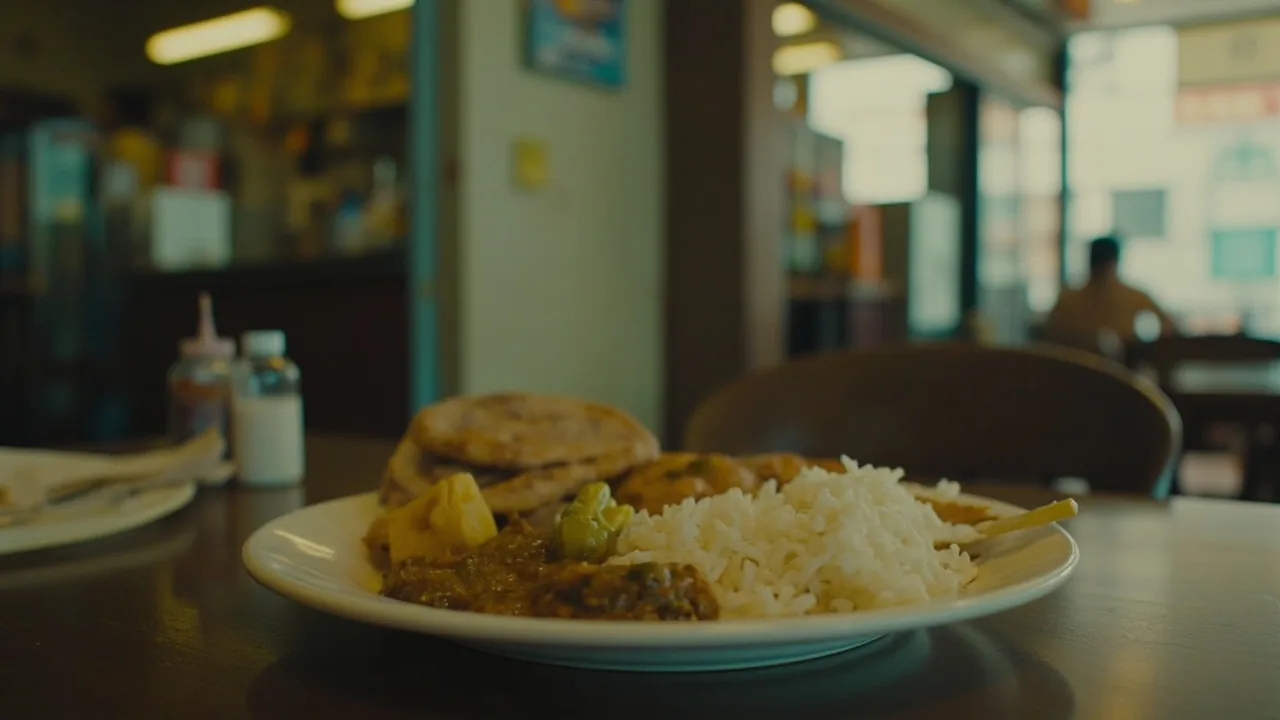
Indian Food in Vietnam: Prices, Top Restaurants & Veg Options in Hanoi, HCMC & Da Nang
Short answer: yes, you can find Indian food in Vietnam, with pure veg and Jain options concentrated in Hanoi.
This guide covers what’s available in 2026, what it costs, and where to eat when you’ve had your fifth bowl of pho and want dal-chawal.
Subodh’s Pro Tip: Don’t rely on “vegetarian” translations alone. Vietnamese cooks often think chicken broth and shrimp paste are vegetarian. Always specify “no meat, no fish sauce, no shrimp” at local spots, and stick to Indian or pure veg places when Jain or strict-veg is the priority.
This article is part of our Southeast Asia Backpacking Hub covering food, costs, and logistics across the region. For more on Vietnamese food basics, see our Vietnam Food Guide.
If you’re after dedicated vegetarian coverage, check Vegetarian Food in Vietnam.
Quick Answers
| What | Answer | Price (INR) |
|---|---|---|
| Is Indian food available in Vietnam? | Yes, with pure veg and Jain options concentrated in Hanoi | ₹370 (~$3.84) to ₹925 (~$9.60) per meal |
| Is veg food available in Vietnam? | Yes, both Vietnamese Buddhist ‘chay’ spots and Indian pure veg restaurants | ₹75 (~$0.78) to ₹370 (~$3.84) per meal |
| Is 100 rupees a lot in Vietnam? | Yes, 100 rupees covers 2-3 street food meals or 1 veg café meal | ₹100 (~27,027 VND or ~$1.04) |
| Cheapest Indian meal in Vietnam? | Thali at a pure veg spot in Hanoi | ₹368 (~100,000 VND or ~$3.82) |
| Most expensive Indian meal in Vietnam? | Biryani or tandoori at a mid-range Indian restaurant | ₹921 (~250,000 VND or ~$9.55) |
Note: prices above reflect July 2026 listings from restaurant menus and traveller reports.
The Vietnamese Food Landscape (and Why Indian Travellers Care)
Vietnamese food is one of the world’s great cuisines, but it’s built on flavours that don’t translate cleanly for Indian vegetarians and Jains. Three ingredients show up almost everywhere: nuoc mam (fish sauce), tom (shrimp, often dried and ground into a paste), and ga (chicken, including in broths that look clear and vegetable-only). A bowl of vegetable pho can have a beef or chicken base by default. A banh mi that’s “just vegetables” can still have pork pate or mayo with anchovies in the spread. Stir-fried morning glory at a riverside spot is almost always cooked in oyster sauce, which is shellfish-derived.
The Vietnamese word that helps is “chay” (pronounced like “chai” but with a soft ‘ch’). A chay restaurant is fully plant-based, usually Buddhist-run, and avoids the animal-product traps. You’ll see red signs or banners reading “Cơm Chay” or “Bún Chay” at street stalls and small restaurants. The catch: chay doesn’t automatically mean no onion or garlic, which matters for Jains. And some chay spots still use eggs.
This is why Indian restaurants persist across Vietnam’s tourist trail. The Indian traveller market has been visible since the 1990s, and Hanoi in particular has a deep pocket of long-running, family-style pure veg Indian restaurants catering to North Indian, South Indian, and Jain palates side by side.
Key Phrases in Vietnamese (and Hindi)
| English Phrase | What it Means | Vietnamese Script | Pronunciation |
|---|---|---|---|
| I am vegetarian | No meat, no fish, no eggs | Tôi ăn chay | ”toy ane chai” |
| No fish sauce | Skip the nuoc mam | Không nước mắm | ”khong nuk mam” |
| No meat or seafood | Skip ga, heo, tom | Không thịt, không hải sản | ”khong tit, khong hai san” |
| No egg | Skip trung | Không trứng | ”khong trung” |
| Pure veg, no onion/garlic | For Jain meals | Ăn chay, không hành tỏi | ”an chai, khong han toi” |
| Is this vegetarian? | Ask before ordering | Cái này ăn chay được không? | “kai nay an chai duok khong” |
Carry these on your phone. Travellers report that pointing at the phrase while ordering cuts confusion to zero, and Vietnamese servers are generally patient once they understand the ask.
Safe Vietnamese Street Food Dishes for Vegetarians
Vietnamese street food is cheap, fresh, and a huge part of the travel experience. With a few specs in Vietnamese, you can eat well without burning out on Indian restaurants.
Pho Chay (Vegetarian Pho)
A vegetable-broth version of Vietnam’s national noodle soup. Comes with rice noodles, tofu, and herbs. Specify “no fish sauce” (không nước mắm) and “vegetable broth only” (nước dùng rau củ). Price: ₹129-₹203 (~35,000-55,000 VND or ~$1.34-$2.10). Look for stalls with a “Chay” banner.
Banh Mi Chay (Vegetarian Sandwich)
A baguette filled with grilled tofu, pickled carrot and daikon, cucumber, cilantro, and chili. Skip the mayo if you’re strict-veg (some versions contain egg or anchovy). Price: ₹55-₹110 (~15,000-30,000 VND or ~$0.57-$1.15) from a street cart.
Bun Chay (Vegetarian Vermicelli Bowl)
Cold rice vermicelli with tofu, herbs, pickled veg, and a soy-peanut dressing. Light and refreshing. Price: ₹110-₹184 (~30,000-50,000 VND or ~$1.15-$1.91). Specify “no fish sauce in the dressing” (không nước mắm trong nước chấm).
Banh Xeo Chay (Vegetarian Sizzling Pancake)
A crispy turmeric-rice pancake stuffed with bean sprouts, tofu, and mushrooms. Specify no shrimp and no pork belly (the standard fillings). Price: ₹147-₹258 (~40,000-70,000 VND or ~$1.53-$2.67).
Che (Sweet Soups and Desserts)
Mung-bean, black-bean, or pandan-coconut sweet soups served cold or warm. Vegan and Jain-friendly. Price: ₹37-₹92 (~10,000-25,000 VND or ~$0.38-$0.96) from street vendors.
Travellers report that the best chay street stalls are often the ones with a long queue of locals at lunch, since high turnover means fresh ingredients and a clean pot.
Vietnamese Vegan and Vegetarian Restaurants Worth Knowing
If you want the local cuisine but with the safety of a fully plant-based kitchen, these chay spots and veg-friendly Vietnamese restaurants are solid.
Nhà An in Hanoi serves Vietnamese classics in a vegan format with a 4.8 rating. Hoang’s Restaurant in Hanoi carries a 4.9 rating and a cosy, welcoming vibe. May Hanoi Train Street Restaurant (4.9) is worth a stop if you’re near the tracks - good coffee and simple Vietnamese dishes. For Da Nang, NGON DA NANG has a 4.9 rating and travellers specifically call out the Bun Cha Ca and Banh Xeo. Thìa Gỗ Restaurant offers authentic local Vietnamese food in a cosy setting (4.7). Sen Trang An (4.9) leans into traditional flavours with a cultural focus. Hong Hoai’s Restaurant (4.9) is a family-run spot serving traditional Vietnamese food in a relaxed setting.
If you’d rather let a local guide handle the language barrier and the ingredient detective work, the Small-Group Street Food Walking Tour in Hanoi (4.8) walks you through the Old Quarter’s veg-friendly stalls with an English-speaking guide. In Da Nang, the Da Nang Food Tour (4.6) does the same along the food-rich neighbourhoods near the beach. Check food tours on GetYourGuide if you’d like the bookings handled in advance. For a hands-on approach, see our guide to Vietnamese Cooking Classes & Food Tours.
Indian Restaurants in Hanoi (The Strongest Cluster)
This is where Indian travellers have the most options. Hanoi’s Old Quarter and Hoan Kiem district have been home to Indian restaurants since the early 1990s, and the concentration of pure veg and Jain spots is genuinely better than what you’ll find in HCMC or Da Nang.
AMY Indian Restaurant (4.8) is a family-style spot specialising in South Indian flavours and strict Jain preparations. Rutba Indian Restaurant carries a 5.0 rating and is popular with the Indian backpacker crowd. Rishikesh Indian Restaurant (4.8) is another reliable pure veg pick. Royal Rajasthan (4.7) has been around for over three decades and serves North Indian and tandoori dishes with a clear veg/vegan menu. Sattva (4.9) is the casual spot where travellers consistently praise the paneer butter masala, with meals running ₹368-₹552 (~100,000-150,000 VND or ~$3.82-$5.73) per person. APNA (4.9) in Hoan Kiem is known for biryani at ₹552-₹921 (~150,000-250,000 VND or ~$5.73-$9.55) per person.
Most Hanoi Indian restaurants serve thalis in the ₹368-₹663 (~100,000-180,000 VND or ~$3.82-$6.88) range, with biryanis and tandoori mains climbing to 200,000-280,000 VND. At current rates (1 INR = 270.27 VND), that’s roughly ₹370 to ₹1,035 for a full Indian meal, noticeably cheaper than India-tier restaurants in Bangkok or Singapore. While you’re in Hanoi, don’t miss the café scene - see Hanoi Coffee Culture for egg coffee spots and laptop-friendly cafés.
Indian Restaurants in Ho Chi Minh City
HCMC has Indian restaurants spread across District 1 (the backpacker and tourist core) and District 7 (the expat-heavy area). The density is lower than Hanoi and pure veg options are scarcer, but there are reliable spots. Travellers report that District 1’s Pham Ngu Lao area has a handful of North Indian and South Indian places within walking distance of most hostels. Expect slightly higher prices than Hanoi: ₹552-₹1,105 (~150,000-300,000 VND or ~$5.73-$11.46) per person for a full meal.
If you don’t see a specific HCMC restaurant name on this list, it’s because I want to give you names that have held up across multiple traveller reports, not a single review. The safest move in HCMC is to filter Google Maps by “pure vegetarian” or “Jain” and read the recent reviews, or ask at your hostel, which will usually point you to one or two spots within a 10-minute walk.
Indian Restaurants in Da Nang
Da Nang’s Indian scene is smaller and younger, mostly built around the city’s growing role as a beach-and-mountains stop between Hanoi and HCMC, plus its proximity to Hoi An. You’ll find a handful of North Indian restaurants along the Bach Dang riverside strip and near My Khe Beach, with thalis running ₹479-₹810 (~130,000-220,000 VND or ~$4.97-$8.40). Pure veg is harder to confirm here than in Hanoi; most Da Nang Indian spots are veg-friendly but serve meat too, so specify your requirements when ordering.
If you’re heading to Hoi An for a day or two, the Old Town has fewer Indian restaurants but the same Vietnamese veg options carry you through (bánh mì chay, cơm chay, bún chay).
Food Safety & Hygiene
- Drink bottled or filtered water only. Ice from street vendors is generally fine in major cities since factories use purified water, but if you have a sensitive stomach, skip it for the first few days.
- Eat at busy stalls. High turnover means the food hasn’t been sitting in the heat.
- Wash hands or use sanitizer before eating street food.
- Avoid raw vegetables that haven’t been peeled or washed in safe water.
- For Indian restaurants, check recent Google reviews for hygiene mentions; a sudden drop in ratings is a signal.
Getting Connected
You’ll want data for Google Translate (camera-based Vietnamese OCR is a lifesaver for menus), Grab (Vietnam’s ride-hailing app), and food delivery apps like ShopeeFood or GrabFood. A local SIM from Viettel or Mobifone costs around ₹368-₹737 (~100,000-200,000 VND or ~$3.82-$7.64) per week for 3-5 GB/day, available at the airport or any convenience store. As an alternative, Get Nomad eSIM lets you activate a Vietnam data plan before you fly, which is useful if you’re landing late or don’t want to queue at the airport kiosk.
Common Food Mistakes Indians Make in Vietnam
- Assuming “vegetarian soup” means veg broth. Vietnamese vegetable pho often starts with a beef or chicken stock. Specify “nước dùng rau củ” (vegetable broth) or eat at a chay place.
- Ordering “no meat” but forgetting fish sauce. Nuoc mam is the default seasoning in dressings, stir-fries, and even some rice dishes. Always say “không nước mắm.”
- Trusting chay for Jain meals. Chay is plant-based but usually includes onion and garlic. Ask specifically: “không hành tỏi” (no onion, no garlic).
- Eating only Indian food for the whole trip. Vietnam has some of the world’s best street food and you’ll regret missing it. With the phrases above, you can safely eat local 80% of the time and save the Indian spots for when you genuinely need them.
- Skipping breakfast because the hotel only serves banh mi with mayo. Most cafes will do a banh mi chay (no mayo) if you ask. Travellers report this works at every major café chain.
Subodh’s Take
Vietnam is one of the easiest Southeast Asian countries for Indian vegetarians and Jains to eat well, as long as you skip the assumption that “vegetarian” translates itself. Spend your first day in Hanoi learning the chay system and the phrases above. Mix local chay spots and street food during the day (cheap, fresh, varied). Save the Indian restaurants for nights when you’re tired, sick of pointing at menus, or genuinely craving dal-chawal. Ho Chi Minh City and Da Nang have less density, but the Indian spots that exist are solid. Travellers report you can comfortably spend ₹500 (~$5.19) to ₹1,000 (~$10.37) per day for a mix of local and Indian meals, or under ₹300 (~$3.11) if you’re mostly eating street food. Print the phrase table, screenshot it on your phone, and you’ll eat better than most travellers out there.
FAQ
Is McDonald’s or Burger King safe for vegetarians in Vietnam?
Yes, both have veggie menus. McDonald’s Vietnam offers a Veggie Burger (no meat, no fish sauce). Burger King has a Veggie Whopper. Neither is Jain-friendly (mayo, egg-based buns), but they’re reliable for a veg meal in a pinch. Expect to pay ₹166-₹276 (~45,000-75,000 VND or ~$1.72-$2.87).
Can I get Jain food in local Vietnamese markets?
Strict Jain (no onion, no garlic, no root vegetables) is effectively impossible outside of dedicated Indian restaurants. Vietnamese cuisine is built on garlic, shallots, and scallions. Your best bet is AMY or Sattva in Hanoi, both of which explicitly cater to Jain travellers.
Is fish sauce used in everything?
Almost everything savoury. Pho, bun cha, banh xeo, most stir-fries, dipping sauces, and rice dishes use fish sauce as the base seasoning. Even “vegetable” dishes will often have a splash. Always specify “không nước mắm” if you’re at a non-veg-restaurant.
How much should I budget daily for food in Vietnam?
Budget travellers can eat well on ₹552-₹921 (~150,000-250,000 VND or ~$5.73-$9.55) per day using street food, chay stalls, and one Indian meal. Mid-range travellers at a mix of sit-down restaurants and Indian spots: ₹1,105-₹1,842 (~300,000-500,000 VND or ~$11.46-$19.10). Comfortable: ₹1,842-₹2,946 (~500,000-800,000 VND or ~$19.10-$30.56).
Is street food safe for Indian stomachs?
Mostly yes, if you follow the rules above (busy stalls, bottled water, cooked food). Travellers report that Hanoi and HCMC street food is generally safer than Bangkok or Bali. If you have a particularly sensitive stomach, stick to cooked-to-order dishes and avoid raw herbs for the first 48 hours.
Are there Indian restaurants near Hoi An?
Hoi An’s Old Town has fewer Indian restaurants than Hanoi or HCMC, but a handful of spots serve North Indian and South Indian dishes within the ancient town and along Cua Dai Beach. Da Nang, 30 minutes north, has more options and is a common day-trip base.
Can I use Indian payment apps in Vietnam?
No, UPI doesn’t work in Vietnam. Carry a forex card (HDFC, ICICI, Axis Bank Forex cards are widely accepted) or Vietnamese Dong cash. ATMs are everywhere in tourist areas; Viettel and Vietcombank ATMs reliably accept Indian debit cards.
— Subodh
