Vietnamese Cooking Classes & Food Tours in Hanoi, Hoi An & HCMC: Worth It or a Scam?
Looking for the best Vietnamese cooking class in Hoi An or Hanoi? Many cooking classes and food tours in Vietnam are genuinely good; a meaningful share are tourist-trap conveyor belts. The trick is knowing which is which before you hand over your dong.
The short version: Hoi An is the gold standard for cooking classes in Vietnam, full stop. Hanoi runs a close second with the bonus of proper market access. Ho Chi Minh City is where the worst scams live. Within those cities, the question isn’t should you book a class, it’s which one, and that’s what this guide answers. For more on Vietnam travel, check our Southeast Asia backpacking hub and Vietnam food guide.
Quick Answers
| What | Answer | Price (INR) |
|---|---|---|
| Average cooking class in Hoi An (half-day with market visit) | Worth doing, the best in Vietnam | ₹2,208-₹4,416 (~600,000-1,200,000 VND or ~$22.92-$45.84) |
| Average cooking class in Hanoi | Good options available, book in Old Quarter | ₹2,576-₹5,152 (~700,000-1,400,000 VND or ~$26.74-$53.48) |
| Average cooking class in Ho Chi Minh City | Skip the class, do a food tour instead | ₹2,944-₹5,520 (~800,000-1,500,000 VND or ~$30.56-$57.30) |
| Street food tour (3-4 hours, small group) | The single best food experience in Vietnam | ₹2,944-₹5,888 (~800,000-1,600,000 VND or ~$30.56-$61.12) |
| Vegetarian/Jain options on standard tours | Rare on group tours, common at veg-friendly schools | ₹0-₹736 (~0-200,000 VND or ~$0-$7.64) extra |
Use this as your filter: anything under ₹1,840 (~500,000 VND or ~$19.10) for half-day cooking class in Hoi An is suspicious, and anything over ₹5,520 (~1,500,000 VND or ~$57.30) in HCMC is almost a cruise-ship joint.
The Honest Scam-or-Not Verdict by City
Hoi An: Genuinely Worth It
Cooking classes in Hoi An are the real thing. The town has been doing this for two decades, and the format has matured into something almost every traveller loves: morning market walk to identify herbs and produce, then a riverside kitchen where you cook three or four dishes at your own wok station, then eat what you made. The food is good because the ingredients are absurdly fresh, and the recipes you’ll learn (cao lầu, white-rose dumplings, bánh xèo) are central Vietnam specialties, not generic “Vietnamese stir-fry.”
What makes it good: small class sizes (usually 8-12), real market access (not a fake “look at the lettuce” walk-through), English-speaking local instructors who cook every day, recipes you can replicate at home with the photo handbook they send you home with.
The scam layer to watch for: street touts in the Old Town who say “free cooking class, just come with me.” There is no free cooking class. They’ll walk you to a low-quality joint, the “free” part is the demo, and the moment you sit down someone orders a meal at inflated prices. Ignore anyone offering anything “free” near the night market.
Hanoi: Worth It, with Caveats
Hanoi cooking classes are good but inconsistent. The Old Quarter has several excellent schools with proper kitchen setups; the Long Biên area has a couple of mid-range options; and anywhere that takes you to “the famous local market” without specifying which one is usually code for a five-minute stop at a tourist-shop market. Stick to classes run by Vietnamese chefs who are also restaurant owners, which keeps the food at the end of the class to a high standard.
What makes it good: northern Vietnamese cuisine (phở, bún chả, bánh cuốn) is genuinely different from southern and central, so the class teaches dishes you can’t easily get elsewhere. The Hanoi market walks are real and educational if you go with someone who shops there.
What makes it patchy: many HCMC-based tour operators run “Hanoi” cooking classes as a packaged itinerary, often with a translator standing between you and the chef. Skip those.
Ho Chi Minh City: Skip the Class, Book a Food Tour Instead
This is where cooking classes get dodgy. HCMC has fewer standalone schools, more hotel-run or “experience” branded classes, and the surrounding food scene (street food, markets, beer joints) is so good that you’d rather spend the half-day eating your way through District 1 and 4 on a guided food tour instead. A cooking class in HCMC teaches you to make southern dishes you can easily find in any Saigon restaurant.
The exception: if you’ve already done Hoi An and Hanoi classes and want the southern recipe set (bánh xèo, hủ tiếu), there are a few southern-focused schools worth researching beyond the well-known shortlist.
Best Cooking Classes in Hoi An and Hanoi Right Now
These are the classes that consistently show up in current traveller reports without a single “this was a scam” review attached. Prices below are the standard half-day class with market tour.
Hoi An
Hoi An’s cooking-class scene is mature and competitive; the well-known half-day schools with proper market walks cluster along the riverside just outside the Old Town. Rather than name one specific operator that may have changed hands, the safer move is to book a half-day class with a riverside school that publishes an English-language menu and confirms market-walk inclusion up front, then verify on recent TripAdvisor reviews.
Hanoi
Hanoi’s standalone cooking schools cluster in the Old Quarter and Long Biên, run by Vietnamese chefs who also operate restaurants. Same booking rule as Hoi An: book a half-day class with a school that includes a real market walk (not a “famous local market” stop without naming the market) and check recent reviews. For more on Hanoi coffee and egg-coffee spots, see our Hanoi coffee and egg coffee guide.
Hoi An Restaurants Worth Visiting
The Son Bistro - Vietnamese Restaurant, Craft Beer & Bar (rating 4.8) is a modern bistro in Hoi An serving Vietnamese dishes and craft beer, a solid meal spot.
Hoang’s Restaurant - Vietnamese Restaurant & Vegan Food (rating 4.9) is vegan-friendly and worth a separate meal stop for its Vietnamese and vegan menu.
What to Expect, Step by Step, at a Good Class
A legitimate Vietnamese cooking class runs like this:
- Pickup or meet at 8:30-9:00 AM. If a class asks you to be ready at 6:30 AM, it’s either a wholesale-market tour (rare, advanced) or a low-quality joint trying to extend the day.
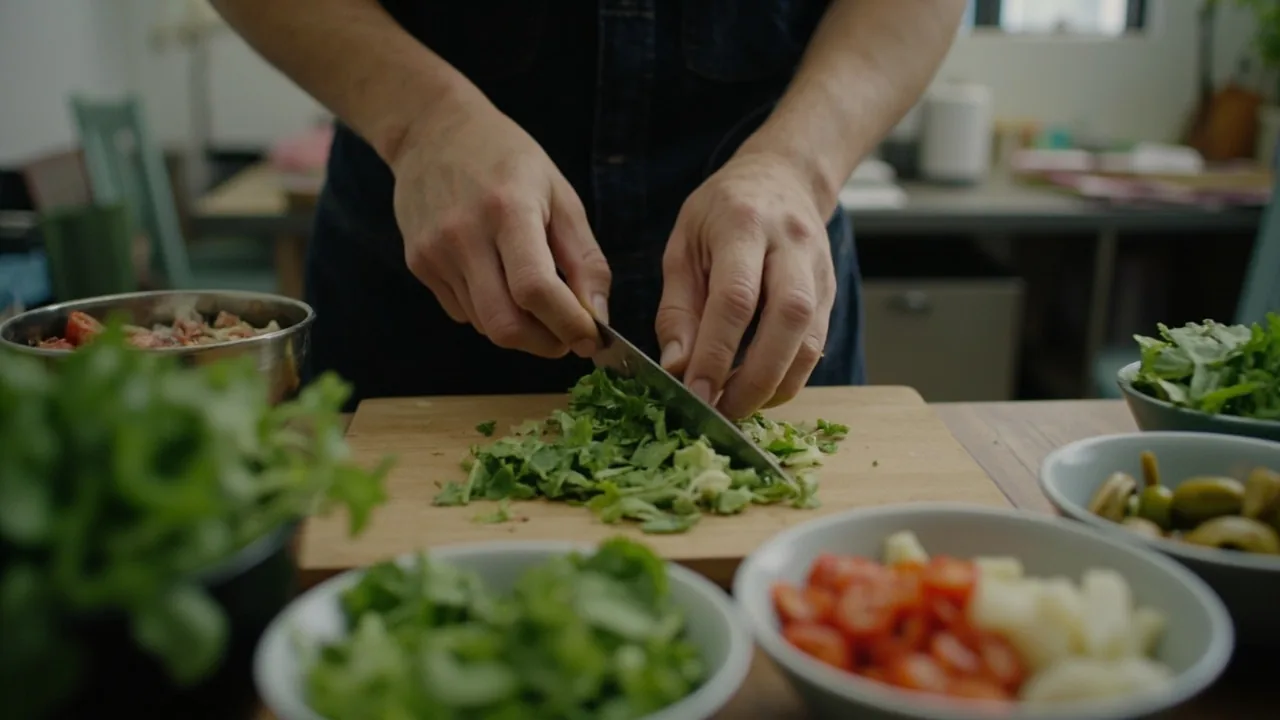
- Market walk, 30-45 minutes. You see herbs (rau thơm), fish sauce (nước mắm), and the rice-paper lady. You learn why Vietnamese coriander (rau răm) tastes nothing like the European kind.
- Cooking, 2-3 hours. Three to four dishes, individual wok, recipes printed in English with Vietnamese script for you to take home.
- Eat what you cooked, plus extras the chef preps. Always order the extras; the chef will have prepared things you’re not yet skilled enough to make (like properly crispy spring rolls).
- Recipes sent by email or printed booklet. If they don’t give you this, you’ve been had.
A good class costs ₹2,208-₹5,152 (~600,000-1,400,000 VND or ~$22.92-$53.48) for the half-day version. Anything marketed as “luxury” or “private” runs ₹9,200 (~2,500,000 VND or ~$95.51) and up, which is fine for a special occasion but pointless for the regular backpacker.
Vegetarian and Vegan: What Works
Vietnamese cooking has a long Buddhist vegetarian tradition, and good schools know this. Hoi An is the easiest city for vegetarians because several schools run parallel veg and non-veg classes. For more on vegetarian options, check our vegetarian food in Vietnam guide. For Jain travelers, see our vegetarian Indian food in Vietnam guide.
Hoang’s Restaurant - Vietnamese Restaurant & Vegan Food (rating 4.9, Hoi An) is one of the most veg-forward operations in town. Their menu reads like a Buddhist temple cookbook, and they can accommodate vegetarian cooking requests if you flag it at booking.
MẸT Hội An (rating 4.9, multiple branches including MET 9 and the Met 2 location) is your backup if Hoang’s is full. Strict vegetarian menu, including Cao Lầu made with mushroom broth instead of pork. Note that vegetarian-friendly restaurants in Hoi An outnumber cooking schools, so most classes will happily accommodate if you flag the requirement at booking.
In Hanoi, Sen Trang An Vietnamese Restaurant handles vegetarian requests well at the restaurant level, swapping dishes on the menu (mushroom-based broth in place of fish-sauce-heavy northern staples) rather than running a structured cooking class. That’s a 90% solution for a meal, not a 100% one for learning the northern recipe set.
For Jain travelers: genuinely hard. Vietnamese Buddhist vegetarian (chay) typically still uses onion, garlic, and eggs. The Indian restaurants in Hanoi are your safest fallback: Rutba Indian Restaurant Hanoi - Pure Veg & Jain Food (rating 5) advertises pure veg and Jain food options and is one of the few places in the country that takes “no onion, no garlic” seriously. Swad Kitchen 5 - Indian Restaurant in Hanoi (rating 4.9) does North Indian, and The Indian Kitchen - Restaurant & Bar Hanoi (rating 4.9, Giang Vo) is another safe stop. Plan around these for at least one meal per city.
Street Food Tours: The Better Bang for Your Buck
If the choice is between a cooking class and a food tour, and you only have half a day, book the food tour. You’ll eat more, learn more about what to order on your own, and walk through neighbourhoods you wouldn’t find alone.
A good food tour covers 5-8 stops in 3-4 hours, costs ₹2,944-₹5,888 (~800,000-1,600,000 VND or ~$30.56-$61.12), and the guide is usually a local food writer or chef who has relationships with the vendors. Book a Hanoi food tour via a known operator (look for TripAdvisor “Travelers’ Choice” ranked tours in the Old Quarter) rather than a budget aggregator. The same operator-style search will surface Hoi An versions; pick the one with a named local guide rather than a budget aggregator version.
Red flags on food tours: under ₹2,208 (~600,000 VND or ~$22.92) for four hours in Hoi An (the vendor commission model usually produces a lower-quality stop list), or any tour that meets at a tourist-shop rather than a coffee shop. HCMC food tours at ₹9,200 (~2,500,000 VND or ~$95.51) and above are almost always packaged with hotel transfers you don’t need.
Common Mistakes Backpackers Make With These Tours
Booking “free” classes. There is no free cooking class in Hoi An or Hanoi. Even the demo-then-upsell variants will charge ₹736-₹1,472 (~200,000-400,000 VND or ~$7.64-$15.28) per dish by the end.
Booking through hotel concierge at markup. Hotels add 20-40% to the standard price. Book direct or via GetYourGuide at the listed rate.
Skipping the market walk. The market is half the education. If a class offers “express no-market” at a discount, take the full version.
Trying to do cooking class and street food tour on the same day. You’ll be too full from the class to enjoy the tour, and vice versa.
Assuming “vegetarian” without specifying. In Vietnamese, “chay” means Buddhist vegetarian and usually includes onion, garlic, egg. If you need stricter (Jain, no onion/garlic), say “không hành không tỏi” (no onion no garlic) and confirm with the chef.
Getting Connected
You’ll want data for looking up translation help, mapping restaurant locations, and booking or modifying tours on the go. Get Nomad eSIM is the easiest option for short trips since you activate it before you fly. If you prefer a physical SIM, Viettel and Mobifone both work fine in Vietnam; tourist SIMs run around 200,000 VND/week for 5-10 GB.
FAQ
Is the Hoi An cooking class worth it for vegetarians? Yes, and it’s the best city in Vietnam for it. Hoang’s and Mẹt are well-known vegetarian-friendly restaurants that can accommodate cooking class requests, and the dishes (cao lầu, white rose) translate well into vegetarian versions.
Are street food tours in Hoi An good? The good ones are excellent; the cheap aggregator ones skip the best vendors. Book through a known operator (TripAdvisor Travelers’ Choice ranking, GetYourGuide verified listing) rather than a hotel package.
What’s the best Vietnamese cooking class in Hoi An or Hanoi? For pure food learning, a half-day riverside class in Hoi An with a confirmed market walk is the strongest option in either city; for a special-occasion experience, look for a larger-format riverside school in Hoi An as the upgrade pick.
What should I expect to pay? Half-day class with market walk: ₹2,208-₹4,416 (~600,000-1,200,000 VND or ~$22.92-$45.84) in Hoi An, ₹2,576-₹5,152 (~700,000-1,400,000 VND or ~$26.74-$53.48) in Hanoi. Anything outside this range is either suspiciously cheap or unjustifiably expensive.
Can I do a cooking class in Ho Chi Minh City? Yes, but I’d book a food tour instead. The city has better street food than the cooking class teaches you to make.
Will the class teach me dishes I can cook at home? The good ones yes, and you’ll get a printed recipe booklet. Verify this is included before booking; some budget versions don’t.
Is it safe to eat the food right after cooking? Yes. Wok-fried dishes cooked and served within the hour are fine. The bigger food-safety question in Vietnam is uncooked herbs on market tours and ice in drinks from street vendors; the cooked food at a class is the safest meal you’ll eat all day.
Subodh’s Take
Here’s the honest read based on cross-referencing current traveller reports and operator listings: Hoi An cooking class, half-day, booked direct through a known operator, is one of the three things every Vietnam itinerary should include. The other two are a Hanoi street food tour and at least one banh mi eaten standing up at a stall with no seats. The classes are worth it not because Vietnamese food is hard, but because the teacher’s knife and herby market access will level up your home cooking by years. Just skip the “free” variants, skip anything in HCMC that calls itself luxury, and if you’re vegetarian, look for classes that can accommodate at Hoang’s or Mẹt restaurants. That’s the entire game.
- Subodh
