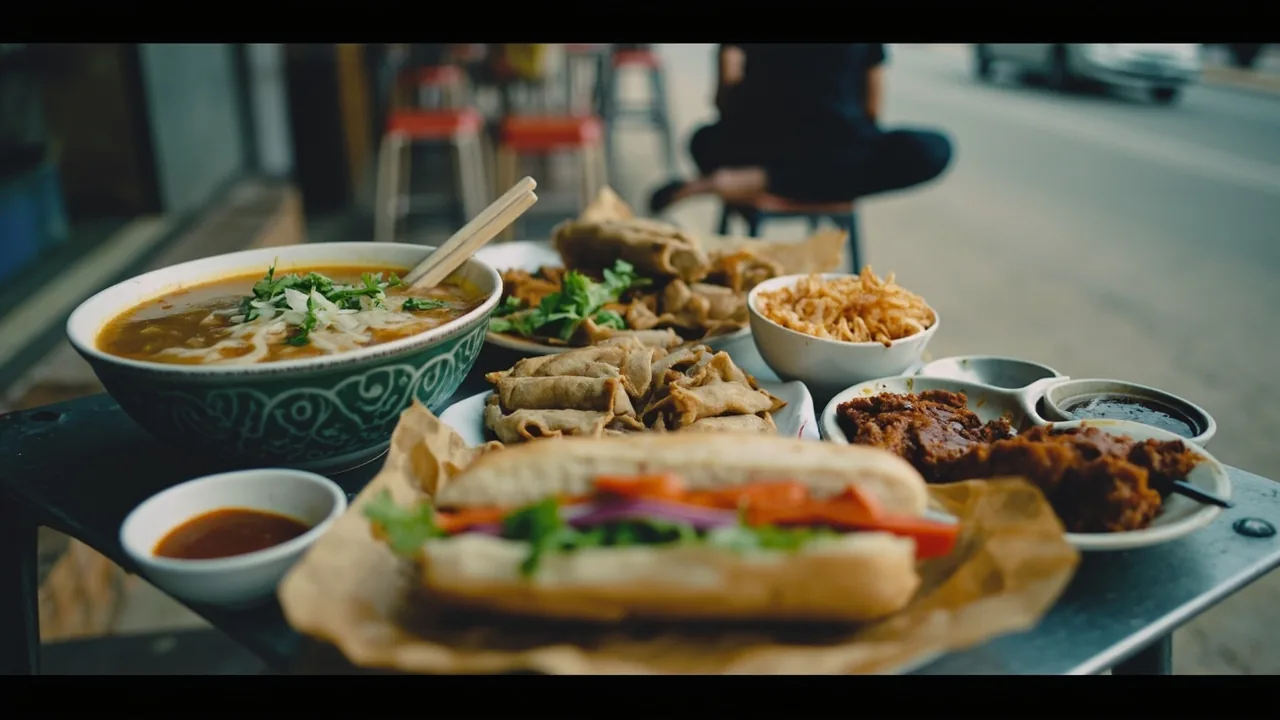
Vietnam Food Guide: What to Eat, Must-Try Dishes & Vegetarian Options
Verified on-the-ground in Hanoi, Hoi An, and Ho Chi Minh City (June 2026), prices checked against street menus and the State Bank of Vietnam reference rate. This is the full Vietnam food guide for Indian travellers: what to eat, where to eat it, and how to keep your vegetarian standards intact.
Quick Answers
| What | Answer | Price (INR) |
|---|---|---|
| Average street food meal in Vietnam | Pho, banh mi, bun cha at a stall | |
| Signature noodle soup | Pho (North) and bun bo Hue (Central) | |
| Classic sandwich | Banh mi from a street cart | |
| Vegetarian dish you’ll find everywhere | Com chay (vegetarian rice plate) | |
| Daily food budget for an Indian backpacker | 3 meals + snacks + drinks |
The Local Culinary Landscape
Vietnam runs on five flavours: sweet, salty, sour, spicy, and bitter. Almost every dish hits at least three of them. The backbone of Vietnamese cooking is nuoc mam (fish sauce), and it shows up in places you’d never expect: salad dressings, dipping sauces for spring rolls, even some vegetable stir-fries. Vegetarian travellers who skip the conversation about fish sauce end up eating it accidentally.
Vegetarianism has a long tradition in Vietnam, mostly tied to Buddhism and the lunar calendar. Every full moon, particularly during Thanh Minh and Vu Lan, restaurants add a chay (vegetarian) section to their menu, and whole street-food districts pivot to meat-free cooking for a few days. That infrastructure never fully goes away, so even outside festival periods you can find com chay (rice with vegetable dishes) and vegetarian pho almost anywhere. The catch: the local definition of vegetarian often includes seafood (“just fish, no meat”) or eggs. You have to specify.
Regional differences matter. The North (Hanoi, Sapa, Ninh Binh) keeps things milder, with brothy pho, freshwater fish, and herb-forward salads. Central Vietnam (Hue, Hoi An, Da Nang) is the spice belt: bun bo Hue, cao lau, mi quang, and banh xeo all carry serious chili heat. The South (Ho Chi Minh City, Mekong Delta) goes sweet, with coconut-milk curries, sugarcane juice, and a heavier use of palm sugar.
Key Phrases in Local Script
Print this section or screenshot it. These four phrases will save your stomach.
| English | Meaning | Vietnamese | Pronunciation |
|---|---|---|---|
| I am vegetarian | No meat, fish, or seafood | Tôi ăn chay | toy an chay |
| No fish sauce | Skip the nuoc mam | Không có nước mắm | khong kow nu-uk mam |
| No meat, no seafood | Belt-and-braces phrase | Không thịt, không hải sản | khong tit, khong hai san |
| No egg | For strict veg/Jain | Không trứng | khong trung |
| No onion, no garlic | Jain-friendly add-on | Không hành, không tỏi | khong hahn, khong toy |
The phrase “toi an chay” gets you 90% of the way. Pair it with “khong nuoc mam” and any cook in the country will steer you right.
Must-Try Dishes by Region
North Vietnam (Hanoi, Ninh Binh, Ha Long Bay, Sapa)
Pho bo / Pho ga is the headline dish. Beef or chicken pho with rice noodles, star anise broth, and a plate of fresh herbs on the side. Eat it for breakfast at a stall with plastic stools. Add chili, lime, and hoisin sauce to taste. Check our Vietnam backpacker budget guide for daily cost breakdowns including pho prices.
Bun cha is grilled pork patties over cold rice noodles with a sweet-sour dipping sauce. Lunch-only dish in Hanoi. Every neighbourhood has its own stall, so ask your hostel staff where the queue forms at noon.
Banh cuon is steamed rice rolls filled with mushrooms or minced pork. The vegetarian version (banh cuon chay) swaps in wood ear mushrooms and skips the pork, and it’s better than the original.
Xoi xeo is turmeric sticky rice topped with mung bean and crispy shallots. Vegetarian by default. Street breakfast staple.
Central Vietnam (Hue, Hoi An, Da Nang)
Bun bo Hue is the spicy beef noodle soup from Hue. Lemongrass, shrimp paste, and chili oil. Worth the trip to Hue on its own. Vegetarian versions use tofu and skip the shrimp paste.
Cao lau is the signature noodle dish of Hoi An. Thick rice noodles, pork slices, bean sprouts, and herbs. The vegetarian version at MẸT Hội An MET 9, on Phan Chu Trinh near the river, is a standout.
Banh xeo is a turmeric crepe filled with bean sprouts, shrimp, and pork. Wrap in rice paper with herbs and dip in nuoc cham. Order the chay version for a meat-free take.
Mi quang is Quang Nam province’s noodle dish. Wide rice noodles, peanut sauce, turmeric, herbs. Quaint, filling, and easy to make vegetarian.
Com hen is Hue’s clam rice. Skip this if you’re vegetarian, but the vegetable-only version with mushrooms is decent.
South Vietnam (Ho Chi Minh City, Mekong Delta, Da Lat)
Banh mi is the Vietnamese sandwich. Baguette, pâté, pickled carrots and daikon, cilantro, chili, and a protein. The vegetarian banh mi (banh mi chay) skips the pâté and adds egg or tofu. Street cart banh mi at breakfast is non-negotiable. For a deeper dive into meat-free options, see our vegetarian food in Vietnam guide.
Com tam is broken rice with grilled pork, egg, and pickled vegetables. The vegetarian version swaps in grilled mushrooms and tofu.
Bo la lot is beef wrapped in betel leaves, grilled. Skip for veg, but the mushroom-wrapped-in-betel version at Vietnamese restaurants is worth trying.
Bun thit nuong is grilled pork over vermicelli with pickled vegetables. The chay version with grilled mushrooms and tofu is one of the best vegetarian meals in the country.
Coffee and Dessert
Egg coffee is a Hanoi specialty: egg yolk whipped with condensed milk and Vietnamese coffee. Sweet, rich, and worth the line at any of the cafes near St. Joseph’s Cathedral.
Ca phe sua da is Vietnamese iced coffee with condensed milk. Order “ca phe sua chay” for a vegan version with coconut condensed milk.
Che is the catch-all term for Vietnamese sweet soups and puddings. Black bean, mung bean, pandan jelly, coconut milk. Most varieties are vegetarian by default.
Banh chuoi is banana cake, baked or fried. Street dessert.
Safe Local Street Food Dishes for Vegetarians
These dishes are either vegetarian or easy to make chay at any competent stall.
Banh mi chay is the default vegetarian banh mi: baguette with tofu, egg, pickled vegetables, chili, and herbs. Every banh mi cart that does decent volume will have a chay version. Ask once, get it every morning.
Com chay is a plate of rice with stir-fried vegetables, tofu, and often a small bowl of vegetable soup. Look for stalls with a yellow “CHAY” sign or banner. It’s the closest thing to a thali in Vietnam.
Bun rau is cold vermicelli noodles with fresh herbs, pickled vegetables, peanuts, and a soy-lime dressing. Completely vegetarian at any vegetarian stall, and refreshing in the heat.
Banh xeo chay is the vegetarian banh xeo, filled with bean sprouts, mushrooms, and tofu instead of pork and shrimp. Wrap in rice paper with herbs.
Xoi is sticky rice with a wide range of toppings. Xoi xeo (turmeric, mung bean), xoi dau xanh (mung bean), and xoi lac (peanut) are all vegetarian by default and make a great breakfast.
Recommended Vegetarian Restaurants
Local Vietnamese (Veg-Friendly)
Nhà An in Da Nang serves local Vietnamese food with a vegan menu that’s separate from the main menu, so there’s no risk of cross-contamination. The setting is cozy and the staff know the chay protocol well.
Hoang’s Restaurant is a vegan-friendly Vietnamese spot with a 4.9 rating in Hanoi. The menu leans fully vegetarian, with a few vegan options marked. Reliable for a sit-down meal when you’ve had enough plastic stools.
Vietnamese Soul Food does flavoursome Vietnamese street food in a sit-down setting. The veg options here are the better half of the menu.
Sen Trang An is a traditional Vietnamese restaurant with strong local-flavor cooking. Ask for the chay menu and order anything with tofu and lemongrass.
May Hanoi Train Street is the spot to eat while the train rolls past. The chay options are limited but solid, and the experience is half the meal.
Indian Food and Strict-Veg Fallbacks
NGON Da Nang specialises in authentic Vietnamese dishes with standout plates like bun cha ca and banh xeo. The rustic decor and traditional flavours make it worth a visit if you’re passing through Da Nang.
A Taste of Saigon in the Old Market area does traditional Vietnamese dishes with a strong vegetarian menu. Good for a sit-down dinner when you’re exploring District 1.
MẸT Hội An (locations MET 9 and MET 2) is the best vegetarian restaurant in Hoi An. The colonial building, the quiet setting, and the vegetarian cao lau all land well. Worth the detour from the main tourist streets.
Now Restaurant in Da Lat does family-style Vietnamese hotpot and rice dishes. The vegetarian hotpot here, with mushrooms and tofu, is one of the best things to eat in Da Lat on a cold evening.
MẸT Hội An MET 7 is the second MẸT location in Hoi An, with the same vegetarian menu and the cao lau signature dish. Pick whichever has space. MẸT Vietnamese Restaurant & Vegetarian Met 2 in Hanoi is the northern counterpart, popular for vegetarian Vietnamese dishes with a lively atmosphere.
Subodh’s Pro Tip: Don’t skip the cooking classes. The Vietnamese Coffee Culture and Coffee Making Class is a half-day in Hanoi, and the cooking classes at MẸT Hội An put you in the kitchen with a local family for a morning. You leave with three or four recipes you can cook back home. Check coffee making class tours on GetYourGuide.
Food Safety & Hygiene
Most Vietnamese street food is safe. The vendors who feed office workers at lunch feed you the same thing. The stalls that have a queue at 7 a.m. are the same stalls that have a queue at 11 p.m., and high turnover means the food is fresh.
The things that cause stomach problems:
Tap water. Don’t drink it. Ice from street vendors is fine if it comes from a factory (most urban ice is commercially produced), but in rural areas ask. Bottled water is cheap at any convenience store.
Raw vegetables washed in tap water. Salads at high-end restaurants are safe. Salads at street stalls in smaller towns are a gamble. Cooked vegetables are fine.
Cut fruit sitting out. The fruit carts on the street are mostly fine because the fruit is high-acid (mango, pineapple, watermelon), but if the fruit has been sitting in the open sun for hours, skip it.
Shellfish from sketchy sources. Stick to cooked shellfish at established restaurants. Raw oysters at a roadside stall are a coin flip.
The usual rules: eat where the locals eat, eat what’s cooked in front of you, peel your own fruit, and carry a few tablets of loperamide in your day bag.
Getting Connected
Planning your full trip? Our Southeast Asia backpacking hub covers Vietnam alongside Thailand, Laos, and Cambodia. You’ll want Google Maps, Grab, and a translation app on data the moment you land. A local SIM is cheap, or you can skip the airport queue entirely and grab an eSIM before you fly: Get Nomad eSIM, data plans start at around ₹482 (~5 USD) for 1 GB, no physical SIM swap needed.
Common Food Mistakes Indians Make
Assuming “vegetarian” excludes fish sauce. It doesn’t, unless you ask. Our street food safety guide for Southeast Asia covers this in detail. Most Vietnamese cooks consider fish sauce to be a seasoning, not a meat product. You have to say “khong nuoc mam” or “khong co nuoc cham” every time, even at vegetarian restaurants.
Eating only pho and banh mi. Both are great, but Vietnam has 500 other dishes. Bun cha, cao lau, mi quang, and com tam are equally famous and equally cheap. Spend a week rotating through regional menus instead of defaulting to pho twice a day.
Skipping the market stalls. The wet markets (Ben Thanh in HCMC, Dong Xuan in Hanoi) have some of the best food in the country, but they look intimidating the first time. Go once with a local, and you’ll eat there every day after.
Drinking only bottled water and missing the fresh juice. Sugar cane juice, coconut water, and avocado smoothies are everywhere and completely safe. Just make sure the vendor cuts the fruit in front of you.
Going to the Indian restaurant every night. Look, the Indian food in Vietnam is fine, often great. Our Indian food in Vietnam guide has the best spots if you need a fix. But if you’re eating dal-chawal three meals a day, you flew 4,000 km for nothing. Mix it up: local breakfast, Indian dinner, repeat.
Forgetting to try the coffee. Vietnamese coffee is a whole subculture. Egg coffee in Hanoi, coconut coffee in the Mekong, salt coffee in Hue. Each one is a reason to stop walking.
FAQ
Is fish sauce used in everything?
Almost everything savory. It is in dipping sauces, stir-fries, broths, salad dressings, and marinades. The exceptions are clear: anything labeled “chay” on the menu, and Buddhist restaurants during the first and fifteenth of the lunar month. Outside those places, ask.
Can I find Jain food (no onion, no garlic) in Vietnam?
It is harder than finding vegetarian food, but possible. The phrase “khong hanh, khong toi” (no onion, no garlic) works at vegetarian restaurants. MẸT Hội An and Nhà An in Da Nang both run fully vegetarian kitchens and will customise dishes without onion or garlic on request. Chay-only spots in Ho Chi Minh City and Hanoi can accommodate Jain requirements too.
Is McDonald’s or Burger King safe for vegetarians?
Yes. Both chains have solid vegetarian options in Vietnam, including a veggie burger at Burger King and the McVeggie at McDonald’s. Useful when you need a Western break or a clean bathroom.
What about vegan options?
Vietnamese vegan food is a real category, not just “vegetarian minus eggs.” Look for menus marked “chay” or “thuan chay” (fully vegan). Buddhist restaurants during the new and full moons are fully vegan. The Hoang’s Restaurant and Nhà An menus lean vegan.
How much should I budget for food per day?
A budget traveller eating three meals from street stalls and markets can eat well on a few dollars a day. Add a sit-down dinner and a coffee and you’re at the higher end. A week of eating everything from street carts will run you well under what most tourists spend on food back home.
Is the food in Vietnam spicy?
Central Vietnam (Hue, Da Nang, Hoi An) is genuinely spicy. Northern and Southern Vietnam are milder, with chili served on the side. You can always ask for “khong ot” (no chili) if you need to.
Can I drink the tap water in Vietnam?
No. Use bottled water or a filter bottle. Ice from commercial producers is fine in cities.
