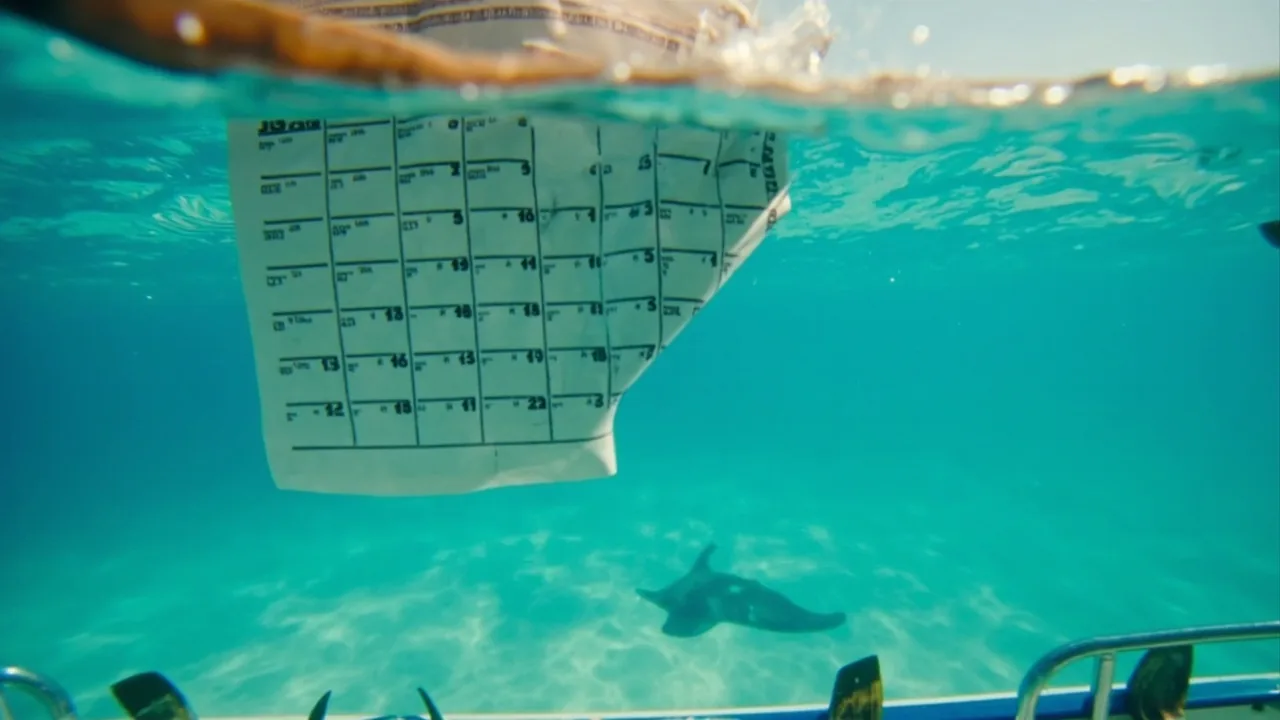
Indonesia Diving Season Calendar: Raja Ampat, Manta Rays at Nusa Penida, and Cenderawasih Whale Sharks
Indonesia’s diving is spread across three different weather systems, which is why a calendar matters more here than in Thailand or Vietnam. Raja Ampat runs on the southeast monsoon, Nusa Penida runs on Bali’s dry season, and Cenderawasih Bay sits in the bird’s head of Papua where the currents shift again. Crossed against current operator schedules and verified against traveller reports from June 2026, here is the month-by-month calendar that lets you stitch two or even three of these regions into a single trip without flying into a flat-calm window that turns out to be chop and current. For related planning, see our guide on Sea Backpacking Hub.
Subodh’s Pro Tip: The biggest mistake Indian divers make is booking Raja Ampat and Nusa Penida back-to-back in a single window. Raja Ampat peaks October to April (northwest monsoon, calm seas), Nusa Penida peaks April to October (Bali’s dry season, mantas on the south coast). The overlap months, October and April, are your only realistic chance to do both in one trip, and even then expect 30 to 40 percent chop at one of the two. You may also find Rinjani Trek Best Month July August Weather Guide useful for this trip.
Quick Answers
| What | Answer | Price (INR) |
|---|---|---|
| Best month for Raja Ampat | Mid-October to mid-April (calm seas, viz 25-30m) | ₹95,000 (~14,500,000 IDR or ~$995) |
| Best month for Nusa Penida manta rays | April to October (Bali dry season, Manta Point) | ₹4,200 (~640,000 IDR or ~$44) |
| Best month for Cenderawasih whale sharks | March to June (whale sharks at bagans year-round, peak these months) | ₹48,000 (~7,300,000 IDR or ~$503) |
| Indonesia Visa on Arrival fee (Indian passport, 2026) | ₹2,642 (~500,000 IDR or ~$27.67), 30 days, extendable once for 30 days at immigration office | ₹2,918 (~500,000 IDR or ~$31) |
| Bali tourist levy (added to VoA, from Feb 2024) | ₹793 (~150,000 IDR or ~$8.30) per person | ₹1,051 (~150,000 IDR or ~$16) |
Safety Alert: Raja Ampat and Cenderawasih are both in eastern Indonesia, where the Pacific and Indo-Australian plates meet. The region sees periodic earthquakes and local tsunami advisories. Before booking any boat-based trip to these areas, check the Indian MEA travel advisory page at mea.gov.in and Indonesia’s BMKG official site for current seismic activity. Do not skip this step. See also: Monsoon Travel Guide for Indian Backpackers June October Deals Trends Tips.
Month-by-Month Breakdown
| Month | Raja Ampat | Nusa Penida Mantas | Cenderawasih Whale Sharks | Verdict |
|---|---|---|---|---|
| January | Peak season, flat calm, viz 25-30m | Wet season, low viz (5-10m) | Shoulder season, fewer boats | Raja Ampat only |
| February | Peak season, flat calm, viz 25-30m | Wet season, low viz (5-10m) | Shoulder season | Raja Ampat only |
| March | Shoulder, light winds, viz 20-25m | Wet-to-dry transition, viz 10-15m | Peak season starts | Cenderawasih starts |
| April | Shoulder, calm starts breaking, viz 15-20m | Dry season begins, mantas reliable | Peak season | Transition window, both possible |
| May | Low season, strong winds, viz 10-15m | Peak manta season, viz 20-25m | Peak season | Nusa Penida + Cenderawasih |
| June | Low season, choppy, viz 10-15m | Peak manta season, viz 20-25m | Peak season | Nusa Penida + Cenderawasih |
| July | Low season, peak chop, viz 10m or less | Peak manta season, viz 20-25m | Shoulder season | Nusa Penida only |
| August | Low season, peak chop, viz 10m or less | Peak manta season, viz 20-25m | Shoulder season | Nusa Penida only |
| September | Low season, winds easing late month | Peak manta season, viz 20-25m | Low season, fewer operators | Nusa Penida only |
| October | Shoulder, calm returning, viz 15-20m | Transition month, mantas still possible | Low season | Transition window |
| November | Peak season, calm established, viz 25m+ | Wet season, viz 8-12m | Low season | Raja Ampat only |
| December | Peak season, flat calm, viz 25-30m | Wet season, viz 5-10m | Low season | Raja Ampat only |
The reason this calendar works as a single planning document is the inverse relationship between Raja Ampat and Nusa Penida. When Raja Ampat is at its flat-calm peak (November to February), Bali and the Gili islands are in monsoon and the manta cleaning stations at Manta Point turn to green soup. When Bali dries out (May to September), Raja Ampat is at the mercy of strong southeasterly winds that close several dive sites and force liveaboards to shift itineraries south. For related planning, see our guide on Visiting Indonesia in June Weather Crowds Prices Events.
Cenderawasih is the wild card. The whale sharks at the bagans (lift-net fishing platforms) appear year-round, but March to June is when operator schedules are most reliable, visibility is at its annual peak, and the surface conditions between Nabire and the bay are at their calmest. Travellers report that outside this window, whale shark encounters still happen but operators cut trips if winds exceed 20 knots. You may also find Visiting Indonesia in July Weather Crowds Prices Events useful for this trip.
Diving Season in Indonesia: Pros and Cons by Window
October to April (Raja Ampat peak, Nusa Penida wet):
- Raja Ampat at its absolute best, viz 25-30m, currents manageable, macro life at peak
- Fewer boats than the July-August rush at other Indo spots, dive sites feel uncrowded
- Raja Ampat dive resort packages drop slightly in October shoulder and March-April shoulder
- Nusa Penida mantas effectively absent, viz drops to 5-10m in Bali monsoon months
- Raja Ampat liveaboards book out 3-4 months in advance for December-January
May to September (Nusa Penida peak, Raja Ampat low):
- Manta Point encounters at Nusa Penida reliable (some days 10-15 mantas at the cleaning station)
- Bali-side day-trip diving cost drops, Book a Bali diving day trip is widely available
- Raja Ampat effectively un-diveable, several resorts close entirely
- Cenderawasih falls into shoulder season, fewer operators running schedules
- Whale sharks at Cenderawasih still seen but boat availability is the constraint
March-April and October (Transition windows):
- Only realistic chance to combine Raja Ampat and Nusa Penida in one trip
- Expect 30-40% chop at one of the two regions, never both perfectly calm
- Cenderawasih operators running full schedules during March-April window
- Raja Ampat shoulder pricing applies (15-25% below peak)
In practice, Indian divers on a fixed budget almost always default to one region per trip. Raja Ampat trips run 7-10 nights at a resort or liveaboard, Nusa Penida trips run 3-5 nights as a side from Bali, and Cenderawasih trips run 6-8 nights and require a Sorong or Nabire domestic connection. Trying to do all three is technically possible but adds 4-6 internal flights and roughly ₹317 (~60,000 IDR or ~$3.32) per leg in domestic transit cost.
What to Pack for Indonesia Diving Trips
The same gear list does not cover all three regions. For Raja Ampat and Cenderawasih, the constraint is the liveaboard or resort laundry turnaround and the equatorial sun. For Nusa Penida, the constraint is the cold thermocline at Manta Point and Crystal Bay.
- 3mm or 5mm full wetsuit: Nusa Penida water drops to 18-22°C at depth even in peak season, a 3mm is genuinely cold. Raja Ampat sits at 27-29°C year-round, 3mm is plenty.
- Reef-safe sunscreen (zinc oxide): Required at all three sites. Most operators sell it on the boat but at ₹264-₹528 (~50,000-100,000 IDR or ~$2.77-$5.53) markup.
- Dry bag (10-15L): For Raja Ampat and Cenderawasih, afternoon rain squalls are common even in peak season. For Nusa Penida, less critical but useful for the fast boat from Sanur.
- Motion sickness meds: The Sorong-Raja Ampat transfer is 2-3 hours in open water. The Sanur-Nusa Penida fast boat is calmer but chop builds in October-November.
- Reef hook and surface marker: Most Indonesian dive operators rent these but availability drops at smaller Cenderawasih outfits. Travellers report bringing their own to be safe.
- Light rashguard for surface intervals: Equatorial sun at the equator is no joke, sun exposure between dives adds up fast.
Season Costs Comparison
| Item | Raja Ampat Peak (Nov-Feb) | Shoulder (Mar, Oct) | Nusa Penida Peak (May-Sep) | Cenderawasih Peak (Mar-Jun) |
|---|---|---|---|---|
| 7-night Raja Ampat resort | ₹95,000 (~$994.84) | ₹75,000 (~$785.40) | N/A | N/A |
| Raja Ampat liveaboard (7 nights) | ₹140,000 (~$1,466.08) | ₹110,000 (~$1,151.92) | N/A | N/A |
| Nusa Penida 2-tank day dive (from Bali) | N/A | ₹4,200 (~$43.98) | ₹4,200 (~$43.98) | N/A |
| Cenderawasih 6-night dive resort | N/A | N/A | N/A | ₹48,000 (~$502.66) |
| Domestic flight Bali-Sorong | ₹9,500 (~$99.48) | ₹8,000 (~$83.78) | N/A | N/A |
| Domestic flight Bali-Nabire | N/A | N/A | N/A | ₹14,000 (~$146.61) |
The Raja Ampat liveaboard number is the one that surprises Indian divers the most. A 7-night itinerary runs ₹110,000 (~$1,151.92) to ₹140,000 (~$1,466.08) depending on cabin class, which is genuinely higher than a comparable Maldives or Red Sea liveaboard. The reason is purely logistics: every kilo of food, fuel, and gas has to be shipped to Sorong and transferred to the boat. Operator costs are real, the markup is real, and the peak-season surcharge on Raja Ampat (December-January) can push a 7-night trip past ₹150,000 (~$1,570.80).
Nusa Penida day trips from Bali are the entry-level option and the right starting point for divers who haven’t done Indonesia before. Two tanks at Manta Point and Crystal Bay runs ₹4,200 (~$43.98), which is roughly half the price of a similar day trip in the Maldives.
Cenderawasih sits between the two. Resorts in the bay are functional but not luxury, 6-night packages at ₹48,000 (~$502.66) include all diving, meals, and transfers from Nabire.
Getting Connected
Indonesian dive operators communicate by WhatsApp once you’re booked, and Raja Ampat resorts in particular have patchy 4G even in 2026, so the SIM matters for both booking coordination and weather checks before each dive day. Telkomsel prepaid is the most reliable network across Raja Ampat and Cenderawasih, XL Axiata works in Bali and the Gili islands. A physical Telkomsel SIM with 25GB runs around ₹528 (~100,000 IDR or ~$5.53) at Ngurah Rai airport or any Indomaret. If you’d rather skip the airport SIM queue, Get Nomad eSIM covers Indonesia on most major plans and activates before you fly.
Raja Ampat vs Nusa Penida vs Cenderawasih: Which One Is Right for You?
| Factor | Raja Ampat | Nusa Penida | Cenderawasih |
|---|---|---|---|
| Marine life density | Highest on earth (1,500+ species recorded) | Manta rays, mola mola (seasonal), reef sharks | Whale sharks (year-round at bagans), reef sharks |
| Visibility | 25-30m in peak | 20-25m in peak | 20-25m in peak |
| Trip duration needed | 7-10 nights | 2-3 nights (side from Bali) | 6-8 nights |
| Budget for the dive portion (INR) | ₹75,000-₹150,000 (~$785.40-$1,570.80) | ₹8,000-₹15,000 (~$83.78-$157.08) | ₹40,000-₹60,000 (~$418.88-$628.32) |
| Best for | Repeat divers, photographers, macro lovers | First-time Indo divers, Bali-extension divers | Bucket-list whale shark encounters |
| Connectivity | Patchy 4G, limited WiFi | Decent 4G from Bali | limited, satellite at best |
If you have one trip to Indonesia and one budget, the answer depends entirely on what you’ve already done. If you’ve never dived Indonesia, do Nusa Penida first. It’s cheap, it’s accessible from Bali, the mantas are reliable in peak season, and you don’t burn a third of your budget on internal flights before you’ve even seen a fish. If you’ve done Bali and the Gilis and want the bucket-list trip, do Raja Ampat between November and March. If you’ve done both and want whale sharks at a bagan without flying to Oslob in the Philippines, Cenderawasih in March to May is the play.
Visa and Entry for Indian Divers (2026)
Indian passport holders get a Visa on Arrival at all major Indonesian airports including Ngurah Rai (Bali) and Soekarno-Hatta (Jakarta). The fee is ₹2,642 (~500,000 IDR or ~$27.67), valid 30 days, single entry, extendable once for an additional 30 days at the local immigration office for another ₹2,642 (~500,000 IDR or ~$27.67). Bali adds an additional ₹793 (~150,000 IDR or ~$8.30) tourism levy (~₹1,051) that you pay online before arrival or at the airport kiosk. The VoA process takes 10-15 minutes at the counter if your documents are in order: passport with at least 6 months validity, return ticket, and either a physical accommodation booking or a liveaboard confirmation.
For Raja Ampat entries, most divers fly Bali-Sorong via Jakarta or Makassar, with one domestic leg taking 4-6 hours total. For Cenderawasih, Bali-Nabire typically routes through Makassar and adds another 6-8 hours of transit. Internal flights on Lion Air, Citilink, and Garuda run ₹8,000-₹15,000 (~$83.78-$157.08) one way depending on the route and how far ahead you book.
FAQ
Can I do Raja Ampat and Nusa Penida in the same trip? Yes, but only in the transition windows, late March to mid-April or October. Even then expect one of the two regions to be choppier than peak season. Most divers pick one region per trip to keep the budget manageable.
Do I need an advanced certification for Raja Ampat? Yes. Most Raja Ampat dive sites have strong currents, and operators require at least Advanced Open Water with 30+ logged dives. Some sites like Cape Kri and Blue Magic are technical-level currents and even experienced divers report getting pushed around.
Are whale sharks at Cenderawasih guaranteed? No, but the encounter rate is the highest in the world. Travellers report 90%+ encounter rates during March-June peak season. The bagans attract the sharks year-round but surface conditions during monsoon months can prevent boat access.
How far in advance should I book Raja Ampat? 3-4 months for peak season (December-January), 1-2 months for shoulder season (October, March-April). Liveaboards sell out first, then resort packages.
What is the best option for a first-time Indonesia diver? Nusa Penida day dives from Bali between May and September. Cheap, accessible, reliable manta encounters, and you don’t blow half your budget on internal flights before the first dive.
Is diving in Indonesia safe during the monsoon months? At Nusa Penida, yes, visibility drops but conditions remain safe. At Raja Ampat, no, operators cancel trips when winds exceed 20-25 knots, and several sites become genuinely unsafe. Always check operator WhatsApp updates the morning of your dive day.
Subodh’s Take
Indonesia is the only destination in Southeast Asia where the diving calendar genuinely runs against the surface weather, and that’s exactly why most divers get the timing wrong on their first trip. Pick one region, pick its peak window, and spend the saved flight money on two extra nights at the resort. Trying to stitch all three into one trip sounds romantic on paper and turns into a transit-and-cancellation nightmare in practice. Raja Ampat in January, Nusa Penida in July, Cenderawasih in April, three separate trips over three years. That’s the version that works.
