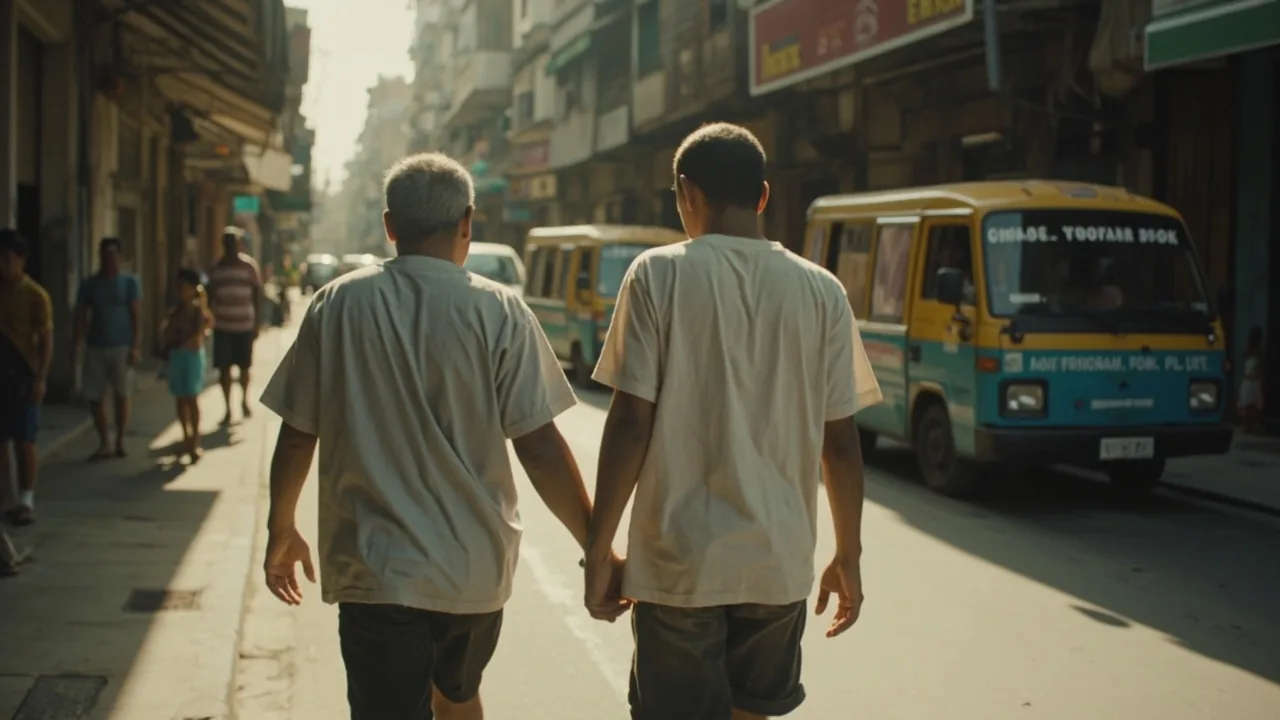
LGBTQ Travel Safety in the Philippines (2026): Laws, Acceptance & Real Safety Tips
LGBTQ travel safety in the Philippines is genuinely one of the more specific questions an Indian traveller can Google before booking a flight. The country has no anti-sodomy law, public Pride marches happen in major cities every June, and you will see openly queer couples holding hands in malls in Quezon City without anyone blinking. At the same time, there is no same-sex marriage, no civil union law, and the Catholic Church plus a vocal evangelical minority shape public discourse in ways that can swing from welcoming to hostile depending on the street you are standing on. Cross-checked on 2026-07-17 against the official Philippine Commission on Human Rights (CHR) pages, the DFA consular advisory site, and recent traveller feedback from Manila, Cebu, and Siargao. For related planning, see our guide on Sea Backpacking Hub.
If you are an Indian couple (a solo queer traveller) weighing the Philippines against Thailand or Vietnam, this guide walks through the actual legal landscape, the regional acceptance picture, where you can relax and where to keep your guard up, and the practical safety steps that turn a good trip into a great one. You may also find What to Do When Travelling to Philippines useful for this trip.
Quick Answers
| What | Answer |
|---|---|
| Is same-sex marriage legal? | No. Civil unions and full marriage remain unrecognised in 2026. |
| Are there anti-LGBTQ laws? | No nationwide criminalisation; local SOGIE ordinances exist in many cities. |
| Is Manila safe for LGBTQ travellers? | Generally yes, especially in Quezon City (Cubao, Tomas Morato). |
| Can Indians enter visa-free? | Yes, 30 days visa-free, extendable at a BI office. |
| Is public affection safe? | Depends on the city: fine in Manila and Cebu City, avoid in rural Mindanao. |
Verified across the CHR position papers, DFA consular advisories, and traveller reports from June 2026. See also: Philippines Scooter Motorbike Rental Safety Tips Indian Backpackers.
The Real Risks (What to Worry About)
Ranking by likelihood, not by sensationalism, for an Indian LGBTQ traveller or couple moving through the Philippines in 2026: For related planning, see our guide on Vegetarian Indian Food Philippines Allergies Safety Guide.
| Risk | Likelihood | Impact | How to Avoid |
|---|---|---|---|
| Verbal harassment in conservative or rural areas | Moderate | Low (uncomfortable, rarely escalates) | Stick to Metro Manila, Cebu City, Boracay, Siargao, Baguio for visible affection. |
| Refusal of service (e.g. Hotel turning away a same-sex couple) | Low | Medium | Book through established platforms (Agoda, Booking.com) where the property cannot discriminate without losing listings. |
| Police harassment at a checkpoint | Low | Medium | Carry your passport and a printed visa-free entry stamp (you get 30 days at arrival). |
| Physical violence | Low (rare for foreigners in tourist zones) | Severe | Avoid known anti-LGBTQ protests and religious rallies; trust your instinct and leave. |
| Online exposure (local apps, social media) | Low | Medium | Use a burner Grindr/Blued if you want privacy; never share your room number with strangers you met online. |
| Customs / entry refusal for “non-traditional” travellers | Low | Severe | Keep your documents tidy; the Philippines does not single out queer travellers at immigration, but a calm, polite greeting carries you through any line. |
The pattern is what you would expect for any minority traveller anywhere: cities are mostly fine, conservative towns require a degree of discretion, and outright physical violence against foreigners is exceptionally rare. The biggest day-to-day “risk” is friction, not danger. You may also find Philippines Street Food Safety Indian Travelers useful for this trip.
The Legal Landscape in 2026, In Plain English
The Philippines is a rare case: the legal picture is friendlier than the headlines suggest, and worse than the Pride photos imply.
- No nationwide criminalisation. Unlike Section 377-era India before 2018, the Philippines never had a colonial-era sodomy law on the books. Private, consensual same-sex activity between adults is legal in all of the country.
- No marriage, no civil union. The Family Code defines marriage as between a man and a woman. Several bills (the most prominent is the Sexual Orientation and Gender Identity and Expression Equality Bill, often called the SOGIE Equality Bill) have been filed across multiple Congresses. As of 2026, none has passed into law. Local civil partnerships exist in a handful of cities (Mandaluyong, Angeles, Bacolod, Cebu City, Iloilo, Marikina, San Juan, and a few others via their own anti-discrimination ordinances) but they are piecemeal and not interchangeable with national marriage.
- SOGIE ordinances protect you in some cities. Quezon City, the biggest local sponsor, has had a full ordinance since 2003, and more than 30 cities and provinces have similar protections. Travellers benefit because discrimination in covered establishments is a punishable offence locally.
- Religious and political pushback persists. The Catholic Bishops’ Conference of the Philippines (CBCP) and the more evangelical bloc in Congress regularly oppose SOGIE legislation. Public discourse can get loud, especially around election cycles. That is noise from Manila cable news, not something that follows tourists around Cebu City.
Net effect for LGBTQ travel safety in the Philippines: the legal floor is decent (no criminalisation, growing local anti-discrimination coverage), but the legal ceiling (marriage) is still flat. Use the SOGIE-protected cities as your base, and treat the rest of the country like a friendly uncle’s house: warm, but don’t smooch on the couch.
City-by-City Acceptance Map
Acceptance is not uniform across the 7,000+ islands. Here is what to expect:
Metro Manila (and especially Quezon City). This is the safest mental geography for an LGBTQ traveller in the Philippines. Quezon City’s “Tomas Morato” entertainment strip is the de facto queer district, with openly gay bars, drag shows, and clubs. Cubao has the older, dive-bar feel. Even outside these hubs, holding hands in a Mall of Asia hallway or a Robinsons Galleria corridor will not raise a single eyebrow. Manila remains heavily Catholic, but the capital treats queerness as a familiar feature of everyday life.
Cebu City. Solidly welcoming, second only to Manila for queer visibility. There is an annual Pride march in June, gay-friendly bars and clubs in the uptown area, and a vocal LGBTQ community you will see on the dating apps. Cebu accepts queer couples in mid-range hotels without friction. Avoid over-the-top displays in the smaller satellite islands served by Cebu (Bantayan, Camotes, Malapascua) where conservatism rises sharply.
Boracay. Long-established gay-friendly beach destination. Hotels and beach clubs are used to same-sex couples. Public affection on the beach is widely tolerated.
Siargao. Surf-and-yoga island with a strong backpacker, mostly international crowd. Acceptance mirrors Boracay’s. Avoid overt displays in General Luna proper after dark, just to be polite.
Baguio City. The “summer capital” up in the Cordillera. Holds an annual Pride march. Student-heavy, liberal, but still set inside a conservative region; public displays attract less attention than you would fear.
Davao City and most of Mindanao (Marawi, Cotabato). Conservative Christian and Muslim-majority regions. Verbal harassment is more likely for obvious same-sex couples. Bisexual or trans travellers are particularly visible to read. Skip these if you and your partner want to be relaxed; come for the durian, not for the dating scene.
Siquijor (where Hill-Top Cuisine sits). Safe, quiet, mostly a backpacker and mysticism crowd. Avoid flamboyant public displays here too. Locals are friendly to foreign tourists regardless of orientation, but the island is small and gossip travels fast.
Where to Stay: Safe-Neighbourhood Picks for LGBTQ Travellers
Accommodation is rarely the friction point in the Philippines, but a few neighbourhoods make the trip effortless:
- Quezon City (Cubao, Tomas Morato, Timog Avenue areas): Right by the gay nightlife, surrounded by malls and food courts, on the MRT line. Cuban-style gay-friendly area? Filipino-style instead: a dozen queer bars within a 10-minute walk.
- Makati (Poblacion, Salcedo Village, Ayala CBD): Manila’s business and weekend-district core, modern, dense, squeaky-clean, indifferent to your orientation. Best for first-time visitors who want comfort without nightlife.
- Cebu City (IT Park, Lahug, Mabolo): Central, expat-heavy, lots of mid-range international chains that already train staff on diversity.
- Boracay (Station 2, Bulabog area): Mid-island, walking distance to the beach and to the gay-friendly bars.
- Siargao (General Luna Cloud 9, Pacifico): Near the surf break, mixed crowd, easy to blend in.
For dining: Kantina Manila in Manila and Leandro’s Bistro in Cebu cover the local-food craving, with signature sisig, adobo and the rest. For homesick palates or strict-veg Indian plates, Biryanista, Seven Mannah Indian Fusion Food (around 300 to 500 PHP per person, with reviewers praising the chicken biryani), and Agni - By Mantra hold down the North Indian / Hyderabadi spots. Traveller note: Filipino kitchens are forgiving about spice level, so ask for “less spicy” rather than the default “extra spicy” if you cannot handle heat.
Prevention and Preparation for LGBTQ Indian Travellers
Most of the work is psychological and administrative, not medical.
- Documents. Carry your passport, a printed copy of your 30-day visa-free entry stamp, your hotel booking, and your return ticket. Indians travel visa-free for 30 days, extendable at a Bureau of Immigration office for PHP 3,030 per month. Set a phone reminder for day 28.
- Travel insurance. A standard policy covers medical evacuation and trip interruption the same way it would for any traveller. Single-room hospital admission for any condition in the Philippines is typically in the PHP 25,000 to PHP 80,000 range, so a policy matters here. Get SafetyWing travel insurance covers Indian travellers from ~$62/month (~₹5,900). It includes COVID, trip interruption, and medical evacuation across Southeast Asia, and treats pre-existing conditions more fairly than most.
- Digital copies of everything. Save a scan of your passport, visa stamp, insurance policy, and emergency contacts in WhatsApp’s “Starred Messages,” a Google Drive folder, and a password-protected email draft. If your passport goes missing, you will skip 80% of the BI office queue.
- Pack a small “rainbow kit.” A discreet rainbow pin, a phone wallet with your ID, a burnable email account for bookings under a different name if you share a room with a partner and want plausible deniability at the front desk. This is overkill for 95% of trips, but only if you pack it.
- Vaccines and prep. Standard Southeast Asia list: Hep A/B, typhoid, JE if you are heading to rural Luzon, and a COVID booster if your last one is over 9 months old. Keep dengue in mind (no vaccine for travellers in 2026, but DEET 30%+ repellent during the day is the rule). PEP for rabies if you are going near the bat-inhabited caves of Siquijor or the monkeys of Bohol.
- Money. Quezon City and Makati ATMs are safe and frequent; rural ATMs less so. Carry PHP 5,000 to PHP 10,000 in cash (always in a money belt) for areas without cards.
- Phone and data. Globe or Smart SIM at the airport, around PHP 40-100 for a tourist SIM with data, or pick up an eSIM before you fly. Either way, working data is the fastest way to call for help or pull up an embassy number. One Nomad eSIM option that ships to India before you leave: Get Nomad eSIM covers the Philippines well for short trips.
City-by-City Scams and Gotchas Relevant to LGBTQ Travellers
The Philippines has the standard Southeast Asia scam playbook with a queer twist on one or two items.
- Manila: the “undercover agent” extortion. Someone approaches you in a mall or bar (often in male-only spaces), gets friendly, and then a “police officer” appears demanding a “fine” for whatever they have just done. This scam targets local men as well, so any bar bathroom in the city (whether the bar is gay or straight) carries a small risk. Rule: walk away, find a security guard in a brightly lit area, never settle on the street.
- Manila and Cebu: the bogus dating app meetup. Scammers on Grindr/Blued/Tinder will lure you to a quiet bar, inflate a bill, or worse. Always meet first-time dates in public, in a known gay-friendly establishment in Tomas Morato, Timog Avenue, or Lahug.
- Boracay: beach vendors and “room rental” hustlers. Less queer-specific, but a same-sex couple can be pressured with extra charges by an unofficial room tout. Always book your room online before you arrive.
- Cebu and Manila taxis refusing the meter. Use Grab for fixed fares (typical Manila Grab rides run 100 to 300 PHP, around 7-21 km cross-city). Uber is folded into Grab in the Philippines, so you only need one app.
- Provincial bus terminals: “companion” taxi touts. In terminal areas outside the major cities, touts will put you in a non-metered car. Insist on Grab, on the official airport taxi, or on a jeepney (within the city, expect 9 to 20 PHP per ride).
- Spa and massage parlour pricing. Real spas quote the rate first and stick to it. If a “spa” in a known cruising area offers services that are off-menu, leave. LGBTQ travellers have been caught in police raids that targeted the venue, not the customer, but the experience is degrading either way.
What to Do If It Happens
- You encounter verbal harassment on the street. Walk into the nearest mall, hotel lobby, or 7-Eleven. Filipino malls and convenience stores are everywhere in cities and staff are trained to defuse things. Note the time, location, and any description that helps the police.
- Hotel refuses to honour a same-sex couple booking. Pull up your Booking.com or Agoda confirmation on your phone, show the front desk that the platform will cancel and refund on discrimination grounds. Most properties fold immediately. If they don’t, walk out and book across the street.
- You are detained or questioned at a checkpoint. Stay calm. Hand over your passport. Do not joke, do not film, do not argue; ask politely to call your embassy. Emergency numbers: National Emergency 911 (works from any phone in the Philippines, even without a SIM). Tourist Police Hotline: +63 2 8524-1660. Philippine National Police: 117. Indian Embassy in Manila: +63 2 8334-6940 / [email protected].
- Your passport is stolen. File a police report at the nearest barangay hall (the smallest administrative unit) first, then get a replacement travel document from the Indian Embassy (8th floor, GBC Building, Makati). Cash and passport photos are good to have on hand. Average processing time: 1 to 3 working days.
- Severe food poisoning. Head to the nearest mall clinic (any Robinsons or SM mall has one with English-speaking staff). Standard rehydration salts (Hydrite, Gatorade) and a short course of ciprofloxacin from the pharmacy will sort most cases. Skip street food in the first 24 hours of arrival until your stomach has acclimatised.
For your own quick reference, the Indian Embassy in Manila is your safest backstop for documentation emergencies; Siquijor and Siargao require a long land-and-boat return to Manila, so always do your embassy run early in the trip.
Indian-Specific Considerations
- Brands and equivalents. Paracetamol is Biogesic. ORS is Hydrite (buy plain Pedialyte). Pantocid (pantoprazole) is available under the same brand name in major pharmacies. Metrogyl (metronidazole) is Flagyl in Metro Manila pharmacies; bring a personal supply if you react badly.
- Clinic deposit and hospital admission costs. A typical outpatient clinic visit costs PHP 1,500 to PHP 3,000. A short ER admission with tests is in the PHP 8,000 to PHP 25,000 range. A single-room hospital admission for a moderate issue runs PHP 25,000 to PHP 80,000. Major surgery or ICU is far above this. Insurance pays off fast.
- Indian Embassy in the Philippines. 8th Floor, GBC Building, 150 Legaspi Street, Legaspi Village, Makati City, 1229. Phone: +63 2 8334-6940 / +63 917 506 1197 (for emergencies). Email: [email protected]. Working hours: 09:00 to 13:00 and 13:30 to 16:30, Monday to Friday.
- Conservative Indian family expectations. Many Indian travellers come out for the first time on a Southeast Asia trip, or travel with a partner they have not introduced to family. The Philippines is generally a safe space for that, but keep in mind that Grindr and similar apps surface a lot of activity in big cities; if discretion matters, your hotel Wi-Fi is safer than public networks.
- Cultural friction. Indian LGBTQ travellers report little friction with locals, but be aware that the Indian community in the Philippines is small and sometimes socially conservative. If you want privacy, lead with English rather than Hindi or Tamil in shared spaces like malls in Metro Manila.
Getting Connected
Working data is your fastest safety net. Buy a Globe or Smart tourist SIM at Manila Ninoy Aquino International Airport (PHP 40 to PHP 100 for a basic tourist SIM with data), or skip the queue and pick up an eSIM before you fly. Either option gets you on 4G/LTE in under 5 minutes and lets you call 911, pull up Grab, and message your embassy if anything goes sideways.
FAQ
Is the Philippines safe for LGBTQ couples from India? Yes in cities (Manila, Cebu, Boracay, Siargao, Baguio), with discretion in rural and Mindanao areas. The legal floor is friendly (no criminalisation, SOGIE ordinances in 30+ cities), and violent incidents are exceptionally rare for foreign travellers.
Are there anti-LGBTQ laws in the Philippines? No nationwide anti-sodomy or anti-LGBTQ laws. The risk is social, not legal, and most friction is verbal, not physical.
What is the safest city for LGBTQ travellers? Quezon City in Metro Manila. Tomas Morato is the de facto gay district, SOGIE ordinances are old and enforced, and the worst you will encounter is an awkward stare in a Catholic procession.
Will my same-sex booking be honoured at hotels in the Philippines? Major international chains on Booking.com and Agoda almost always. Guest houses in rural areas are riskier; book online for refund protection if anything goes wrong.
Can same-sex couples adopt or have parental rights in 2026? No. Without marriage or civil union at the national level, parental and adoption rights remain tied to individual city ordinances and case-by-case rulings.
Is there a Pride march in 2026? Yes. Metro Manila Pride, Cebu Pride, and Baguio Pride all happen in June. Participation by foreign tourists is welcome and common.
Will I be denied entry at Manila airport for being LGBTQ? No. The Bureau of Immigration does not single out queer travellers; the standard 30-day visa-free entry stamp for Indian passport holders is granted normally. Always have your onward ticket and a hotel booking to make the line move fast.
Subodh’s Take
The honest framing for LGBTQ travel safety in the Philippines is this: the country is friendlier than its reputation, less uniform than its Pride photos, and far safer for tourists than for locals. If you travel the same way you would in Bangkok or Hanoi, namely keep your public displays proportionate to the city you are in, book through mainstream platforms, and keep your documents digital, you will almost have a trip with no friction at all. Save your worry budget for scooters, dengue, and typhoon season, which are the same risks every traveller in the Philippines faces.
