Jain Food Guide for Backpackers: Complete Vegetarian Rules, Allowed and Avoided Foods (India and SE Asia)
This jain food list covers the strictest mainstream vegetarian diet in India. Short version: no onion, no garlic, no root vegetables, no mushrooms, no ginger on most days, no eating after sunset, and no food stored overnight. Everything else is mostly fine.
What Is Jain Food?
Jain food is a vegetarian and often vegan diet rooted in the Jain principle of ahimsa (non-violence toward all living beings). The rules go further than lacto-vegetarianism: they exclude underground vegetables because pulling them up kills the plant and harms small organisms in the soil, exclude fungi because mushrooms grow on decaying matter, and often restrict eating after sunset to avoid accidentally swallowing insects attracted to lamps. The goal is to eat in a way that harms the fewest living things.
Quick Answers
| What | Answer | Price (INR) |
|---|---|---|
| Onion and garlic | Avoided (called “tamasic” or root-family offenders) | — |
| Root vegetables | Avoided (potato, carrot, beet, radish, onion, garlic, ginger in stricter versions) | — |
| Mushrooms | Avoided (grow on decaying matter, classified as “tamasic”) | — |
| Dairy | Allowed (milk, ghee, curd, paneer, butter) | — |
| Eggs | Avoided (most Jains are vegetarian; some are vegan) | — |
| Honey | Avoided by stricter Jains (harms bees) | — |
| Eating after sunset | Avoided in stricter households and during Paryushan | — |
| Fermented foods | Avoided during Paryushan | — |
| Green leafy vegetables | Allowed but avoided on certain Paryushan days | — |
| Honey, figs, dates, plums, grapes, peanuts, sesame | Avoided (believed to host micro-organisms) | — |
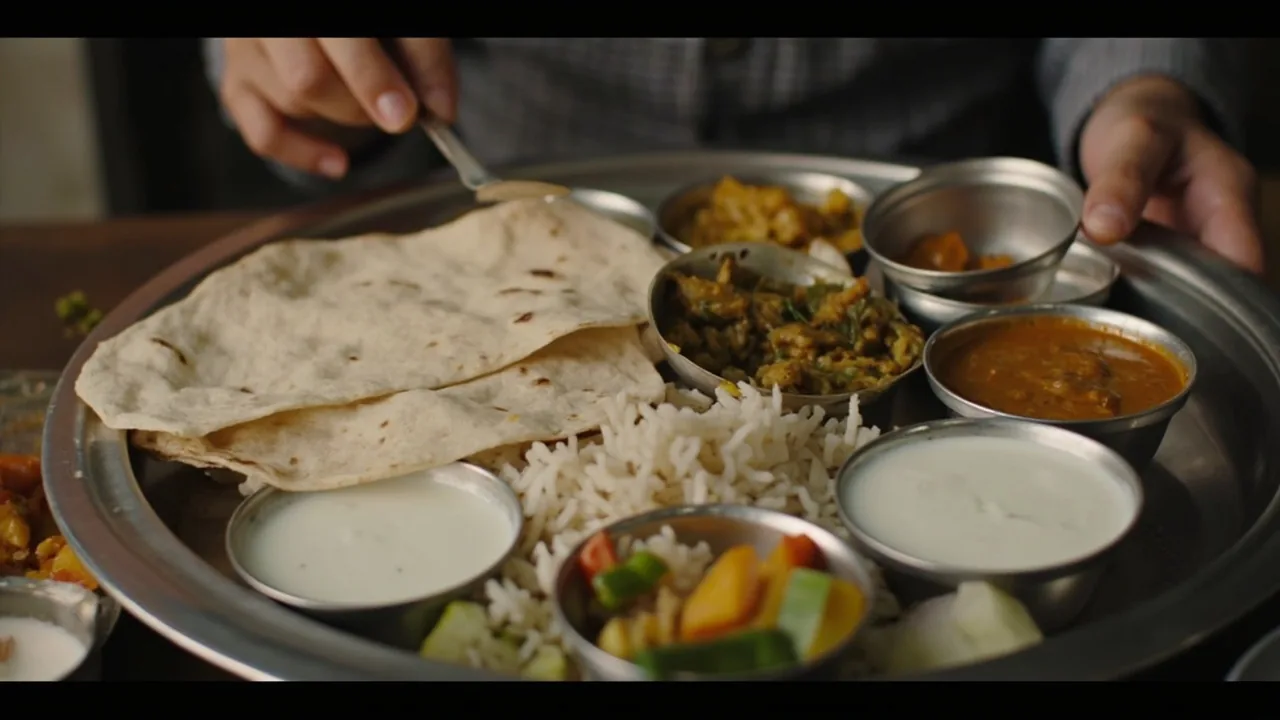
| Typical Jain thali (North India) | ₹200-₹350 (~$2.07-$3.63) | 200-350 |
| Typical Jain thali (SE Asia, Indian-run restaurant) | ₹1,005-₹1,723 (~350-600 THB or ~$10.43-$17.87) | 1005-1723 |
| Air-fried potato alternatives abroad | Rare; rely on rice, roti, khichdi, dal-rice, sabudana, fruits | — |
The Core Rules in Plain Language
Six rules cover about 90% of what you need to know on the road.
- No onion, no garlic. This is the rule people notice first because it removes two ingredients from almost every Indian restaurant menu. Look for “no onion no garlic” labels (often abbreviated “NONOG” or “Jain” on menu boards and Swiggy/Zomato filters).
- No root and underground vegetables. Potato, carrot, beet, radish, sweet potato, yam, arbi (taro), onion, garlic, ginger (in stricter versions). This single rule eliminates most of what a standard Indian thali is built around.
- No mushrooms and no fungus-based ferments. Mushrooms, yeast-extract products, and fermented soy sauces contain fungal life or are produced with microbial action.
- No eating after sunset, no food stored overnight. Called “Ahar Prasansk” or “Ratri Bhojan Nishedh.” Some Jains also avoid eating before sunrise.
- No honey, no figs, no urad dal (in stricter households), no certain fruits. Items believed to host many micro-organisms when stored.
- Filtered or boiled water only. Unfiltered water is assumed to contain micro-organisms; many Jains carry a cloth filter or boil water before drinking.
These rules apply year-round for practising Jains. During Paryushan and other fasts, additional layers get added (see below).
What You Can Eat: The Allowed List
Here is what a typical Jain traveller can eat across most meals.
Grains and flours
- Rice (white, brown, hand-pounded)
- Wheat, wheat flour (atta), maida
- Semolina (rava/suji)
- Bajra, jowar, ragi, maize flour
- Poha (flattened rice)
- Sabudana (sago/tapioca pearls)
- Sago and sago-based khichdi
- Sevaiya (vermicelli)
- Daliya (broken wheat porridge)
- Rice flakes (chiwda)
Dairy
- Milk (cow, buffalo)
- Curd / dahi / yogurt
- Paneer (cottage cheese)
- Ghee (clarified butter)
- Butter
- Buttermilk (chaas)
- Khoya / mawa (reduced milk solids, for sweets)
- Cheese (most plain varieties)
Lentils and beans
- Toor/arhar dal
- Moong dal (yellow and green)
- Chana dal
- Masoor dal
- Moth beans (matki)
- Green moong whole
- Rajma (kidney beans) in many households (strict Jains avoid because it’s a “ground-growing” bean, similar to sprouts which are also often avoided)
- Sprouts in general are sometimes avoided because they look like new life
Vegetables (above-ground only)
- Bottle gourd (lauki/dudhi)
- Ridge gourd (turai)
- Bitter gourd (karela)
- Snake gourd (padwal)
- Ash gourd (petha)
- Pumpkin (kaddu)
- Cucumber
- Tomato (technically a fruit; widely accepted in Jain cooking)
- Capsicum / bell pepper
- Cabbage
- Cauliflower (sometimes avoided because of insects; check with the household)
- Broccoli
- Okra / bhindi
- French beans
- Cluster beans (guar)
- Drumstick (moringa pods)
- Zucchini
- Spinach and leafy greens (palak, methi, dhania leaves, mint)
Fruits (most of them)
- Banana, apple, papaya, mango, pomegranate, chikoo, guava, pear, watermelon, muskmelon, kiwi, pineapple, orange, sweet lime (mosambi), custard apple, lychee, dragon fruit, coconut (water and flesh)
- Avoided by stricter Jains: figs, dates, plums, grapes (because of fermenting and micro-organisms), and any fruit that has fallen on the ground (considered contaminated)
Nuts and seeds
- Almonds (soaked and peeled is preferred)
- Cashews
- Walnuts
- Pistachios
- Raisins (some avoid)
- Sesame seeds (til) and til-based sweets
- Peanuts (some avoid because of soil-contact when growing)
- Flax seeds, chia seeds, sunflower seeds, pumpkin seeds
Spices and seasonings (no onion/garlic base)
- Cumin (jeera)
- Coriander powder and fresh coriander leaves
- Turmeric (haldi)
- Red chilli powder (in moderation)
- Asafoetida (hing) as a substitute for onion/garlic flavour (this is the cheat code of Jain cooking)
- Garam masala
- Cardamom, clove, cinnamon, black pepper
- Curry leaves
- Fennel (saunf), fenugreek (methi)
- Mustard seeds
- Saffron (kesar)
- Rock salt (sendha namak) preferred during fasts over regular salt
- Tamarind (in moderation)
Oils and fats
- Groundnut oil
- Sunflower oil
- Sesame oil
- Coconut oil
- Cow ghee (most preferred)
- Olive oil
Sweets and snacks
- Jalebi (no yeast, sugar syrup version)
- Ladoo (besan, rava, moong dal)
- Barfi (kaju katli, coconut barfi, mawa barfi)
- Halwa (sooji, moong dal, atta)
- Khichdi
- Thepla (no onion/garlic)
- Handvo
- Sabudana khichdi / vada
- Makhana (fox nuts) roasted
- Khakhra
- Samosa (made with sabudana or wheat, not potato)
What You Avoid: The Avoided List
| Category | Avoided Items |
|---|---|
| Underground vegetables | Potato, sweet potato, carrot, beet, radish (mooli), onion, garlic, ginger (in strict versions), arbi (taro), yam, kachalu |
| Fungus and ferments | Mushrooms, truffles, yeast extracts (Marmite/Vegemite), regular soy sauce, vinegar (some allow synthetic vinegar) |
| Animal products | Eggs, meat, fish, gelatin, animal-derived rennet in cheese (most Indian paneer is vegetarian-safe) |
| Sweeteners | Honey (in strict households) |
| Stimulants | Alcohol (no Indian Jain consumes alcohol; some sources also flag coffee in stricter households because of fermentation in processing) |
| High-microbe fruits | Figs, dates, plums, grapes (in stricter households) |
| Cooking style | Deep-fried with reused oil, food cooked the previous day and reheated (Basi khana, avoided by some) |
| Time | Food stored overnight, food eaten after sunset |
Subodh’s Pro Tip: When in doubt at an Indian restaurant, say “no onion, no garlic, no potato” as your one-line brief. That covers 95% of mistakes. If you’re stricter, also add “no mushroom, no ginger.”
Jain Food List for Dinner
The dinner question comes up most often because that’s when most eating-out happens. Here’s a practical dinner plate for a Jain traveller in India.
A typical Jain dinner plate
- 1 cup steamed rice OR 2 phulkas / rotis
- 1 katori dal (toor/moong, simple tadka with cumin, hing, tomato)
- 1 katori sabzi (lauki, turai, bhindi, karela, cabbage, capsicum, methi, or palak)
- Salad: cucumber + tomato + coriander (no onion)
- Buttermilk (chaas) or curd rice
- Sweet: a small piece of mawa barfi, kaju katli, or homemade shrikhand
- Drink: warm haldi milk or jeera water
Jain dinner in 15 minutes (hostel/kitchen)
- Moong dal khichdi (rice + moong dal + turmeric + ghee + cumin + salt) cooked in a pressure cooker or pot
- Lauki sabzi (bottle gourd + cumin + hing + tomato)
- Roti from store-bought atta
- Curd from a tetra pack
Jain dinner at an Indian restaurant (what to order)
- Jeera rice OR plain rice
- Dal tadka (toor/moong, request no garlic; hing-based tadka)
- Sabzi: lauki, turai, bhindi, karela, cabbage, capsicum, methi, palak
- Roti / naan / kulcha
- Dahi raita (no onion)
- Dessert: moong dal halwa, kaju katli, gulab jamun (check for ghee, not vanaspati)
Jain dinner abroad (Thai/Vietnam/Laos/Cambodia)
- Plain steamed rice (khao suan / com trang)
- Stir-fried vegetables (pad pak ruam, request no garlic; most Thai cooks default to garlic, you have to ask)
- Plain tofu (tao hu / dau hu) with rice
- Curd/yogurt (where available; South Indian restaurant branches abroad carry curd rice)
- Fruit plate (banana, papaya, watermelon)
Backup: quick Jain meal in a hostel kitchen If no Indian restaurant is nearby, a simple khichdi works: moong dal + rice + turmeric + ghee + cumin + salt, plus lauki sabzi (bottle gourd + cumin + hing + tomato) and store-bought roti or curd from a tetra pack.
Jain Food List in Paryushan Parv
Paryushan (also spelled Paryushana or Paryushna) is the most important Jain fasting period, lasting 8 days for Shvetambar Jains and 10 days for Digambar Jains, usually in August or September. During this time, the rules tighten further.
Paryushan rules (typical, varies by sect and family)
- Only one or two meals per day, eaten before sunset
- No green leafy vegetables on certain days
- No fresh fruit on certain days
- No root vegetables (already standard)
- No fermented foods (idli, dosa batter, bread, yogurt in stricter versions)
- No honey
- Boiled/filtered water only
- Some households do “Bele Pakva” (cooked food once a day)
- Some do “Ektana” (one meal a day of one item)
- Some do “Upvas” (fasting with water only)
- Salt may be restricted (sendha namak or no salt at all on specific days)
- “Santhara” / “Sallekhana” is the ultimate vow of fasting unto death, taken only by terminal patients with full consent; do not confuse with normal Paryushan fasting
Paryushan food list (what you can eat)
- Plain boiled rice with ghee
- Moong dal (yellow) with salt and pepper
- Sabudana khichdi (sago, peanuts, ghee, sendha namak)
- Sweet potato is a root vegetable and avoided by most Jains, though some interpretations differ
- Fruits: banana, apple, papaya, pomegranate (no grapes, dates, figs)
- Milk and curd
- Roasted makhana (fox nuts)
- Coconut water
- Singoda (water chestnut) flour items (singhare ki puri, singhare ka halwa)
- Rajgira (amaranth) flour puris and ladoos
- Samak rice (barnyard millet) khichdi
- Khichdi with samak rice and moong dal
- Hand-churned buttermilk (no curd on certain days)
Subodh’s Pro Tip: If you’re travelling during Paryushan, plan your destinations around cities with a sizable Jain community (Mumbai, Ahmedabad, Jaipur, Udaipur, Indore, Bhopal, Kolhapur, Pune, Bengaluru, Chennai, Hyderabad). Multiple Indian restaurants in each of these cities serve a dedicated Jain thali even during Paryushan. Airports in these cities stock Jain meal options if you request at booking.
Common Mistakes Indians Make
-
Assuming “vegetarian” means Jain. A veg Jain traveller ordering “veg fried rice” in Bangkok gets garlic and soy sauce by default. “Veg” abroad ≠ “Jain.” You have to specify each restriction.
-
Trusting the “Jain” tag on Swiggy/Zomato blindly. Restaurant staff often don’t know what’s in the kitchen oil, or they use pre-made pastes that contain garlic. Order from places that explicitly print “no onion, no garlic” on the menu.
-
Confusing “vegan” with Jain abroad. A vegan pad thai may contain mushroom, fermented soy sauce, and msg. Neither is automatically Jain-safe.
-
Eating potato fries because they’re “just potato.” Standard Jain dietary rules treat potato as a root vegetable and avoid it. Some less-strict families eat potato; others don’t. Default to avoiding unless your specific tradition allows.
-
Not checking what’s in the oil or the “Jain ghee” served at sweet shops. Some shops use vanaspati (hydrogenated oil) for frying mithai, and many Jains avoid vanaspati. Ask before eating.
-
Booking flights without a Jain meal option. Most Indian-origin airlines (Air India, Vistara, IndiGo’s international routes) and major Gulf/Middle East carriers offer Jain meals, but you must request at least 24 hours before departure. SriLankan, Singapore Airlines, and Thai Airways also offer Jain meals on request.
What Most Guides Don’t Tell You
-
The “Jain thali” abroad isn’t always Jain. Many Indian restaurants abroad serve a “Jain thali” that has potato in it, because the cook translates “Jain” as “vegetarian without onion/garlic” and forgets the root-vegetable rule. Travellers report this across Bangkok, Hanoi, and Phnom Penh. Confirm with the staff member, ideally the owner, before ordering.
-
Cauliflower and broccoli get washed but not always checked. Strict Jain households avoid cauliflower and broccoli because insects hide inside the florets and a single missed insect violates ahimsa. Restaurants rarely check. If you’re strict, avoid these at restaurants and wash them thoroughly at home.
-
Yeast in bread abroad. Standard bread (pav, baguette, dinner rolls, pizza dough) uses yeast, which is a fungus. Some strict Jains avoid it. Alternatives: unleavened breads (roti, tortilla, matzo, rice paper), unleavened crackers, baked makhana, and sabudana wafers.
-
“No onion no garlic” Indian restaurants in Southeast Asia cluster in specific neighbourhoods. Sukhumvit/Asok area in Bangkok, Little India in Singapore and Kuala Lumpur, Pham Ngu Lao in Ho Chi Minh City, and Pub Street area in Siem Reap all have at least one Indian restaurant that does proper Jain. Most don’t advertise it; you ask.
-
Tap water abroad will quietly break the “boiled/filtered water” rule. Carry a LifeStraw or a kettle to your hotel/hostel. In SE Asia, even brushing teeth with bottled water is the conservative call.
-
Filter coffee and tea sometimes contain chicory or coffee essence. Some Jains avoid coffee for this reason; tea is usually fine. Green tea, herbal tea, and lemongrass tea are safe across SE Asia.
How to Eat Jain While Travelling in India and Southeast Asia
For a broader look at vegetarian eating across Southeast Asia, or to find the best vegetarian restaurants in major SE Asian cities, those guides cover non-Jain options too.
India (easy mode)
- Filter restaurants on Swiggy/Zomato: “Pure Veg” + “No Onion No Garlic” usually gives you a Jain option.
- Look for “Jain Tiffin” services in metros (Mumbai has dozens, “Jain Tiffin” is a search term that works).
- Most dharamshalas and Jain Bhavans (Mumbai’s Dadar, Delhi’s Chandni Chowk, Bengaluru’s Chikpet) serve vegetarian food that often follows Jain norms by default.
- Train pantry cars carry Jain meals on Rajdhani, Shatabdi, Vande Bharat, and Duronto if you book with the “Jain Meal” option.
Thailand
- Bangkok: Indian restaurant clusters in Sukhumvit/Asok and Silom areas have dedicated Jain-marked items or no-onion-no-garlic menus. See our vegetarian food in Thailand guide for city-by-city picks.
- Chiang Mai, Phuket, Krabi, Pai: One or two Indian restaurants per town, usually with a couple of Jain options. Check the Thailand vegetarian food prices for realistic meal costs.
- Street food: Generally not Jain-safe. Most Thai stir-fry uses garlic and oyster sauce (even the “veg” version has oyster sauce).
Vietnam
- Ho Chi Minh City: Indian restaurants in District 1 (Pham Ngu Lao area) serve rice + dal + sabzi; request no potato. See the vegetarian food in Vietnam guide for specific picks.
- Hanoi: Finding Jain food is harder than HCMC. Indian restaurants near the Old Quarter can prepare simple dal-rice on request.
- Street food: pho broth contains fish sauce; banh mi spreads contain fish sauce. Skip these for strict Jain.
Laos
- Luang Prabang and Vientiane have 2-3 Indian restaurants each. Confirm Jain preparation; otherwise carry sabudana, poha, and ready-to-eat Jain snacks from India.
Cambodia
- Phnom Penh and Siem Reap have Indian restaurants in the tourist zones. Cambodian restaurants with veg options exist but typically use fish sauce or garlic — not Jain-safe. Order plainly at Indian spots. Check the Cambodia travel essentials guide for food budget tips.
Malaysia, Singapore, Indonesia
- These have large Indian populations; Little India areas in Singapore, Brickfields in Kuala Lumpur, and Glodok/Jalan Petak Sembilan in Jakarta have multiple Jain-friendly options.
- Major Indian restaurant chains (South Indian thali-style) have branches across these countries with marked Jain items. Look for “Jain” or “no onion no garlic” on the menu.
FAQ
Can I order Jain food on flights from India? Yes. Most full-service carriers (Air India, Singapore Airlines, Thai Airways, Malaysia Airlines, Emirates, Qatar) offer Jain meals on request. Book at least 24-48 hours ahead. The meal arrives sealed and is prepared separately from the regular kitchen line.
Is paneer Jain? Yes. Paneer is made from cow or buffalo milk and is widely eaten by Jains. Most Indian-made paneer uses microbial rennet or citric acid, not animal rennet. Check the brand if you’re strict.
Are samosas Jain? Standard samosas are filled with potato and peas, so the potato is the issue. Many sweet shops make “sabudana samosa” or “dal samosa” versions specifically for Jain customers.
Can I eat at a Jain friend’s house without asking? You can, but the family appreciates you asking. Different Jain families observe different rules (some eat ginger, some don’t; some eat sprouts, some don’t; some eat figs, some don’t). The polite line is: “I follow the standard rules, no onion/garlic/root vegetables.”
Is coffee allowed in Jain food? Contested. Some families allow it, others don’t. Green tea and herbal teas are universally accepted.
Are packaged foods from chains like MTR, Haldiram’s, Bikaji, and Bikano Jain? Many are, but read the label. Look for the green dot (vegetarian) plus the “no onion no garlic” callout. Bisleri water, Tata Salt, Amul butter, most Patanjali products, and MDH kitchen king masala are safe.
Can I do Jain fasting on a long bus or train journey? Yes. Carry makhana, dates (if your tradition allows), roasted chana, sabudana wafers, fruit, tetra-pack milk, and water. Travellers report this works well on overnight trains.
— Subodh
