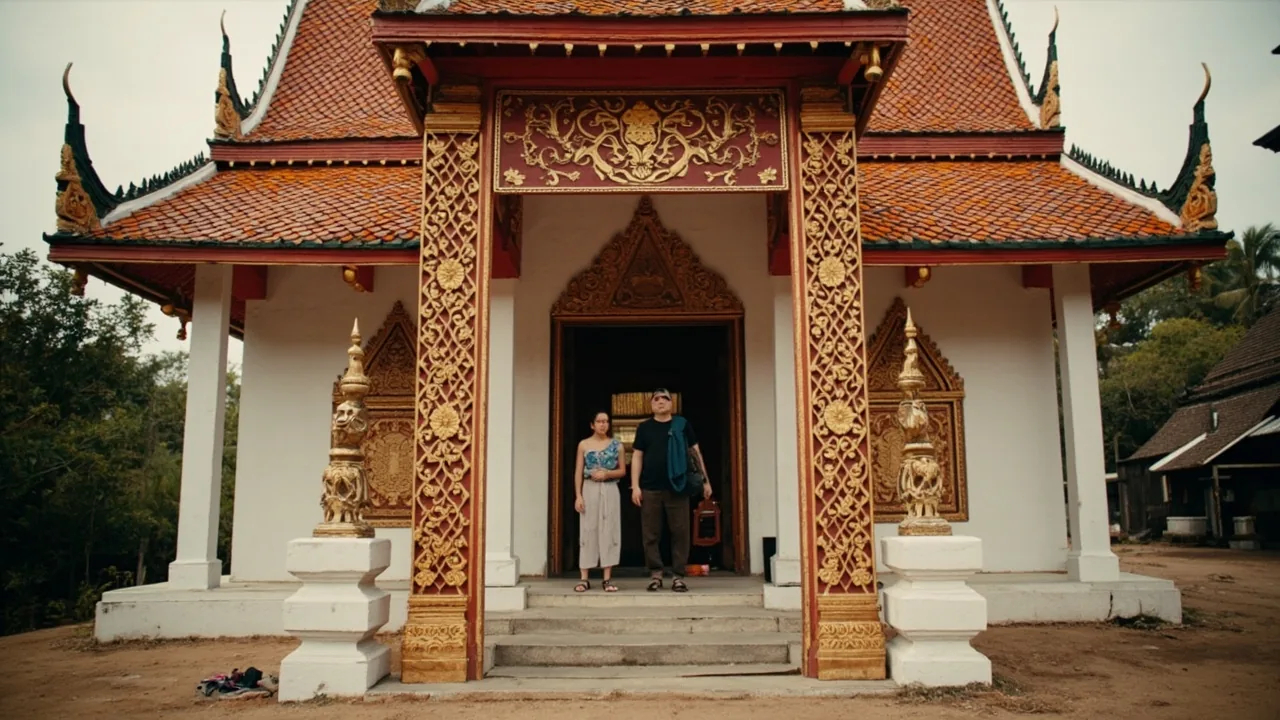
Koh Yao Noi Temple Etiquette: What to Know Before You Visit (2026)
Cover your shoulders and knees, remove your shoes at every entrance, never point your feet toward a Buddha image, and never turn your back to one. Koh Yao Noi’s shrines are small, quiet, and lived-in, so the etiquette is closer to “enter someone’s home respectfully” than to the strict dress enforcement at Bangkok’s Grand Palace or major tourist wats.
This guide covers the exact dress code, what to do when monks are present, where photography is and isn’t allowed, and which temples are worth the trip from the main pier. The rules below are cross-referenced with the Tourism Authority of Thailand’s published visitor guidance and standard Buddhist temple protocols observed across southern Thailand.
What is Koh Yao Noi?
Koh Yao Noi is a small Muslim-majority island in Phang Nga Bay, halfway between Phuket and Krabi. It sits next to its larger twin, Koh Yao Yai. The Thai word wat (วัด) refers to a Buddhist temple complex; on Koh Yao Noi, you’ll also find Chinese-style shrines, small village mosques, and spirit houses, and the etiquette differs at each.
Because the island is overwhelmingly Muslim, Buddhist temples here are fewer and more local than the tourist-heavy wats of Bangkok or Chiang Mai. That changes the etiquette in a specific way: visitors are welcomed, but low-key respect matters more than elaborate ritual. For a broader overview of backpacking across the region, see the Southeast Asia backpacking hub.
Subodh’s Pro Tip: The dress code below is enforced even at tiny roadside shrines. A sarong costs ₹431 (~150 THB or ~$4.47) at any 7-Eleven on the island and solves 90% of dress-code problems. Buy one on arrival, keep it in your daypack.
Quick Answers
| What | Answer | Price (INR) |
|---|---|---|
| Main temple to visit | Wat Koh Yao Noi | Free entry |
| Dress code | Shoulders covered, knees covered, shoes off | Sarong ₹431 (~150 THB or ~$4.47) at 7-Eleven |
| Photography | Allowed outside, usually forbidden inside the ordination hall | Free |
| Monk interaction rule | Women must never touch a monk or hand him anything directly | Free |
| Best time to visit | Early morning 7:00-9:00 AM, cooler and empty | Free |
| Foot direction | Never point feet toward Buddha image | Free |
| Monk blessing ceremonies | Sundays, early morning, donation ₹287-₹574 (~100-200 THB or ~$2.98-$5.96) appreciated | ₹287-₹574 (~100-200 THB or ~$2.98-$5.96) |
The Koh Yao Noi Dress Code: What to Wear, What to Skip
The rule is the same at every Thai Buddhist temple: cover your shoulders and your knees, no exceptions. For men this means a t-shirt (not a singlet) and long shorts or trousers. For women this means a t-shirt or blouse covering the shoulders and a skirt, trousers, or long shorts past the knee.
What works:
- A light linen shirt over a tank top (covers shoulders, breathes in the humidity)
- Long cotton trousers or capri pants
- A wrap sarong tied over shorts, both for men and women
- Closed-toe sandals or trainers you can slip off quickly
What gets you turned away at the gate:
- Sleeveless tops, tank tops, spaghetti straps
- Shorts above the knee (for both men and women)
- See-through fabrics, beachwear, bikinis
- Visible underwear, ripped jeans with knee holes
- Hats worn indoors (remove at the door)
Safety Alert: At the more touristed temples in Bangkok and Chiang Mai, vendors outside rent sarongs for ₹57-₹115 (~20-40 THB or ~$0.60-$1.19) deposit-returnable. Koh Yao Noi has no such rental setup, so bring your own or buy one on arrival. Wearing a temple sarong to the beach afterward is fine and common.
For shoes: you will remove them at every threshold. Slip-on sandals save time. Most temples have a shoe rack at the entrance, but the cleaner option is to carry a small cloth bag and put them inside. Don’t leave your trainers unattended on a rack with no other shoes, it reads as a tourist.
Step-by-Step: Entering a Koh Yao Noi Temple the Right Way
Step 1. Approach the complex from the side, not the main entrance. At most Thai wats, the main entrance is reserved for monks and senior visitors. Walk around to the side or back, find a smaller door, and enter there. Travellers report that this small detail alone signals respect.
Step 2. Remove your shoes at the first threshold. Look for other shoes piled outside or a rack. If neither exists, take your shoes off at the door. Don’t carry them into the inner hall.
Step 3. Lower your body below the Buddha images. When sitting inside the ordination hall (ubosot), sit with your legs tucked to one side, your feet pointing away from the Buddha. Never point the soles of your feet toward a Buddha image, a monk, or a person sitting in prayer. The feet are considered the lowest, dirtiest part of the body in Thai custom.
Step 4. Keep your head lower than the Buddha. Buddha images, even small ones on altars, are considered sacred. Don’t stand with your head above a Buddha image for a photo. If you need to pass behind an altar, crouch.
Step 5. Speak in a low voice or not at all. Koh Yao Noi’s temples are active places of worship, not museums. Locals come here to pray, not to be overheard by tourists. Phones on silent, no speakerphone, no group conversations inside the hall. If you’re new to shared-space etiquette, our hostel etiquette guide covers similar ground rules for budget accommodation.
Step 6. Walk around the ordination hall clockwise. This applies to stupa circuits and Buddha images. Counterclockwise is reserved for funeral rites. If unsure, watch what the locals are doing and follow.
Step 7. Make a donation if you take a photo. A small offering of ₹57-₹144 (~20-50 THB or ~$0.60-$1.49) in the donation box is the polite norm. Some inner halls explicitly forbid photography, look for signs or ask at the entrance. The flash on older cameras can damage murals, so turn it off anyway.
Step 8. Leave the way you came. Don’t shortcut through staff-only areas or monk quarters. Exit the same way you entered, again in the clockwise direction.
Monk Etiquette on Koh Yao Noi
Thai monks follow over 200 Vinaya rules, and several directly affect how laypeople interact with them. The most important ones for visitors:
Rule 1. Women must never touch a monk. Not even a handshake, not even to pass change. If a woman needs to give something to a monk, she places it on a cloth the monk holds, or hands it to a male intermediary. This is the single most broken rule by tourists in Thailand and it’s taken seriously.
Rule 2. Don’t sit higher than a monk. If a monk is sitting on the floor, you sit on the floor. If he’s on a chair, you take a lower chair. Don’t stand over a monk who’s seated while having a conversation.
Rule 3. Don’t pass in front of a monk who’s praying or eating. Especially during the morning alms round (binthabat) around 6:30-7:30 AM, monks walk single-file in silence. Step aside, let them pass, don’t photograph from the front (a side profile is the local norm).
Rule 4. Menstruating women are traditionally barred from touching a monk or entering certain inner spaces. This is one of the more debated rules in Thai Buddhism. Some temples enforce it strictly, others don’t. If you’re unsure, ask at the entrance. Most Koh Yao Noi temples won’t confront you directly, but older local women might give a pointed look.
Subodh’s Pro Tip: Buddhist temples on the island hold early morning alms rounds. If you want to observe, stand quietly to the side and don’t use flash. At small village temples, offering sticky rice or fruit directly is welcomed; at larger wats, donations go in the box, not in the bowl.
Koh Yao Noi Things to Do Around the Temples
Most Indian backpackers pair a temple visit with a half-day island loop. Here’s what fits the etiquette window:
Morning temple + beach combo
- 6:30 AM: Watch the alms round from a respectful distance
- 7:30-9:00 AM: Visit Wat Koh Yao Noi, donate ₹144 (~50 THB or ~$1.49), walk the grounds
- 9:30 AM: Head to a quiet beach on the east coast for a swim
- 1:00 PM: Lunch at Chacha Beach Café or another halal spot near the pier (most restaurants on the island are halal)
Sunset viewpoint finish Scooter to one of the island’s hilltop viewpoints for panoramic views of Phang Nga Bay. They require modest walking and often have small spirit houses at the top. Treat them like mini-temples: shoes off at the spirit house, don’t touch the offerings, a ₹57 (~20 THB or ~$0.60) coin is enough.
Combine with island-hopping Most visitors do Koh Yao Noi as a day trip from Phuket or Krabi or as a one-night stop on a Phang Nga Bay loop. If you’re planning a longer Thailand leg, the Thailand sleeper train is a budget-friendly way to cover ground between Bangkok and the south.
Where to Stay on Koh Yao Noi
Koh Yao Noi has few traditional backpacker hostels; the island’s accommodation leans toward mid-range resorts and small family-run guesthouses. Options like Hideout Hostel offer dorm beds for budget travellers, though availability is limited compared to bigger islands. For Indian backpackers on a budget, the typical move is a guesthouse dorm-style room or a budget bungalow, which often costs the same as a hostel bed in mainland Thailand. If you’re used to the hostel scene in Krabi or Phuket, expect fewer options but similar prices for dorms when available.
Budget bungalows start around ₹1,436-₹2,297 (~500-800 THB or ~$14.89-$23.83) per night with a fan and shared bathroom. Mid-range resorts with air-con and pool run ₹4,307-₹8,614 (~1,500-3,000 THB or ~$44.68-$89.36). The cluster of guesthouses around Tha Khao Beach and Loh Paret Bay has the most options within walking distance of the pier. Bookings through the usual OTA channels work fine; the island doesn’t have a hostel-style booking scene like Krabi or Koh Phangan. Availability is generally tight in December-February and easier March-October, and most places accept walk-ins outside peak season.
Common Mistakes Indians Make at Thai Temples
Mistake 1. Wearing a sleeveless kurta thinking it’s modest enough. In India, a sleeveless kurta over a churidar reads as covered. In a Thai temple hall it reads as sleeveless. The Thai rule is purely about shoulder coverage, fabric type doesn’t matter. A loose linen shirt over a sleeveless kurta fixes this in two seconds.
Mistake 2. Group selfies in front of the Buddha. The flash damages murals, the pose looks casual in a sacred space, and Thai monks actively dislike it. Photos outside, single-person or small-group shots inside, no flash, no peace signs.
Mistake 3. Bringing food or drink inside. Even water bottles. Eat outside. Gum, sweets, drinks all stay outside the threshold.
Mistake 4. Sitting cross-legged in the ordination hall. Cross-legged sitting points your feet outward, possibly toward a Buddha. The Thai-correct posture is the mermaid pose: legs tucked to one side, feet pointing behind you.
Mistake 5. Bargaining with a monk over a blessing. Some monks offer blessing ceremonies with a red cotton string bracelet. A donation of ₹287-₹574 (~100-200 THB or ~$2.98-$5.96) is the polite amount. Negotiating it down is genuinely offensive. If you’re on a tight budget, skip the blessing rather than haggle over it.
What Most Guides Don’t Tell You
Edge case 1. The Chinese shrine rules are different. Koh Yao Noi has several Chinese-Thai shrines, often red and gold, dedicated to Mazu or local guardian spirits. The etiquette here is closer to a Taoist shrine: incense, bowing, sometimes joss paper burning. You don’t need to remove your shoes at Chinese shrines the way you do at Buddhist wats. Ask the caretaker if unsure.
Edge case 2. Friday prayers at the village mosques. The Muslim-majority population prays on Fridays around noon. If you’re staying near a mosque and the call to prayer starts, don’t photograph the worshippers. Doing so is considered disrespectful and you may be asked to stop. The dress code for non-Muslims entering a mosque is stricter: covered ankles, covered hair for women, no shorts at all for men.
Edge case 3. The temple cats and dogs. Temple grounds often have resident cats, sometimes dogs. They are fed by the monks and considered part of the community. Don’t chase them, don’t feed them from your snack, don’t pick them up near the ordination hall. Monks sometimes shoo them out before prayers, which is also a signal for visitors to keep their distance.
Getting Connected on Koh Yao Noi
AIS and TrueMove have decent 4G coverage on the island, weak in the interior hills. A local SIM from either carrier works at the Tha Khao pier shops, around ₹859 (~299 THB or ~$8.91) for 7 days with 15 GB. If you’d rather skip the kiosk, the Nomad eSIM gives you data on landing in Phuket and works the moment you step off the ferry, no Thai address needed for registration.
Koh Yao Yai Tips (If You’re Crossing Over)
Koh Yao Yai is the larger, less-developed twin. The ferry between the two islands runs roughly every two hours, ₹287 (~100 THB or ~$2.98), 30 minutes. Temple etiquette is identical. The main thing on Yao Yai is that scooters are easier to rent, beaches are emptier, and there’s almost no evening food scene, eat on Yao Noi before crossing back. For transport details, see the Koh Yao Noi getting around guide.
For sightseeing on the larger island, ask locals at the pier for current scooter-friendly spots, the recommendations shift with the season.
Safety Notes for Indian Travellers
Koh Yao Noi is one of the safer islands in Thailand for solo Indian travellers, including women. Theft is rare. The bigger practical risks are scooter accidents on the hilly interior roads, sunstroke (limited shade), and dehydration. For broader safety tips across the region, see the solo female travel in Southeast Asia guide.
Safety Alert: Before any international trip, check the current Thai travel advisory on the Ministry of External Affairs website at mea.gov.in. Thai government advisories and local news outlets (Bangkok Post, The Thaiger) publish up-to-date information on weather, transport strikes, and political situations that don’t always make it into backpacker forums.
The single most useful safety item is travel insurance. Hospital costs in Phuket for a scooter accident can hit ₹143,575-₹287,150 (~50,000-100,000 THB or ~$1,489.31-$2,978.62) without coverage, and most Indian travel insurance plans don’t cover scooter riding over 125cc by default. Read the policy carefully.
FAQ
Do I need a visa to visit Koh Yao Noi from India? Thailand’s visa-free entry for Indian passport holders (60 days, extendable) covers island trips in 2026. Check the Thai MFA site before booking flights, the rules have changed three times since 2023.
Can I enter a Thai temple on my period? The traditional rule bars menstruating women from touching a monk or entering the inner ordination hall. Most Koh Yao Noi temples won’t confront you, but if you see a sign at the entrance, respect it.
Are Koh Yao Noi temples free? Yes. All Buddhist wats on the island are free to enter. Donations of ₹57-₹144 (~20-50 THB or ~$0.60-$1.49) are appreciated for photography, while blessing ceremonies typically involve a donation of ₹287-₹574 (~100-200 THB or ~$2.98-$5.96).
Is photography allowed inside the ordination hall? Usually not, and flash photography is forbidden even in outer areas. Ask at the entrance. Outside temple grounds, photography is unrestricted.
What’s the best month to visit Koh Yao Noi? November to February. The Andaman Sea is calm, the rains have stopped, and the temples see fewer tourists than Phuket’s main shrines.
Should I tip the monk after a blessing? A donation of ₹287-₹574 (~100-200 THB or ~$2.98-$5.96) in the offering box is the polite norm. If a monk places a sacred thread on your wrist and recites a Pali chant, that’s a blessing, and yes, a small donation is appropriate.
Can I take my shoes off in a Thai temple if I’m not entering? Yes, this is the right move at any threshold, even if you’re just stepping into the outer courtyard. If there’s a row of shoes outside, take yours off too.