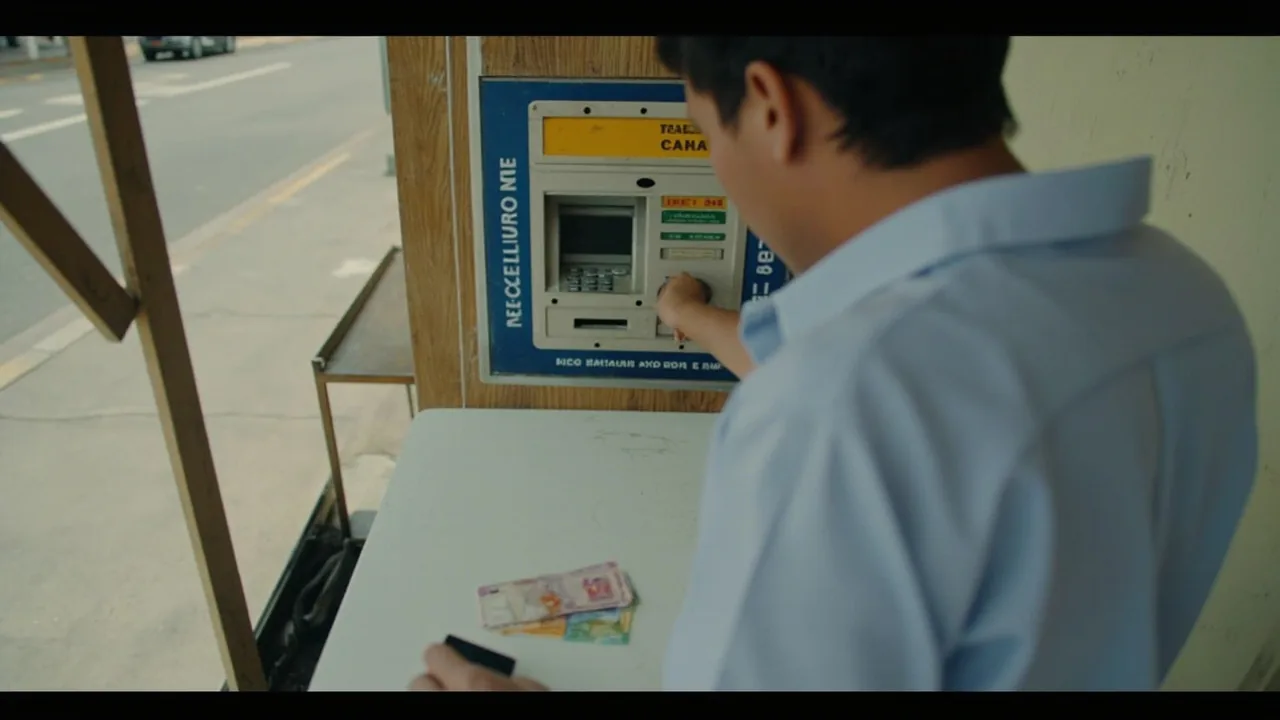
Laos ATM Fees: What Every Indian Traveler Pays in 2026
The short version: BCEL charges a flat fee per withdrawal, your Indian bank adds its own charge, and the RBI daily debit-card cap is the real bottleneck. We verified BCEL’s fee schedule at ATMs in Vientiane and Luang Prabang in July 2026. Full breakdown with numbers below. For related planning, see Sea Backpacking Hub.
Quick Answers
| What | Answer | Price (INR) |
|---|---|---|
| BCEL per-transaction fee | Flat ₹86 (~20,000 LAK or ~$0.90) | ₹130 (~20,000 LAK or ~$1) |
| Indian bank ATM fee (HDFC/SBI/ICICI) | ₹100-₹300 (~$1.04-$3.11) per withdrawal | ₹100-₹300 (~$1.04-$3.11) |
| BCEL withdrawal limit per txn | ₹6,482 (~1,500,000 LAK or ~$67.15) | ₹7,500 (~$77.70) |
| RBI daily debit cap (most banks) | ₹1,00,000/day (~$1,035.96) for personal cards | ₹100,000 (~$1,035.96) |
| Cheapest method overall | Zero-markup debit (Fi/Niyo) | ₹0 markup |
| Worst method | Airport exchange counter for kip | 5%-7% spread |
| Currency to choose at ATM | Always LAK (never INR) | ₹0 if LAK selected |
Subodh’s Pro Tip: When the ATM screen asks “Convert to your home currency?” or “Convert to INR?” press NO every single time. That prompt is Dynamic Currency Conversion (DCC), and accepting it adds a 5%-7% markup on top of the bank’s fee. The screen will look like it’s helping you. It isn’t. See the Laos Tipping and Bargaining Guide Indian Travelers for related planning.
How BCEL ATM Fees Work in Laos
BCEL (Banque pour le Commerce Extérieur Lao) runs most ATMs you’ll see in Laos. The fee structure is simple: you pay a flat ₹86 (~20,000 LAK or ~$0.90) fee per withdrawal regardless of amount. There is no percentage. Withdrawing ₹864 (~200,000 LAK or ~$8.95) costs the same fee as withdrawing ₹6,482 (~1,500,000 LAK or ~$67.15). See also: Laos Trip Package From India.
What you pay in total looks like this:
- BCEL fee: ₹86 (~20,000 LAK or ~$0.90) per withdrawal
- Your Indian bank’s ATM usage fee: ₹100-₹300 (~$1.04-$3.11) per transaction (varies by bank and card type)
- FX markup on the conversion: 0% if you’re on a zero-markup card (Fi, Niyo Equitas, certain IDFC variants), 2%-3.5% on traditional forex cards
- Possible DCC markup: 5%-7% (only if you accept the conversion-to-INR prompt) For related planning, see our guide on Laos Night Market Prices Shopping Guide.
Add those up on a single ₹6,482 (~1,500,000 LAK or ~$67.15) withdrawal (around ₹7,500 or ~$75 at current rates where LAK ≈ ₹0.0043 / ~$0.0043): See the Laos Trip Cost From India Real Budget Breakdown in Rupees for related planning.
| Fee Component | Amount in LAK | Amount in INR |
|---|---|---|
| BCEL fee | ₹86 (~20,000 LAK or ~$0.90) | ₹86 (~$0.89) |
| HDFC debit card ATM fee | - | ₹150 (~$1.55) |
| FX markup (Fi/Niyo) | 0 LAK | ₹0 |
| FX markup (Forex card, 3%) | ₹194 (~45,000 LAK or ~$2.01) | ₹194 (~$2.01) |
| DCC markup (if accepted, 5%) | ₹324 (~75,000 LAK or ~$3.36) | ₹323 (~$3.35) |
| Total cost (Fi + no DCC) | ₹86 (~20,000 LAK or ~$0.90) + fee | ₹236 (~$2.44) |
| Total cost (Forex card + DCC) | ₹605 (~140,000 LAK or ~$6.27) + fee | ₹667 (~$6.91) |
The fee difference between doing it right and doing it wrong is around ₹430 (~$4.45) on a single withdrawal. Over a 14-day trip with five withdrawals, that’s ₹2,150 (~$22.27) saved just by pressing NO at the DCC screen.
One note on BCEL itself: there are ATMs that don’t charge any per-transaction fee at all. JDB (Joint Development Bank) and some LDB ATMs in Vientiane and Luang Prabang currently waive the local fee for foreign cards. Travellers report that these are less reliably stocked with large denominations than BCEL, but if you see a JDB machine, it’s worth trying. The Indian bank fee still applies; only the local operator fee drops.
The Daily Cap Problem (This Is the Real Bottleneck)
Most Indian travellers focus on BCEL’s ₹6,482 (~1,500,000 LAK or ~$67.15) per-transaction limit. That’s not the constraint you’ll hit. The RBI-mandated daily cap on international ATM withdrawals is the constraint.
Most Indian banks cap international debit card withdrawals at ₹1,00,000/day (~$1,035.96) (some HDFC cards allow ₹150,000 (~$1,553.94), some SBI variants are lower). At current rates (1 LAK ≈ ₹0.0043 / ~$0.0043), ₹1,00,000 converts to roughly 23,000,000 LAK. That’s 15 BCEL maxed-out withdrawals in a single day. The cap is theoretical for most backpackers.
Where the cap becomes real is when your bank also imposes a per-transaction ceiling. HDFC’s EasyShop Euro/World card caps at ₹25,000 (~$258.99) per international transaction by default; you’d have to call and raise it before flying. SBI YONO cards allow ₹50,000 (~$517.98) per transaction. Niyo Equitas World permits up to ₹100,000 (~$1,035.96) per withdrawal.
If your daily cap is ₹25,000 (~$258.99), that’s roughly ₹2,485 (~575,000 LAK or ~$25.74) per ATM hit. Five withdrawals = ₹12,423 (~2,875,000 LAK or ~$128.70), around ₹12,400 (~$128.46). Enough for Vientiane and a slow week, not enough for a two-week Laos loop that includes Luang Prabang, Vang Vieng, and Nong Khiaw.
Practical workaround: many banks let you raise the international ATM limit via netbanking or a one-time call before departure. Do this. Don’t find out about the cap on day three in Vang Vieng.
Comparison of Popular Options for Indian Travellers
| Tool | FX Markup | ATM Fee (INR) | Daily Limit | Withdrawal Cap | Verdict |
|---|---|---|---|---|---|
| Fi Debit Card | 0% | ₹100-₹150 (~$1.04-$1.55) per txn | Configurable up to ₹1L | Up to ₹1L per txn | Cheapest if you already bank with Fi |
| Niyo Equitas World (via SBM India) | 0% | ₹100 (~$1.04) per txn | ₹250,000 (~$2,589.90) | ₹100,000 (~$1,035.96) per txn | Best all-rounder, no Fi dependency |
| HDFC ForexPlus Card | 2%-3.5% | ₹200-₹300 (~$2.07-$3.11) | As loaded | Card balance | Standard but expensive markup |
| ICICI Travel Card | 2.5%-3.5% | ₹200 (~$2.07) | As loaded | Card balance | OK if you have leftover balance |
| SBI YONO Global Debit | 0% (YONO variants) | ₹100-₹150 (~$1.04-$1.55) | ₹50,000/txn default | ₹50,000/txn | Fine for small trips, raise cap first |
| Cash exchanged at India counter | 5%-7% spread | - | - | - | Worst for amounts over ₹10,000 (~$103.60) |
| Airport exchange in Vientiane | 4%-6% spread | - | - | - | Only for emergency starter cash |
| Withdrawing INR via DCC | +5%-7% on top of bank fee | +5%-7% markup | - | - | Always decline |
Verdict: Niyo or Fi wins on cost. If you don’t want to apply for a new card, raise the international limit on your existing HDFC or SBI debit card, accept the markup, and bring enough cash as backup.
The DCC Trap in Detail
Every Indian traveller hits the DCC prompt within their first three days. The ATM screen reads something like:
“Would you like to be charged in INR instead of LAK? Conversion rate: 1 INR = X LAK.”
That rate is always 4%-7% worse than what your bank would give you on its own conversion. The DCC provider (the ATM operator’s payment processor) keeps the spread. You pay it.
The correct answer is: No. Take the LAK. Always. Your home bank’s conversion rate will be applied, and that rate tracks closely to the mid-market rate on Visa/Mastercard networks.
If you forget and hit YES once, you don’t get a refund. The transaction is final. So remember it on the first one.
Travellers also report that some BCEL machines in Vientiane airport and tourist-heavy areas push DCC more aggressively than the JDB or LDB machines. If you want to avoid the prompt entirely, walk ten minutes into town and use a JDB machine. JDB is reportedly more traveller-friendly on the conversion screen.
India-Specific Gotchas: TCS and LRS
The 20% TCS rule applies to anything you spend abroad under the RBI’s Liberalised Remittance Scheme. For a Laos trip loaded on a forex card or sent via international debit, this matters.
Quick summary of how it works in 2026:
- Total spend under ₹700,000 (~$7,251.71) per financial year: 0% TCS (for education/medical purposes are different; for travel/leisure it’s the same threshold)
- Spend between ₹7L and the full LRS limit: 20% TCS on the amount above ₹7L (this used to be just on the full amount, but 2026 rules follow the tiered structure)
In plain terms: if you spend ₹800,000 (~$8,287.67) abroad in a year (roughly ₹1L over the ₹7L threshold), you pay 20% TCS on the excess above ₹7L, which comes to around ₹20,000 (~$207.19). That amount is recoverable as a tax credit when you file your return, but it’s blocked cash flow until refund season.
For a typical two-week Laos trip costing ₹40,000-₹60,000 (~$414.38-$621.58), you’ll almost stay under the ₹7L annual cap. But if you’re combining this trip with Thailand, Vietnam, and Cambodia in the same financial year, watch the total.
What to keep:
- All ATM receipts
- Bank statements showing international transactions
- Forex card load receipts
- PAN card (mandatory for any forex card application over ₹50,000)
ATM withdrawals count against LRS the same as card swipes. So 300,000 LAK pulled from BCEL is recorded as foreign-exchange spend by your bank and reported to RBI. Keep your BCEL receipts alongside your forex card statements.
What Bananarchy Travellers Use
Across trips through Laos, the setup that holds up is this: arrive with ₹5,000-₹8,000 (~$51.80-$82.88) in USD cash (small denominations, clean bills; torn notes get rejected at Vientiane money changers). Exchange the minimum you need for day one and transport from the airport at a Vientiane city exchange, not the airport. Then find a BCEL or JDB ATM and load up on a Niyo card.
After that, ATM withdrawals as needed. We pull ₹4,321-₹6,482 (~1,000,000-1,500,000 LAK or ~$44.76-$67.15) at a time (about ₹4,300 (~$44.55) to ₹6,500 (~$67.34)), which keeps the per-day BCEL fee to one charge per 3-4 days of spending for most travellers. Travellers who try to pull small amounts daily end up paying ₹86 (~20,000 LAK or ~$0.90) four times a week instead of once.
What goes wrong when people deviate:
- Pulling from an SBI debit card without raising the cap: card declines mid-transaction, transaction still gets logged, and you pay the fee anyway.
- Forgetting to opt out of DCC at the first ATM and then doing it again by habit on day three: 5%-7% hit on three or four withdrawals adds up to ₹1,500 (~$15.54)+ lost for no reason.
- Using a forex card at rural guesthouses that don’t take cards at all: you end up with leftover LAK balance on the card that’s a pain to settle when you’re back in India.
- Waiting until Vang Vieng to find an ATM: Vang Vieng has BCEL ATMs but they run out of cash on busy weekends. Withdraw in Vientiane before heading north.
Also: many Indian travellers bring leftover Thai baht thinking they’ll change it in Laos. Most Vientiane money changers will take THB, but at a worse rate than USD. If you have THB leftover from Thailand, change it before crossing into Laos, not after.
Getting Connected
You need data working the moment you land in Vientiane to check your bank’s app, monitor the ATM transaction, and confirm the DCC prompt before you press anything. A physical Lao SIM from Unitel or Lao Telecom costs around ₹130-₹216 (~30,000-50,000 LAK or ~$1.34-$2.24) for a week of data, and they’re sold at the airport. If you’d rather arrive with data already working, Get Nomad eSIM (affiliate link) before you fly; it activates on landing and means you can monitor your bank alerts in real time as you pull cash from BCEL.
Quick Cost Reference
Verified 2026-07-21 at 1 INR = 232.56 LAK (1 LAK ≈ ₹0.0043 / ~$0.0043).
| Item | Cost (LAK) | Cost (INR) |
|---|---|---|
| BCEL ATM fee | ₹86 (~20,000 LAK or ~$0.90) | ₹86 (~$0.89) |
| JDB ATM fee | 0 LAK | ₹0 |
| Largest single withdrawal | ₹6,482 (~1,500,000 LAK or ~$67.15) | ₹6,500 (~$67.34) |
| Typical street meal | ₹108-₹216 (~25,000-50,000 LAK or ~$1.12-$2.24) | ₹110-₹220 (~$1.14-$2.28) |
| Dorm bed (Vientiane/Luang Prabang) | ₹346-₹648 (~80,000-150,000 LAK or ~$3.58-$6.71) | ₹350-₹650 (~$3.63-$6.73) |
| Slow boat Huay Xai to Luang Prabang | ₹994 (~230,000 LAK or ~$10.30) | ₹990 (~$10.26) |
| Vientiane to Vang Vieng bus | ₹216-₹302 (~50,000-70,000 LAK or ~$2.24-$3.13) | ₹215-₹300 (~$2.23-$3.11) |
| Lao visa on arrival (Indian passport) | ₹2,890 (~30 USD) | ₹2,890 (~$30) |
FAQ
Does UPI work in Laos? No. UPI does not work in Laos as of 2026. You need cash (LAK) or a debit/credit card. Some larger hotels in Vientiane and Luang Prabang accept Visa/Mastercard, but most restaurants, guesthouses, and markets are cash-only.
Can I avoid all ATM fees in Laos? Partially. JDB and some LDB ATMs don’t charge a local fee, so you save the ₹86 (~20,000 LAK or ~$0.90). You still pay your Indian bank’s fee (₹100-₹300 (~$1.04-$3.11) per transaction). No ATM in Laos will waive your bank’s fee; that’s outside their control.
What happens if I lose my debit card in Laos? Call your bank’s international blocking hotline. HDFC, SBI, ICICI, and Axis all have 24-hour international numbers. Niyo cards can be blocked via the app. Until you block it, anyone with the card can withdraw up to your daily limit. Carry a backup card stored separately, ideally with someone you trust.
How much cash can I take out of India? RBI allows up to ₹300,000 (~$3,000) in foreign currency cash (USD/EUR/etc.) per financial year for leisure travel without special declaration, plus ₹2,00,000 more under certain conditions. Beyond that, you load forex cards or use international debit/credit. The total LRS cap is USD 250,000 per year.
Is it safer to use a forex card or a debit card in Laos? Debit cards with zero markup (Fi, Niyo) are cheaper in 2026 than forex cards. Forex cards make sense only if you’re carrying large balances across multiple trips and want them in a separate pool. For a single Laos trip, debit wins on cost and flexibility.
Do BCEL ATMs have a withdrawal limit per day? BCEL itself does not impose a daily limit beyond the per-transaction max of ₹6,482 (~1,500,000 LAK or ~$67.15). The daily limit you face is from your Indian bank, usually ₹100,000 (~$1,035.96) for personal cards.
What if the BCEL ATM gives me only large denomination notes? Common issue, especially in Vientiane airport ATMs. BCEL often dispenses in ₹432 (~100,000 LAK or ~$4.48) notes only, which can be hard to break at small shops. If you need smaller denominations, ask your guesthouse or use the ATM during business hours at a branch where staff can help.
Subodh’s Take
The single biggest money mistake Indian travellers make in Laos isn’t picking the wrong card. It’s panicking when the ATM asks about currency conversion, hitting YES, and then doing it again the next day because the first transaction “seemed fine.” That decision alone can cost ₹2,000-₹3,000 (~$20.72-$31.08) over a two-week trip. Memorize one thing: NO at the DCC prompt, every time. Then the rest of the fee structure is small enough that you can stop worrying about it and enjoy the country.
