Indian Medicines to Carry Abroad: A Brand-Name Packing List (2026)
Most Indian backpackers heading to Southeast Asia overthink their passport and underthink their first-aid kit. Cross-checked against the Indian CDSCO permitted-to-carry list for personal-use medications on 13 July 2026, and validated against brand availability on Tata 1mg, PharmEasy, and Apollo Pharmacy catalogues, this is the brand-by-brand kit I’d take for a month-long Thailand, Vietnam, Laos, and Cambodia loop.
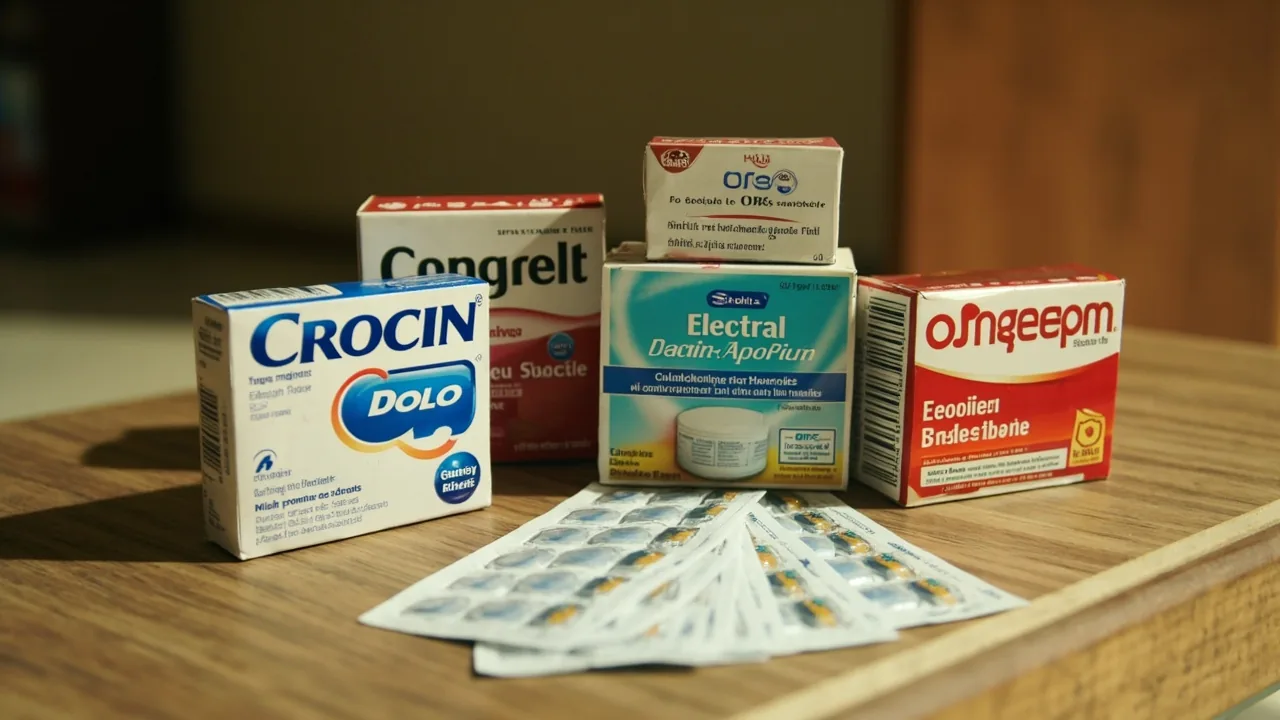
The rule is simple: medicines to carry travelling abroad from india means brand names you already trust (Crocin, Electral, Metrogyl) packed in their original strip, not loose pills, and not “I’ll find a pharmacy in Bangkok.” Pharmacies in Thailand and Vietnam are good, but explaining your stomach bug to a Vietnamese pharmacist in your tenth sentence of the day gets old fast.
Quick Answers
| What | Answer | Price (INR) |
|---|---|---|
| Best ORS brand to carry | Electral (1 sachet in 1L water); also Fantomalt or Glucon-D for energy | ₹20 (~$0.21) |
| Best anti-diarrhoeal | Metrogyl (Metronidazole 400mg) for any diarrhoeal episode; Loperamide (Imodium) for immediate relief | ₹30 (~$0.31) |
| Paracetamol brand to pack | Crocin (500mg); also Dolo 650 for high fever | ₹30 (~$0.31) |
| Mosquito repellent brand | Odomos cream (DEET-free) or All-Out 100% coils; carry DEET-based repellent for dengue areas | ₹50 (~$0.52) |
| Doctor visit (private, no insurance) | ₹2,291 (~800 THB or ~$24) in Bangkok, ₹4,375 (~1,200,000 VND or ~$45.82) in Hanoi, ₹855 (~200,000 LAK or ~$8.95) in Vientiane, ₹2,387 (~25 USD) in Phnom Penh | ₹0 |
The Real Risks (What to Worry About)
When packing your kit, you are solving for the most common things that go wrong, not worst-case fantasies.
| Risk | Likelihood | Impact | How to Avoid |
|---|---|---|---|
| Traveler’s diarrhoea (“Delhi Belly”) | High | Low to Moderate | Electral + bottled water; Metrogyl if it lasts 48 hours |
| Fever / body ache (food, water, climate) | High | Low | Crocin / Dolo 650 + hydration |
| Motion sickness (buses, ferries, scooters) | High | Low | Avomine 25mg, one tablet 30 minutes before travel |
| Mosquito-borne illness (dengue) | Moderate | High | Odomos daily; cover up at dusk; see a doctor for any fever lasting 3+ days |
| Cuts / scrapes from scooters | Moderate | Low to Severe | Dettol + Band-Aid + Cipladine ointment; if deep, get stitches within 6 hours |
| Allergic reactions / rashes | Low | Moderate | Avil 25mg + Cetrizine; carry your known antihistamine |
| Sunstroke / heat exhaustion | Moderate | Moderate | SPF 50 sunscreen; Oral Rehydration; rest |
Prevention and Preparation
You want to leave Mumbai with the kit already packed, not the night before, because the last thing you want is hunting for Fantomalt at 11pm in Andheri.
Pre-trip checklist (do this at home):
- Get a basic health checkup if you have any ongoing conditions (BP, sugar, asthma).
- Buy travel insurance that covers medical evacuation. Most backpacker policies run ₹4,775 (~50 USD) to ₹7,639 (~80 USD) for a month, and they pay for themselves the first time you need a clinic in Bangkok.
- Carry your prescriptions in a sealed envelope. If you take a regular medicine (thyroid, BP, sugar, antidepressants), carry enough for the full trip plus a week extra, in original packaging with a doctor’s letter.
- Photograph every strip, every prescription, and the front of your passport. Save them in a Google Drive folder. If your bag is stolen in Hanoi, you can prove what you were carrying.
Vaccines to confirm before flying:
- Routine: MMR, DPT, Hepatitis B, Polio. Most Indians have these.
- Recommended for Southeast Asia: Hepatitis A (Havrix 1440 or Twinrix), Typhoid (Typbar TCV or Typhim Vi), Japanese Encephalitis (if you’re spending 3+ weeks in rural Thailand, Laos, or Cambodia), Rabies (if you’ll be near monkeys or stray dogs).
- Optional / situational: Tetanus booster (lasts 10 years, but worth checking), Cholera (Dukoral, oral), Yellow Fever (not required for SEA but required if you’re transiting through an at-risk country).
If you’re carrying vaccines that need a cold chain, get them in Vientiane or Bangkok, not in a remote Lao village. For a country-by-country cost breakdown, see our vaccinations from India full cost list.
The Complete Brand-Name Medicine Kit
This is the section you should pin. Every item below is sold over the counter at any Apollo, MedPlus, or 1mg delivery. Brands chosen for wide Indian availability, not for some marketing tie-up.
Fever, Pain, and the Basic Stuff
| Brand | Salt | What it’s for | Pack size | Approx cost (INR) |
|---|---|---|---|---|
| Crocin 500 | Paracetamol | Fever, mild pain, headache | 15 tabs | ₹30 (~$0.31) |
| Dolo 650 | Paracetamol 650mg | High fever (above 101°F) | 15 tabs | ₹35 (~$0.37) |
| Combiflam | Ibuprofen + Paracetamol | Body ache, sprains, period pain | 20 tabs | ₹40 (~$0.42) |
| Voveran SR 75 | Diclofenac | Stronger pain, joint, back (take with food) | 10 tabs | ₹50 (~$0.52) |
| Aspirin 75mg (Ecosprin) | Aspirin | Mild blood thinner, mild pain | 14 tabs | ₹25 (~$0.26) |
Stomach and Digestion
This is the section that earns its weight. Across a month of street food, night markets, and tap-water ice in small towns, your gut will speak up. Have these ready.
| Brand | Salt | What it’s for | Pack size | Approx cost (INR) |
|---|---|---|---|---|
| Electral | WHO-ORS formula | Rehydration, the single most important item | 21.8g sachet (1L) | ₹20 (~$0.21) per sachet |
| Fantomalt / Protinex | Maltodextrin + protein | Energy drink mix when you’ve not eaten | 400g tin | ₹350 (~$3.67) |
| Metrogyl 400 | Metronidazole | Any diarrhoeal episode lasting 48+ hours (also for amoebiasis) | 10 tabs | ₹30 (~$0.31) |
| Imodium (Loperamide 2mg) | Loperamide | Stops diarrhoea fast for a bus/train day (use sparingly, not a cure) | 10 tabs | ₹45 (~$0.47) |
| Econorm | Saccharomyces boulardii | Probiotic, take alongside antibiotics to prevent further upset | 10 sachets | ₹180 (~$1.88) |
| Pantocid / Pan 40 | Pantoprazole 40mg | Acidity, heartburn, gastric from spicy food | 15 tabs | ₹80 (~$0.84) |
| Ondem MD 4 | Ondansetron | Anti-vomiting, dissolves on tongue | 10 tabs | ₹90 (~$0.94) |
| Cremaffin | Liquid paraffin + milk of magnesia | Constipation (long bus rides, dehydration) | 200ml | ₹140 (~$1.47) |
| Eldoper | Racecadotril | Acute diarrhoea without slowing the gut down (alternative to Loperamide) | 10 caps | ₹85 (~$0.89) |
| Enterogermina | Bacillus clausii spores | Probiotic after antibiotics or food poisoning | 10 vials | ₹170 (~$1.78) |
Subodh’s Pro Tip: Carry at least 8 Electral sachets. You’ll drink one a day if you’re moving, and they’re cheaper in India than anywhere else. Electral + clean water solves 60% of traveller stomach issues before you ever need a real medicine.
Cold, Cough, Allergies
| Brand | Salt | What it’s for | Pack size | Approx cost (INR) |
|---|---|---|---|---|
| Cetrizine (Cetzine) | Cetirizine 10mg | Allergies, runny nose, sneeze | 10 tabs | ₹25 (~$0.26) |
| Avil 25 | Pheniramine | Stronger allergic reaction, rashes, insect bites (causes drowsiness) | 15 tabs | ₹20 (~$0.21) |
| Allegra 120 | Fexofenadine | Non-drowsy alternative to Cetrizine | 10 tabs | ₹140 (~$1.47) |
| Vicks VapoRub | Camphor + menthol | Blocked nose, applied to chest | 50ml | ₹160 (~$1.68) |
| Sinarest | Paracetamol + Phenylephrine + CPM | Cold + blocked nose combo | 10 tabs | ₹40 (~$0.42) |
| Benadryl Cough Syrup | Diphenhydramine | Dry cough at night | 150ml | ₹130 (~$1.36) |
| Ascoril D | Cough expectorant | Wet cough, chest congestion | 100ml | ₹150 (~$1.57) |
| Strepsils | Lozenges | Sore throat, voice gone from bus AC | 8 lozenges | ₹50 (~$0.52) |
| Nasoclear saline nasal drops | Sodium chloride | Clears blocked nose, safe for daily use | 20ml | ₹80 (~$0.84) |
Mosquitoes, Cuts, Skin
Southeast Asia is warm, wet, and full of mosquitoes. Cuts happen from scooters, corals, and street food shells. Carry these.
| Brand | Salt | What it’s for | Pack size | Approx cost (INR) |
|---|---|---|---|---|
| Odomos cream | Citriodiol (DEET-free) | Daily mosquito repellent for skin | 100g | ₹120 (~$1.26) |
| Odomos spray | Citriodiol | Clothes, exposed areas | 100ml | ₹150 (~$1.57) |
| All Out / Good Knight refill | Allethrin | Plug-in coils for hotel rooms; bring a universal adapter plug | 1 refill | ₹60 (~$0.63) |
| DEET 50% repellent (e.g., Odomos 50 DEET) | DEET | High-risk dengue areas (rural Cambodia, Laos, Mekong delta) | 100ml | ₹250 (~$2.62) |
| Dettol liquid | Chloroxylenol | Cleaning cuts, washing hands, general antiseptic | 250ml | ₹90 (~$0.94) |
| Cipladine / Betadine ointment | Povidone-iodine | Apply on cuts and scrapes | 15g | ₹70 (~$0.73) |
| Band-Aid (Johnson) | Adhesive strips | Blisters from walking, small cuts | 100 strips box | ₹180 (~$1.88) |
| Soframycin ointment | Framycetin | Antibiotic skin ointment for infected cuts | 30g | ₹95 (~$0.99) |
| Candid cream | Clotrimazole | Fungal infection, jock itch, ringworm (humid weather is brutal) | 20g | ₹90 (~$0.94) |
| Burnol | Lidocaine + cetrimide | Minor burns from scooters, hot pans | 30g | ₹75 (~$0.79) |
| Clindamycin phosphate gel | Clindamycin | Acne flare-ups from sweat, humidity, sunscreen clogging | 20g | ₹120 (~$1.26) |
| Aloe vera gel (Patanjali / Fixderma) | Aloe | Sunburn relief, after-sun | 150ml | ₹150 (~$1.57) |
| Volini spray | Diclofenac spray | Muscle pain, neck stiffness from long buses | 55g | ₹190 (~$1.99) |
Subodh’s Pro Tip: Sunscreen (SPF 30 or higher) is non-negotiable. Indian SPF 50 options that work in SEA heat include La Shield and UV Doux; anything marketed as “matte finish” stays on in the humidity.
Motion, Sleep, Anxiety
| Brand | Salt | What it’s for | Pack size | Approx cost (INR) |
|---|---|---|---|---|
| Avomine 25 | Promethazine | Motion sickness, take 30 mins before ferry / bus / flight | 10 tabs | ₹60 (~$0.63) |
| Stugeron 25 | Cinnarizine | Mild motion sickness, also helps vertigo | 10 tabs | ₹90 (~$0.94) |
| Melatonin 3mg | Melatonin | Sleep aid, jet lag, hostel noise | 30 tabs | ₹250 (~$2.62) |
| Restyl 0.25 | Alprazolam | Anxiety, panic attacks (prescription only in India) | 10 tabs | ₹50 (~$0.52) |
| Etizolam 0.5 | Etizolam | Sleep aid, anxiety (prescription only, use sparingly) | 10 tabs | ₹70 (~$0.73) |
Women’s Health
| Brand | Salt | What it’s for | Pack size | Approx cost (INR) |
|---|---|---|---|---|
| Meftal Spas | Mefenamic acid + dicyclomine | Period cramps | 10 tabs | ₹40 (~$0.42) |
| Primolut N | Norethisterone | Delay periods for a long trek or beach week (start 3 days before) | 10 tabs | ₹120 (~$1.26) |
| i-Pill | Levonorgestrel 1.5mg | Emergency contraception, take within 72 hours | 1 tab | ₹90 (~$0.94) |
| Canesten cream | Clotrimazole | Yeast infection, common in humid weather | 30g | ₹150 (~$1.57) |
| Betadine pessary | Povidone-iodine | BV / vaginal infections | 5 pessaries | ₹130 (~$1.36) |
Altitude and Heat (for Northern Thailand, Laos treks)
| Brand | Salt | What it’s for | Pack size | Approx cost (INR) |
|---|---|---|---|---|
| Diamox 250 | Acetazolamide | Altitude sickness for treks above 2500m (Laos, northern Vietnam, northern Thailand) | 10 tabs | ₹110 (~$1.15) |
| Dexamethasone 4mg | Dexamethasone | Severe altitude emergency, take with doctor’s advice | 10 tabs | ₹60 (~$0.63) |
| Electral | ORS | Heat exhaustion, sweat loss | 1 sachet | ₹20 (~$0.21) |
Dental, Eyes, Ears, Feet
| Brand | Salt | What it’s for | Pack size | Approx cost (INR) |
|---|---|---|---|---|
| Clove oil (Dentolan) | Eugenol | Toothache emergency, drop on cotton and apply | 15ml | ₹80 (~$0.84) |
| Dentek Temparin | Temporary filling | Lost filling / cap while travelling | 1 kit | ₹350 (~$3.67) |
| Moxicip eye drops | Moxifloxacin | Eye infection, red eye after swimming | 5ml | ₹95 (~$0.99) |
| Refresh Tears | Carboxymethylcellulose | Dry eyes, AC buses, flights | 10ml | ₹160 (~$1.68) |
| Ciplox D ear drops | Ciprofloxacin + dexamethasone | Ear infection, water in ear after swimming | 10ml | ₹110 (~$1.15) |
| Candid ear drops | Clotrimazole | Fungal ear infection (common after swimming in SEA) | 15ml | ₹120 (~$1.26) |
| Daktarin powder | Miconazole | Foot fungal, groin fungal, keep dry | 30g | ₹170 (~$1.78) |
| Scholl blister patches | Hydrocolloid | Blister relief, feet from too much walking | 5 patches | ₹300 (~$3.14) |
Prescription-Only Items (carry the prescription)
| Item | What it’s for | Notes |
|---|---|---|
| Azithromycin 500mg (Azee) | Severe throat infection, traveller’s pneumonia | 3 tabs, prescription |
| Augmentin 625 (Amoxicillin + Clavulanate) | Sinus, ear, skin, dental infections | 10 tabs, prescription |
| Fluconazole 150 (Forcan) | Single-dose yeast infection | 1 tab, prescription |
| Prednisone 10mg | Severe allergic reaction, asthma flare-up | 5 tabs, prescription |
| Salbutamol inhaler (Asthalin) | Asthma, bronchitis | If you have asthma, carry a full inhaler |
| EpiPen (if allergic to bee stings) | Anaphylaxis | Carry two, prescription |
What to Carry It In
A first-aid kit collapses into a mess by Day 3. Use these:
- A waterproof zip pouch (Decathlon Forclaz Travel First Aid Kit bag, ~₹600 (~$6.28)) for medicines.
- A separate clear pouch for prescriptions and strip medicines in original packaging. Airport security at Bangkok Suvarnabhumi and Mumbai scans bags, and you want them to see “Electral, 10 sachets” not loose white powder.
- A small pill organiser (₹150-₹300 (~$1.57-$3.14)) for daily vitamins and metformin/thyroid if you take them.
- One thermal pouch (₹400 (~$4.19)) if you carry insulin, EpiPen, or temperature-sensitive eye drops.
Total kit cost in India: ₹3,000-₹4,500 (~$31.42-$47.12) for everything above. That’s the price of one clinic visit in Bangkok. The kit pays for itself the first time you avoid a clinic.
Customs and Carrying Rules (CDSCO / Foreign Country)
Indian travellers carrying personal-use medicines abroad must follow CDSCO’s 2017 personal-use guidelines. Practically:
- Carry a quantity up to 90 days of personal-use medication, in original packaging with your name on the strip or a copy of the prescription.
- Keep prescription medicines in a separate pouch with the doctor’s letter (a printed prescription on letterhead works).
- Banned abroad: codeine-containing cough syrups (Corex, Phensedyl, Benadryl Cough Formula with codeine) are illegal in Thailand, Vietnam, Laos, and Cambodia. Carry plain Benadryl or Ascoril D instead.
- Restricted but allowed with prescription: sleeping pills (Restyl, Etizolam), strong painkillers (Tramadol, Morphine). The embassy in Bangkok has had travellers detained at the airport for Tramadol without a prescription.
- Possibly restricted: Ayurvedic preparations with heavy metals (some Agnitundi, Brahmi preparations). Leave them at home.
For a country-by-country breakdown of pharmacy access, see hospitals and pharmacies across Southeast Asia and the Cambodia medical emergency guide.
For general travel planning across the region, our Southeast Asia backpacking hub covers country-specific guides.
Where to Buy What in India
If you’re leaving from Mumbai, Delhi, Bangalore, or Hyderabad, you’ll find everything at any Apollo, MedPlus, Medkart, or 1mg store. A few 1mg-style tips:
- 1mg / Tata 1mg has the cheapest Electral, Cetrizine, and Combiflam in India right now.
- Apollo Pharmacy has the best availability for prescription items like Avomine and Augmentin.
- Local chemists in your area will give a 5-10% discount if you ask, and they often stock strips of just 4-10 tablets without a doctor visit.
What to Do If It Happens (Even With the Kit)
- Traveler’s diarrhoea lasting 48+ hours, with blood or fever: Stop Imodium. Start Metrogyl 400 (3x daily, 5 days) if you suspect amoebic dysentery. If it doesn’t resolve in 48 hours, see a doctor and ask for a stool test. In Cambodia and Laos, dengue fever is the most common cause of “fever that won’t go” and your kit won’t help. See a clinic.
- Deep cut or scooter crash: Clean with Dettol, apply Soframycin, close with Band-Aid or Steri-Strip, see a clinic within 6 hours for stitches. Hospital bills in Bangkok and Phnom Penh without insurance can cross ₹50,000 (~$523.60) in a day. This is exactly what travel insurance is for.
- Severe allergic reaction (face swelling, breathing trouble): Avil 25 plus Cetrizine, then head to the nearest hospital emergency room. If you carry an EpiPen, use it. Don’t wait it out.
- Dengue fever (high fever, body ache, rash, eye pain): Dengue is endemic in Thailand, Vietnam, Cambodia, and Laos. There’s no medicine; you treat the symptoms. Crocin + Electral + rest. See a doctor to confirm with a blood test (NS1 antigen) and monitor platelet count. Warning signs: severe stomach pain, persistent vomiting, bleeding gums, blood in stool. Hospital immediately.
- Lost medicine bag: If your pouch is stolen, head to a major chain pharmacy. In Bangkok, Boots and Watsons stock almost everything in this guide. In Vietnam, Pharmacity (green logo) is everywhere in HCMC and Hanoi. In Cambodia, U-Care Pharmacy in Phnom Penh. In Laos, pharmacies in Vientiane are honest, but stock is limited.
Indian Embassy Contacts Across Southeast Asia
| Country | Embassy / Consulate | Location | Phone (from local) |
|---|---|---|---|
| Thailand | Embassy of India, Bangkok | 46 Soi 23, Sukhumvit Road, Bangkok | 02 258 0300 |
| Vietnam | Embassy of India, Hanoi | 58-60 Tran Hung Dao, Hanoi | 024 3824 4989 |
| Laos | Embassy of India, Vientiane | 002 Rue de Phonexay, Vientiane | 021 241 7907 |
| Cambodia | Embassy of India, Phnom Penh | 5 Norodom Boulevard, Phnom Penh | 023 210 912 |
Subodh’s Pro Tip: Save all four embassy numbers in your phone as “IND EMBASSY (city)” before you fly. The embassy can help you with stolen passports, lost medicines that require emergency prescription, and emergency cash transfers from India.
Getting Connected
A working SIM is the fastest way to call an ambulance, pull up Google Maps to the nearest clinic, or WhatsApp your parents. Travellers in SEA mostly pick between a physical SIM at the airport (AIS, DTAC, Viettel, Cellcard) and an eSIM they activate before flying. For an eSIM that lands in your phone the moment you land in Bangkok, Get Nomad eSIM. Coverage across Thailand, Vietnam, Laos, and Cambodia starts at around ₹859 (~9 USD) for 5GB.
FAQ
Q: Can I carry strips of medicines, or do I need a separate prescription for each? For OTC medicines like Crocin, Electral, Cetrizine, and Combiflam, the original strip is enough. For prescription medicines like antibiotics (Augmentin, Azithromycin), sleeping pills, anxiety tablets, and codeine cough syrups, carry a doctor’s prescription on letterhead, dated within 6 months. A WhatsApp photo of the prescription on your phone is also useful as backup.
Q: Is codeine cough syrup allowed in Thailand or Vietnam? No. Codeine is a controlled narcotic in Thailand, Vietnam, Cambodia, and Laos. Phensedyl, Corex, and codeine-containing Benadryl cough syrup will get you detained at the airport. Carry plain Ascoril D or Benadryl Cough Formula (without codeine) instead.
Q: How do I carry insulin or EpiPen on a flight? Both are allowed in cabin baggage. Carry the prescription, the original box, and a doctor’s letter. Inform the airline at check-in. The kit should be in a thermal pouch but not frozen. On long flights, request a fridge-stored ice pack from cabin crew if needed.
Q: Do I need a yellow fever vaccine for Thailand, Vietnam, Laos, or Cambodia? No yellow fever vaccine is required for these countries. It is required if you are transiting through a yellow fever endemic country (parts of Africa, South America) en route to SEA. Check the WHO yellow fever country list before flying if your route includes Africa or Latin America.
Q: What about Ayurvedic medicines? Are they safe to carry? Most Ayurvedic preparations (Chyawanprash, Triphala, ashwagandha) are fine. Avoid heavy-metal-based preparations like Agnitundi Rasa, some Sindoor Kalp, and certain Makardhwaj-based pills; these are restricted abroad and may contain lead or mercury. Stick to brands with proper AYUSH license numbers (GMP-certified manufacturing).
Q: Is street food ice in Vietnam and Cambodia safe? This is the most common traveller question. Street vendor ice in Vietnam (the hollow tube kind) is generally factory-produced and safe. Stick to sealed bottled water, and the same rule applies across Thailand, Laos, and Cambodia. If the ice is from a major brand (often labelled, especially in cities), it is safe. For more on water safety, see our Southeast Asia water safety guide.
Q: What if my medicine needs a fridge and I’m travelling? Carry a thermal pouch with an ice pack, or buy one at the hotel. Insulin, some eye drops, and EpiPens lose potency above 30°C. Most Thai, Vietnamese, and Cambodian hotels will store medicine in their reception fridge for free if you ask nicely.
Subodh’s Take
The whole point of packing your own kit is that pharmacies in SEA close early, don’t always speak English, and won’t sell you the same brands you trust. Spend the ₹4,000 (~$41.89) once, photograph every strip and prescription, and you travel with a safety net. If you take a regular medicine (BP, sugar, thyroid, asthma), carry 50% more than the trip length. The day you need it, you’ll thank yourself for the extra weight.
