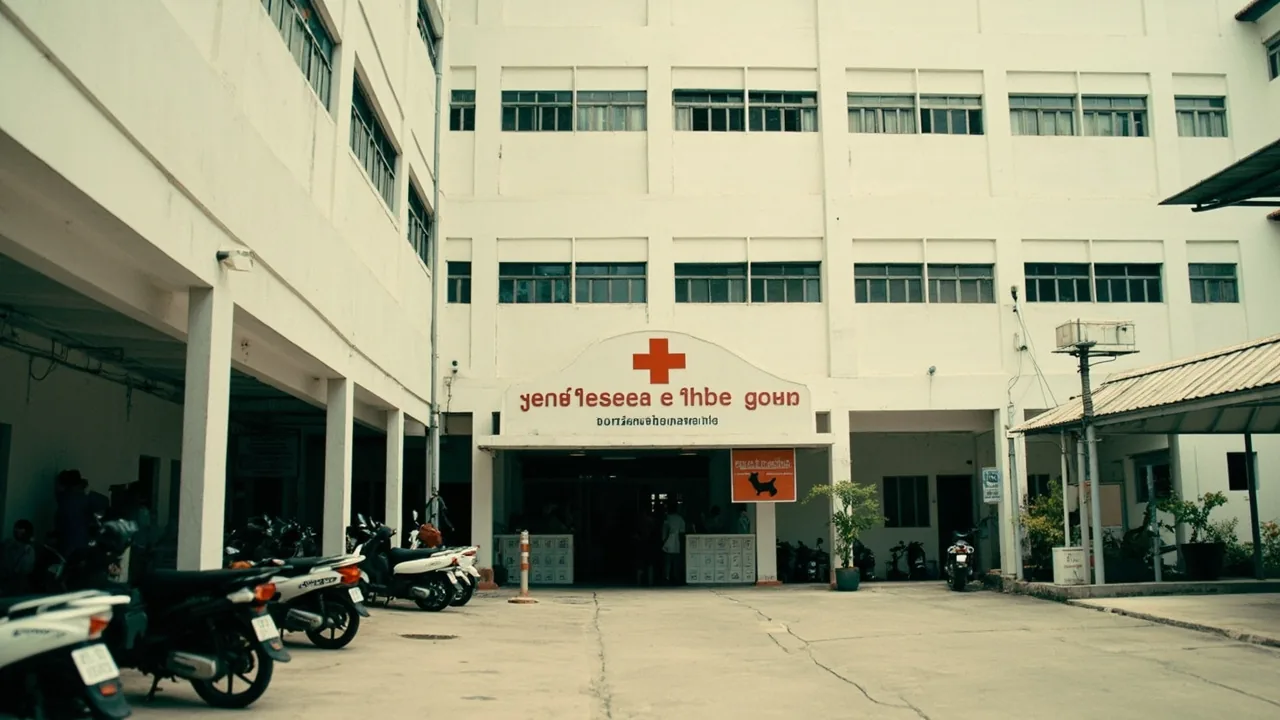
Hospital & Clinic Guide for Southeast Asia: What It Costs When You Get Sick
Getting sick abroad is one of those things backpackers don’t plan for until they’re on a tuk-tuk with food poisoning, sweat dripping, and the language barrier suddenly real. The good news: Southeast Asia has some of the best and cheapest private healthcare on the planet. A Thai hospital often runs cleaner, faster, and cheaper than a similar visit back home. A routine GP consult in Bangkok goes for around ₹2,287-₹4,288 (~800-1,500 THB or ~$23.74-$44.51), and even complicated procedures like a knee replacement cost a fraction of what you’d pay in India or the West. Indian travellers regularly come home surprised at how smooth the experience was. For related planning, see our guide on Sea Backpacking Hub.
The bad news: hospitals outside Bangkok, Phuket, and a few other hubs vary wildly in quality, ambulance response is slow outside tourist zones, and most rural clinics expect cash. If you ride scooters, swim at unmarked beaches, or eat street food daily, this guide will save you a lot of stress (and probably a few thousand baht). If you don’t, this guide will reassure you that the safety net is solid.
Quick Answers
| What | Answer | Price (INR) |
|---|---|---|
| Average GP consult (Thailand, private hospital) | 15 minutes, English-speaking doctor, prescription included | ₹2,287-₹4,288 (~800-1,500 THB or ~$23.74-$44.51) |
| Emergency room visit (Bangkok hospital, minor) | Triage, doctor, basic tests | ₹8,577-₹17,153 (~3,000-6,000 THB or ~$89.03-$178.05) |
| Overnight hospital stay (private room) | Standard ward, no surgery | ₹14,295-₹42,884 (~5,000-15,000 THB or ~$148.38-$445.13) |
| Pharmacy antibiotic course (Vietnam) | 7-day supply, no prescription needed for most | ₹184-₹551 (~50,000-150,000 VND or ~$1.91-$5.72) |
| Full body health checkup package (Thailand) | Bloodwork, ECG, chest X-ray, doctor review | ₹11,436-₹22,871 (~4,000-8,000 THB or ~$118.70-$237.40) |
The Real Risks (What to Worry About)
Ranked by what puts Indian travellers in a foreign clinic, not what feels scary.
| Risk | Likelihood | Impact | How to Avoid |
|---|---|---|---|
| Food poisoning (“Delhi Belly”) | High | Low to Moderate | Bottled water only, busy stalls, peel-it-yourself fruit |
| Scooter/bike accidents | High | Severe | Wear a helmet, get an International Driving Permit, never ride drunk |
| Dengue fever | Moderate | High | DEET 30%+ repellent daily, long sleeves at dusk |
| Severe dehydration from heat | Moderate | Moderate | ORS sachets, 3 litres water/day in Thailand/Cambodia |
| Drowning at unmarked beaches | Moderate | Severe | Swim between flags, ask locals about currents |
| Malaria (rural areas only) | Low | High | Tablets for forested border zones in Cambodia/Laos |
| Rabies (stray dog bites) | Low | Severe | Avoid stray animals; PEP available in capital hospitals |
| Violent crime against tourists | Low | Severe | Standard city awareness, avoid dark alleys at 2 a.m. |
Subodh’s Pro Tip: Nine out of ten Indian travellers I’ve seen end up in a hospital here did so because of a scooter or a late-night street food binge. Both are preventable. Don’t ride if you’ve had more than one drink, and don’t eat shellfish from a cart that’s been sitting in the sun.
Prevention and Preparation (Before You Board the Flight)
Vaccines
Get these at least 4 weeks before departure from any travel clinic in Delhi, Mumbai, or Bengaluru:
- Hepatitis A and B (combined shot, two doses) - non-negotiable.
- Typhoid - oral or injection, lasts 2 years.
- Tetanus booster - if yours is over 10 years old.
- Japanese Encephalitis - only if you’ll be doing rural border work in Laos/Cambodia in monsoon season.
- Rabies pre-exposure - recommended for anyone spending 30+ days or hiking in rural areas. Three shots over 21 days.
Travel Insurance
This is the single most important line item in your trip budget. A single scooter accident requiring surgery in Thailand can run ₹571,780-₹1,429,450 (~200,000-500,000 THB or ~$5,935.08-$14,837.71). Without insurance, you’re paying that out of pocket or flying home.
Read the policy wording for two specific things: (1) scooter accidents are covered only if you have a valid International Driving Permit (IDP) and a corresponding Indian motorcycle licence, otherwise it’s excluded; (2) the policy lists direct-billing partner hospitals, which means you walk out without paying upfront. Save those hospital names offline.
Documents to Back Up
Before leaving India, photograph or scan every document and store it in two places: a WhatsApp “favourites” chat with yourself, and Google Drive or iCloud. You need: passport, visa, insurance policy, vaccination card, IDP, and a list of current medications. If your bag gets stolen in Hanoi, your embassy visit goes from a nightmare to a 30-minute errand.
City-by-City Hospital & Clinic Costs
Healthcare prices across the region vary by 3 to 5x depending on country and whether you pick a public or private facility. The “Bumrungrad” tier of international hospitals exists in Bangkok and Phuket; elsewhere, you’re usually in mid-tier private clinics that are still excellent for 90% of what backpackers need.
Thailand (Bangkok, Chiang Mai, Phuket, Koh Phangan)
Thailand is the regional gold standard. Bangkok alone has dozens of JCI-accredited hospitals with English-speaking staff, in-house translators (Hindi is available at major branches), and pricing transparency. Most GP consults are between 800 and ₹4,288 (~1,500 THB or ~$44.51) including medication. A basic emergency room visit for stitches and an X-ray lands at ₹11,436-₹22,871 (~4,000-8,000 THB or ~$118.70-$237.40). Overnight observation in a private room runs ₹14,295-₹42,884 (~5,000-15,000 THB or ~$148.38-$445.13).
Procedure costs that draw medical tourists from across the world:
- Full body checkup package: ₹11,436-₹22,871 (~4,000-8,000 THB or ~$118.70-$237.40)
- Knee replacement surgery: ₹1,000,615-₹1,429,450 (~350,000-500,000 THB or ~$10,386.40-$14,837.71)
- Heart bypass (CABG): ₹1,429,450-₹2,573,010 (~500,000-900,000 THB or ~$14,837.71-$26,707.88)
- Dental implant (single tooth): ₹142,945-₹285,890 (~50,000-100,000 THB or ~$1,483.77-$2,967.54)
- LASIK eye surgery (both eyes): ₹228,712-₹428,835 (~80,000-150,000 THB or ~$2,374.03-$4,451.31)
These figures are why medical tourism is a multi-billion-dollar industry here. Indian patients regularly fly in for dental and cosmetic work because the same procedure costs 40-60% less than private hospitals in Mumbai or Delhi, and the recovery happens on a beach.
Chiang Mai has a handful of excellent private hospitals (the Bangkok Hospital Chiang Mai branch is well-regarded); Koh Phangan and Koh Tao have small clinics good for stitches, IV drips, and basic infections, but anything serious requires a ferry ride to the mainland. Our Thailand emergency medical guide goes deeper on each island.
Vietnam (Ho Chi Minh City, Hanoi, Da Nang)
Vietnam runs on a public-private split. Public hospitals are cheap (₹184-₹734 (~50,000-200,000 VND or ~$1.91-$7.62) for a GP visit) but the queues are long, English is patchy, and the experience can be chaotic. Private clinics in District 1 (HCMC) and the Old Quarter (Hanoi) charge ₹1,102-₹2,938 (~300,000-800,000 VND or ~$11.43-$30.49) for a consult, English-speaking doctors, and a pharmacy on-site. A typical “tourist with stomach bug” visit, including blood test, IV drip, and prescription, lands at ₹5,508-₹11,016 (~1,500,000-3,000,000 VND or ~$57.17-$114.35).
Pharmacies in Vietnam are unusually liberal. You can walk into almost any pharmacy and buy antibiotics, strong anti-diarrheals, and even mild steroids without a prescription. Travellers report this is convenient for known issues (a recurring UTI, for example) but dangerous for anything new; self-diagnosing a dengue rash as a heat rash is a classic mistake. See our Vietnam emergency medical help article for the trusted clinic list per city.
Cambodia (Phnom Penh, Siem Reap, Sihanoukville)
Cambodia’s healthcare is the most uneven in the region. Phnom Penh has several excellent international clinics (the Royal Phnom Penh Hospital and the Central Hospital are the two names backpackers trust), and Siem Reap has a couple of expat-run clinics good for travellers. Outside these cities, quality drops sharply. A GP consult in Phnom Penh runs ₹4,817-₹9,634 (~50-100 USD). Surgery or serious trauma usually means medical evacuation to Bangkok or Singapore, which is exactly what your travel insurance is for.
For specifics on which clinic to walk into in each Cambodian city, our Cambodia medical emergency guide has the full breakdown.
Laos (Vientiane, Luang Prabang, Vang Vieng)
Laos has the thinnest healthcare infrastructure on the trail. Vientiane has a few decent clinics; Luang Prabang has the Lao-Japanese Friendship Hospital plus a small private clinic for travellers. Anything beyond basic care means a flight to Bangkok. Medical evacuation insurance isn’t optional here, it’s the only reason a serious incident doesn’t end badly. Travellers report that even basic IV drips in Vang Vieng require cash (often USD), and pharmacy stocks of antibiotics can be unreliable.
What to Do If It Happens
Step 1: Assess and Stabilise
- Food poisoning / mild dehydration: Stay in your hostel, drink ORS sachets (sold at every 7-Eleven, ~₹86 (~30 THB or ~$0.89)), eat plain rice and bananas. If symptoms last more than 48 hours or include blood, see a doctor.
- Scooter accident: Don’t move if you suspect a broken bone. Call your insurance hotline immediately; they will direct you to a partner hospital. Keep your helmet on until paramedics arrive.
- Severe allergic reaction / anaphylaxis: Carry an EpiPen if you’re prone. Hospitals in Bangkok, Phuket, and HCMC have adrenaline on hand.
- Suspected dengue (high fever, body ache, rash after mosquito exposure): See a doctor within 24 hours for a blood test. Dengue platelet counts can drop fast.
Step 2: Find the Right Hospital
Open Google Maps and search “international hospital” or “Bangkok Hospital” (these chains have branches across the region). Avoid clinics with no website, no English signage, and no reviews on Google. For anything beyond a sniffle, head straight to a private hospital with a JCI accreditation logo at reception.
Step 3: Pay and Document
Pay upfront at most private hospitals (they’ll hold your passport as a deposit if you can’t pay). Get itemised receipts in English for everything. You’ll need them for the insurance claim. Most hospitals will email you the full breakdown within 24 hours if you ask.
Emergency Numbers by Country
| Country | Ambulance | Police | Tourist Police | Indian Embassy |
|---|---|---|---|---|
| Thailand | 1669 | 191 | 1155 | +66 2 613 6364 |
| Vietnam | 115 | 113 | - | +84 24 3845 3737 |
| Cambodia | 119 | 117 | - | +855 23 218 363 |
| Laos | 195 | 191 | - | +856 21 413 401 |
For India-specific emergency contacts at each embassy, see our Thailand Indian Embassy emergency helpline guide. Save these numbers offline before you fly.
Subodh’s Pro Tip: Keep a printed copy of your insurance policy’s hotline number in your wallet, and screenshot the partner hospital list. When you’re concussed or in pain, you do not want to be digging through emails at 3 a.m.
Indian-Specific Considerations
Medicine Equivalents
| Indian brand | Use | Local equivalent |
|---|---|---|
| Electral / ORS | Rehydration | ORS sachets (same formulation, ~₹86 (~30 THB or ~$0.89) at 7-Eleven) |
| Crocin / Dolo | Fever, pain | Paracetamol (sold as “Paracetamol” or “Para”, ₹14-₹57 (~5-20 THB or ~$0.15-$0.59) per strip) |
| Metrogyl | Diarrhea, infection | Metronidazole (available OTC in Vietnam/Cambodia) |
| Pantocid | Acidity | Omeprazole (sold under many brand names, ₹57-₹143 (~20-50 THB or ~$0.59-$1.48)) |
| Avomine | Motion sickness | Dimenhydrinate (sold as “Dramamine”, available at all pharmacies) |
| Combiflam | Pain, inflammation | Ibuprofen (sold as “Brufen” or “Ibuprofen”, ₹29-₹86 (~10-30 THB or ~$0.30-$0.89)) |
For rabies immunoglobulin and Japanese Encephalitis vaccines, only go to a capital-city hospital or a recognised travel clinic; rural stocks are unreliable.
Embassy Locations
All four countries have Indian embassies in their capitals. Indian travellers report the Bangkok embassy (Bumrungrad area) and the HCMC consulate are the two most responsive to emergency calls. Laos and Cambodia embassies are smaller but still functional for lost passports and emergency certificates.
Getting Connected
Working data is the fastest way to call for help or pull up an embassy number. A local SIM with ₹143-₹286 (~50-100 THB or ~$1.48-$2.97) of credit is enough for emergency calls across the region. For dual-SIM phones, Get Nomad eSIM lets you stay connected from the moment you land without queuing at the airport counter.
Specific Risks That Catch Indian Travellers Off-Guard
A few hazards that don’t show up on generic travel health lists but consistently land backpackers in a clinic:
- Scooter rash infections: Small scrapes from a bike fall get badly infected in tropical humidity. Wash with bottled water and antiseptic within an hour. If you see red streaks spreading, that’s cellulitis, get to a doctor.
- Heat stroke: March-May in Thailand and Cambodia regularly hits 40°C. Travellers report collapsing on day hikes in Chiang Mai and Vang Vieng. Carry 3 litres minimum, take noon breaks, and recognise the early signs (dizziness, no sweating despite heat).
- Dengue vs. Malaria confusion: Both are mosquito-borne, both cause fever, both need a blood test to confirm. Don’t self-diagnose. If you have a fever within 14 days of a mosquito bite, see a doctor.
- Tap water contamination: Even in hotels, the rule is “if you can’t peel it, cook it, or boil it, don’t drink it.” See our Vietnam tap water guide for the deep dive, and our what not to eat in Cambodia for the regional food-safety rules.
For motorbike safety specifically, that’s the single biggest modifiable risk factor on this trip.
FAQ
Do I need a yellow fever vaccine to enter any of these countries?
No, unless you’re arriving from a yellow fever endemic country (parts of Africa or South America). For Indians flying direct, no certificate is needed. Carry your yellow card only if you’ve transited through an endemic country.
Is it safe to take antibiotics bought at a Vietnamese pharmacy without a prescription?
For a known recurring condition (UTI, sinus infection) with a doctor-prescribed course you’ve used before, yes, many travellers do this. For anything new, self-diagnosis is risky. See a doctor if symptoms don’t match what you’ve had before, and especially if you have a fever plus rash, which can indicate dengue.
How much cash should I keep in case of a hospital visit?
Carry the equivalent of ₹48,170 (~500 USD) in local currency as a safety deposit buffer. Bangkok hospitals will hold your passport if you can’t pay the deposit upfront, which complicates the rest of your trip. Most other Southeast Asian hospitals accept USD or Thai Baht for international patients.
Can I use my Indian mediclaim insurance in Thailand?
Most Indian domestic policies do not cover overseas treatment, and even those that do require upfront payment and reimbursement, meaning you pay in Bangkok and claim back in India. International travel insurance from SafetyWing or similar gives you direct billing at partner hospitals, which is much cleaner. Keep all receipts either way.
What if I need a blood transfusion?
Major private hospitals in Bangkok, HCMC, and Phnom Penh have screened blood supplies. Smaller clinics and rural areas may not. For any planned surgery, the hospital will pre-screen donors from family or friends if needed. Travellers report the safety record in Thai private hospitals is excellent.
Is dengue common for backpackers?
Yes, especially during monsoon (May to October). There is no vaccine widely available for tourists, and no prophylactic medication; prevention is the only defence. Use DEET 30%+ repellent daily, sleep under a mosquito net in budget guesthouses, and cover up at dusk. If you get a fever within 14 days of a mosquito bite, see a doctor for a dengue NS1 antigen test.
What happens if I can’t pay the hospital bill?
The hospital will not let you leave without settling or providing insurance documentation. If you have insurance, the 24-hour hotline will coordinate with the hospital. If you genuinely cannot pay, contact your embassy immediately; they can help negotiate and in extreme cases arrange emergency repatriation. Avoid this situation by buying insurance before you fly.
