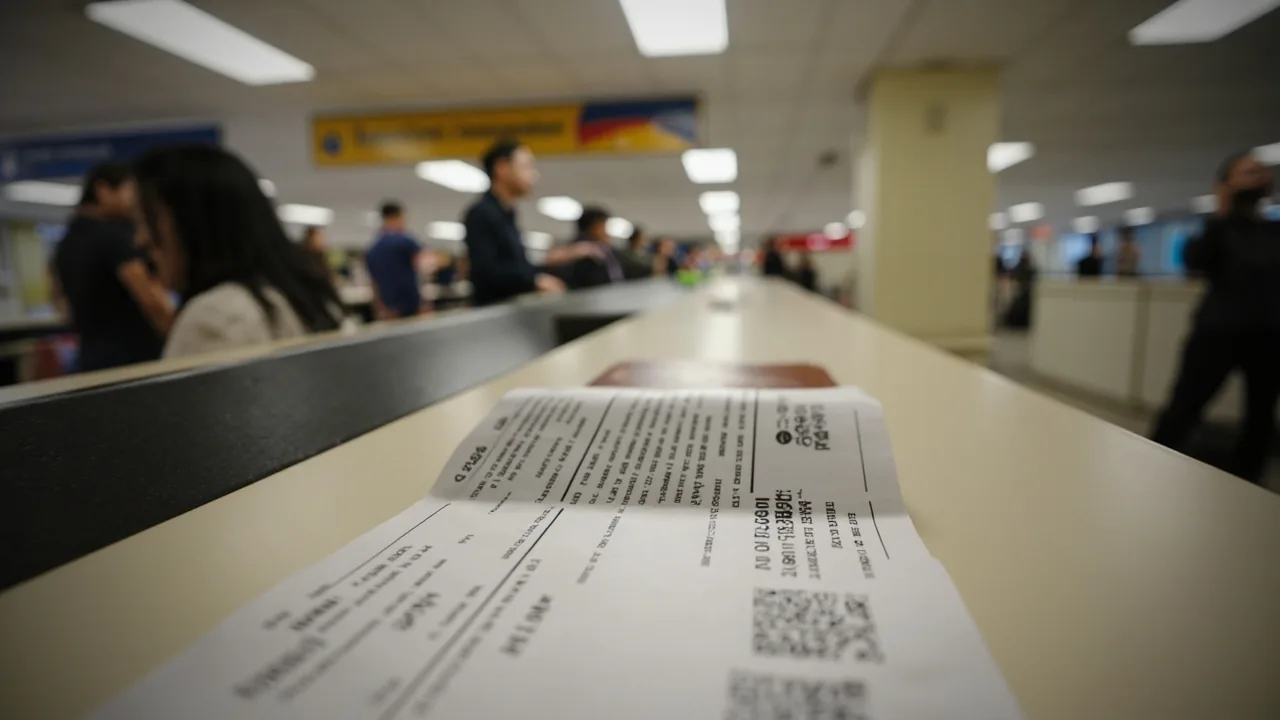
Leaving the Philippines? Overstay Fees, Exit Clearance, eTravel & Lost Passport Guide for Indians
Your Philippine chapter is closing and you need to know the Philippines exit requirements for Indian citizens. Here is what to prepare: the eTravel registration deadline, the overstay fine calculator, and the Bureau of Immigration (BI) clearance stamp if your visa was extended. Miss any one of these and you can lose hours, or real money, at the airport. For related planning, see our guide on Philippines Airport Departure Procedures Guide.
This guide is built end-to-end for the Indian passport holder flying out, covering every step from 72 hours before the flight to walking out the gate doors. Where the official rules move, we say so. Everything is calibrated for 2026.
Quick Answers
| What | Answer | Price (INR) |
|---|---|---|
| Is eTravel mandatory for Indians? | Yes, for both arrival and departure. Register within 72 hours of your flight, no fee. | ₹0 |
| Overstay fine for Indians? | PHP 500 per month, plus PHP 500 per year of overstay (administrative fine). Pay at BI office before flying. | ~₹750 (~$7.78) |
| Visa extension fee | PHP 3,030 per month (first 2 months), paid at any BI office. | ~₹4,545 (~$47.15) |
| NAIA terminal fee (departure) | PHP 550 to 850 (separate from ticket, paid at airport). | ₹825 (~$8.56) to ₹1,275 (~$13.23) |
| Lost passport emergency | File police report + go to Indian Embassy Manila for an Emergency Certificate. | ~₹3,000 (~$31.12) in fees |
Subodh’s Pro Tip: Take a screenshot of your eTravel QR code the moment you finish the form and email it to yourself. Airports lose Wi-Fi, screens die, and immigration officers do not take “the website is down” as an excuse. The QR code is the gate pass.
The 72-Hour Departure Timeline
The Philippine departure system runs like a checklist. Tick each box in order.
T-minus 72 hours: Register on eTravel
Every traveller entering or leaving the Philippines through an air or sea port must register on the eTravel portal within 72 hours of the flight. Indians are no exception. The form takes about 8 to 10 minutes and asks for passport details, flight info, and a Philippine address (your hostel is fine). You will get a QR code on screen and by email. Print it, screenshot it, email it to yourself.
The official line is that it’s “free and easy.” It is. The catch is that the QR code is your proof of registration, and the Immigration officer scans it at the booth before letting you queue for airline check-in. No QR code = slower line, sometimes a refusal to board, depending on the officer.
T-minus 48 hours: Check Your Visa Status
Indians enter the Philippines visa-free for 30 days. You must exit (extend) on or before the 30th day after arrival. Here is the calculation rule: your arrival date is day one. Day 30 is your last legal day. If you are flying out on day 31, you are one day overstay.
Need more time? Two options:
- Visa extension at BI: PHP 3,030 per month, payable at any Bureau of Immigration office. Bring your passport, eTravel printout, and proof of address in the Philippines. Processing is same-day at most regional offices (Manila, Cebu, Davao), 2 to 3 days at smaller satellite offices. The first 2-month extension costs PHP 3,030; subsequent months follow the same tariff.
- Visa downgrade (Emigration Clearance Certificate): Required if you are leaving with an ACR-I card (Alien Certificate of Registration), which most 30-day tourists do not hold. Skip this section unless you have been issued an ACR-I.
If your extension is approved, the BI officer stamps your passport with the new authorised stay. That stamp, plus your eTravel QR code, is what you present at departure. Travellers report that officers at NAIA do check the BI stamp length against the actual stay length.
T-minus 24 hours: Sort the Departure Money
Two payments happen at the airport that almost no online guide warns you about.
Terminal Fee (PHP 550 to 850): This is a Philippine government fee, separate from your airline ticket, paid at the airport. Domestic flights are usually included in the ticket; international flights almost always require you to pay cash at the terminal fee counter before you reach airline check-in. The exact amount depends on your route (PHP 550 for short international, PHP 850 for long-haul). Cash only at most counters. Cebu Pacific and Philippine Airlines offer online terminal fee payment at booking, which saves the queue.
Travel Tax (PHP 1,620): Most foreign passport holders are exempt under the EVAT (Expanded Value Added Tax) law, but double-check at the Bureau of Internal Revenue counter if asked. Pre-Covid this was the most common “surprise” charge at NAIA.
T-minus 4 hours: Arrive at NAIA Early
NAIA Terminal 3 (most international flights including Cebu Pacific, Philippine Airlines, Singapore Airlines from Manila) and Terminal 1 (selected long-haul) both have a 3-hour international check-in cutoff. Add 60 minutes for the eTravel counter, the terminal fee counter, and immigration. Realistic arrival window: 4 hours before departure. NAIA queues in 2026 are shorter than 2023 but still irregular.
At NAIA: Step-by-Step Departure Walkthrough
Here is the physical sequence. The order matters.
- Terminal fee counter (if not pre-paid): Cash PHP 550 to 850. Skip this line if you paid online at booking.
- Airline check-in: Drop luggage, get boarding pass. They will ask for your eTravel QR code here.
- Immigration / Passport control: Show passport, eTravel QR, BI extension stamp (if you extended). The officer scans the QR, checks the visa stamp, stamps your passport out. This is the actual exit.
- Customs (random lane): The Philippine customs duty-free allowance for foreign visitors is ₹38,561 (~400 USD) of dutiable goods, with strict rules on electronics, cigarettes, and alcohol. The green lane is for nothing-to-declare; if you are carrying dutiable goods above the allowance, use the red lane and declare. Customs officers are polite but thorough. Declare if unsure.
- Security + boarding gate.
If you have a connecting flight onward (say, Manila to Bangkok via Cebu Pacific), you clear Philippine immigration at your first international outbound point. Domestic-to-international connections at NAIA use a separate transfer desk inside the secure area.
Safety Alert: NAIA has had periodic reports of aggressive “porter” offers inside the arrivals hall (curbside touts offering to “help” with luggage for a fee). Politely decline and walk to the official taxi desk or Grab pickup zone. There are no free-porters inside the secure international departure area.
Overstay Fines: What Happens If You Overstay
Overstay is calculated per month, with an additional administrative fine per year:
- PHP 500 per month of overstay (the “stay violation” fine).
- PHP 500 per year (the “administrative fine,” paid once if you cross a 12-month threshold).
- Example: A 32-day overstay (just under one extra month) = PHP 500 + PHP 500 admin = PHP 1,000 total. A 13-month overstay = PHP 6,500 (13 × 500) + PHP 500 admin = PHP 7,000.
Fines are paid at the BI office at NAIA (Proceed to the BOQ-BI office in the restricted area, near the immigration booths), or in advance at any BI regional office. Travellers report that the BI officer at the airport will tell you your exact amount, give you an order of payment slip, and direct you to a cashier. The whole process takes 30 to 90 minutes, which is why you arrive early.
In 2026, the BI has been piloting an online overstay calculator; check the BI main site before relying on it. The official tariff schedule is the legal source.
eTravel Deep-Dive
The eTravel system is the Philippine version of Thailand’s TDAC or Singapore’s SG Arrival Card. Three things trip Indians up:
1. The 72-hour rule is strict. Register between 72 hours and 0 hours before your flight. Outside this window and the form refuses to submit. Travellers report that the morning of departure (within 4 hours) often has slowdowns because of high traffic.
2. You need a Philippine address. Hotels are fine. Hostels are fine. If you are staying with a friend, write their full address in Cebu City / Manila / wherever.
3. The QR code expires. Each QR code is tied to a specific flight. Change your flight? Re-register. Get an eTravel error? Re-register with the corrected information. Most often it’s a typo in the passport number, since Indian passport numbers are 8 characters (older booklets) or longer for newer e-passports. Match the spelling and number exactly as printed.
A common 2026 complaint: eTravel servers slow down at peak times (Friday afternoons, Sunday mornings, holiday weekends). Build in 15 extra minutes if your departure overlaps those windows.
Lost Passport in the Philippines: The Emergency Plan
Losing your passport abroad is never simple. In Manila, the process is straightforward if you go in the right order.
Step 1: File a Police Report
Within 24 hours of losing the passport, go to the nearest police station. For NAIA, that is the Pasay City Police Station or the NAIA Police Sub-Station inside Terminal 3. You will get a written police blotter. Keep the original; you cannot replace it.
Step 2: Contact the Indian Embassy Manila
The Indian Embassy in Manila is at the address below for consular services:
Embassy of India, Manila Office Address: 2190 T.M. Kalaw Street, Roxas Boulevard, Ermita, Manila Phone: +632 8332 0463 Email: [email protected] Working hours: Monday to Friday, 09:00 to 12:30 and 14:00 to 16:00
For emergency after-hours, the embassy’s 24/7 helpline is on the official site. Call before walking in.
Step 3: Apply for an Emergency Certificate (EC)
An Emergency Certificate (EC) is a one-way travel document the embassy issues if you have lost your passport and need to fly home. Required documents:
- Police report (original).
- Completed application form (available at the embassy counter).
- Two passport-sized photos.
- A copy of your FIR/Police complaint.
- Photocopy of the lost passport if you have one (a scan in your email is accepted by the Manila embassy as last-resort ID).
- The fee: roughly PHP 1,500 (~₹2,250) for the EC plus any emergency processing fees.
Indian embassies process ECs the same day for Indians in good standing; the Manila embassy is efficient. Plan 4 to 6 working hours from walking in to holding the EC.
Step 4: BI Clearance and Exit
With the EC, you must also get a Bureau of Immigration clearance to leave the country. The BI office near NAIA issues these in 30 to 90 minutes. Carry the EC, the police report, your ticket, and your eTravel QR. The officer will stamp you out. You cannot skip this step; the EC alone is not exit permission.
What About eTravel if You Re-Book?
If you lost your passport and have to rebook to a different day, your old eTravel QR is invalid. Re-register on etravel.gov.ph once you have the EC.
Safety Alert: Indian passport holders have the right to consular help under the Vienna Convention. Filipino police stations, especially around tourist areas, are experienced with foreign passport losses. Save the embassy 24/7 number in your phone before you fly, ideally as part of your Manila airport arrival checklist.
Common Indian Traveller Mistakes at NAIA
From the reports that come through from Indian backpackers in the Philippines, these are the recurring pitfalls:
- Skipping eTravel until check-in counter. The check-in counter rejects you without a QR code and forces you to find Wi-Fi and re-register. It is always faster to do it the night before.
- Not realising the 30-day visa includes day one. Day 1 is arrival. Day 30 is exit or extend. Travellers who count “30 days from arrival” often overstay by a day.
- Buying the wrong type of Philippine SIM for a short trip. A 7-day tourist SIM from Globe or Smart (PHP 50, around ₹75 (~$0.78)) is enough if you are only in the country two weeks. Read the Philippines SIM and power adapter guide before you commit to a longer plan.
- Cash-only terminal fee surprise. The terminal fee counter does not take credit cards in 2026. PHP 550 in twenties and hundreds, ready in your hand.
- Travel tax confusion for foreigners. Most short-stay Indians are exempt, but the counter officers may still ask. Have your passport ready to confirm your visitor status.
Travel Tax and Departure Refunds
Foreign passport holders on tourist visas are exempt from the PHP 1,620 travel tax. If you paid it, you can request a refund at the Bureau of Internal Revenue counter at NAIA, but the line is long. Save the receipt, fill form 0616-E, and bring your passport. Refunds take 4 to 6 weeks by bank transfer.
If you are a returning Overseas Filipino Worker (OFW) or hold an Overseas Worker Welfare Administration (OWWA) document, your exemption may be different. The travel tax guide walks through every exemption category.
Pre-Departure Checklist
Five things, in order:
- eTravel QR printed + screenshot + emailed to yourself.
- Passport with valid BI stamp (30-day arrival date still inside).
- Terminal fee paid online or PHP 550 to 850 in cash.
- Boarding pass from airline online check-in (saves 20 minutes).
Subodh’s Take
The Filipinos are well-practiced at handling lost passports; the BI office is bureaucratic but never hostile; and the eTravel QR system, despite the websites, does what it says on the tin. The single biggest mistake Indians make is registering for eTravel an hour before flight-time over hotel Wi-Fi. Give yourself a 24-hour buffer, screenshot the QR, and the airport becomes a 30-minute formality instead of a 3-hour saga. The overstay fines look small in dollar terms but are religiously enforced, so set a phone reminder 7 days before your visa expires. And if you do lose your passport, the Indian Embassy in Manila is fast and professional. The system is built for exactly this case.
FAQ
1. How much is the overstay fine for Indians in the Philippines? PHP 500 per month + PHP 500 per year (administrative fine). Payable at any BI office or at the BI counter inside NAIA before departure.
2. Is eTravel mandatory for Indian passport holders leaving the Philippines? Yes, for both arrival and departure. Register within 72 hours of the flight at etravel.gov.ph. No fee.
3. Can I extend my 30-day visa-free stay as an Indian? Yes. PHP 3,030 per month, extendable twice (so 90 days total including the original 30). Apply at any Bureau of Immigration regional office; same-day processing in Manila, Cebu, Davao.
4. What happens if I lose my passport at NAIA? File a police report at the NAIA police sub-station, then go to the Indian Embassy in Manila for an Emergency Certificate (EC). Allow 4 to 6 hours. The embassy is also reachable by phone 24/7 for the after-hours emergency line listed on indembassymanila.gov.in.
5. Do I need to pay a terminal fee when leaving the Philippines? Yes, PHP 550 to 850 depending on the international route, payable at the terminal fee counter inside NAIA (pre-paid online when booking with most airlines). It is separate from your air ticket.
6. Is the Philippine travel tax charged to Indians? Most Indian tourists are exempt. The PHP 1,620 travel tax applies to Filipino citizens and some dual-nationality holders. Have your passport ready at the BIR counter if asked.
7. Can I use a Philippine-issued Emergency Certificate (EC) to fly home via Manila? Yes. The EC is a one-way travel document. Get it stamped by BI before flight departure. Make sure your airline accepts ECs for boarding (Cebu Pacific, Philippine Airlines, and most major carriers do).
