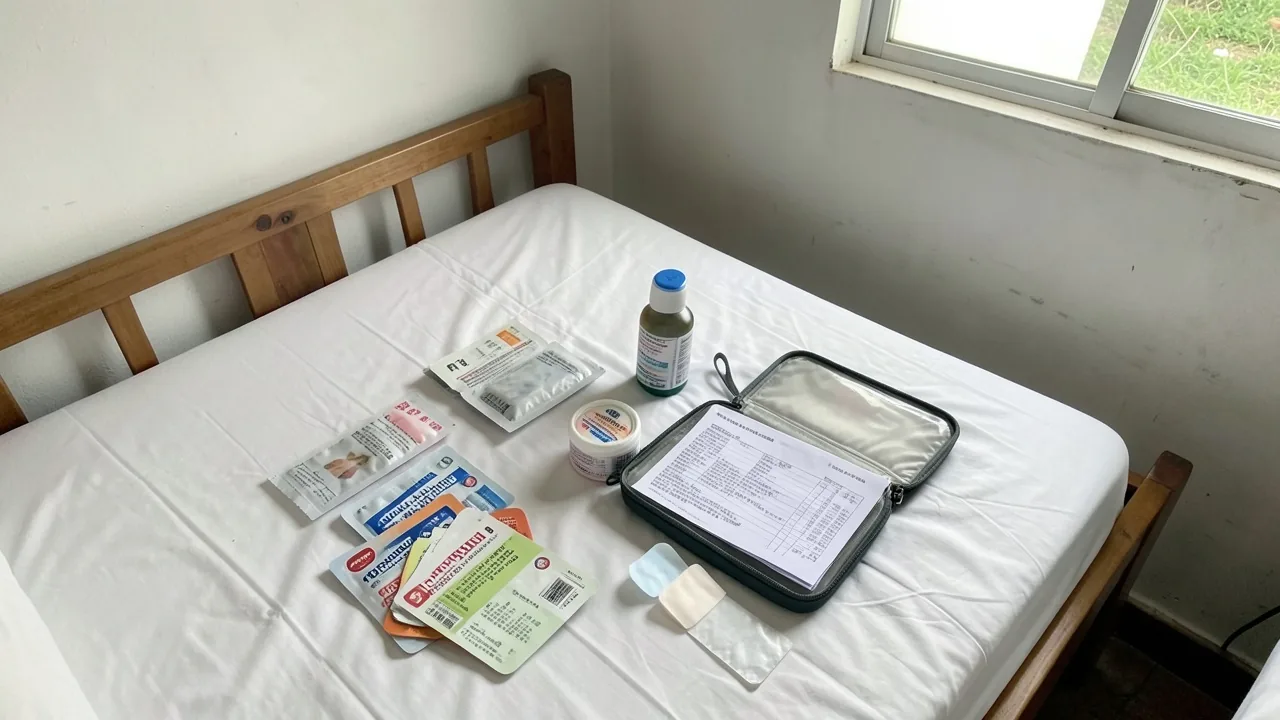
Philippines Travel Health Kit for Indian Visitors: Vaccinations, Medicines & Hospitals
Before you read further, here is the core of this philippines health vaccinations indian travelers guide. Direct flights from India to the Philippines do not require any mandatory vaccinations at immigration. For related planning, see our guide on Sea Backpacking Hub.
That said, “no vaccines required” is not the same as “no vaccines recommended.” The Philippines is a tropical archipelago, and your Indian gut is not equipped for its local pathogens on day one. This guide covers what the Philippine Bureau of Quarantine, the Department of Health, and the Indian Association in Manila recommend, plus the exact medicines to pack from an Apollo or Medplus in India before you fly. You may also find Philippines Travel Insurance Indian Budget Backpackers useful for this trip.
Quick Answers
| What | Answer | Price (INR) |
|---|---|---|
| Are vaccines mandatory for Indians flying direct to Manila? | No. Direct entry from India needs no vaccine certificate. | Free |
| Is Yellow Fever certificate required for Indians? | Only if transiting through or recently arriving from a Yellow Fever endemic country (Africa, South America). | ₹500-₹1,500 (~$5.19-$15.56) for the shot + certificate |
| Best hospitals for Indian tourists in Manila? | Ask your hotel or hostel for the nearest accredited private hospital with an English-speaking ER. | Consultation ₹2,527-₹5,054 (~1,500-3,000 PHP or ~$26.69-$53.38) |
| What medicines to carry from India? | ORS (Electral), Paracetamol (Crocin), Metrogyl (Metronidazole), Pantocid, Lopamide, Doxycycline (for leptospirosis after floods). | ₹800-₹2,000 (~$8.30-$20.75) total |
| Recommended vaccines before flying? | Hepatitis A, Typhoid, Hepatitis B, Japanese Encephalitis (if going rural), routine boosters. | ₹3,000-7000 total |
Note on the FX rate used below: 1 PHP = ~₹1.65 at current rates (1 USD = ₹96.33; 1 PHP ≈ 0.0171 USD). I will mention this once and stick to Philippine pesos throughout. See also: What to Do When Travelling to Philippines.
The Real Risks (What to Worry About)
Let me rank these by what Indian travellers report, not by what looks scary on a government advisory. For related planning, see our guide on Philippines Scooter Motorbike Rental Safety Tips Indian Backpackers.
| Risk | Likelihood | Impact | How to Avoid |
|---|---|---|---|
| Traveller’s diarrhoea (“Manila belly”) | High | Low-Moderate | Carry ORS, avoid raw vegetables and ice from street vendors in the first 48 hours. |
| Dengue fever | High (year-round, peaks Jun-Nov) | High | DEET 30%+ repellent daily, long sleeves at dusk, no stagnant water near your hostel. |
| Leptospirosis after floods | Moderate (typhoon season) | High | Avoid wading through floodwater. If you must, take Doxycycline 200mg weekly as prophylaxis. |
| Rabies (stray dogs) | Moderate | Severe (fatal untreated) | Do not pet stray dogs. If bitten, wash thoroughly and get post-exposure vaccine within 24 hours. |
| Hepatitis A (contaminated food/water) | Moderate | Moderate | Get vaccinated before flying (2 weeks prior is ideal). |
| Violent crime against tourists | Low | Variable | Standard city awareness. Avoid Tondo and dark Ermita alleys at night. |
The dengue number is the one that surprises most Indians. The Philippines reports over 200,000 dengue cases a year, and the 2024-2025 seasons have been particularly bad in Metro Manila, Cebu, and Iloilo. You will not get dengue from food, only from Aedes mosquito bites. That makes repellent and covered clothing your single highest-use daily habit. You may also find Vegetarian Indian Food Philippines Allergies Safety Guide useful for this trip.
Prevention and Preparation: What to Do in India Before You Fly
Get your vaccines at least 2 to 4 weeks before departure. The antibodies need time to build, and some shots (like Japanese Encephalitis) come in a 2-dose series.
The Philippines Bureau of Quarantine and the DOH recommend, for travellers from non-endemic countries:
- Hepatitis A (2 doses, 6 months apart): non-negotiable. Get this even if you skip everything else.
- Typhoid (single injectable dose): recommended if you will eat street food or go beyond hotel buffets.
- Hepatitis B (3-dose series): if you haven’t already completed this as part of standard Indian immunisation.
- Japanese Encephalitis (2 doses, 28 days apart): only needed if you plan extended rural stays (rice paddies, pig farms), but worth discussing with your doctor.
- Routine boosters: Tetanus, MMR, Polio. Cheap and wise.
- Yellow Fever: required only if you have a recent (within 6 days) Yellow Fever endemic country in your itinerary, but the certificate is valid for life. If your trip ever includes a layover in Nairobi or Johannesburg, get it.
Yellow fever vaccine is available at designated centres in India (Delhi, Mumbai, Chennai, Kolkata, Bengaluru) and costs roughly ₹500-₹1,500 (~$5.19-$15.56) including the WHO-issued International Certificate of Vaccination (the yellow booklet). Bring this booklet with you on every trip, even when the destination does not require it. It is the only globally accepted proof.
For full insurance that covers dengue hospitalisation and emergency evacuation, Get SafetyWing travel insurance, covers Indian travelers from ~$62/month (~₹5,900). Includes COVID, trip interruption, and medical evacuation across Southeast Asia. Standard Indian domestic travel insurance often excludes dengue and tropical diseases, so do not assume your existing policy covers this.
City-by-City Health Gotchas (Where You Go)
The Philippines is 7,000+ islands, and the health profile shifts. Here is what Indian travellers report from the actual trail.
Manila and Metro Manila
Manila’s biggest health risks are dengue-carrying mosquitoes in residential areas and food hygiene in cheap eateries. The air quality in EDSA is also poor (PM2.5 regularly above WHO limits), so if you have asthma, bring your inhaler. For Indian food that is safe and genuinely Indian, ask local Indian expat groups for current recommendations in BGC and other Manila neighborhoods. Tap water is not potable anywhere in Metro Manila. Use bottled or filtered water, including for brushing teeth in the first 48 hours.
Cebu and the Visayas
Cebu City has good private hospitals, and the tap water is marginally safer than Manila, but still boil it or filter it. The bigger risk here is post-typhoon leptospirosis. After heavy rain, flooded streets in downtown Cebu carry rat urine runoff. If you are wading through knee-deep water, you are at risk. The antibiotic prophylaxis is Doxycycline 200mg once a week, started 1-2 days before exposure. Discuss this with your doctor before typhoon season (Jul-Oct).
Boracay, Palawan, Siargao
Beach destinations are lower-risk for dengue (sea breezes disperse mosquitoes), but the rural food hygiene is uneven. Choose restaurants with high turnover and visible food hygiene, especially in smaller islands.
What to Do If It Happens
Let me walk you through the three most common Indian traveller scenarios, step by step.
You have severe food poisoning or traveller’s diarrhoea
Take Lopamide (Loperamide 2mg) for the symptoms and Metrogyl 400 (Metronidazole) three times daily for 5-7 days if it is bacterial or amoebic. Stay hydrated with Electral ORS sachets (mix one in 1 litre of bottled water). If you have blood in stool, fever above 39°C, or cannot keep liquids down for 12+ hours, go to a hospital. Ask your hotel, hostel, or a local expat group for the nearest accredited private hospital with a 24-hour emergency room and English-speaking Filipino doctors. Outpatient consultation runs 1500-3000 PHP; ER visit with basic tests runs 5000-10,000 PHP. Pay upfront and claim later from your travel insurance.
You get bitten by a stray dog or scratched by a monkey
Wash the wound with soap and running water for 15 minutes. Apply betadine. Go to the nearest clinic within 24 hours for the rabies post-exposure vaccine (PEP). The Philippines has human diploid cell vaccine (HDCV) widely available. You will need 4-5 doses over 14-28 days. Cost per dose: 1500-2500 PHP at a private hospital. Do not delay. Rabies is 100% fatal once symptoms appear.
Your passport is stolen or you need the Indian Embassy
The Indian Embassy in Manila is at 2190 Pasong Tamo Extension, Makati City. Emergency phone: +63-2-8843-1888 (office hours). Outside hours, contact the 24x7 helpline at +91-1800-11-3636 (MEA India). For non-emergency consular services, email [email protected]. Photocopy your passport and visa, then email yourself the scan and WhatsApp it to a family member before you fly. Cloud backup is your best friend here.
Pro tip: Save the Bureau of Immigration Philippines hotline (1324) in your phone for visa extension queries. If you need to extend your visa-free 30-day stay, the standard extension fee is 3030 PHP at any BI office.
Indian-Specific Considerations
Medicines to pack from India
Carry these by their Indian brand names. They are available at any Apollo, Medplus, or local chemist back home, and bringing them avoids the language barrier at a Filipino pharmacy.
- Electral ORS sachets (4-6): for dehydration, the single most useful item in your kit.
- Crocin (Paracetamol 500mg): for fever and pain. Avoid Combiflam if you have dengue risk; NSAIDs worsen dengue bleeding.
- Metrogyl 400 (Metronidazole): for amoebic dysentery. Three times a day for 5-7 days after meals.
- Lopamide (Loperamide 2mg): for symptom relief of acute diarrhoea. Stop if you have fever or blood in stool.
- Pantocid (Pantoprazole 40mg): for acidity from new food. Once daily before breakfast.
- Doxycycline 100mg (14 tablets): for leptospirosis prophylaxis during typhoon season floods. Twice daily with food.
- Avomine (Promethazine 25mg): for motion sickness on long ferry rides between islands.
- Cetirizine 10mg: for allergies. Mosquito bites respond well to this.
- Glucon-D or similar: for energy drops during long bus rides.
Total cost in India: ₹800-₹2,000 (~$8.30-$20.75) for the full kit. The same medicines at a Filipino Mercury Drug pharmacy will cost 2-3x and require a prescription for antibiotics.
Safety alert: Dengue fever has no specific treatment, only supportive care. Hydration and Paracetamol are your best friends. Do not take Ibuprofen, Aspirin, or any NSAID if you suspect dengue, as they increase bleeding risk.
Indian Embassy and Consular Info
The Embassy of India, Manila is your primary contact. For long-stay or business travellers, there is an honorary consul in Cebu. Save these in your phone and email them to family before departure.
- Embassy of India, Manila: 2190 Pasong Tamo Extension, Makati City, Metro Manila. Phone: +63-2-8843-1888. Email: [email protected]
- 24x7 MEA Helpline (India): +91-1800-11-3636
- MEA Travel Advisory: mea.gov.in (check before you fly for any current advisories on Mindanao or Sulu region).
Hospital deposit and consultation costs
For an Indian traveller in Manila, expect:
- Outpatient consultation (private hospital): 1500-3000 PHP
- ER visit with basic blood tests: 5000-10,000 PHP
- Dengue hospitalisation (3-5 days): 80,000-150,000 PHP
- Rabies PEP course (4 doses): 6000-10,000 PHP
Always pay upfront, collect every receipt, and claim reimbursement from your travel insurance after returning to India.
Getting Connected
Working data on your phone is the difference between calling an ambulance and panicking in a foreign hospital. The Philippines has good 4G/LTE coverage in cities, patchy coverage on remote islands. Get a Nomad eSIM before you fly, or buy a Globe or Smart physical SIM at Manila airport on arrival. Both work fine, and Globe has slightly better tourist data packages.
FAQ
Do I need a Yellow Fever vaccination certificate when flying directly from India?
No. Yellow Fever is not present in India, and direct flights from India to Manila do not require the certificate. You only need it if you have transited through or arrived from a Yellow Fever endemic country within 6 days of reaching the Philippines.
Is dengue common in the Philippines?
Yes. The Philippines reports 200,000+ dengue cases annually, with peaks during the rainy season (June-November). There is no vaccine recommended for most travellers, only prevention through DEET repellent and avoiding mosquito bites.
Can I find vegetarian or Indian food if I am sick of local cuisine?
Yes. In Manila, search for current Indian restaurants in Quezon City and other expat neighborhoods; Indian expat groups and recent Google reviews are the best way to find up-to-date options. For local Filipino vegetarian dishes (vegetable sinigang, kare-kare with vegetables, pinakbet), most mid-range restaurants accommodate dietary needs if you ask.
Is the tap water safe to drink in the Philippines?
No. Drink only bottled or filtered water. Even in high-end hotels, avoid the tap water for brushing teeth in the first 48 hours. Ice in street drinks is risky; ice in hotel restaurants is generally safe.
Do I need travel insurance for the Philippines?
Strongly recommended. A single dengue hospitalisation can cost 100,000+ PHP (₹1.65 lakh+), and standard Indian domestic policies often exclude tropical diseases. Get a policy that specifically covers dengue, emergency evacuation, and trip interruption.
What if I have a pre-existing condition like diabetes or asthma?
Carry an extra supply of prescription medicines (double what you need) in original packaging with a doctor’s letter. Filipino pharmacies may not stock your exact brand, and bringing Indian generics like Glycomet or Foracort avoids any interruption.
Is it safe to travel to the Philippines during typhoon season?
Typhoons (Jul-Oct) bring heavy rain, flooding, and flight cancellations. The islands are still travelable with proper planning, but monitor PAGASA (the Philippine weather bureau) and your government’s travel advisory. Avoid coastal areas during typhoon warnings and steer clear of flood-affected streets to prevent leptospirosis.