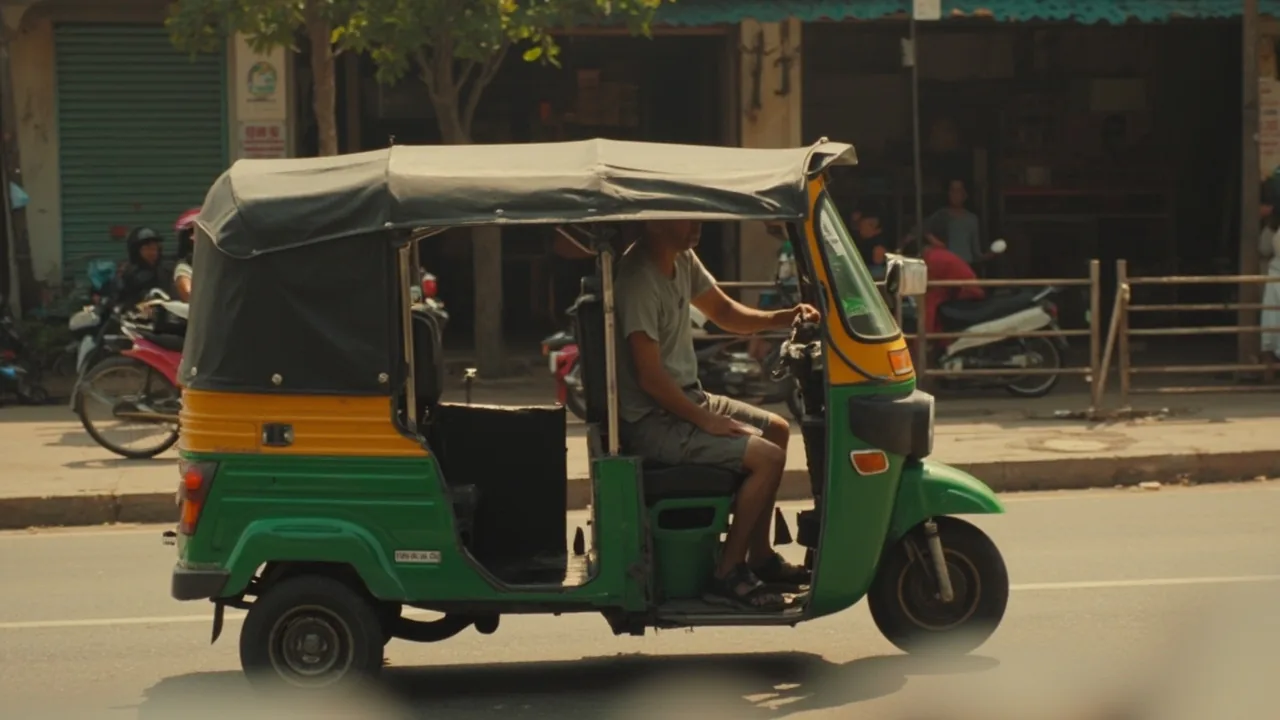
Phnom Penh Survival Guide: Tuk-Tuks, Tuol Sleng, Indian Food & Russian Market Hacks
Phnom Penh is Southeast Asia’s most emotionally heavy capital. Between the Killing Fields, S-21 prison, and a backpacker scene that runs harder than Bangkok’s, you will need a working scam radar, a stomach that handles street food, and a budget that doesn’t blow out on day three. Cross-checked against current tuk-tuk rates, the official VoA fee at the airport, the e-visa portal at evisa.gov.kh, and traveller reports from June 2026.
Quick Answers
| What | Answer | Price (INR) |
|---|---|---|
| Daily backpacker budget (dorm + street food + transit) | ₹2,121-₹2,699 (~22-28 USD) | ₹2,120-₹2,700 (~$21.99-$28.01) |
| Phnom Penh airport to city centre by tuk-tuk | ₹964 (~10 USD) | ₹965 (~$10.01) |
| Visa on arrival fee (Cambodia) | ₹2,892 (~30 USD) at airport, ₹3,471 (~36 USD) e-visa online, 30 days single entry | ₹2,890 (~$29.98) |
| Tuol Sleng (S-21) entry fee | ₹482 (~5 USD) + audio guide | ₹480 (~$4.98) |
| Cellcard/Smart tourist SIM 7-day | ~10GB data | ₹250 (~$2.59) |
The Airport Tuk-Tuk Trap (and How to Skip It)
This is the single biggest way Indian travellers lose money on arrival. Phnom Penh International has an official “Passenger Transport Desk” inside the arrivals hall that quotes ₹964 (~10 USD) to the riverside / BKK1 area. That is the legal rate and the actual fair price for a fixed route.
What usually happens: drivers outside arrivals tell you the desk is closed, the official rate is ₹1,446 (~15 USD), your hotel is much further than it is, or they ignore the quote and ask for ₹1,446-₹1,928 (~15-20 USD) once your bags are loaded. Some drivers will say “meter broken” or point to a free sim card / tuk-tuk combo that ends with a ₹2,410 (~25 USD) ride to a commission-based guesthouse.
How to do it:
- Walk past the drivers, find the official desk inside arrivals, pay the ₹964 (~10 USD) fee, get a printed ticket, hand it to the driver waiting at the official rank outside. This is the documented route on the airport’s own signage.
- If the queue at the desk is long, walk to the departure level exit and grab a Grab (Cambodia’s ride-hailing app) from the pickup point. Same trip, ₹386-₹578 (~4-6 USD), no haggling.
- Never accept a free sim card offer tied to a ride. The “free” sim is a ₹289 (~3 USD) tourist sim they bought for ₹145 (~1.50 USD), and the ride price goes up to cover it.
Subodh’s Pro Tip: Book the airport pickup through your hostel. Most places in BKK1 and the Riverside area charge ₹482-₹675 (~5-7 USD) for the same ride. The Mad Monkey, Onederz, and most guesthouses will email you this on confirmation. Reply yes, save the difference for an actual meal.
Getting Around the City: PassApp vs Grab vs Tuk-Tuk
Once you are in town, three options exist:
PassApp is the local ride-hailing app and the cheapest. Tuk-tuk rides inside the central area (Riverside, BKK1, Russian Market, Tuol Sleng) run ₹96-₹145 (~1-1.50 USD). Set the destination, watch the meter run, pay in cash at the end. Drivers accept riel or USD at the rate displayed on the screen.
Grab works in Phnom Penh but charges 20-30% more than PassApp. Use it when PassApp is glitching (rainy evenings, post-midnight) and you need a confirmed car.
Street tuk-tuks (no app) will quote you ₹191-₹358 (~8,000-15,000 KHR or ~$1.98-$3.71) for the same trip. For short hops inside the centre, walk or use PassApp. For longer routes (to Choeung Ek Killing Fields, the airport, or out to the suburbs), negotiate before you get in. The current fair rate to Choeung Ek, about 17 km south of the centre, is ₹675-₹964 (~7-10 USD) one way via tuk-tuk, or ₹386-₹482 (~4-5 USD) via Grab.
Subodh’s Pro Tip: Carry small notes of both currencies. USD is widely accepted but you get change in riel. Drivers running short on change will “round up” the riel side aggressively. Pay in riel for small fares (under ₹193 (~2 USD)) and you sidestep the rounding entirely.
Russian Market (Psar Tuol Tom Poung) Without Getting Ripped Off
The Russian Market is the best souvenir and clothing market in Phnom Penh, and the most heavily targeted at tourists. The “Russian” name comes from the expat Russian traders who ran it in the 1990s, nothing to do with Russian tourists today.
The Real Haggling Rules
- First quote for tourist clothing (branded tees, pants, dresses, knock-off bags): start at 40-50% of the asking price. Work up to 60-70% for a fair deal.
- First quote for local souvenirs, scarves, krama cloth, silver: start at 50-60% of the asking price. Fair price is 70-80%.
- Fixed-price items (electronics, name-brand anything, food stalls, drinks): no haggling. The price is on the tag. Walk away if they tell you “special price for you.”
- Bundle discount: if you are buying 3+ items, ask for a total price, not per-item. Sellers prefer one big sale to five small ones.
How to Haggle Without Offending
Smile. Always. Say “too expensive” (thleang angkat) with a laugh, not a flat refusal. If they don’t move, walk five steps toward the exit. In 8 out of 10 cases they will call you back with a better price. If they don’t, the price wasn’t real.
What never works: aggressive counter-offers, touching the item while negotiating, raising your voice, comparing prices to a different stall in front of the seller. Cambodian sellers respect patience and a friendly face more than bargaining skill.
What Indian travellers report: if you visibly bargain hard, you’ll be quoted higher to start. The “soft Indian tourist” stereotype runs in both directions here. Smile first, anchor low second, walk away third.
Tuk-Tuk Drivers and the “It’s Closed Today” Lie
The granddaddy of Phnom Penh scams. A tuk-tuk driver at your hostel tells you the Royal Palace is closed for a Buddhist holiday, or Tuol Sleng is closed for “cleaning day,” and offers a “special tour” to three other places instead. The driver gets a commission from each shop on the route. You lose your morning and end up at a gem showroom you didn’t ask for.
The reality: The Royal Palace is closed only on Khmer New Year (mid-April), Pchum Ben (late September/early October), and the actual day of the King’s coronation or funeral. Tuol Sleng (S-21) is open every day of the year except Khmer New Year. Choeung Ek Killing Fields closes on those same days.
How to verify before you leave the hostel: Google “Royal Palace Phnom Penh closed today” the night before. The Cambodia tourism board posts holiday closures on their official site. Cross-check the Royal Palace schedule directly with your hostel reception, who sees dozens of tourists head there each morning and knows the real status.
If a driver insists the place is closed, decline the tour, pay for the direct tuk-tuk (₹95-₹143 (~4,000-6,000 KHR or ~$0.99-$1.48)) and go yourself. Five minutes at the gate will tell you whether the driver was lying.
SIM Cards and Connectivity
You have three real options at the airport:
- Airport desk SIM: Smart or Cellcard tourist SIM, 7 days, ~10 GB data, ₹289 (~3 USD). Available at the official telco counters just past customs. Quickest path to working data.
- City shop SIM: Same providers, same packages, sometimes ₹96-₹193 (~1-2 USD) cheaper once you are in town. Buy at any Cellcard or Smart branded shop, or at a 7-Eleven. Need your passport.
- Nomad eSIM: Buy before you fly, scan a QR code at 35,000 feet, land with working data. Same coverage as a physical tourist SIM, no passport handover required. Get Nomad eSIM.
Subodh’s Pro Tip: If you have a short layover and need Maps, WhatsApp, and Grab working inside an hour, the airport desk SIM is worth the ₹96-₹193 (~1-2 USD) markup. If you have time after check-in, walk to a Smart shop near BKK1 and pay ₹145-₹193 (~1.50-2 USD) for the same package.
Coverage: Smart and Cellcard both run 4G/LTE across the city centre, Riverside, Tuol Sleng, and Russian Market. 5G is rolling out but spotty. Outside the city (Choeung Ek, Silk Island, Oudong) expect 3G or dead zones.
Indian Food in Phnom Penh: Where to Eat
This matters. Phnom Penh has the best Indian food scene of any Southeast Asia capital outside Singapore. Three real options that don’t disappoint:
Gorkha Palace (Indian and Nepalese, BKK1 area, 4.8 rating) is the reliable choice for north Indian curries, dal, naan, and biryani in the ₹578-₹868 (~6-9 USD) per person range. Open lunch and dinner, walk-ins welcome.
Indian Royal Halal Food (Riverside, 4.8 rating) does Punjabi and Mughlai halal at a slightly higher tier (₹771-₹1,157 (~8-12 USD) per person) with a river view. Family-style seating, big portions, the butter chicken and dal makhani are what Indian travellers specifically recommend.
MDSK (4.7 rating) is the vegan dosa specialist. South Indian street food at its Phnom Penh best: masala dosa, vada pav, idli, sambhar, all vegetarian, around ₹771-₹1,157 (~8-12 USD) per person for a full meal. The vada pav gets called out by name in nearly every review.
Subodh’s Pro Tip: Order online if you want to avoid language mishaps. Both Gorkha Palace and Indian Royal Halal are on Foodpanda and GrabFood in Phnom Penh. Photo menus at the door are reliable; menu-only restaurants in this city will sometimes drop a ₹1,157 (~12 USD) dish when you point at a ₹482 (~5 USD) item on the table.
Local Food Worth Trying (Non-Indian)
If your group can handle non-veg and wants the actual Cambodian food experience:
- Phnom Penh Three Rivers Restaurant (4.9 rating): Traditional Khmer dishes in a cozy riverside setting. Amok (fish curry steamed in banana leaf), lok lak (stir-fried beef), and Khmer red curry are the three dishes to try.
- Cuisine Wat Damnak (4.7 rating): Upscale contemporary Cambodian. Set menu around ₹2,410-₹3,374 (~25-35 USD) per person, the move if you want one proper Khmer tasting meal in the city.
- CHINGU Cafe (4.8 rating): Korean-style brunch, the Kimchi Benedict is the signature dish. Not Khmer, but it’s where Phnom Penh’s brunch crowd goes on Sundays.
Street food: noodle soups (kuy teav), grilled meats on sticks, rice with pork and egg over rice (bai sach chrouk) for breakfast. Stick to stalls with high turnover, food cooked in front of you, and no buffet trays sitting in the sun. Stick to cooked food only, peel your own fruit, avoid ice from unknown sources.
For a full breakdown of what to skip, see our Cambodia food safety guide. Planning the full Cambodia route? Start with the Southeast Asia backpacking hub for country-by-country planning.
Tuol Sleng and Choeung Ek: The Two Sights You Cannot Skip
These two places are why most travellers come to Phnom Penh. Budget a full day and bring tissues.
Tuol Sleng (S-21 Genocide Museum) is a former high school the Khmer Rouge converted into a torture and detention centre in 1975-79. Today it’s a museum with cells, photographs, and survivor accounts. Entry fee is ₹482 (~5 USD) plus ₹289 (~3 USD) for the audio guide (worth it). The audio guide walks you through each block in about 90 minutes. Open daily 8 AM to 5 PM, last entry 4:30 PM.
Subodh’s Pro Tip: Go to Tuol Sleng first, in the morning. The order matters. You read about the regime’s paperwork and structure at S-21, then you stand in the killing field at Choeung Ek and see where the paperwork ended. Doing them in reverse order dulls the impact.
Choeung Ek Killing Fields is about 17 km south of the city, the largest of the Khmer Rouge mass grave sites. Entry fee is ₹578 (~6 USD), audio guide ₹289 (~3 USD), combined Tuol Sleng + Choeung Ek ticket ₹1,253 (~13 USD). Tuk-tuk out and back runs ₹675-₹964 (~7-10 USD) via negotiation, or grab a PassApp each way for around ₹482 (~5 USD).
Both sites have on-site memorials and a small stupa with skulls at Choeung Ek. Keep your voice low, no photos inside the cells or stupa, dress covered shoulders and knees out of respect. School groups visit both sites regularly, often in the morning, and will queue ahead of you at the audio guide desk.
Essential Cultural Rules Most Indians Don’t Know
- Head and feet: don’t touch anyone’s head, even children. Don’t point your feet at people or at Buddha statues. Crossing legs pointing feet at a monk or temple image is a real faux pas.
- Royal Palace dress code: shoulders and knees covered. No hats inside, no shoes inside the throne hall. Scarves are available to rent at the gate for $1 USD.
- Temple etiquette: same shoulder-and-knee rule, shoes off at every doorway threshold, never turn your back to a Buddha image for a photo.
- Monks: women should not touch a monk or hand anything directly to one. Place the item on a cloth or on the floor in front of them.
- Public anger: raising your voice in a hotel, restaurant, or shop loses you every negotiation in Cambodia. Calm, polite, slightly amused is the winning tone.
- Basic Khmer: “Arkun” (thank you), “Joom reap sou” (hello), “Thleang angkat” (too expensive), “Ot te” (no thanks). Locals visibly warm up when you try.
Common Mistakes Indian Travellers Make in Phnom Penh
- Trusting the first tuk-tuk quote: drivers anchor high. Always counter at 50% and work up.
- Carrying all cash in one wallet: split it. A ₹1,928 (~20 USD) pickpocket incident in BKK1 is the end of your day.
- Going to “special tour” stops (gem shops, silk villages, dried seafood markets) the tuk-tuk driver insists on: you’ll spend 45 minutes in a shop you don’t care about. Politely refuse.
- Buying “kingdom of Cambodia” land sale offers at the airport: these are real estate scams targeting tourists, ignore the glossy brochures.
- Losing your temper over a ₹193 (~2 USD) overcharge: it doesn’t work here. Smile, walk away, find another driver.
Daily Budget Breakdown for Indian Backpackers
At the current rate of 1 USD = ₹96.33 (1 INR = 41.95 KHR for riel conversions), here is what a real day costs in Phnom Penh:
| Item | Range | In USD | In INR |
|---|---|---|---|
| Dorm bed (Mad Monkey, Onederz, The Big Easy) | ₹675-₹1,157 (~7-12 USD) | ₹675-₹1,157 (~7-12 USD) | ₹670-₹1,160 (~$6.95-$12.03) |
| Street food (three meals) | ₹96-₹289 (~1-3 USD) | ₹96-₹289 (~1-3 USD) | ₹95-₹290 (~$0.99-$3.01) |
| Mix of street food and one sit-down meal | ₹289-₹578 (~3-6 USD) | ₹289-₹578 (~3-6 USD) | ₹290-₹580 (~$3.01-$6.02) |
| Local tuk-tuk / PassApp (4-5 rides) | ₹386-₹578 (~4-6 USD) | ₹386-₹578 (~4-6 USD) | ₹385-₹580 (~$3.99-$6.02) |
| Entry fees (Tuol Sleng + Choeung Ek) | ₹1,253-₹1,542 (~13-16 USD) | ₹1,253-₹1,542 (~13-16 USD) | ₹1,250-₹1,540 (~$12.97-$15.97) |
| Cold drinks, coffee, water | ₹193-₹289 (~2-3 USD) | ₹193-₹289 (~2-3 USD) | ₹195-₹290 (~$2.02-$3.01) |
| Total per day | ₹2,410-₹3,085 (~25-32 USD) | ₹2,410-₹3,085 (~25-32 USD) | ₹2,400-₹3,080 (~$24.90-$31.95) |
For a full Cambodia-wide budget, see our Phnom Penh budget guide.
Subodh’s Take
Phnom Penh rewards the traveller who shows up prepared. Tuk-tuk quotes will test you, market sellers will double the price for foreigners, and the food can make you sick if you go in blind. None of this is hard once you have the actual rates and a working sim. The Killing Fields and S-21 will sit with you for weeks after you leave; budget a proper day for them, not a rushed afternoon. Eat at the three Indian restaurants above when you need grounding, the Khmer spots when you want the real experience, and stay calm when a driver tries the closed-temple line on you. Phnom Penh is heavy, generous, cheap, and unforgettable if you do it right.
FAQ
Is Phnom Penh safe for Indian travellers? Yes, the central areas (Riverside, BKK1, Tuol Tom Poung) are safe day and night. Petty theft is the main concern. Avoid isolated lanes after midnight and don’t flash cash or phones on quiet streets. For a deeper dive, read our solo female traveller guide. For the full scam playbook across Cambodia, see our Cambodia scams & safety guide.
Can I use Indian UPI apps in Cambodia? No. UPI does not work in Cambodia. Carry USD cash, withdraw riel/USD from ABA Bank or Canadia Bank ATMs (avoid non-bank standalone ATMs at convenience stores, they charge ₹482-₹578 (~5-6 USD) per withdrawal), and use forex cards for bigger purchases.
How much should I budget per day in Phnom Penh? ₹2,410-₹3,085 (~25-32 USD) covers dorm, street food, tuk-tuks, and entry fees. The Phnom Penh budget guide breaks down weekly and monthly totals.
What’s the best way to get from the airport? ₹964 (~10 USD) official desk tuk-tuk, ₹482-₹578 (~5-6 USD) Grab, ₹482-₹675 (~5-7 USD) pre-arranged hostel pickup. Avoid unmarked drivers quoting over ₹1,446 (~15 USD).
Do I need a visa in advance? No. VoA is ₹2,892 (~30 USD) at the airport for Indian passport holders, e-visa is ₹3,471 (~36 USD) online via evisa.gov.kh, both give 30 days single entry. Carry a 4x6 cm white-background photo for VoA.
Is tap water safe? No. Brush teeth with bottled water, avoid ice from street stalls, peel your own fruit. Bottled water is ₹24-₹48 (~0.25-0.50 USD) at any shop.
When is the cheapest time to visit? May to October is low season. Lighter rains, fewer tourists, dorm prices drop ₹96-₹193 (~1-2 USD). November to February is high season, dry and cooler.
