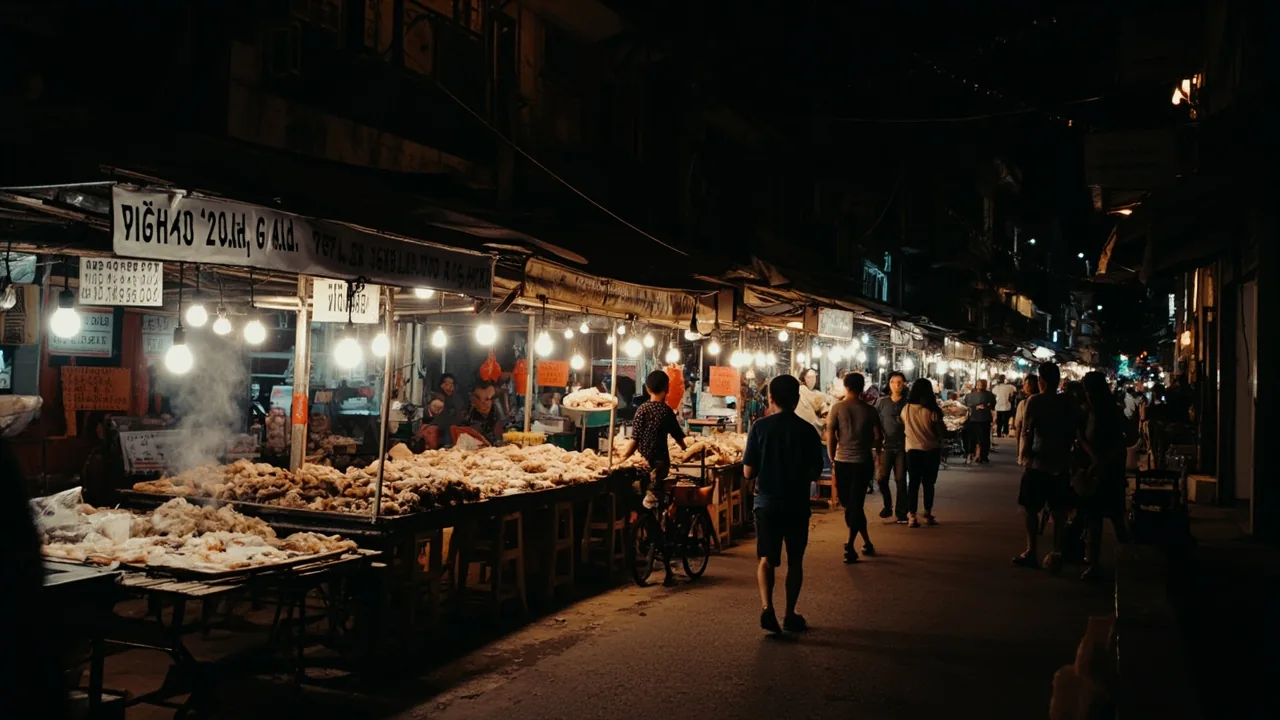
Phu Quoc Night Market 2026: Timings, What to Buy & Scams to Avoid
Phu Quoc’s Dinh Cau Night Market sits at the mouth of the Duong Dong river, a permanent bazaar with food courts down both sides and souvenir stalls in the middle. For anyone searching Phu Quoc night market opening times what to buy, this guide covers exact hours, stall-by-stall prices, and scams to watch for. Stalls start flipping grills the moment the sun drops behind the temple on the cape.
If you want grilled scallops, cheap pearls, and a thousand T-shirts, this is the place. If you want a quiet cocktail, it is not. Read on for the exact stall-to-stall breakdown, the prices you should see, and the four common scams that catch Indian backpackers. For a broader overview of backpacking the region, see our Southeast Asia backpacking hub.
Quick Answers
| What | Answer | Price (INR) |
|---|---|---|
| Opening hours | 5pm to midnight, every day | Free |
| Best time to arrive | 6pm to 7pm (stalls warm, crowds thin) | |
| Signature seafood platter (grilled scallops, clams, prawns) | ₹552-₹1,105 (~150,000-300,000 VND or ~$5.73-$11.46) per plate | |
| Pearl jewellery (freshwater, set) | ₹737-₹2,946 (~200,000-800,000 VND or ~$7.64-$30.56) | |
| Fish sauce (Phu Quoc’s main export) | ₹295-₹552 (~80,000-150,000 VND or ~$3.06-$5.73) per 500ml bottle | |
| Coconut ice cream | ₹74 (~20,000 VND or ~$0.76) |
The Dinh Cau Night Market at a Glance
Dinh Cau sits at the mouth of the Duong Dong river, a 5-minute walk from the backpacker strip along Tran Hung Dao street. Travellers describe it as a permanent night bazaar with a food court running down both sides and souvenir stalls packed into the middle. Permanent roof, concrete floor, open walls, fans in summer. It is loud, it is touristy, and it works.
Bring small VND notes. Most stalls run on cash, the larger souvenir shops take cards, but the seafood grills and fruit sellers do not.
Hours and the best 90 minutes
The market officially opens at 5pm and the last grills close around midnight. The smartest window is 6pm to 7:30pm: the grills are hot, the tables are easy, and the sunset light over the Dinh Cau cape is the only free thing you will leave with. After 9pm it becomes shoulder-to-shoulder, especially Friday and Saturday when domestic tourists fly in for the weekend. For weather patterns across the year, see our Phu Quoc weather guide.
The layout
Three main sections, in order:
- Seafood grills along both flanks, plastic stools, communal tables, no menus, point at the fish tank.
- Souvenir lane down the centre: T-shirts, lacquerware, dried seafood, pepper, pearls, drag-on keychains.
- Fruit and dessert row at the northern end: coconut ice cream, sugar cane juice, mango on a stick.
What to Eat at the Market
You came for the seafood. The rest is filler.
Must-eat at a seafood stall
Walk to any stall with a glass fish tank and a Vietnamese woman yelling “seafood, seafood, sit sit.” Order:
- Grilled scallops with scallion and peanut (so diep nuong mo hanh), usually three to four pieces per order, served in the shell. ~₹110 (~30,000 VND or ~$1.15) per order.
- Butter-grilled clams (ngheu nuong bo), three to four orders is normal for two people. ~₹147 (~40,000 VND or ~$1.53) per order.
- Tiger prawns on the charcoal, grilled with salt and chili. ~₹442 (~120,000 VND or ~$4.58) per 100g, you choose the size from the tank.
- Squid on the grill (muc nuong), brushed with a sticky sweet chili glaze. ~₹295 (~80,000 VND or ~$3.06) per whole squid.
- Sea urchin (nhum bien) when in season (October to March): served raw with lime and a tiny spoon of wasabi, ~₹221 (~60,000 VND or ~$2.29) per fresh urchin.
Travellers report the best value is at the southern end, just past the temple gate, where four family-run stalls keep prices listed on a board. The first five stalls by the main gate often quote 30 to 50 percent higher to catch first-time visitors.
Veg and Indian-friendly bites
Dinh Cau is not a vegetarian paradise. Fish sauce runs through everything, even the seemingly “plain” grilled greens. Two ways to survive:
- Sugar cane juice (nuoc mia), ₹55 (~15,000 VND or ~$0.57) a cup, vending stalls at the northern end. It is sweet, cold, and safe for strict-veg stomachs.
- The fruit stands: dragon fruit, rambutan, mangosteen (in season), pineapple chunks, all peeled and bagged at ₹74-₹110 (~20,000-30,000 VND or ~$0.76-$1.15) per bag.
For a proper Indian meal, you will need to walk off-site. North Indian restaurants along Tran Hung Dao, the main backpacker road, serve curries, dal, and rice from ₹368-₹737 (~100,000-200,000 VND or ~$3.82-$7.64) per dish. Amritsr Restaurant and PAPAJI are two reliable options near the beach end of the street, ask any tuk-tuk driver for “Indian food, Tran Hung Dao.” For more on eating across Vietnam, see our Vietnam street food guide.
Subodh’s Pro Tip: Pick your stall first, then sit. The shrimp tanks all carry similar stock, but the woman who waves you down first is rarely the cheapest. Walk the row once, compare the taped menu boards, then commit. Saves ₹184 (~50,000 VND or ~$1.91) easily.
What to Buy (And What to Walk Past)
Worth it under ₹500 (~$5.19) These are the items where the price is genuinely good and the goods are genuine.
- Fish sauce, 500ml bottle. Phu Quoc is the fish-sauce capital of Vietnam. The good stuff (Phu Quoc brand, 30N or 40N grading) goes for ₹295-₹552 (~80,000-150,000 VND or ~$3.06-$5.73) per bottle at the market, half what the airport shops charge. Look for bottles with the island’s protected designation of origin sticker.
- Dried seafood bundles: shrimp, squid, scallops, vacuum-packed for the flight home. ₹368-₹737 (~100,000-200,000 VND or ~$3.82-$7.64) per pack. Light, shelf-stable, and easy to declare at Indian customs.
- Pepper, 200g tin. Phu Quoc pepper is a known export, and visiting a Phu Quoc Pepper Farm on the island is a worthwhile day trip. ₹295-₹442 (~80,000-120,000 VND or ~$3.06-$4.58) per tin, the green peppercorn version is the one to grab.
- Coconut soap and hair oil, ₹110-₹184 (~30,000-50,000 VND or ~$1.15-$1.91) per bar or bottle, all made in factories on the island. Cheap souvenirs for the office.
- Mango or passion fruit chocolate bars, ₹92 (~25,000 VND or ~$0.96) each, locally produced and sold at most souvenir stalls.
Worth it if you know what you are buying
- Pearls. Yes, they are real freshwater pearls from the farms around the north of the island. Real as a material, but the price is set high. A simple stud pair goes ₹737-₹1,473 (~200,000-400,000 VND or ~$7.64-$15.28), a full necklace ₹2,946 (~800,000 VND or ~$30.56) and up. The trick: every stall says “farm price.” None of them are. Bargain to 60 percent of the opening quote and you are close.
- Lacquerware bowls and chopsticks sets, ₹368-₹921 (~100,000-250,000 VND or ~$3.82-$9.55) per set. Made in the village workshops, durable, breakable in your suitcase if you don’t wrap them in your shirt.
Skip
- “Vietnamese” T-shirts printed in the market: ₹184 (~50,000 VND or ~$1.91), the same print job you find at every other stall in the row.
- Wooden carvings labelled “antique”: every stall has them, none are, the wood is fresh from a workshop.
- The arowana fish in tiny bowls: it is illegal to buy or export them, and the sellers will deny this. Walk past.
- “Designer” sunglasses at the entrance: still ₹289 (~3 USD), still peeling a week later.
Getting There and Back
Dinh Cau Night Market is walkable from anywhere in Duong Dong Town. Further out, grab a Grab. Check our Vietnam budget guide for daily cost breakdowns across the country.
- From Long Beach (most resorts): 10km east. Grab bike runs ₹92 (~25,000 VND or ~$0.96), Grab car ₹295 (~80,000 VND or ~$3.06) for the trip home.
- From the airport: 15 minutes, ₹442-₹552 (~120,000-150,000 VND or ~$4.58-$5.73) by Grab car. Negotiate a fixed price with a taxi if you land late at night when rideshare supply is patchy.
- From the cruise port: 5 minutes. Walk out the gate, turn right, ten minutes of road walking along Tran Hung Dao.
Do not take a tuk-tuk back to Long Beach after midnight unless you negotiated the price on the way in. A standard quoted fare of ₹737 (~200,000 VND or ~$7.64) for a 10km ride is the night’s most common tourist tax. Grab bikes work fine past midnight on the main roads if you are using the rideshare app, which is the easier option.
Getting Connected
Dinh Cau has free Wi-Fi, but it is overloaded by 7pm. Buy a local Viettel or Mobifone SIM for the trip, ₹368-₹552 (~100,000-150,000 VND or ~$3.82-$5.73) for a 7-day package with 5GB of data. Stub at the airport kiosks on the way in, or grab one at any VinMart in Duong Dong.
If you want to skip the airport queue and stay online the second your plane hits the gate, the easier option is an eSIM. Check Nomad eSIM plans, set it up before you fly, data starts the moment you land.
Night-Time Safety and Scams
Phu Quoc is one of the safer parts of Vietnam. Phu Quoc city itself is calm after midnight. The night market sees almost no violent crime. What it does see is targeted tourist pricing, four classic versions.
1. The “no menu, no price” seafood scam
You sit down, the griller points at the tank, you choose the fish, you eat, and the bill arrives showing ₹2,946 (~800,000 VND or ~$30.56) for a fish that was 350g not the 800g on the receipt. Always, always ask for the fish to be weighed in front of you with a visible scale, photographed, and the price per kg confirmed before cooking. This single step stops the scam, the scaler appears and the number drops.
2. The pearl “farm outlet” pressure
A friendly girl walks you to a “special outlet” two streets behind the market. Pearls are 30 percent cheaper, she insists, please come. The pearls are the same fake-Chinese-freshwater pearls every other stall sells, and the journey ends in a hard sell of a 1.5 million VND pendant. Stay where you are, the front-row stalls sell the same goods at the same bargaining price with no walking required.
3. The fake “shop is closing” urgency
The classic “you buy now, I close in 30 minutes, special price only for you” line is a mid-sale trap that morphs into something pricier once you commit. Walk away, watch the price drop in 60 seconds.
4. The card-machine surcharge
A 3 to 5 percent “card fee” appears at the seafood grills when you tap. Vietnamese law says surcharges are legal, but it should be on the menu. Push it, ask for cash discount, pay cash instead. Travellers report a ₹368 (~100,000 VND or ~$3.82) cash discount on a 1.5 million VND seafood bill is normal.
Safety Alert: At night, the river mouth behind the market is poorly lit and the ground is uneven. A broken ankle at Dinh Cau is not the souvenir you want. Wear flat shoes, watch your step after the second beer.
Local Rules and Etiquette
Phu Quoc is a small island, the residents see the same backpackers month after month, and they take it personally when visitors act badly. Specific things to know:
- The temple at Dinh Cau Cape Temple is a working Buddhist site. Cover shoulders and knees if you walk up the steps. No photos of the altar inside. Open until 9pm.
- No firecrackers or sparklers anywhere on the market. Confiscation is the friendly version, a fine is the unfriendly version.
- Tetanus shots before you fly. Standard travel health advice, update yours if you haven’t in five years.
- Cashiers quote in thousands of VND by default. “300” at a stall means ₹1,105 (~300,000 VND or ~$11.46). Confirm the number of zeroes before any handshake.
Before you fly, check the latest advisory from the Indian Ministry of External Affairs and the official Phu Quoc tourism portal for any local curfews or weather disruptions. Indians need an e-Visa ($25 / ₹2,085), no visa-on-arrival is available. Apply at the official e-Visa portal at least 3 days before travel. Our Vietnam visa guide for Indians has the full step-by-step process. Advisories change, the page above is updated within 24 hours of any incident that affects travellers.
Common Nightlife Mistakes Indians Make
- Sitting at the first stall that shouts at you. The flat-touting stall at the front gate runs a 50 percent tourist markup. Walk five stalls in, save ₹184 (~50,000 VND or ~$1.91) on your meal.
- Buying pearls at the back-street “outlet.” You are being walked to a hard-sell room. Stay in the main market.
- Ordering whole fish without weighing it in front of you. Scam-bait. Always ask for the visible scale.
- Tap-and-pay without checking the receipt. Surcharges hide here. Pay cash, get 5 percent off.
- Driving a rented scooter back to Long Beach after midnight. Roads are darker than they look, and Vietnamese drivers don’t dim high beams. Take a Grab.
- Showing up after 8pm with the family. The place becomes a wall of people. Aim for 6pm to 7pm, dinner with sunset, walk out before the crush.
- Bringing a child under 6. The market is loud, hot, and there is no shade after 8pm. Families with small kids tend to head back to Long Beach resorts for the evenings.
Subodh’s Take
Phu Quoc’s night market is one of the cheaper places in Vietnam to eat large grilled prawns for around ₹500 (~$5.19) and not feel cheated. The 5pm-to-midnight hours are no longer a secret, but most travellers miss the window between 6pm and 7pm when the grills are hot and the beer is cold. Show up at sunset, eat at the southern stalls, bargain the pearls down 40 percent, save the card-machine jokes for somewhere else. And don’t touch that scooter on the way home. Phu Quoc doesn’t have an Uber problem, it has a “first-day islander” problem, and Grab solves both.
FAQ
What time does Phu Quoc night market open?
5pm, every day, including weekends. Stalls start cooling the grills around midnight.
How do I get to the night market from Long Beach?
Grab bike (~25,000 VND) or Grab car (~80,000 VND). A taxi from the airport is ₹442-₹552 (~120,000-150,000 VND or ~$4.58-$5.73) if you want fixed-price comfort.
Is the seafood expensive at Phu Quoc night market?
It is mid-range for Vietnam. A full seafood dinner for two runs ₹2,946-₹5,524 (~800,000-1,500,000 VND or ~$30.56-$57.31). Compared to Goa seafood prices, this is a steal. Compared to other Vietnamese street food, it is the most expensive food on the island.
Can I use card payment at Phu Quoc night market?
For souvenirs, yes. For seafood grills and fruit, cash only. Carry ₹2,946-₹5,524 (~800,000-1,500,000 VND or ~$30.56-$57.31) per person for the night.
Are the pearls at Phu Quoc night market real?
Yes, but the price is set high. Bargain to 60 percent of the opening quote for freshwater pearl studs and 50 percent for necklaces. If a “factory outlet” offer pops up, walk away.
Is the night market safe for solo female travellers?
Yes, this is one of the safer night markets in Vietnam. Pick up your bag at the bathroom stalls (the bathroom part is paid, ₹18 (~5,000 VND or ~$0.19)), keep your phone in your front pocket, and avoid the river mouth after 10pm when the path gets uneven. For more on safety across Vietnam, see our Vietnam safety guide.
Do they sell alcohol at the market?
Yes. Cold beer (Bia Saigon, 333, Heineken) at ₹66-₹92 (~18,000-25,000 VND or ~$0.69-$0.96) per can. No shots, no cocktails, no hard liquor available. If you want whisky, walk to a bar on Tran Hung Dao first.
- Subodh
