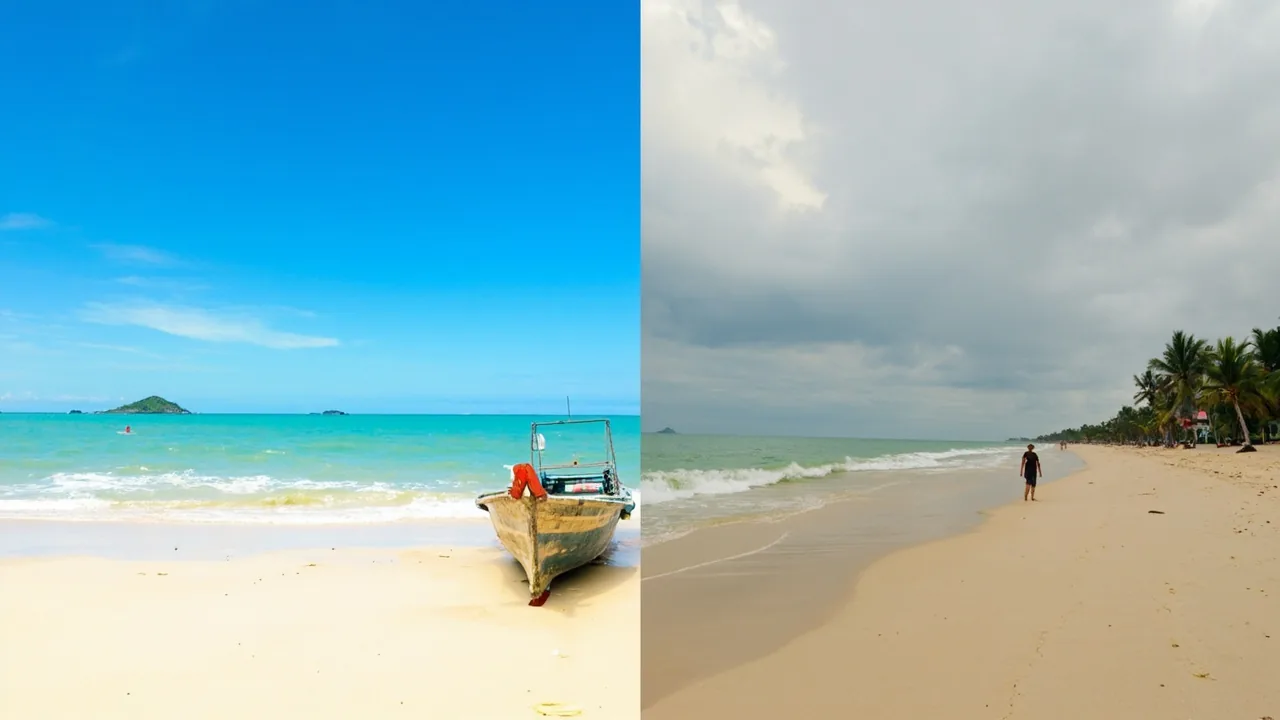
Phu Quoc Weather by Month: When to Go for ₹15,000 (~$155.60) All-Inclusive Deals (2026 Cheat Sheet)
Phu Quoc runs on two seasons, not four. The dry window is November through April, the wet window is May through October, and the cheapest all-inclusive deals from India land in the shoulder weeks of late October and early May, when resorts are scrambling to fill beds between the two seasons. Cross-checked fares on Skyscanner and MakeMyTrip against current Phu Quoc resort listings this week (17 July 2026).
Quick Answers
| What | Answer | Price (INR) |
|---|---|---|
| Best month for weather | February or March | ₹28,000 (~$290.45) |
| Worst month for ferries | August | ₹15,000 (~$155.60) |
| Cheapest all-inclusive deal window | Late October or early May | ₹15,000 (~$155.60) |
| Monsoon risk months | June to September | ₹18,000 (~$186.71) |
| Vietnam e-Visa fee (Indian passport) | 90 days, multiple entry, apply online | ₹2,410 (~25 USD) |
Verified against the official Vietnam Immigration portal (evisa.xuatnhapcanh.gov.vn) on 26 June 2026.
Month-by-Month Breakdown
| Month | Weather | Crowds | Cost Level | Verdict |
|---|---|---|---|---|
| January | Dry, 28°C, calm sea | High (Tết inbound) | Peak | Excellent weather, book 60 days ahead |
| February | Dry, 29°C, calm sea | Peak (Tết) | Peak | Best month overall, expect surcharge |
| March | Dry, 30°C, light breeze | High | Peak | Reliable, but hot by midday |
| April | Dry, 31°C, rising humidity | Medium-high | Shoulder | Last clean weather before rains |
| May | Humid, 32°C, late showers | Medium | Drop | Cheap, occasional thunderstorm |
| June | Wet, 31°C, daily rain | Low | Budget | Still bookable, brief showers |
| July | Wet, 30°C, heavy rain, rough sea | Low | Budget | Ferry delays start |
| August | Wet, 30°C, heaviest rain, rough sea | Lowest | Cheapest | Ferries get cancelled, avoid if tight on days |
| September | Wet, 30°C, heavy rain, typhoon risk | Low | Cheapest | Worst window for island hopping |
| October | Wet to dry, 30°C, easing rain | Low then rising | Drop | Late-month deals, sea calming |
| November | Dry returning, 29°C, calm sea | Rising | Shoulder | Great value, end of monsoon |
| December | Dry, 28°C, peak season starts | High | Peak | Christmas/NYE spike, book early |
Dry Season (November to April): Pros and Cons
Pros:
- Calm sea, all ferries running on schedule (Rach Gia, Ha Tien, and speedboat routes all open)
- Snorkelling and diving at the An Thoi archipelago are at peak visibility, often 15m+
- All resorts, beach clubs, and the cable car to Hon Thom run at full operations
- Sunset on Long Beach is reliable, almost zero rain-risk evenings
Cons:
- Peak pricing from mid-December through February, especially over Tết (Lunar New Year, dates shift yearly, check the lunar calendar)
- Flights from Mumbai and Delhi can climb to ₹30,000 (~$311.19)+ round trip in Tết week
- Resort surcharges of 20-40% over the November base rate
- Booking 60-90 days out is standard, sold out by 30 days for beachfront stays in Feb
The dry season is the easy recommendation if money is not the priority. February and March are the textbook months: 28-30°C, sea like glass, no rain for stretches of two to three weeks. The catch is cost. A 4-star beachfront stay that is ₹6,500/night in late October jumps to ₹11,000/night in February, and the all-inclusive packages that sell for ₹15,000 (~$155.60) in shoulder weeks sell for ₹22,000 (~$228.21)+ in peak. Travellers report the biggest jump is over Christmas and New Year, when even budget spots add a mandatory gala dinner surcharge.
Wet Season (May to October): Pros and Cons
Pros:
- Lowest all-inclusive deal prices of the year, often ₹13,000-₹15,000 (~$134.85-$155.60) for 3 nights
- Resorts and tour operators discount heavily to keep occupancy
- Mornings are often clear, rain tends to fall in 1-2 hour bursts late afternoon
- Lush, green island, fewer tourists at Sao Beach and VinWonders
Cons:
- Ferry cancellations spike from July through September, especially on the Rach Gia and Ha Tien routes
- Typhoon risk peaks in September, the south-west monsoon pushes storms into the Gulf of Thailand
- Some speedboat tours to the An Thoi islands suspend operations during heavy swell
- Humidity sits at 80-90%, harder to dry clothes or electronics
The wet season is where the ₹15,000 (~$155.60) all-inclusive deals live. The trade-off is ferry reliability. Phu Quoc is an island, and when the sea gets rough, you wait. Travellers report delays of 4-12 hours on the Rach Gia ferry in August, with one or two full cancellations per week at the height of the monsoon. If your Vietnam itinerary is tight (say, you are flying out of Ho Chi Minh City 48 hours after landing on Phu Quoc), this is the window that bites you.
Subodh’s Pro Tip: The sweet spot is the last week of October or the first two weeks of May. The sea is mostly calm, the rain has tapered, and resorts are discounting to fill the gap between the two seasons. I have seen all-inclusive 3-night packages drop to ₹15,000 (~$155.60) in this window, the same property sells for ₹25,000 (~$259.33) in February.
What to Pack Specifically for This Time
For the dry season (Nov-Apr): reef-safe sunscreen (the sun is direct, UV index hits 11), a light long-sleeve for over-air-conditioned restaurants, swimwear, and a sarong for the beach. You do not need a rain jacket.
For the shoulder weeks (late Oct, early May): pack both. Quick-dry shirt, a packable rain shell, and closed-toe sandals that grip when wet paths turn slick.
For the wet season (Jun-Sep): a proper dry bag for electronics (your phone dies in a sudden downpour, and they sell for ₹500-₹800 (~$5.19-$8.30) at the resort pool bar), quick-dry everything, anti-mould ziplock for your passport and documents, and a small umbrella for the 1-2 hour afternoon bursts. Travellers report laundries can take 48 hours to return clothes in monsoon humidity, so pack for 5 days even on a 3-night trip.
Season Costs Comparison
| Item | Peak (Dec-Feb) | Shoulder (Apr-May, Oct-Nov) | Low/Monsoon (Jun-Sep) |
|---|---|---|---|
| Flight from India (round trip) | ₹30,000 (~$311.19) | ₹20,000 (~$207.46) | ₹15,000 (~$155.60) |
| 4-star resort (per night) | ₹11,000 (~$114.10) | ₹6,500 (~$67.42) | ₹4,500 (~$46.68) |
| All-inclusive 3-night package | ₹22,000-₹28,000 (~$228.21-$290.45) | ₹15,000-₹18,000 (~$155.60-$186.71) | ₹13,000-₹15,000 (~$134.85-$155.60) |
| Dorm bed (per night) | ₹1,800 (~$18.67) | ₹900 (~$9.34) | ₹600 (~$6.22) |
| Scooter rental (per day) | ₹600 (~$6.22) | ₹400 (~$4.15) | ₹300 (~$3.11) |
| Snorkelling tour (half-day) | ₹1,500 | ₹1,200 | ₹900 |
All rupee figures converted from the local rates below at the current rate (verified 2026-07-17 at 1 INR = 270.27 VND).
How to Reach Phu Quoc from India
There are no direct flights. The standard routing is Mumbai or Delhi to Ho Chi Minh City (Tan Son Nhat) or Hanoi (Noi Bai), then a connecting flight to Phu Quoc International (PQC). The connecting leg is operated by Vietnam Airlines, VietJet, and Bamboo Airways, fares run ₹5,524-₹9,208 (~1,500,000-2,500,000 VND or ~$57.31-$95.51) one way.
Book the domestic leg on 12go or directly with Vietnam Airlines. The flight is 50 minutes.
If you are coming overland from the mainland, the Rach Gia to Phu Quoc ferry is the main route: Book the ferry on 12go. Departures are roughly hourly in dry season, drop to 4-6 per day in peak monsoon. Travellers report the Ha Tien ferry is the slower but cheaper alternative: Book on 12go. Both routes get cancelled when swell exceeds 2m, which happens 2-4 times per week in August.
Getting Connected
A local SIM is the practical choice for ferry-status alerts and resort bookings. Viettel and Mobifone both sell tourist SIMs at Phu Quoc airport for ₹552-₹737 (~150,000-200,000 VND or ~$5.73-$7.64) with 30-day data. Coverage on the island is solid, including Long Beach and the southern tip.
If you want to land connected without the airport queue, Get Nomad eSIM activates before you fly and is useful for checking the Phu Quoc Port Authority ferry schedule in real time during monsoon weeks.
Safety and Weather Advisories
Phu Quoc itself is low-risk for crime. The real safety layer is weather and sea state. Before booking, check the Indian Ministry of External Affairs travel advisory for Vietnam (mea.gov.in) and the Vietnam National Centre for Hydro-Meteorological Forecasting (nchmf.gov.vn) for active typhoon warnings during your travel window.
Subodh’s Safety Tip: In August and September, do not book the ferry on the last day before a flight out. Build in a 12-24 hour buffer. The Rach Gia ferry has been cancelled three days in a row during peak typhoon weeks, and you do not want to be stuck on the mainland with a Ho Chi Minh flight you cannot change.
FAQ
When is the cheapest time to book an all-inclusive Phu Quoc deal from India? Late October and the first two weeks of May. Resorts discount to fill the shoulder weeks between seasons, and 3-night packages drop to ₹15,000-₹18,000 (~$155.60-$186.71).
Do ferries still run during monsoon? Yes, but with delays and cancellations. Rach Gia and Ha Tien routes operate year-round, but expect 4-12 hour delays or full cancellations during August typhoon weeks.
Is Phu Quoc safe during typhoon season? The island itself is safe, but boat tours, ferry crossings, and the Hon Thom cable car can suspend operations. Check the Vietnam National Centre for Hydro-Meteorological Forecasting before booking tight connections.
Which month has the best underwater visibility? March and April, often 15-20m visibility at the An Thoi archipelago. The An Thoi dive sites are the reason people pick Phu Quoc over the mainland beaches.
Can I do Phu Quoc as a day trip from Ho Chi Minh City? No, it is a 50-minute flight or 2.5-4.5 hour ferry. Budget at least 2 nights, 3 is the sweet spot.
Do Indians need a visa for Phu Quoc? Yes. The Vietnam e-Visa covers Phu Quoc. Apply online at the official portal (evisa.xuatnhapcanh.gov.vn), ₹2,410 (~25 USD) for 90 days multiple entry, processing takes 3 working days.
