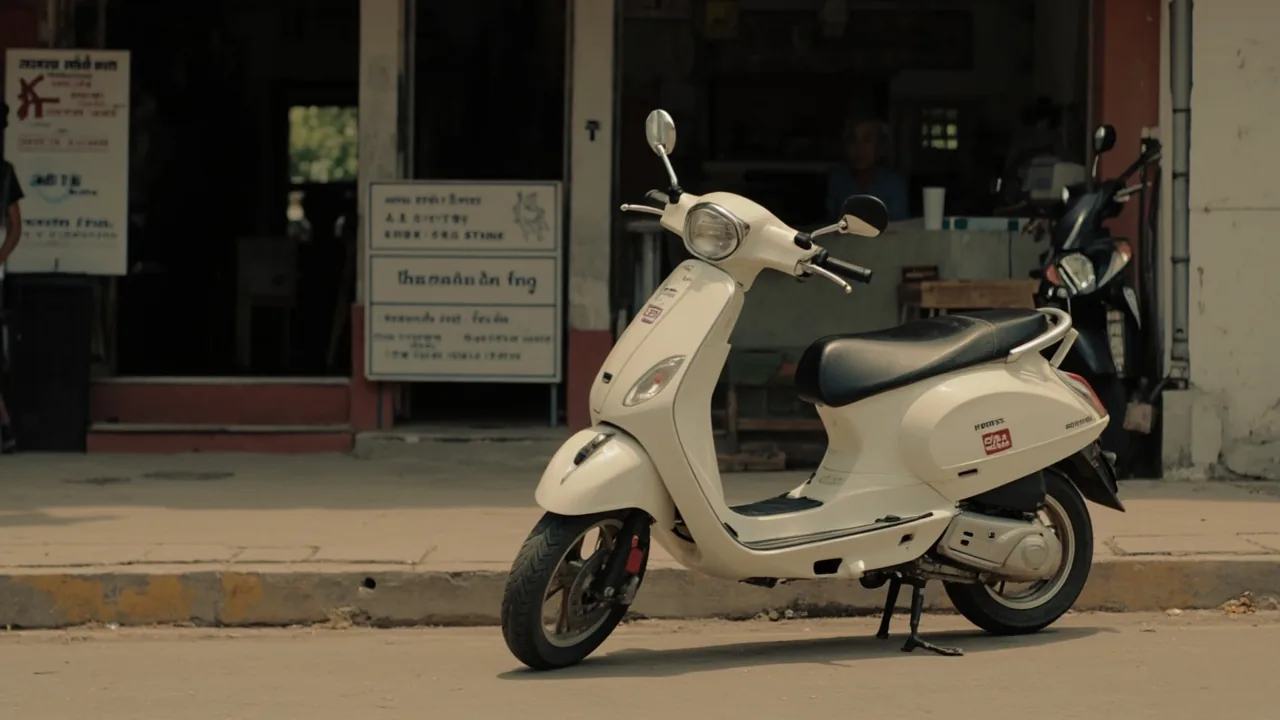
Rent a Scooter in Siem Reap: The Angkor Wat Temple Run on a Budget + Grab Bike & Tuk-Tuk Truths
If you’re Googling “rent scooter siem reap angkor wat,” you’re deciding between self-driving the Angkor temple loop, hiring a tuk-tuk driver, or calling Grab. We cross-checked rental shop rates, Grab Cambodia fares, and traveller reports to give Indian backpackers the honest side-by-side. Planning the wider region? Southeast Asia backpacking hub covers the full multi-country route.
Quick Answers
| What | Answer | Price (INR) |
|---|---|---|
| Cheapest way to do the Angkor temple loop? | Tuk-tuk for the day (3 temples, sunrise + main circuit) | ₹1,446 (~15 USD) to ₹2,410 (~25 USD) for a full-day charter |
| Self-drive scooter rental in Siem Reap? | Yes, widely available near Pub Street and Sok San Road | ₹482 (~5 USD) to ₹675 (~7 USD) per day |
| Is Grab Bike available in Siem Reap? | Limited. Grab Cambodia operates mainly in Phnom Penh. Siem Reap has PassApp and WeGo as the local ride-hailing apps, plus traditional tuk-tuks | ₹193 (~2 USD) to ₹482 (~5 USD) for in-town rides |
| Do I need an International Driving Permit (IDP) for a scooter in Cambodia? | Legally yes. In practice, rental shops rarely ask, but a police checkpoint fine without one can cost you your day | Fine: ₹358-₹715 (~15,000-30,000 KHR or ~$3.71-$7.42), plus passport hold |
| Indian vegetarian food near Pub Street? | Yes. Royal Indian, Dakshin’s, and Paratha House & Academy all serve proper dal-chawal | ₹675 (~7 USD) to ₹964 (~10 USD) per person |
Subodh’s Pro Tip: Cambodia is officially a USD cash economy. Carry small USD bills (₹96 (~1 USD), ₹482 (~5 USD), ₹964 (~10 USD)) for scooter deposits and temple fees. Riel (KHR) is given as change. Don’t convert rupees at the airport. See the Cambodia visa and money essentials for the full breakdown.
Rent a Scooter in Siem Reap: What It Costs
Scooter rental in Siem Reap is one of the cheapest in Southeast Asia. Most shops cluster along Sok San Road, around Pub Street, and near the Old Market. Walk in, show your passport, leave a cash deposit, ride away in 15 minutes.
Typical daily rates (July 2026, verified against traveller reports):
- Semi-auto 110cc–125cc scooter: ₹482 (~5 USD) to ₹675 (~7 USD) per day
- Fully automatic Honda Click/Yamaha NMAX: ₹578 (~6 USD) to ₹771 (~8 USD) per day
- Manual 125cc (better for temple roads): ₹675 (~7 USD) to ₹964 (~10 USD) per day
- Weekly rate (7 days): ₹2,892 (~30 USD) to ₹4,338 (~45 USD)
- Cash deposit: ₹4,820 (~50 USD) to ₹9,640 (~100 USD), refundable. Some shops accept a passport photocopy instead of cash. Never leave your original passport as collateral. A photocopy works.
Verified against traveller reports from Sok San Road shops as of July 2026.
For a 3-day temple run (Day 1: Angkor Wat sunrise + Bayon + Ta Prohm; Day 2: Banteay Srei + Grand Circuit; Day 3: Phnom Kulen or Koh Ker), a scooter costs roughly ₹1,446 (~15 USD) to ₹2,024 (~21 USD). A full-day tuk-tuk for the same circuit costs ₹1,446 (~15 USD) to ₹2,410 (~25 USD). The scooter wins on flexibility. The tuk-tuk wins on comfort and zero stress.
The IDP Rule: What Cambodia Enforces
Here’s the uncomfortable truth Indian backpackers learn the hard way: Cambodia legally requires an International Driving Permit (IDP) with a motorcycle endorsement. An Indian car license alone is not valid for two-wheelers anywhere in Southeast Asia, including Cambodia.
In practice:
- Rental shops in Siem Reap almost never ask for an IDP. They take your passport (photocopy), your deposit, and hand you the keys.
- Police checkpoints exist on the road to Angkor Wat, especially around the temple ticket checkpoint and on National Route 6 toward Phnom Kulen. Travellers report being stopped weekly, sometimes daily during peak season.
- If stopped without an IDP, the typical “fine” ranges from ₹358-₹715 (~15,000-30,000 KHR or ~$3.71-$7.42). Some officers ask for more. Your passport may be held until you pay.
- If you’re in an accident without a valid license, your travel insurance is void. You pay all hospital costs out of pocket.
Safety Alert: A scooter crash in Cambodia without an IDP is the single most expensive mistake Indian backpackers make in Siem Reap. Hospital bills start at ₹96,404 (~1,000 USD) for an X-ray, ₹482,018 (~5,000 USD)+ USD (~₹4,20,000+) for a fracture. Get the IDP in India before you fly. It costs ₹1,000 (~$10.37) at any RTO and takes one day.
The honest workaround: Most Indian travelers skip the IDP and ride anyway. The risk is real but low on a quiet temple day. If you do ride without one, drive slowly (30 km/h max), avoid night riding, and never ride after drinking. The fine is annoying. A hospital bill is catastrophic.
Scooter Rental Checklist: The 5-Minute Inspection
Before you hand over your deposit, spend 5 minutes on this. It saves you ₹4,820 (~50 USD) to ₹19,281 (~200 USD) in damage disputes when you return the bike.
- Photo and video everything. Walk around the scooter. Photograph every scratch, dent, and scuff mark from multiple angles. Open the seat box. Photograph the inside. Send the photos to your own WhatsApp with a timestamp.
- Test the brakes. Squeeze the front brake lever. Squeeze the rear. Both should bite firmly. If the front brake feels spongy or pulls to one side, ask for a different bike.
- Check the tires. Look at the tread. Cambodian roads have gravel patches near the temples. Bald tires on wet temple steps have ended more temple runs than bad luck.
- Test the lights. Headlight on. Tail light on. Indicators working. Police checkpoints at dusk check for working headlights.
- Check the helmet. It comes with the rental. Make sure the strap clips shut. A loose helmet is a fine waiting to happen.
Subodh’s Pro Tip: Take a 2-minute test ride around the block before leaving the shop. Feel the throttle response, the brakes at speed, and the suspension over bumps. If anything feels off, swap the bike. Rental shops have 10+ scooters. They’ll give you another one.
The Angkor Pass: Buy It First, Ride Second
Before you ride anywhere near the temples, you need an Angkor Pass. The ticket checkpoint at the main entrance checks every vehicle. There is no shortcut.
- 1-day pass: ₹3,567 (~37 USD)
- 3-day pass: ₹5,977 (~62 USD)
- 7-day pass: ₹6,941 (~72 USD)
Payment is cash only (USD or KHR, but USD is preferred). The pass comes with a photo ID card. Wear it around your neck at all times inside the temple complex. Checkpoints at Bayon, Banteay Srei, and Phnom Bakheng all scan it.
Verified against the official Angkor Enterprise ticket office as of July 2026.
For a full breakdown of which temples are on which pass and the dress code at Angkor Wat, see the complete Angkor Wat temple guide.
Tuk-Tuk vs Scooter vs Grab Bike: The Honest Side-by-Side
This is the decision most backpackers face. Here’s how they stack up for the Angkor run:
| Factor | Self-Drive Scooter | Full-Day Tuk-Tuk | Grab / PassApp Ride |
|---|---|---|---|
| Cost (full day, Angkor loop) | ₹482 (~5 USD) to ₹675 (~7 USD) | ₹1,446 (~15 USD) to ₹2,410 (~25 USD) | ₹771 (~8 USD) to ₹1,446 (~15 USD) |
| English-speaking guide | No | Yes (most drivers speak basic English, some excellent) | No |
| Sunrise flexibility | High. Leave at 4:30 AM, park at Angkor Wat lotus pond | High. Driver waits in the dark at your guesthouse | Low. App drivers don’t do pre-dawn temple runs |
| Safety risk | Medium. You drive, you fall | Low. Driver handles the road | Low |
| Heat comfort | Low. You’re in the sun all day | High. Shade and breeze | High |
| Best for | Confident riders on a tight budget | First-timers, sunrise chasers, anyone who wants to relax | Quick in-town trips, not temple runs |
The real-world recommendation:
- Rent a scooter if you’ve ridden in Indian traffic (Delhi, Pune, Bengaluru). The temple roads are calmer than MG Road. You save ₹964 (~10 USD) to ₹1,735 (~18 USD) per day and stop wherever you want for photos.
- Hire a tuk-tuk if it’s your first time in Cambodia, you want a sunrise shot without driving in the dark, or you want someone to explain Bayon’s faces to you. Most Siem Reap tuk-tuk drivers are honest, speak decent English, and know the temple circuit by heart. Book through your guesthouse the night before. Never through a tout on Pub Street at midnight.
- Grab Bike is unreliable in Siem Reap. Grab Cambodia operates mainly in Phnom Penh. For ride-hailing in Siem Reap, use PassApp (the local app) or WeGo. Both accept cash payment. For in-town rides (airport to Pub Street, Old Market to your hostel), PassApp runs ₹193 (~2 USD) to ₹482 (~5 USD). For the temple run, PassApp full-day is ₹1,157 (~12 USD) to ₹1,735 (~18 USD), but availability is hit-or-miss.
Grab Bike in Siem Reap: What Works
Let me be direct: Grab Bike is not the answer for the Angkor temple run. Here’s what Indian travelers need to know.
Grab in Cambodia:
- Grab launched in Phnom Penh in 2024. Siem Reap service is patchy. Some weeks there are 30 Grab drivers. Some weeks there are 5.
- Grab accepts cash payment (Cambodian USD/KHR). Indian cards fail on the app. Set up GrabPay with cash at any 7-Eleven or via the “Pay with Cash” option.
- Grab Bike (motorbike taxi) in Phnom Penh: ₹96 (~1 USD) to ₹289 (~3 USD) for short trips.
- Grab Car in Phnom Penh: ₹289 (~3 USD) to ₹771 (~8 USD) for in-town rides.
PassApp (the local alternative):
- This is what Siem Reap locals and savvy travelers use. Download it before you arrive. It works on cash.
- PassApp tuk-tuk rates: ₹193 (~2 USD) to ₹482 (~5 USD) for in-town rides.
- PassApp doesn’t reliably do full-day temple charters. For that, book a tuk-tuk driver directly.
The practical setup:
- Download Grab, PassApp, and Google Maps offline (download Siem Reap + Angkor region before you leave Indian Wi-Fi).
- Add your Indian phone number. The OTP works.
- Set payment to “Cash” in Grab settings. Don’t link your HDFC or SBI card. It will decline.
- For the temple run, skip the apps and book a tuk-tuk through your guesthouse.
For broader Cambodia transit, including buses to Phnom Penh, see Getting Around Cambodia: Transport Options, Real Costs, Practical Tips.
Getting Connected: SIM and eSIM
You need data to use PassApp, Grab, and Google Maps. Two options for Indian travelers:
Physical SIM (Smart or Cellcard):
- Buy at Siem Reap airport on arrival. The kiosk is before customs.
- 30-day tourist SIM with 30 GB data: ₹482 (~5 USD) to ₹675 (~7 USD).
- Bring your passport. Registration takes 5 minutes.
eSIM (Nomad or Airalo):
- Activate before you fly. Data works the moment you land.
- Get Nomad eSIM for Cambodia coverage from ~₹482 (~5 USD) for 5 GB / 30 days.
- No passport swap. No airport queue. Indian phone numbers stay active on your primary SIM for WhatsApp.
For a full SIM vs eSIM comparison, see Cambodia travel essentials for Indian tourists.
Where to Eat: Fueling the Temple Run
You’ll be riding or riding in a tuk-tuk for 6 to 8 hours. Breakfast matters. Lunch matters more. Here are real spots near Pub Street and the temple road, not generic “try local food” filler.
Pre-temple breakfast (opens 5:30 AM):
- Street Three Eatery Siem Reap (rating 4.9) opens early, has strong coffee, and serves a proper Khmer breakfast (rice porridge with pork, or a baguette with egg and cheese) for ₹193 (~2 USD) to ₹386 (~4 USD). Eat here before the 5 AM sunrise drive.
Post-temple lunch (near the temples or back in town):
- Chubby Gonzo’s Siem Reap (rating 4.8) is a 10-minute ride from the Angkor ticket checkpoint. Western comfort food when you need a break from rice. Burgers and fries, ₹482 (~5 USD) to ₹771 (~8 USD).
- Angkor Hand-Pulled Noodles & Dumplings (rating 4.9) for a quick, cheap, hot bowl of noodles. Mains under ₹482 (~5 USD). Perfect temple-run fuel.
- Fellini Siem Reap (rating 4.9) if you want a sit-down Italian lunch after the sunrise shift. Pasta and pizza, ₹578 (~6 USD) to ₹1,157 (~12 USD).
Vegetarian and Indian food (when you need a dal fix):
- Royal Indian (rating 4.6) on Sivatha Boulevard serves North and South Indian dishes. Garlic naan is the highlight. Budget ₹964 (~10 USD) per person.
- Dakshin’s restaurant Siemreap (rating 4.5) for South Indian. Dosa, idli, sambar. The homestyle kind, not the hotel kind.
- Paratha House & Academy Siem Reap (rating 4.9) for Pakistani and Indian dishes. Hyderabadi biryani is the standout. Mains ₹289 (~3 USD) to ₹771 (~8 USD).
Dinner (Pub Street area):
- Viva (rating 4.5) for a lively atmosphere. Khmer and Thai dishes, ₹482 (~5 USD) to ₹964 (~10 USD). Good for a post-temple drink and meal.
Verified against current Google Maps ratings and traveller reports as of July 2026.
Common Mistakes Indian Travelers Make in Siem Reap
These are the five errors I see most often. Each one costs time, money, or a trip to the hospital.
-
Leaving the original passport as scooter collateral. What happens: the shop “loses” it, or you spend 3 hours arguing when you return. Fix: leave a photocopy + cash deposit (₹4,820 (~50 USD) / ~₹4,200 (~$43.57)). Every shop accepts this. If they don’t, walk to the next shop.
-
Riding without an IDP and not knowing the checkpoint locations. What happens: you get stopped on Route 6, fined ₹477 (~20,000 KHR or ~$4.95), and lose an hour. Fix: know the checkpoint spots (near Angkor ticket center, near Phnom Kulen turnoff, on Route 6 toward Phnom Penh). Drive slowly through them. Have ₹477 (~20,000 KHR or ~$4.95) in your pocket.
-
Buying the Angkor Pass at the wrong counter. What happens: you queue for 45 minutes at the ticket office, only to find you need to walk 200 meters to the photo counter first. Fix: the process is (1) go to the photo counter, get your photo taken ($1 USD), (2) take the receipt to the ticket counter, (3) pay and get your pass. The photo counter opens at 4:30 AM. The ticket counter opens at 5 AM.
-
Riding a scooter to Phnom Kulen without checking the road. What happens: the last 15 km is gravel and sand. A rental scooter with street tires slides out. Fix: if you’re doing Phnom Kulen, take a 4x4 or a guided tour. The road is not scooter-friendly for beginners.
-
Drinking and riding after Pub Street. What happens: cheap cocktails + a dark temple road + no helmet = a ₹192,807 (~2,000 USD) hospital bill. Fix: Pub Street closes at midnight. If you’ve been drinking, take a tuk-tuk back to your guesthouse. It costs ₹193 (~2 USD) to ₹289 (~3 USD). The scooter will be there in the morning.
Safety Context: Cambodia in 2026
Beyond traffic and police checkpoints, keep these generic categories in mind:
- Border regions (especially near Thai and Lao borders) see periodic tension. Check the Indian MEA travel advisory before crossing any land border.
- Tap water is not drinkable. Bottled water costs ₹48 (~0.50 USD) at any shop.
- Monsoon season (June to October) makes temple roads muddy and scooter handling harder. Sunrise fog is also worse. Plan for tuk-tuks on rainy days.
For a full safety briefing, see Cambodia travel essentials.
Subodh’s Take
Here’s the honest call: if you’ve ridden a scooter in any Indian city and you have an IDP, rent a scooter. The Angkor loop is calmer than Pune traffic, the savings are real (₹964-₹1,735 (~10-18 USD) / ~₹840-₹1,500 (~$8.71-$15.56) per day), and the sunrise at Angkor Wat hits different when you roll up at 5 AM on your own bike. If you don’t have an IDP, if you’ve never ridden a geared or automatic two-wheeler in traffic, or if you want someone to tell you which temple has the best carvings, hire a tuk-tuk driver through your guesthouse. Skip Grab Bike for the temple run. PassApp and Grab work in town, but a full-day Angkor charter through the apps is unreliable. Either way, buy the 3-day pass, eat at Street Three Eatery before sunrise, and save a night for Royal Indian when the Khmer rice fatigue hits. And carry small USD bills. The whole country runs on cash.
FAQ
Can I rent a scooter in Siem Reap with an Indian driving license?
Legally, you need an International Driving Permit (IDP) with a motorcycle endorsement. An Indian car license alone is not valid for two-wheelers in Cambodia. In practice, rental shops don’t check. But if you’re stopped at a checkpoint without an IDP, you’ll be fined ₹358-₹715 (~15,000-30,000 KHR or ~$3.71-$7.42), and any accident will void your travel insurance.
How much does it cost to rent a scooter in Siem Reap?
A semi-auto 110cc–125cc scooter costs ₹482 (~5 USD) to ₹675 (~7 USD) per day. Fully automatic bikes run ₹578 (~6 USD) to ₹771 (~8 USD). Weekly rates are ₹2,892 (~30 USD) to ₹4,338 (~45 USD). A refundable cash deposit of ₹4,820 (~50 USD) to ₹9,640 (~100 USD) is standard, though most shops accept a passport photocopy instead of cash.
Is Grab Bike available in Siem Reap?
Limited. Grab Cambodia operates mainly in Phnom Penh. In Siem Reap, use PassApp or WeGo for ride-hailing. For the Angkor temple run, book a full-day tuk-tuk through your guesthouse (₹1,446-₹2,410 (~15-25 USD) / ~₹1,250-₹2,100 (~$12.97-$21.78)). App-based full-day charters are unreliable.
What’s the fine for riding without a helmet in Cambodia?
₹119-₹238 (~5,000-10,000 KHR or ~$1.24-$2.47) at a checkpoint. More importantly, a head injury from a no-helmet scooter crash in Cambodia will cost you ₹482,018 (~5,000 USD)+ USD (~₹4,20,000+) in hospital bills. Wear the helmet. It’s not optional, even for short rides.
Do I need to leave my passport as scooter rental collateral?
No. Every shop in Siem Reap accepts either a cash deposit (₹4,820-₹9,640 (~50-100 USD) / ~₹4,200-₹8,400 (~$43.57-$87.13)) or a passport photocopy plus a smaller cash deposit. Never leave your original passport. A photocopy is enough. If a shop insists on the original, walk to the next shop.
How do I get from Siem Reap to Angkor Wat without a scooter?
Book a tuk-tuk through your guesthouse. Full-day Angkor charters cost ₹1,446 (~15 USD) to ₹2,410 (~25 USD). Most drivers speak basic English, know the temple circuit, and wait for you at each stop. For sunrise runs, book the night before. For a bus to Phnom Penh or other Cambodian cities, book on 12go.
Is it safe to ride a scooter in Siem Reap at night?
Avoid it. Roads are poorly lit, tuk-tuks drive without indicators, and police checkpoint activity picks up after dark. If you’re out past 10 PM, take a tuk-tuk or PassApp back to your guesthouse. Night riding is where most scooter accidents involving tourists happen.
