Singapore Laws & Fines Tourists Must Know: Jaywalking, Chewing Gum Ban & Strict Rules Explained
Some of the strictest fines tourists should know about in Singapore involve chewing gum, MRT eating, and jaywalking, and enforcement is consistent. Tourists do not get a pass. Scan the Quick Answers table and MRT section below; those are the areas where Indian travellers get caught most. For the full SEA trail, see our SEA backpacking hub.
Quick Answers
| What | Answer | Price (INR) |
|---|---|---|
| Jaywalking fine in Singapore | First-time offenders: ₹74,730 (~1,000 SGD or ~$775.17); repeat offenders up to ₹149,459 (~2,000 SGD or ~$1,550.35) + court. Compounded fines can push the total higher. | ₹75,000 (~$777.98) |
| Chewing gum possession / import | Possessing or bringing chewing gum into Singapore is illegal. Smuggling carries a ₹7,472,970 (~100,000 SGD or ~$77,517.46) fine or 2 years’ jail for the first offence, and up to ₹14,945,940 (~200,000 SGD or ~$155,034.92) + 4 years’ jail for repeat offences. Dental gum (nicotine, dental) needs a prescription. | ₹7,500,000 (~$77,797.84) |
| Eating / drinking on MRT trains and in station paid areas | Banned. Fine up to ₹37,365 (~500 SGD or ~$387.59) for a first offence under the Rapid Transit Systems Act. Plain water in a sealed container has been tolerated historically but is technically still in scope. | ₹37,000 (~$383.80) |
| Littering (including cigarette butts) | First offence up to ₹149,459 (~2,000 SGD or ~$1,550.35). Repeat offenders face higher fines under the Environmental Public Health Act, and a Corrective Work Order (CWO) in lieu of court. | ₹149,000 (~$1,545.58) |
| Smoking in prohibited areas (MRT platforms, covered walkways near MRT exits, bus stops, public toilets) | First offence up to ₹74,730 (~1,000 SGD or ~$775.17). Repeat offenders up to ₹149,459 (~2,000 SGD or ~$1,550.35). Note: a 2019 amendment expanded the list of prohibited places, so what was once fine (a quiet bus stop) is now a fine-able spot. | ₹75,000 (~$777.98) |
The Chewing Gum Rule: What the Ban Covers
The chewing gum ban is the rule that surprises Indian travellers the most, because India does not have one and chewing gum is on every shop shelf back home. The short version: it is illegal to import, possess for sale, or sell chewing gum in Singapore. The background story is also the answer to “why is this still a thing”: in the early 1990s, gum-chewing commuters were sticking spent wads under MRT doors and into ticket machines, costing the government real money in cleaning and repairs, so the import-and-sale ban was put in place in 1992. You may also find Is Public Transport Free in Singapore useful for this trip.
What you can do: bring in small quantities for personal use, in practice, is the question Indian travellers ask. The Ministry of Health’s official line still says chewing gum is a controlled import. Travellers report being waved through Changi with a couple of personal-use packs, but the legal letter of the rule is the legal letter of the rule. If you want zero risk, skip the gum aisle at Changi and at the in-town 7-Elevens, and pick up breath mints or hard candy instead, both are legal and sold everywhere. See also: Singapore Money Exchange Payment Guide Indian Travelers.
The carve-outs you can use:
- Dental gum and nicotine gum are allowed with a prescription or at a pharmacy counter (ask the pharmacist; availability is the catch, not legality).
- Therapeutic gum (some medicated types) falls under the same pharmacy-only path.
The fines, for the record, are not symbolic. Importing chewing gum for sale carries a fine up to ₹7,472,970 (~100,000 SGD or ~$77,517.46) and up to 2 years’ jail for the first offence. Repeat offenders face up to ₹14,945,940 (~200,000 SGD or ~$155,034.92) and 4 years’ jail. The possession-for-personal-use side is not the headline, the import-and-sale side is, but Indian travellers get the most “wait, what?” reaction here. So: skip the gum, pick up a tin of Fisherman’s Friend, move on.
Jaywalking: The Fine Tourists Get
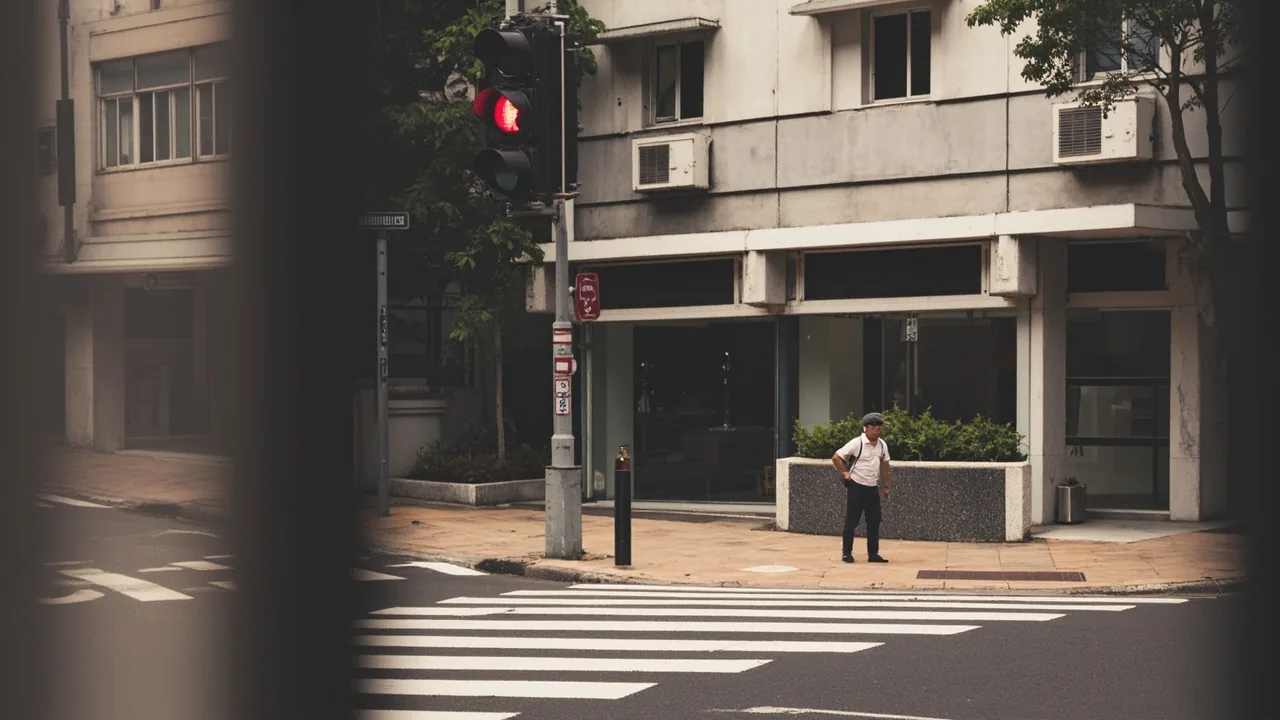
Jaywalking in Singapore is the one fine Indian travellers ask about, and the answer is more than most people expect. The standard first-offence fine under the Road Traffic Act is ₹74,730 (~1,000 SGD or ~$775.17), with repeat offences up to ₹149,459 (~2,000 SGD or ~$1,550.35) plus a court date and possible Corrective Work Order.
Where the rule bites: jaywalking is enforced, particularly near MRT stations and major junctions. Enforcement officers are commonly stationed at busy intersections like Ang Mo Kio and Bugis during evening peak hour. The fine is not random, it is the policy. There are overhead bridges, underpasses, and pedestrian crossings every 200 to 300 metres on most major roads; using them costs 30 extra seconds and saves you a real chunk of money.
A few real enforcement details worth knowing:
- Jaywalking across the expressway has a higher penalty schedule and is treated more seriously because of the speed and danger involved.
- Repeat offenders can be required to attend a court session in addition to the fine.
- The fine is per crossing. The cumulative math of three or four bad crossings during a week-long trip is genuinely painful.
Practical tip: when in doubt, walk one block to the next signalised crossing or overhead bridge. The MRT network is dense; an extra 200-metre walk will almost always be the cheaper, faster option in absolute time too.
Eating, Drinking, and Carrying Food on the MRT: The Rule That Trips Indians Up
This is the one I want to flag in detail, because it is the gap that every ranking competitor for “fines tourists should know about in singapore” covers well, and it is the rule that catches Indian travellers more than any other.
The law: under the Rapid Transit Systems Act, eating, drinking, and carrying open food or drinks is prohibited on MRT trains and within the paid areas of MRT stations (the area past the faregates). The fine is up to ₹37,365 (~500 SGD or ~$387.59) for the first offence, with repeat offences able to push higher. The official rationale is hygiene: spilled food attracts pests, and the MRT runs through tunnels that are expensive to clean. The “no durian” rule is enforced under the same law, durian is banned on the entire public transport network including buses.
What this means in practice for you, the Indian traveller:
- Wait until you are past the faregates and out of the station entrance before you open that bubble tea, that samosa, that bottle of sugarcane juice you just bought from the hawker next door. Outside the gantry is fine; inside the gantry is the fine-able zone.
- Plain water in a sealed bottle has historically been tolerated, but it is technically still in scope under the same Act. The safe move is to finish or stow your drink before you tap in. Travellers report the rule is enforced mostly on visible offenders, but “tolerated” is not “legal,” and a strict reading can land you the ₹37,365 (~500 SGD or ~$387.59) fine.
- Take-out from hawker centres (Newton, Lau Pa Sat, Maxwell, Chinatown Complex): eat at the hawker centre, or walk two minutes out of the station. Do not plan a “I will just eat on the train” strategy.
- Buses are covered by a separate but similar framework. Eating and drinking on public buses is also disallowed, with fines up to ₹37,365 (~500 SGD or ~$387.59). So the rule is not an MRT-only quirk, it is a system-wide rule.
If you have kids and a long trip, plan a 10-minute snack stop at a hawker centre between MRT changes. It is cheaper, it is the actual cultural experience, and it keeps you out of the fine-able zone.
Other Fines Indian Travellers Get Caught By
A few more rules that come up again and again in traveller reports and in MEA advisories:
- Littering and cigarette butts: First-offence fine up to ₹149,459 (~2,000 SGD or ~$1,550.35), with repeat offenders facing higher fines. Singapore has famously heavy enforcement, including spot fines and Corrective Work Orders (community service in a public-space uniform) in lieu of court for some offences. Travellers report that the visible bin density in Singapore is on purpose; use them.
- Smoking in prohibited areas: First offence up to ₹74,730 (~1,000 SGD or ~$775.17), repeat up to ₹149,459 (~2,000 SGD or ~$1,550.35). The list of prohibited areas was expanded in 2019. Most MRT platforms, all covered walkways within a certain radius of MRT exits, every public toilet, and most bus shelters are now smoke-free. If you smoke, look for the designated yellow bins.
- Drug offences: This is the area where Singapore’s reputation is not a stereotype. Trafficking (including small amounts above defined thresholds) carries the death penalty. Possession of even small amounts for personal use can mean years in prison and caning. Do not bring cannabis products from a U.S. State or from a place where it is legal. Do not accept packages from anyone, even at the airport, even from a new friend.
- Public nuisance, urinating in lifts, and disorderly conduct: Up to ₹74,730 (~1,000 SGD or ~$775.17) for the first offence. Singapore has a zero-tolerance reputation here for good reason.
- Vaping: E-cigarettes and vapes are illegal to import, possess, and use in Singapore under the Tobacco (Control of Advertisements and Sale) Act, with fines up to ₹747,297 (~10,000 SGD or ~$7,751.75) for first offenders and up to ₹1,494,594 (~20,000 SGD or ~$15,503.49) / 6 months’ jail for repeat offenders. Travellers report vapes being confiscated at Changi regularly. The legalisation wave in other countries has not reached Singapore.
- Overstaying a visa: This is the single most serious law-by-accident that Indian travellers get caught by. Singapore visa is a single-entry tourist visa valid up to 30 days, with the exact duration printed on your eVisa. Overstaying starts a per-day fine schedule and can lead to detention, a fine, and a future-entry ban. Set a phone reminder for the day before your visa expiry. If you want to extend, apply to ICA (Immigration & Checkpoints Authority) before the expiry date, not on it.
MRT, Bus, and Getting Around Without Mistakes
The transit system is one of the cleanest in the world, and using it correctly is the single best habit a tourist can build.
- MRT single trip: ₹75 (~1 SGD or ~$0.78) to ₹187 (~2.50 SGD or ~$1.94) depending on distance. Use the EZ-Link card to tap in and tap out, the per-trip cost comes down compared to single-trip paper tickets. The card is sold at any MRT station: ₹747 (~10 SGD or ~$7.75) deposit, of which ₹374 (~5 SGD or ~$3.88) is non-refundable and ₹374 (~5 SGD or ~$3.88) is stored value. You can top it up with cash or card at any station.
- Bus single trip: ₹67 (~0.90 SGD or ~$0.70) to ₹187 (~2.50 SGD or ~$1.94) by distance, same EZ-Link card works.
- Grab (ride-hailing) short hops: ₹598 (~8 SGD or ~$6.20) to ₹1,121 (~15 SGD or ~$11.63). Useful when you have luggage or are out late.
Food and drink: do not open anything inside the gantry zone. Save the bubble tea for outside the station.
Money: How Fines Get Paid
Fines are quoted in SGD, and the on-the-spot payment path is usually a card tap at the station or a ticket-issuing machine. Carry an internationally working debit/credit card, not just a forex card, so you have backup. A useful reference: 1 SGD ≈ ₹74.69 at current rates (verified 18 July 2026, 1 USD = ₹96.33). That means a SGD 1,000 fine lands at around ₹75,000 (~$777.98), which is enough to ruin a budget trip and is worth 30 seconds of caution every time you cross a road.
Subodh’s Pro Tip: Take a screenshot of your eVisa with the exact expiry date visible, and set a phone reminder for 24 hours before that date. Overstaying is the most expensive “I forgot” mistake Indian travellers make in Singapore, by a wide margin.
Where to Eat (So You Can Stay Out of the MRT’s Fine Zone)
Singapore’s hawker centres are the cheapest, most authentic food, and the right answer for Indian travellers who want a samosa or a real meal before hopping back on the train. Some options across the spectrum, all mentioned by name and rating from traveller reviews as of mid-2026:
- Ming’s Cafe & Pub (rating 4.2): casual local bites, useful for a relaxed evening with a drink.
- Joya Onsen Cafe (rating 4.4): a Japanese-inspired onsen and cafe experience, more of a treat than a daily stop.
- Les Climats (rating 4.9): fine French dining, useful for a special-occasion splurge.
- Sanook Kitchen - Square 2 (rating 4.8): Thai dishes, casual setting, good for a quick pre-MRT sit-down.
- Yogiyo Korean restaurant (rating 4.7): Korean food, casual setting.
For Indian food and strict-veg fallback, three real spots Indian travellers rate well in Singapore right now:
- Chola Cafe - Biryani House (rating 4.9): Hyderabadi biryani, casual setting, traveller favourite.
- Zaffron Tandoori Restaurant @ Boat Quay (rating 4.8): North Indian tandoori, riverside location, lively evenings.
- Black Pepper Multicuisine Restaurant (rating 4.8): North and South Indian, modern setting, useful when you want a wider menu.
Finish your meal at the restaurant, then walk to the MRT. Two minutes of patience keeps you out of the ₹37,365 (~500 SGD or ~$387.59) zone.
Safety Context: What You Should Check Before You Fly
Singapore is one of the safest major cities in the world for tourists. The street-smart side of this article is mostly about not paying fines, not avoiding danger. That said, two categories of risk to be aware of, generic rather than specific, since news cycles change:
- Border-region awareness: Singapore is a city-state without internal border zones, but the wider region (Malaysia, Indonesia) does see periodic travel-advisory updates. The Indian MEA travel advisory page (mea.gov.in) and Singapore’s own MFA advisory page (mfa.gov.sg) are the two sources to check before you fly.
- Scams: Singapore is much lower-risk than Bangkok or Bali, but travellers do report occasional taxi meter tricks, the rare “your hotel is closed” con around Orchard Road, and overcharging at tourist-heavy hawker stalls. For what to do if you get scammed, see our scam-recovery guide. For the broader picture, see our Singapore safety guide and our is-Singapore-safe-for-Indian-travellers piece.
Subodh’s Take
Singapore’s rules look strict, but they are also why you can leave your bag on a café chair, walk home at 2 a.m., and never think twice. The trick is to treat the rules as a feature, not a gotcha. Walk to the overhead bridge, finish your drink before you tap in, skip the chewing gum, set a visa reminder, and the city becomes one of the easiest places in Southeast Asia to travel. The fines are not there to punish tourists; they are there to make sure the city works the way you want it to work for you.
FAQ
Can you eat or drink on the Singapore MRT? No. Eating, drinking, and carrying open food or drinks is prohibited on MRT trains and within the paid area of MRT stations, with fines up to ₹37,365 (~500 SGD or ~$387.59) for the first offence. Buses have a similar rule. Plain water in a sealed bottle has been tolerated historically, but the safe move is to finish or stow your drink before you tap in.
Is chewing gum completely banned in Singapore? Importing, possessing for sale, and selling chewing gum is illegal. Personal possession is the grey area: the law targets import and sale, and travellers report being waved through Changi with personal-use packs, but the legal letter of the rule is the legal letter of the rule. Dental gum and nicotine gum are available at pharmacies with a prescription.
How much is the jaywalking fine in Singapore? First-offence jaywalking under the Road Traffic Act carries a fine of up to ₹74,730 (~1,000 SGD or ~$775.17). Repeat offenders face higher fines (up to ₹149,459 (~2,000 SGD or ~$1,550.35)) and can be required to attend court. Use the overhead bridges and signalised crossings, they are never more than 200 to 300 metres apart on major roads.
Is vaping legal in Singapore? No. E-cigarettes and vapes are illegal to import, possess, and use, with fines up to ₹747,297 (~10,000 SGD or ~$7,751.75) for first offenders and up to ₹1,494,594 (~20,000 SGD or ~$15,503.49) / 6 months’ jail for repeat offenders. Travellers report regular confiscation at Changi. Do not bring one in, even if you bought it legally elsewhere.
What happens if I overstay my Singapore visa? Overstaying is treated seriously. It triggers a per-day fine schedule, possible detention, and a future-entry ban. The single-entry tourist visa is valid up to 30 days, with the exact duration on your eVisa. Apply to ICA to extend before your expiry date, not on the day you are overstaying.
Do I need travel insurance for Singapore? It is not mandatory for entry, but it is the cheapest hedge against the kind of accident that turns a good trip into a hospital bill. A standard policy covers medical costs, trip interruption, and emergency evacuation across Southeast Asia.
