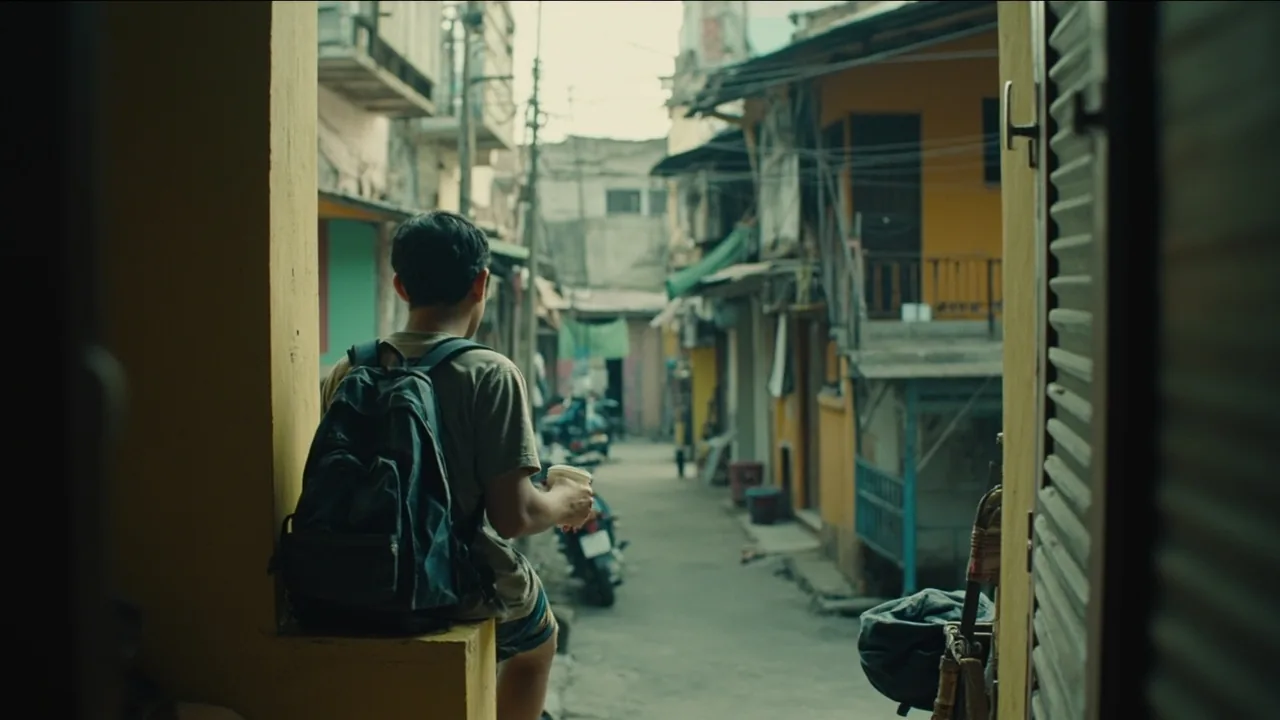
Solo Travel with Anxiety in Southeast Asia: A Practical Guide for Nervous First-Timers
Southeast Asia is, statistically and culturally, the easiest region in the world to start travelling solo when you’re scared. The hostels are built for it, the routes are well-trodden, the food is cheap enough to lower your daily stakes, and the medical system is reachable within an hour from almost any town. If your hands shake at the airport gate, you’re in good company: most first-timers flew out nervous and came back wondering why they waited so long. For related planning, see our guide on Sea Backpacking Hub.
This guide is for you if you’ve typed “solo travel scared” or “anxiety travelling alone” into Google at midnight, then closed the tab. It’s practical, blunt, and grounded in what happens on the ground from Bangkok to Hanoi, with specific tactics for managing fear on the road.
Quick Answers
| What | Answer | Price (INR) |
|---|---|---|
| Is Southeast Asia safe for anxious solo travellers? | Yes, among the safest regions globally. Petty theft is the main risk, not violent crime. Start in Thailand or Vietnam for the easiest entry. | — |
| Best country for a scared first-timer? | Thailand. English is widely spoken, hospitals are world-class, and the Bangkok-Chiang Mai-Ao Nang route has 20+ years of solo-traveller infrastructure. | — |
| Cheapest dorm bed in the region? | ₹429 (~150 THB or ~$4.45) in Bangkok (~$4.20), ₹294 (~80,000 VND or ~$3.05) in Hanoi (~$3.20), ₹107 (~25,000 LAK or ~$1.11) in Vientiane (~$1.20). | From ₹430 (~$4.46) |
| Cost of a single weekly therapy session back home? | ₹2,000-₹5,000 (~$20.76-$51.90). A week in a Thai hostel costs about the same, and the social cure is built in. | ₹2,000-₹5,000 (~$20.76-$51.90) |
| Travel insurance for one month? | SafetyWing Nomad covers Indian travellers, including medical evacuation and COVID. | ~₹5,900 (~$61.24) |
Subodh’s Pro Tip: If your anxiety is medically diagnosed (GAD, panic disorder, social anxiety), carry a copy of your prescription in English and your doctor’s note. Thai hospitals in particular ask for it at the pharmacy counter, and Customs in Singapore will question unmarked controlled substances.
The Solo Travel Vibe in Southeast Asia
The “Banana Pancake Trail” earns its name for a reason: the same route, hostels, and friendships have been repeated by backpackers for decades. From Bangkok to Chiang Mai to Luang Prabang to Hanoi, you’ll find the same English-speaking hostel owners, the same group-tour billboards, and the same WhatsApp groups for people arriving tomorrow.
What this means for an anxious traveller: you don’t have to invent the social structure. The hostel lobby at 7 pm has a whiteboard listing tonight’s dinner meet-up. The 8 am walking tour has a sign-up sheet at reception. The bus to the next town has 30 other backpackers, half of whom are also travelling alone for the first time. Travellers report that the loneliness they feared in India often disappears by the second hostel night.
The culture here treats solo travel as normal. Eating alone at a street stall? Everyone does. Sitting alone at a bar? Normal. Asking a stranger to share a tuk-tuk? Expected. This lowers the social cost of every small interaction, which is exactly the input a nervous brain needs.
How to Meet Other Backpackers (Even When You’re Petrified)
Meeting people is the single best anxiety medicine on the road. Here’s what works:
- Stay in social dorms, not anti-social hotels. A 6-bed dorm with a common area will produce 10 conversations a day. A private room with no lounge produces zero. The cost difference is ₹400-₹800 (~$4.15-$8.30) per night, the social difference is everything.
- Join the free hostel walking tour. Most major hostels in Bangkok, Chiang Mai, Hanoi, and Bali run one. They start at 9 or 10 am, last 2–3 hours, and you don’t need to talk, just walk. By lunch you’ll have 4–5 phone numbers.
- Take a group cooking class. Pad Thai, pho, and laab classes are everywhere. Communal kitchens force cooperation, which is a less intimidating way to bond than bar chat.
- Use hostel bar crawls and group dinners. These are pre-organised, low-commitment, and the bartender usually knows everyone’s name by drink three.
- WhatsApp and Telegram groups. Search “Chiang Mai backpackers,” “Hanoi solo travellers,” etc. People post asking for dinner buddies daily. Replying “I’m here, also solo, would love to join” works more often than you think.
For deeper strategies on introverted socialising, see the solo introvert guide, and for the broader social playbook, the making friends while solo guide is the deeper read.
Safety: The Real Risks vs. The Anxiety-Magnified Ones
Let’s separate the two, because anxiety lies.
Real risks (low but worth planning for):
- Petty theft from unlocked dorm lockers. Use a padlock, even a ₹200 (~$2.08) one.
- Motorbike accidents. The leading cause of traveller hospitalisation in Thailand and Bali. Wear a helmet, don’t ride at night, and check your travel insurance covers motorbike use.
- Scams at tourist sites (overpriced tuk-tuks, gem scams, closed-temple “today is a holiday” lies). Your hostel staff will name the current ones in your city, ask them on day one.
Anxiety-magnified fears (statistically rare):
- Violent crime against tourists. In Singapore, virtually zero. In Bangkok, lower than Mumbai per capita. Travellers report feeling safer walking in Chiang Mai at 11 pm than in most Indian metros at 9 pm.
- Food poisoning hospitalisation. Annoying, yes, dangerous, rarely. Most cases resolve with rest, ORS, and a 24-hour fast.
- Getting stranded. Unlikely. Buses run daily, hostels will rebook you, Grab works in six countries.
For transport specifically, never hail a random tuk-tuk when Grab or Bolt is in your pocket. The app tells you the fare before you board and gives the driver your name in writing, which removes the “no meter, foreigner price” dynamic entirely.
Before departure, check the official advisory from the MEA travel advisories page for your specific countries, and the destination country’s own foreign ministry site if one exists. Generic categories of risk are useful to know; specific panic-inducing stories you read online are usually third-hand.
Budgeting When You’re Solo (and Why It Costs Less Than You Think)
Solo travel has a hidden advantage for the anxious traveller: it’s cheap enough that a bad day costs almost nothing, which lowers your psychological stakes.
Per-day Southeast Asia budget for one solo backpacker:
| Country | Dorm | Street food x 3 | Transport | Total/day (local) |
|---|---|---|---|---|
| Thailand | ₹572 (~200 THB or ~$5.94) | ₹429 (~150 THB or ~$4.45) | ₹286 (~100 THB or ~$2.97) | ₹1,287 (~450 THB or ~$13.35) |
| Vietnam | ₹367 (~100,000 VND or ~$3.81) | ₹367 (~100,000 VND or ~$3.81) | ₹184 (~50,000 VND or ~$1.91) | ₹918 (~250,000 VND or ~$9.53) |
| Laos | ₹215 (~50,000 LAK or ~$2.23) | ₹215 (~50,000 LAK or ~$2.23) | ₹129 (~30,000 LAK or ~$1.34) | ₹558 (~130,000 LAK or ~$5.80) |
| Cambodia | ₹771 (~8 USD) | ₹482 (~5 USD) | ₹289 (~3 USD) | ₹1,541 (~16 USD) |
| Bali, Indonesia | ₹646 (~120,000 IDR or ~$6.70) | ₹430 (~80,000 IDR or ~$4.47) | 50,000 IDR | 250,000 IDR |
At current rates, 1 THB ≈ ₹2.87, 1 VND ≈ ₹0.0037, 1 LAK ≈ ₹0.0043, 1 USD ≈ ₹96.53. Conversions are added by the system on display, so what you see in your wallet is what you pay.
Single-supplement trap: tours, boat trips, and cooking classes sometimes charge a “private guide” fee if you’re alone. The fix is to ask the hostel to put you on the next group departure (almost always within 24 hours), or to post in the hostel WhatsApp group “anyone doing XYZ tomorrow, want to split the cost?” Solo diners can also avoid the awkward two-top by sitting at the bar or street-stall counter, both standard in the region.
For a deeper cost breakdown by country, the solo budget guide is the one I send nervous friends first.
Getting Connected: The Non-Negotiable Layer
Solo travellers, especially anxious ones, need reliable data for three reasons: maps (you’ll get lost, that’s the trip), check-ins with family (a daily “I’m alive” WhatsApp to your parents removes 80% of their worry, which removes 80% of your guilt), and Grab/Bolt (the only reliable way to avoid taxi scams).
The two standard options:
- Local SIM. Buy at the airport counter on arrival. AIS in Thailand, Viettel in Vietnam, Unitel in Laos, Smart in Cambodia. Most tourist SIMs are 5–8 days unlimited for a fixed price (₹855 (~299 THB or ~$8.87) in Thailand is the standard tourist SIM).
- eSIM. If you want data the moment you land without swapping physical cards, an eSIM loads over Wi-Fi and works in 100+ countries, including all of Southeast Asia.
Either way, set up a daily 9 pm check-in with a family member before you leave. It’s the single highest-ROI mental health practice for anxious first-timers.
Common Solo Mistakes Indians Make (and How to Avoid Them)
Mistake 1: Booking private hotels to “feel safe.” Reality: you trade physical comfort for total isolation, which feeds the anxiety loop. Fix: book a 6 or 8-bed dorm for the first 3 nights, then reassess. Most nervous travellers end up preferring them.
Mistake 2: Sticking only to other Indian groups at the hostel. The instant Indian community at a hostel can feel like a security blanket, but it also limits your English practice, your cross-cultural friendships, and your overall growth. Fix: spend the first day with whoever, but make a point of asking the non-Indian traveller at your dinner table one specific question (“where are you headed next?”). It’s small and it works.
Mistake 3: Overpacking a 23 kg suitcase. The single biggest source of day-to-day solo stress is dragging a heavy bag on a 40°C day through a city without pavements. Fix: 30–40 litres, under 8 kg packed, one change of weather, washing every 4 days.
Mistake 4: Trying to “see everything” to justify the trip. Anxious travellers often over-plan to feel in control. The opposite happens: you burn out in week two. Fix: 2–3 nights per city max, with one full rest day per week.
Mistake 5: Not telling anyone where you’re going. Even in the safest region, leaving a daily itinerary with someone back home is non-negotiable. Share your hostel name, your Grab plate number at night, and your bus ticket screenshots in a single WhatsApp group.
Country-Specific Anxiety Notes
Singapore: The easiest entry for safety-anxious travellers. The MRT is clean, signs are in English, crime is statistically negligible, and pharmacies stock every Indian brand of anxiety medication. The catch: it’s expensive. A dorm is around ₹2,611 (~35 SGD or ~$27.10), a meal court is ₹448-₹597 (~6-8 SGD or ~$4.65-$6.19), and the MRT is ₹149-₹224 (~2-3 SGD or ~$1.55-$2.32) per ride. Budget S $60–80/day. See the Singapore solo hostels guide and the meeting people in Singapore for the social layer.
Thailand: The standard recommendation for Indian first-timers. Bangkok-Chiang Mai-Ao Nang route. Vegetarian Indian food is available in every tourist town (the “Jay” restaurants, run by the Jain community, are pure-veg and ₹400 (~$4.15)-ish for a thali). Hospitals like Bumrungrad in Bangkok have Indian coordinators on staff.
Vietnam: Hanoi and Ho Chi Minh City feel intense at first (traffic), but the hostel social scene is the strongest in the region. Pho and banh mi cost almost nothing. The Sapa and Da Nang stretches are quieter for low-stimulation travellers.
Cambodia: Phnom Penh and Siem Reap are easy, but the road infrastructure is rougher. Bring more buffer days than you’d budget for Thailand.
Laos: Luang Prabang and Vang Vieng are the gentle introduction. Slower pace, fewer tourists, more time to process.
Indonesia (Bali): Strong solo-female infrastructure (coworking hostels, women-only dorms, scooter training). Bali-specific anxiety usually shows up as motorbike fear, which is solvable by hiring a car with a driver for the first week.
For a deeper comparison on where to start, the first-time solo guide is the next read after this one.
Mental Health Prep Before You Fly
A few practical things anxious travellers tell me they wish they’d done before boarding:
- Write a one-page “if I panic” card. On it: the name and address of your hostel, the local emergency number (191 in Thailand, 113 in Vietnam, 191 in Cambodia), the nearest hospital, and three grounding phrases (“I’m safe, this will pass in 20 minutes, here’s my hostel address”).
- Pre-book your first three nights. Arriving somewhere with a confirmed bed, a confirmed pickup, and a confirmed first-day tour removes the biggest anxiety spike (the “what do I do at the airport” moment).
- Pack your prescriptions in original packaging. Bring 1.5x the quantity you need. Losing a week’s worth of anxiety medication abroad is not a recoverable situation.
- Tell your GP. A short note in your file saying “patient is travelling solo to Southeast Asia” helps if you need a teleconsultation from a Bangkok hospital.
- Schedule one call a week with a therapist back home. Most Indian therapists now do WhatsApp or Zoom. A 30-minute weekly check-in from a Hanoi café is cheaper and more effective than you think.
Subodh’s Take
If you’ve read this far, you’re already past the hardest part, which is the decision. The fear doesn’t go away before the trip, it goes away on day three, somewhere between the second bowl of khao soi and the third person at the hostel bar asking where you’re headed next. Pack light, book your first three nights, set the daily check-in with home, and just take the flight. You’ll be fine. Honestly, you’ll be better than fine.
FAQ
Q: I’m scared to eat street food alone. Will I get sick? A: Travellers report that following one rule avoids 90% of issues: eat at stalls where locals are eating and where food is cooked to order in front of you. Avoid pre-cooked food sitting out at room temperature, and bring ORS sachets as backup.
Q: What if I panic on the plane or at the airport? A: That’s why you pre-book the airport pickup and the first three nights. The moment you’re in a Grab with a name on your phone, the panic has a destination and an endpoint. Most travellers say the worst anxiety is the 30 minutes before boarding, not the trip itself.
Q: I’m a solo female traveller. Which country should I avoid as a first-timer? A: None, with the caveat that you should avoid motorbike riding at night in any country. Thailand, Vietnam, and Bali all have well-established solo-female backpacker scenes. Dress modestly at temples (shoulders and knees covered), use Grab after dark, and trust your hostel staff’s advice on which neighbourhoods to avoid after 10 pm.
Q: How do I manage my bags when I need the restroom at airports or bus stations? A: Master the “double-loop” technique: one strap looped around your wrist or ankle, the bag resting against your body or between your feet. Never leave a bag on a hook or chair behind you. For long-haul travel, an anti-theft daypack with lockable zips is a ₹2,000 (~$20.76) investment that pays for itself in peace of mind.
Q: Will I get bored travelling alone? A: After day three, the question flips: how do people find time to be bored? Most solo travellers report being more overstimulated than understimulated. If you do hit a low-energy day, book a half-day spa or cooking class through GetYourGuide, sleep 10 hours, and try again tomorrow.
Q: What if I want to quit and come home? A: Buy a flexible return ticket. If you’re flying back within 7 days, you lose almost nothing on the airfare. The safety net of “I can go home tomorrow” is itself the anxiety cure, and most people never use it.
