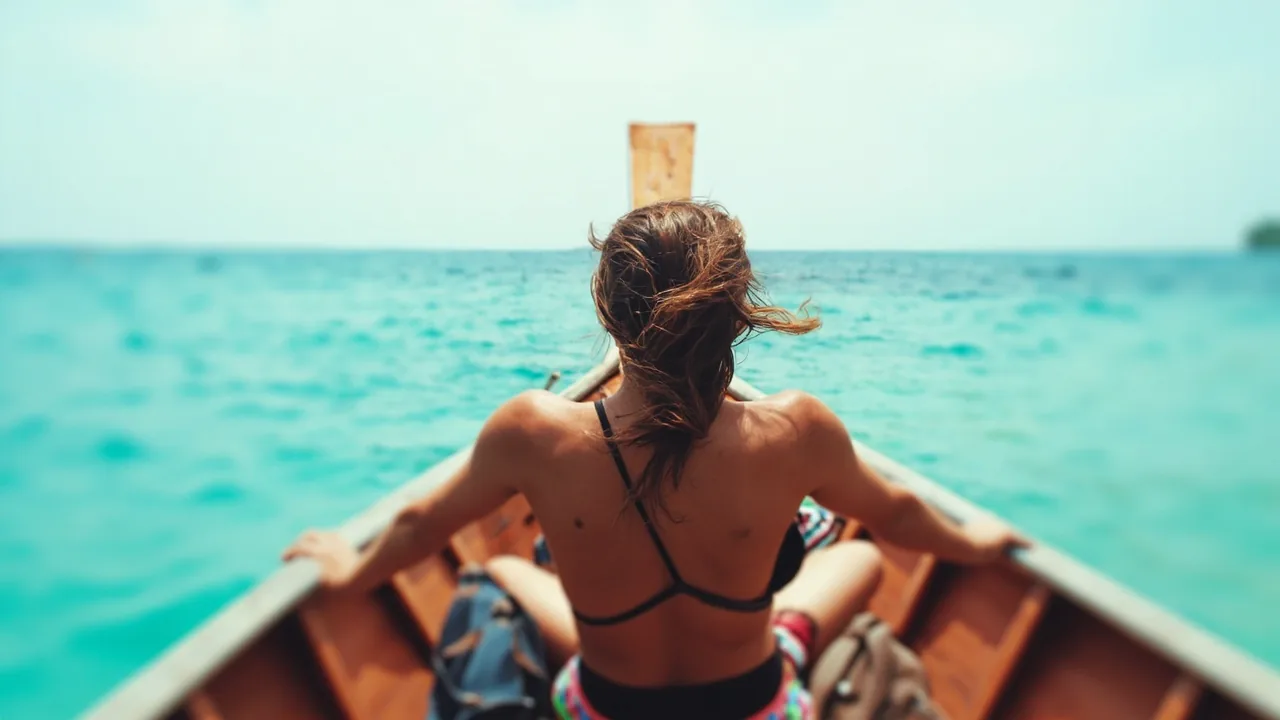
Solo Wellness Travel in Southeast Asia: The Complete Backpacker’s Guide
Solo sea travel and solo wellness travel in Southeast Asia overlap heavily, and the region is the gentlest possible first solo trip for an Indian backpacker: the infrastructure is built around people who arrive alone and need to reset. For related planning, see our guide on Sea Backpacking Hub.
This guide covers the practical backbone of a solo wellness trip: which countries have the right retreats, how to vet them, what solo wellness travel in Southeast Asia costs day-to-day, how to stay connected and safe, and where Indian backpackers tend to go wrong. No fluff, no fabricated anecdotes, just the route I would send a friend on.
Quick Answers
| What | Answer | Price (INR) |
|---|---|---|
| Cheapest country for solo wellness travel in SEA | Thailand (Koh Phangan, Pai, Chiang Mai) | ₹2,287 (~800 THB or ~$23.74) |
| Cheapest yoga teacher training (200hr, 28-day) | Bali (Ubud) | ₹70,000 (~1,300 USD or ~21,000,000 IDR) |
| Daily wellness budget in Thailand | Hostel dorm + yoga drop-in + veg thali | ₹3,431 (~1,200 THB or ~$35.61) |
| Average 10-day silent meditation retreat | Thailand / Myanmar border (Wat Pa Tam Wua) | ₹71,472 (~25,000 THB or ~$741.89) |
| Best SIM for solo wellness travellers | AIS or Nomad eSIM (data + maps offline) | ₹855 (~299 THB or ~$8.87) |
Why Southeast Asia Works for Solo Wellness Travel
The wellness scene in Southeast Asia grew up around three real things, not marketing. First, Thailand and Bali have long-standing local traditions of massage, herbal medicine, and Theravada Buddhism practice, so a “wellness retreat” in Pai or Ubud is not a Western import with a Sanskrit label; it is a centuries-old practice that someone figured out how to package for visitors. Second, the cost of land, food, and labour is low enough that a 28-day yoga teacher training can include three vegetarian meals a day and still come out cheaper than a fortnight in Goa. Third, the backpacking infrastructure (hostels, scooter rentals, communal kitchens, social bars that close early) means you do not have to choose between a wellness trip and a normal solo trip; you can do both.
Solo wellness travel in Southeast Asia is also structurally easier than doing the same thing alone in India. In Rishikesh or Mysore, you tend to arrive knowing someone, or you arrive in a structured ashram where the schedule is enforced. In Pai or Koh Phangan, you can show up with nothing booked, walk into a yoga studio, ask about a drop-in class, and end up sharing a guesthouse with seven other solo travellers by sunset. The flexibility is the point. If you do not like a place, you leave. If a retreat feels cultish, you walk out. If you need two days of doing nothing, you spend two days of doing nothing.
Subodh’s Pro Tip: The wellness capitals of the region are Chiang Mai and Pai (northern Thailand), Koh Phangan (Gulf of Thailand), Ubud (Bali), and Da Lat (Vietnamese highlands). Of these, Koh Phangan and Ubud are the two places you can show up with zero plan and still find a serious practice within 48 hours.
Picking the Right Country and Style
Wellness travel is not one thing, and the country that fits depends on what kind of reset you need. Here is the honest breakdown for Indian backpackers planning solo wellness travel in Southeast Asia.
Thailand: The Cheapest, Most Social Option
Thailand is the default for a reason. A yoga drop-in class in Chiang Mai or Koh Phangan runs ₹858-₹1,715 (~300-600 THB or ~$8.90-$17.81), a one-hour traditional Thai massage is ₹715-₹1,144 (~250-400 THB or ~$7.42-$11.87) in any tourist town, and a 10-day silent meditation retreat at established monasteries like Wat Pa Tam Wua (Mae Hong Son) or Wat Suan Mokkh (Surat Thani) is offered on a donation basis or a fixed ~₹71,472 (~25,000 THB or ~$741.89) fee that includes everything. Koh Phangan has an established yoga and detox scene alongside its better-known party reputation, so you do not feel cut off if you decide halfway through a retreat that you want to go to a beach party.
Chiang Mai is the other Thai wellness capital, less beach, more jungle and old-city temples. The old city has dozens of yoga studios, vegan cafes, and meditation centres within walking distance of each other. Pai, three hours northwest by minivan, is smaller and quieter, a town of about 2,000 residents where the wellness crowd and the backpacker crowd overlap entirely.
Bali, Indonesia: The Yoga Teacher Training Capital
Bali, specifically Ubud, has the densest concentration of registered yoga schools in the world. A 200-hour Yoga Alliance certified YTT runs ₹115,607-₹173,410 (~1,200-1,800 USD), about ₹115,800 (~$1,202.01) to ₹173,800 (~$1,804.05), for 28 days including shared accommodation and three vegetarian meals a day. That sounds like a lot until you compare it to the same training in Rishikesh, where the same 200 hours cost ₹180,000 (~$1,868.40) without meals or housing.
Bali is also the only major SEA wellness destination where the Indian traveller community is genuinely large. There are Indian-owned guesthouses, sattvic cafes with idli and sambar, and at any given YTT you will probably find two or three other Indians in the group. If you want solo wellness travel in Southeast Asia with a slight safety net of familiar food and faces, Bali gives you that without turning the trip into a group tour.
Vietnam: Cheaper, Less Polished, More Real
Vietnam is the budget choice. A drop-in yoga class in Da Lat or Hoi An runs ₹551-₹918 (~150,000-250,000 VND or ~$5.72-$9.53), a full-body massage is ₹1,102-₹1,836 (~300,000-500,000 VND or ~$11.43-$19.06), and the food is so fresh and vegetable-heavy that half the wellness trip takes care of itself. The Vietnamese wellness scene is younger and less packaged than Thailand or Bali, which is a feature for some travellers and a bug for others. You will find fewer English-language retreat menus and more homegrown studios run by Vietnamese teachers who studied in India.
Cambodia and Laos: For the Quiet Reset
If the goal is genuine silence, the mainland countries still beat the islands. Cambodia has meditation centres near Siem Reap and Battambang that are unknown to Western tourists but known to Bangkok-based monks. Laos has retreat centres outside Luang Prabang and Vang Vieng that combine meditation with herbal steam and Lao massage. These are the two countries where a 7-day silent retreat still costs less than your monthly gym membership in Mumbai.
The Solo Wellness Itinerary
Here is a four-week, four-country route that an Indian backpacker can complete on a reasonable budget. The structure is rest-recover-build-rest, so you do not burn out in the first week and have nothing left for the last.
Weeks 1 to 2: Northern Thailand. Fly into Bangkok, take an overnight train or flight to Chiang Mai (about ₹3,717 (~1,300 THB or ~$38.58) on the train, sleeper class), spend four or five days in the old city doing daily yoga and walking around Doi Suthep. Move to Pai for three days of silent time, then back to Chiang Mai for a half-day meditation at one of the forest monasteries on the outskirts.
Week 3: Koh Phangan. Fly Chiang Mai to Koh Samui (~3,000 THB), ferry to Koh Phangan (~200 THB), and do a 6-day yoga retreat or drop in daily at one of the studios on the south coast. Mornings are for practice, afternoons for the beach, evenings for the social hostel scene if you want it.
Week 4: Bali, Indonesia. Fly Koh Samui to Denpasar via Bangkok (most affordable routing), spend the week in Ubud, either doing a YTT module or a drop-in week at a single studio. Day trip to the rice terraces at Tegallalang, finish with a couple of days in Canggu if you want beach and cafe time.
Total budget for the four weeks, excluding international flights: roughly ₹171,534-₹228,712 (~60,000-80,000 THB or ~$1,780.53-$2,374.03), of which accommodation is about a third and food is about a third. Wellness costs (classes, massages, retreats) make up the rest.
Solo Safety on a Wellness Trip
Wellness trips are, statistically, the safest kind of solo travel, for two reasons. First, the traveller profile is older and more risk-averse than the 22-year-old-bucket-list crowd, so the social environment around retreats is calmer. Second, the schedule is structured, so you are not wandering around a strange city at 2 a.m. Looking for food. That said, here is the honest breakdown.
Solo female travellers should treat Thai and Balinese wellness centres as broadly safe but apply the same instincts you would anywhere. Cover shoulders and knees inside temple grounds and meditation halls (this is a respect issue more than a safety issue, but the two overlap). Use Grab or Bolt for all late-night transport instead of street taxis. In Ubud specifically, rent a scooter only if you have ridden one before; scooter accidents are the single largest cause of serious injury among Western tourists in Bali, and wellness retreats see several a month.
For night safety, the simple rule is the same as anywhere in SEA: be back at your accommodation by 11 p.m. Unless you are with people you have met that day, and let your family know where you are. Most wellness hostels and retreat centres have a WhatsApp group for the current intake, which is both social infrastructure and a soft check-in system.
Safety Alert: Check your government’s official travel advisory before booking, especially for Myanmar’s border regions, parts of eastern Indonesia, and southern Thailand’s deep south, where periodic tensions can flare. For Indian travellers, the MEA travel advisory page at mea.gov.in is the official source, and the destination country’s own foreign ministry site is worth a five-minute scan. Wellness retreats are almost always in low-risk zones, but routing decisions matter.
How to Meet People on a Wellness Trip
This is the part solo wellness travel in Southeast Asia handles better than almost any other region, and Indian backpackers often miss it because they default to hanging out with other Indians and never end up in the international crowd.
The honest version: most wellness retreats are designed for solo travellers and structure social time into the schedule. Communal meals, partner yoga, group meditations, and shared cooking classes mean you meet people without trying. The retreats that do this well are usually the smaller ones, 10 to 20 people, where the same faces show up at every meal.
Outside the retreat, stay in social hostels rather than private guesthouses. The single biggest mistake Indian solo travellers make on wellness trips is booking a quiet private hotel for “rest” and then feeling isolated by day three. A 6-bed dorm in a hostel with a shared lounge gives you the option of company without requiring it.
Join the free walking tours and cooking classes that every Chiang Mai, Hoi An, and Ubud hostel runs. These are not tourist traps, they are the standard way backpackers meet each other, and wellness travellers who skip them are skipping the easiest social infrastructure in the region.
Use the community apps. Couchsurfing still has active SEA communities. WhatsApp groups for current retreats are often set up by the school itself. Reddit’s r/solotravel and the SEA-specific subreddits have weekly meet-up threads for current travellers in Chiang Mai, Bangkok, Bali, and Hanoi.
For more on the social mechanics of solo travel in this region, the practical framework in making friends while solo traveling in Southeast Asia covers the day-to-day tactics in more depth.
Budgeting for Solo Wellness Travel
Solo wellness travel in Southeast Asia costs roughly the same as regular solo travel in the region, with one big exception: retreats and YTT modules are priced per person, not shared, so there is no “single supplement” penalty to worry about. That is a structural advantage of wellness travel for solo travellers.
A realistic daily budget in Thailand on a wellness trip looks like this:
| Item | Daily cost |
|---|---|
| Hostel dorm (social, 6-bed) | ₹1,001 (~350 THB or ~$10.39) |
| Two yoga or meditation drop-ins | ₹2,287 (~800 THB or ~$23.74) |
| One massage | ₹1,144 (~400 THB or ~$11.87) |
| Three vegetarian meals | ₹1,287 (~450 THB or ~$13.35) |
| Transport + misc | ₹572 (~200 THB or ~$5.94) |
| Daily total | ~₹6,290 (~2,200 THB or ~$65.29) |
In Bali, the same structure runs roughly ₹3,228-₹4,304 (~600,000-800,000 IDR or ~$33.51-$44.68) per day (~₹3,200 to ₹4,300). In Vietnam, ₹2,570-₹3,672 (~700,000-1,000,000 VND or ~$26.68-$38.12) per day (~₹2,600 to ₹3,700).
The single biggest cost saver on a solo wellness trip is choosing a retreat that includes meals. Retreats without meals force you to eat out three times a day, which adds ₹1,144-₹2,001 (~400-700 THB or ~$11.87-$20.77) in Thailand, more in Bali, and quietly doubles your daily spend. The retreats that include meals look more expensive on paper and almost always come out cheaper in practice.
For a full breakdown of regional solo backpacker budgets, the solo budget travel in Southeast Asia guide goes into the per-country numbers in detail.
At current rates, 1 THB ≈ ₹2.87, so a 1,200 THB daily wellness budget in Thailand works out to about ₹3,400 (~$35.29), well within the reach of most Indian backpackers planning a two to four week reset.
Getting Connected: SIM and eSIM
Solo travellers need data more than other travellers, because maps, check-ins with family, and ride-hailing apps all assume you have a working connection. For Thailand, the AIS tourist SIM at the airport counter runs ₹855 (~299 THB or ~$8.87) for 8 days with 15 GB of data, which is enough for maps, Grab, and WhatsApp. The 7-Eleven version of the same package is the same SKU for about ₹800 (~280 THB or ~$8.31), a small saving but you skip the airport queue.
For Bali, Telkomsel and XL Axiata both sell tourist SIMs at Ngurah Rai airport for ₹538-₹807 (~100,000-150,000 IDR or ~$5.58-$8.38) with 15 to 25 GB, valid for 30 days. Activate the SIM at the official counter before leaving the airport hall, not at a third-party reseller kiosk in the parking area.
For a lighter setup, an eSIM works fine for wellness trips where you are staying in one place for a week or more. Get Nomad eSIM sells regional SEA packages starting at about ₹482 (~5 USD) for 1 GB, valid 30 days, with no physical SIM to swap. Useful if you are bouncing through three countries and do not want to queue at three airport counters.
Common Mistakes Indian Backpackers Make on Wellness Trips
Five specific patterns that tend to go wrong, and how to avoid each one.
Mistake 1: Booking a private hotel for the whole trip. What happens: you arrive alone, eat alone, do yoga alone, feel isolated by day four, and either fly home early or spend the next two weeks wishing you had not. The fix: stay in social hostels for at least the first few days of any solo trip, then transition to private rooms only when you have retreat contacts or local friends to fall back on. The solo accommodation in Southeast Asia guide covers the full hostel-to-private-room transition.
Mistake 2: Only hanging out with other Indians. What happens: you end up in a small expat bubble, miss the international crowd that makes the trip memorable, and come home with the same friend group you left with. The fix: actively seek out non-Indian travellers. Sit with a different group at every communal meal for the first week. Join the hostel’s group activities instead of staying inside the Indian WhatsApp group.
Mistake 3: Booking the cheapest retreat without vetting it. What happens: the school is not Yoga Alliance registered, the teachers are undertrained, and the schedule is more Instagram than actual practice. The fix: check Yoga Alliance registration for any YTT, read recent Google and Reddit reviews, ask the school directly for the names of three past students you can contact.
Mistake 4: Over-packing for a “wellness” trip. What happens: you haul a 23 kg suitcase across four countries because you packed for every climate and every contingency. The fix: a 40-litre backpack, two sets of yoga clothes, a light sarong, one pair of walking sandals, one pair of trainers. Wellness travel is laundry-every-three-days travel; pack for that.
Mistake 5: Booking back-to-back retreats. What happens: you do a 10-day silent retreat followed immediately by a 28-day YTT, burn out by week three, and leave early. The fix: alternate retreat weeks with free weeks. A retreat, then three or four days of doing nothing, then the next retreat. The slow version of solo wellness travel in Southeast Asia works better than the sprint version, and the solo slow travel guide explains the framework in more detail.
Subodh’s Take
A solo wellness trip in Southeast Asia is the easiest reset an Indian backpacker can buy for the money, and it is also the trip where being solo is genuinely the right way to do it. You do not have to negotiate the trip with a partner, you do not have to wait for friends to be free, and the region’s whole wellness infrastructure is built around people who arrive alone. Pick one country, pick one retreat, book the flight. The rest sorts itself out within 48 hours of landing.
FAQ
Is solo wellness travel in Southeast Asia safe for Indian women?
Yes, broadly. Thailand, Bali, Vietnam, and Cambodia all have active wellness scenes where solo female travellers are routine. Use Grab or Bolt for night transport, dress conservatively in temples and meditation halls, and check your government’s official travel advisory at mea.gov.in before booking. Most reported issues are scooter accidents, not personal safety incidents.
How much should I budget for a two-week solo wellness trip?
In Thailand, roughly ₹85,767-₹114,356 (~30,000-40,000 THB or ~$890.26-$1,187.02), excluding flights. In Bali, roughly ₹64,560-₹96,840 (~12,000,000-18,000,000 IDR or ~$670.13-$1,005.20). In Vietnam, roughly ₹36,720-₹51,408 (~10,000,000-14,000,000 VND or ~$381.15-$533.62). Retreat modules add ₹71,472-₹228,712 (~25,000-80,000 THB or ~$741.89-$2,374.03) depending on length and inclusions.
Can I do a yoga teacher training as a complete beginner?
Most 200-hour YTTs are designed for beginners with at least six months of consistent practice. If you have never done yoga before, do at least three months of weekly classes before booking a YTT, or look for “foundation” or “introductory” modules that some Bali schools offer separately.
Do I need a visa in advance for Thailand or Bali?
For Indian passport holders, Thailand offers visa on arrival (free, 30 days, two recent photos required) and Indonesia offers visa on arrival (₹2,690 (~500,000 IDR or ~$27.92), 30 days, extendable once). Vietnam requires an e-visa applied for in advance through the official government portal. Check the current rules at the relevant embassy site before flying, because SEA visa rules change frequently.
Will I get bored doing a wellness trip alone?
No, because the retreat schedule is structured, the hostel scene is social, and the region has enough cafes, walks, and day trips to fill every gap in the schedule. The honest concern is the opposite: you may not want to leave. Travellers report that the hardest part of solo wellness travel in Southeast Asia is not the silence, it is going back to a regular job afterward.
Is a silent retreat realistic for a first-time solo traveller?
Yes, and it is a good first solo experience because the silence removes the social anxiety that first-timers worry about. You do not have to make conversation, you do not have to perform, and the monastery or retreat centre handles your food and schedule. Show up at Wat Suan Mokkh or Wat Pa Tam Wua with an open mind and let the structure do the work.
What is the best time of year to plan a wellness trip in SEA?
November to February for Thailand, April to October for Bali (avoid the November-to-March rainy season in Ubud), February to April for Vietnam, and November to March for Cambodia and Laos. For more on seasonal routing, the Indonesia solo trip 2026 guide covers Bali timing in detail.
Planning solo wellness travel in Southeast Asia on your own is doable but heavy on logistics. If you want the same route handled end-to-end, fixed cost, fixed dates, one seat, our Bananarchy trip covers Thailand, Vietnam, Laos, and Cambodia with the wellness stops built in.
