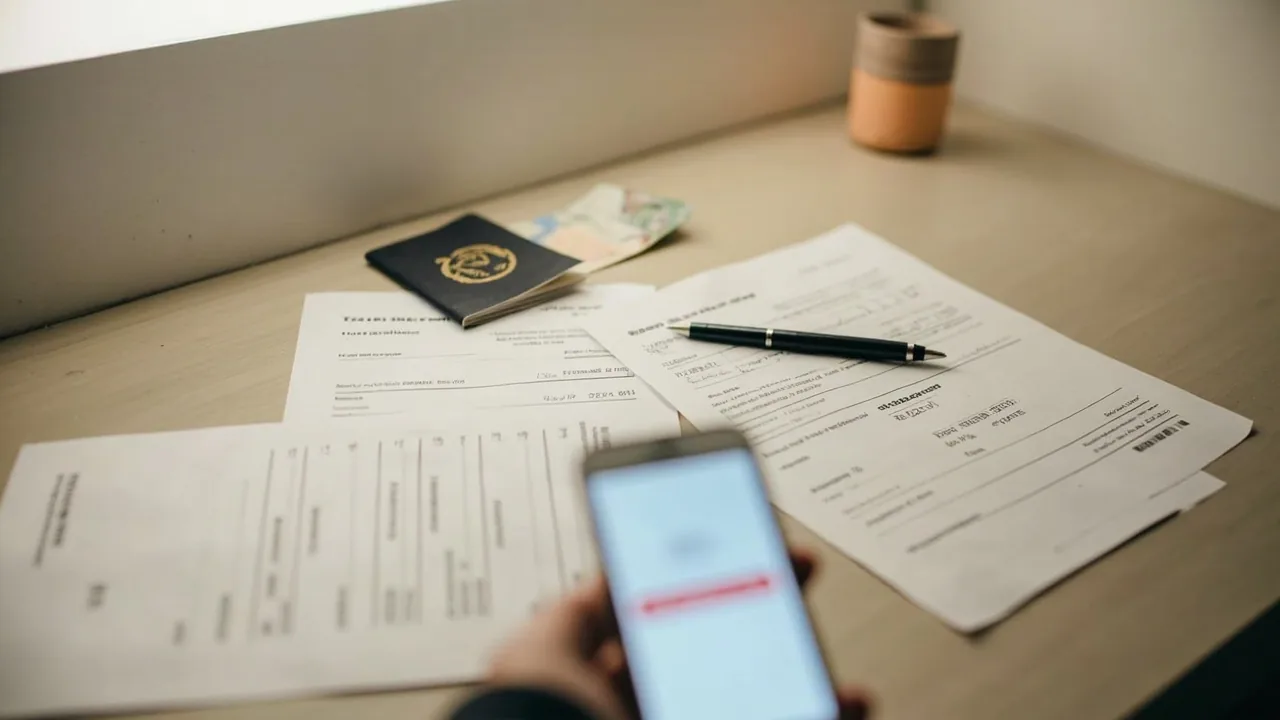
Travel Insurance Claims Guide for Indian Backpackers (2026)
Buying travel insurance is the easy part. The travel insurance claim process is where most Indian backpackers lose money, not at the hospital, but at the paperwork stage. This guide covers the real Southeast Asia claim process: what to photograph, which documents Indian insurers ask for, settlement timelines, and the small mistakes that get claims rejected. For broader safety basics across the region, see our Thailand safety guide and Cambodia scams guide.
Quick Answers
| What | Answer | Price (INR) |
|---|---|---|
| How long does claim settlement take? | 7 to 21 working days after all documents are submitted | ₹0 (no extra cost) |
| What’s the biggest reason claims get rejected? | Missing or unreadable hospital bills / discharge summary | ₹0 (lost claim) |
| Do I need to inform the insurer before hospitalisation? | Yes, call the 24/7 helpline within 24 hours in emergencies | Free from any phone |
| What’s the standard excess / deductible? | Usually ₹9,640 (~100 USD) to ₹24,101 (~250 USD) per claim | ₹9,640 (~100 USD) |
| Can I claim for stolen phone or laptop? | Only if you have a “personal belongings” add-on, not standard medical cover | Add-on: ~₹800 (~$8.30) extra |
Why Most Indian Claims Get Rejected Before They Even Start
Here’s the uncomfortable truth. Indian travel insurance claim approval rates sit somewhere between 70% and 85% depending on the insurer and claim type. That looks decent until you realise that the rejections aren’t random. They cluster around the same five reasons, every quarter, every insurer:
- No prior intimation. The traveller didn’t call the 24/7 helpline before going to the hospital or within 24 hours after.
- Original documents missing. Photocopies instead of originals, or originals sent in but the discharge summary is illegible.
- Treatment outside the network. Some Indian policies only cover “emergency” treatment, and the insurer argues the case wasn’t an emergency.
- Pre-existing disease disclosure gaps. The traveller didn’t declare a known condition on the proposal form.
- Time-barred intimation. The claim was reported 45 days after the incident instead of within the policy’s notification window.
If you avoid those five traps, your probability of approval jumps well north of 90%. Everything below this line is about avoiding them.
Subodh’s Pro Tip: The single most useful habit is a 60-second photo session the day your trip starts. Photograph your passport, visa, policy PDF, every page of the policy wording, your boarding pass, and the empty backpack. Email these to yourself. If your bag gets stolen in Hanoi or Phnom Penh, you’ve already done half the claim work before the theft even happened.
The Actual Claim Process, Step by Step
Indian travel insurance claim procedure looks different on paper vs in practice. Here’s the field version:
Step 1: Inform the insurer immediately
Every Indian travel policy has a 24/7 international helpline. The number sits in your policy PDF and on the insurer’s app. Call it before going to a hospital in a non-life-threatening emergency, or within 24 hours if it’s a genuine emergency. The call itself takes 3 to 5 minutes. They’ll give you a claim reference number and (usually) a list of network hospitals in your city.
For Southeast Asia specifically, ICICI Lombard, Bajaj Allianz, and HDFC ERGO all have tie-ups with major hospital chains in Bangkok, Ho Chi Minh City, Phnom Penh, and Vientiane. Network hospital = cashless treatment, no upfront payment, insurer settles directly. Out of network = you pay first, claim later.
Step 2: Collect documents at the point of incident
This is the step Indian travellers skip, and it’s the step that costs them. At the hospital, police station, or wherever the incident happened, ask for:
- Medical: Original itemised hospital bill, discharge summary (with diagnosis in English), pharmacy receipts, investigation reports (X-ray, blood test, MRI), and doctor’s certificate stating the patient was “unfit to travel” if relevant.
- Theft: Police FIR (or local equivalent), written police report with case number, photographs of damage or theft scene, proof of ownership (bill, warranty card, IMEI for phones).
- Trip delay / missed connection: Airline certificate confirming delay, boarding passes, original hotel bills for extra nights, receipts for meals bought during the delay.
- Baggage loss: Airline PIR (Property Irregularity Report), baggage tag photocopy, list of contents with values, original purchase receipts where available.
Ask for English translations of anything in Thai, Vietnamese, Khmer, or Lao at the point of issue. Hospital admin desks in Bangkok and HCMC routinely do this for free or a nominal fee. Doing it later costs 10x. For emergency contacts and embassy numbers across the region, see our Southeast Asia embassy contacts guide.
Step 3: File the claim within the notification window
Most Indian policies require intimation within 30 days of the incident and document submission within 30 to 45 days after that. Some (Tata AIG, Bajaj) have a stricter 15-day intimation window. Check your specific policy’s Section “Conditions” or “General Conditions” for the exact timeline. The policy PDF you photographed on Day 1 has this.
You can file claims via the insurer’s app (HDFC ERGO, ICICI Lombard), via email to the claims desk, or via the agent / broker who sold you the policy. The app route is fastest.
Step 4: Submit documents and follow up
Upload all originals via the app or courier them to the claims office (Mumbai for most insurers). After submission, the insurer has 7 to 15 working days for standard cases and up to 30 days for cases requiring investigation. Insurers do sometimes ask for additional documents mid-process. Reply within 48 hours. Delay = claim closed for “non-cooperation.”
Step 5: Receive settlement
Approved claims are paid via NEFT to your Indian bank account in INR, even if the original expense was in THB, USD, or VND. The insurer applies their own FX rate on the date of bill, which may differ slightly from the rate you paid at. Don’t argue the FX, it’s a fixed clause. For tips on getting better exchange rates on the road, see our currency exchange tips.
Subodh’s Pro Tip: Settlement timelines are almost always longer than the policy document claims. Budget 21 to 30 working days for medical claims, not 7. For theft claims involving police investigation, expect 45 to 60 days. If the insurer asks for “additional documents” more than twice, escalate to the Grievance Officer (every insurer must have one, contact details are on the IRDAI-registered website).
Most Common Travel Insurance Claims from Indian Backpackers in Southeast Asia
Based on insurer disclosures and traveller reports, the claim categories break down roughly like this:
| Claim type | Typical frequency | Common cause |
|---|---|---|
| Food poisoning / stomach infection | 35 to 40% of medical claims | Street food, untreated water |
| Motorbike accidents | 20 to 25% | No licence, drunk riding, no helmet |
| Dengue / mosquito-borne illness | 10 to 15% | Rainy season, no repellent |
| Theft of phone / cash / passport | 15 to 20% of all claims | Hostel dorms, beach bags, motorbike storage |
| Trip delay / missed connection | 5 to 10% | Weather, low-cost carrier cancellations |
| Dental emergency | 5 to 8% | Existing issues aggravated by flight pressure |
The two highest-frequency categories (stomach issues and motorbike accidents) are also the two most preventable. Never rent a motorbike without an International Driving Permit + a valid licence for that bike’s CC class. Our ATM fee comparison covers which Indian bank cards work at Southeast Asian ATMs, relevant if you’re paying hospital bills in cash.
The Four Most Common Claim Rejections (and How to Avoid Them)
Rejection 1: “No intimation was given within the policy window”
This is the #1 killer. The traveller treated themselves for food poisoning with rest and ORS, didn’t call the insurer, then filed a claim 20 days later when the bill arrived. The insurer rejected it for non-intimation, even though the medical bill was valid.
How to avoid: For anything that costs more than ₹4,820 (~50 USD), call the helpline. The call itself takes 3 minutes and gets logged in their system. If the helpline says “this is below deductible, don’t claim,” you’ve at least registered the incident.
Rejection 2: “Original documents not provided”
You went to a hospital, paid cash, got a receipt, threw the receipt in your bag, lost it during the rest of the trip. Photocopy doesn’t count.
How to avoid: The moment you pay any medical bill, take a photo of the original. Email it to yourself the same hour. Keep the original in a separate ziplock from your passport.
Rejection 3: “Treatment was not an emergency”
The insurer argues that a fever, a sprain, or a skin infection wasn’t a medical emergency and could have waited until you returned to India. This is subjective and often unfair, but it’s a common rejection ground.
How to avoid: At the hospital, ask the attending doctor to write “acute presentation, immediate treatment required” or similar language in the discharge summary. The doctor’s wording carries weight in claim adjudication. A line like “patient presented with 39°C fever, dehydration, unable to travel” reads as an emergency. “Patient reported mild fever” does not.
Rejection 4: “Pre-existing disease not disclosed”
You ticked “no” to diabetes / asthma / hypertension on the proposal form because you weren’t taking medication at the time. The insurer pulls your medical history during claim investigation, finds the diagnosis, rejects the claim.
How to avoid: Disclose everything. Pre-existing conditions don’t necessarily void a claim if they were disclosed; they may trigger a waiting period or sub-limit. Not disclosing them voids the entire policy. Always tick “yes” and let the insurer underwrite the risk.
What About Cashless vs Reimbursement?
Cashless treatment only works at network hospitals. Outside the network, you pay upfront and file for reimbursement. The reimbursement process is slower and riskier, but it’s the only option in most smaller Southeast Asian clinics.
For Southeast Asia, the major network hospitals that Indian insurers tie up with include:
- Bangkok: Bumrungrad, Bangkok Hospital, Samitivej
- Ho Chi Minh City: FV Hospital, Vinmec
- Phnom Penh: Royal Phnom Penh Hospital, Calmette
- Vientiane: Alliance International Medical Center
- Vang Vieng / Luang Prabang: Network coverage is thin; expect reimbursement route
Always ask the insurer’s helpline for the nearest network hospital before going anywhere for non-life-threatening treatment. A 15-minute Grab ride to a network hospital can save you ₹50,000 (~$518.65) in upfront payment.
Documents Checklist (Print This, Carry It)
Save this list on your phone in a notes app called “INSURANCE CLAIM”:
- Policy PDF (every page)
- Passport bio page
- Visa stamp / e-visa confirmation
- Boarding pass (return flight, for proof of trip dates)
- 24/7 insurer helpline number
- Network hospital list for your destinations
- Claim form (download from insurer app before the trip)
- Photos of: passport, visa, policy, empty backpack on Day 1
- Emergency contact in India (family or friend)
That last one matters more than people think. Insurers sometimes need a family member to verify identity before paying out large claims.
How Long Until You Get the Money?
Realistic timelines for Indian travellers:
- Cashless network hospital: 0 to 7 days (insurer pays hospital directly)
- Reimbursement, medical, all docs clean: 14 to 21 working days
- Reimbursement, medical, with queries: 30 to 45 days
- Theft with police FIR: 45 to 75 days
- Disputed claim escalated to Grievance Officer: 60 to 90 days
- Disputed claim escalated to IRDAI ombudsman: 4 to 6 months
If you’re claiming more than ₹2 lakh, the insurer may request an in-person or video
Common Mistakes Indians Make at the Claim Stage
Mistake 1: Waiting until they’re back in India to file. Some documents (police reports, hospital certificates) are easy to get on the spot. Two weeks later, the hospital in Vientiane wants ₹4,820 (~50 USD) to reissue the discharge summary.
What to do: File the intimation immediately. Collect every document before you leave the city.
Mistake 2: Letting the hospital discharge them without a written summary. Verbal instructions don’t count. Insurers want a stamped, signed, dated discharge summary with diagnosis.
What to do: Don’t leave the hospital without it. Wait an extra hour if needed.
Mistake 3: Assuming UPI / debit card payment is “enough proof.” It’s not. Insurers want itemised medical bills, not a card statement.
What to do: Get the itemised bill with each line (consultation, medication, room rent, tests) broken out.
Mistake 4: Filing a claim without reading their own policy exclusions. Standard exclusions include: injury while under influence of alcohol, injury while riding a motorbike without a valid licence, treatment for cosmetic issues, dental unless emergency, adventure sports unless add-on taken.
What to do: Read the exclusions page on Day 1 of your trip, not after the incident.
Mistake 5: Buying the cheapest policy without checking the sub-limits. A ₹500 (~$5.19) policy with a ₹96,40,370 (~100,000 USD) medical cover sounds great until you read that room rent is capped at USD 50/day and ICU at USD 200/day. The hospital bill can far exceed the cap.
What to do: Pay ₹800 (~$8.30) to ₹1,500 (~$15.56) for a policy with realistic sub-limits. The cheapest policies are cheapest for a reason.
When Your Claim Is Rejected, What Then?
Every rejection must come with a written reason. If you don’t get a written reason, demand one via email. Once you have it:
- Reply with evidence: Most “missing document” rejections are curable. Send the document. If the insurer still rejects, escalate.
- Grievance Officer: Every IRDAI-registered insurer has one. Email them with your claim number, rejection letter, and a polite but firm cover note. Response time is 7 to 15 days.
- IRDAI Bima Bharosa portal: If the Grievance Officer doesn’t resolve it within 30 days, file a complaint at https://bimabharosa.irdai.gov.in. Free for policyholders.
- Insurance Ombudsman: Final pre-litigation step. Most cases resolve here without going to court.
Travellers report that ~30% of rejected claims get approved at the Grievance or Ombudsman stage. The insurer often hadn’t read the documents carefully.
Subodh’s Take
The insurance claim process is one of those things that feels overwhelming until you’ve done it once, then it feels like a paperwork checklist. The real work is on Day 1 of your trip, when you photograph everything and save the helpline number. From there, it’s about staying calm at the hospital, asking for English paperwork, and submitting clean originals within 30 days. Buy the policy, photograph it, file promptly, follow up politely. That’s 90% of what gets your claim approved. The rest is just insurers being slow.
FAQ
How long does a travel insurance claim take in India?
Cashless network hospital treatment settles in 0 to 7 days. Reimbursement claims take 14 to 30 working days for clean documentation, and 30 to 75 days for cases involving police reports, multiple documents, or insurer queries. Disputed claims escalated to the IRDAI ombudsman can take 4 to 6 months.
What documents are required for a travel insurance claim?
For medical claims: original itemised hospital bill, discharge summary (with diagnosis in English), pharmacy receipts, investigation reports, and doctor’s certificate. For theft: police FIR, written report with case number, photos of the incident, and proof of ownership of stolen items. For trip delays: airline certificate, boarding passes, and extra accommodation receipts. Originals are mandatory, photocopies are not accepted.
Can I claim travel insurance for food poisoning?
Yes, food poisoning is one of the most common Indian travel insurance claims. It must be treated at a licensed hospital or clinic (not self-medicated), reported to the insurer’s helpline within 24 hours, and supported by original itemised bills and a discharge summary stating the diagnosis.
What is the standard deductible on Indian travel insurance?
Most Indian travel policies have a deductible of ₹9,640 (~100 USD) to ₹24,101 (~250 USD) per claim, meaning the insurer only pays above that amount. Some premium policies have zero deductible but cost 2x to 3x more. Check Section “Conditions” of your policy PDF for the exact figure.
Will my travel insurance cover motorbike accidents in Thailand or Vietnam?
Only if you hold a valid International Driving Permit (IDP) plus an Indian licence with motorcycle endorsement, and the policy doesn’t exclude “self-driven two-wheeler” accidents. Many Indian policies exclude motorbike claims entirely or require an additional premium rider. Read your policy’s exclusions page before renting a bike. Travellers report this as one of the most common denial reasons.
Can I claim for a stolen phone or laptop?
Standard medical-focused travel policies do not cover personal belongings. You need a “personal baggage” or “personal belongings” add-on, usually available for ₹500 (~$5.19) to ₹1,500 (~$15.56) extra at policy purchase. Claims require a police FIR, proof of purchase, and a depreciation deduction (insurers pay current value, not replacement cost).
What if my claim is rejected unfairly?
Reply to the rejection with a written evidence submission. If still rejected, escalate to the insurer’s Grievance Officer (contact on their IRDAI-registered website). If unresolved in 30 days, file a free complaint at the IRDAI Bima Bharosa portal. As a final step, escalate to the Insurance Ombudsman. Travellers report that ~30% of disputed claims get approved at the Grievance or Ombudsman stage.
