Using Indian Debit Cards in Laos: ATM Fees, Working Banks & Withdrawal Limits (2026 Guide for Indian Travelers)
Last updated: 2026-07-17
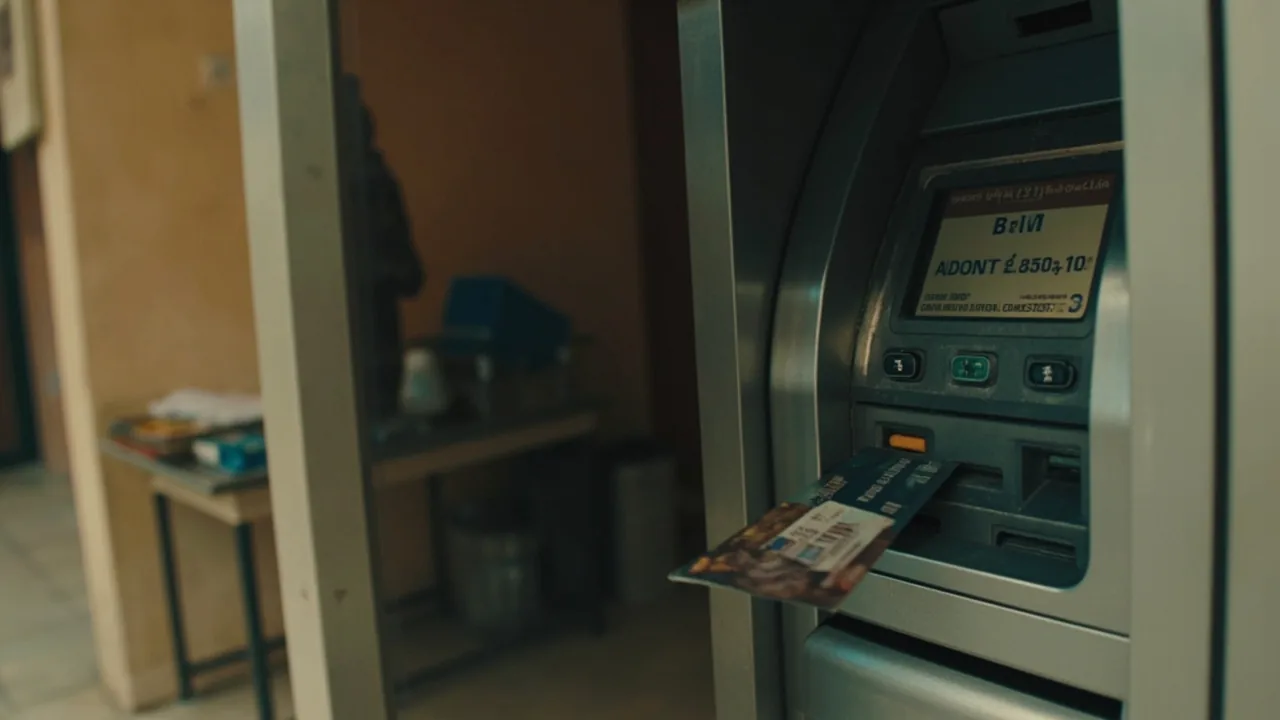
A Laos debit card from India works, but only at the right ATMs. Banque pour le Commerce Extérieur Lao (BCEL) and Joint Development Bank (JDB) reliably accept Indian cards.
This guide covers which ATMs to walk to in Vientiane and Luang Prabang, what each laos debit card transaction costs you in rupees, the daily limits, and the failure points that trip up first-time visitors. For the full Laos backpacking context, see our Southeast Asia backpacking hub.
What Counts as a “Working” ATM for Indian Cards in Laos?
Laos has a thin ATM network compared to Thailand or Vietnam, and Indian travellers run into two specific problems: not every machine is on the Plus or Cirrus networks your Indian card uses, and the machines that do accept international cards often look identical to the ones that do not. The “ATM accepted” sticker on the door is your fastest visual cue, but BCEL is the only bank that has English-language screens on the majority of its machines in tourist areas.
BCEL operates most of the ATMs you will find at Wattay International Airport in Vientiane, along the night market strip in Luang Prabang, and inside the larger minimarts in Vang Vieng. JDB has fewer tourist-area machines but charges a slightly lower per-transaction fee on some cards. You will see Lao Development Bank, APB, and STB machines as well; some accept Visa/Mastercard, many do not, and there is no reliable way to tell from the outside. When in doubt, BCEL.
Compiled from traveller reports from May 2026 and BCEL’s published ATM locator information.
Quick Answers
| What | Answer | Price (INR) |
|---|---|---|
| Do Indian Visa/Mastercard debit cards work? | Yes, at BCEL and JDB ATMs | — |
| Does RuPay work? | Rarely; treat it as backup only | — |
| Per-transaction fee (Lao bank) | ₹86-₹173 (~20,000-40,000 LAK or ~$0.90-$1.79) | ₹86 |
| Per-transaction fee (Indian bank) | ₹150-₹400 (~$1.56-$4.15) typical | ₹150 |
| Daily withdrawal limit at BCEL | ₹8,630 (~$89.52) per card per day | ₹8,630 |
| Max amount per single withdrawal | ₹4,315-₹8,630 (~$44.76-$89.52) | ₹4,315 |
| Best strategy | Withdraw the maximum each time to reduce fee-per-dollar | — |
| Biggest trap | Dynamic currency conversion (always decline) | — |
Step-by-Step: Withdrawing LAK from an Indian Debit Card
Step 1: Decide whether to bring cash or rely on ATMs
Bring ₹19,281-₹38,561 (~200-400 USD) in cash as backup. Indian travellers who arrive in Vientiane with zero local currency and a card that gets declined at the first ATM end up changing money at the airport, which is the worst rate in the country. The Lao visa-on-arrival fee must be paid in USD anyway for Indian passports, so you need USD on arrival regardless of card plans. Carrying USD also gives you a fallback if BCEL’s network is down, which happens roughly once every few weeks. See our Money in Laos guide for the full cash vs card breakdown.
If you have a forex card from Niyo, Happay, or your bank’s travel product, it works at the same BCEL machines but the fee structure differs slightly. Treat the forex card as your primary if you have one (lower markup on the FX), and your regular Indian debit card as backup.
Step 2: Find the right ATM
In Vientiane, head straight to the BCEL branch on Fa Ngum Road near the Mekong riverside promenade, or the BCEL machines inside the airport arrivals hall. The Fa Ngum Road branch has the longest opening hours of any tourist-area ATM and tends to be the most reliable. Avoid the orange Indochina Bank machines on the same street; they frequently decline Indian cards even when the screen says international cards are accepted.
In Luang Prabang, the BCEL ATM on Sisavangvong Road (the main night market street) is the one most Indian travellers use. There is also a BCEL machine at the airport. JDB has an ATM near the morning market that works reliably. See our Luang Prabang travel tips for more on navigating the city.
Step 3: Insert your card and pick the language
BCEL ATMs in tourist areas typically offer English, French, Lao, and Chinese. Pick English.
Do not pick “Convert to my home currency” or “Charge in INR” if the screen offers it. That is dynamic currency conversion, and it gives you a worse rate plus a 3-5% markup on top of the bank’s own fee. Always choose “Continue without conversion” or “Charge in LAK” (the option that lets the transaction settle in LAK so your Indian bank does the FX).
Step 4: Enter the amount
BCEL ATMs let you choose preset amounts (500,000 / 1,000,000 / 1,500,000 / ₹8,630 (~$89.52)) or punch in a custom amount. The per-transaction fee is the same regardless of amount, so always withdraw the maximum the machine allows. Two withdrawals of ₹4,315 (~$44.76) each cost you double the fees of one maximum withdrawal of ₹8,630 (the BCEL cap of ~$89.52).
A reasonable per-withdrawal target for most Indian travellers is ₹6,472-₹8,630 (~$67.14-$89.52), which covers 4-7 days of standard backpacker spending on accommodation, food, and tuk-tuks.
Step 5: Take your card, cash, and receipt
BCEL ATMs are the most common target for card-skimming scams in Southeast Asia, and the device-overlay trick is well documented in Laos. Before inserting, give the card slot a firm tug; if anything wiggles, walk away and use a different machine, ideally inside a bank branch. Always take your card back before counting cash. Always take the receipt (press “no receipt” if you prefer) so you have a record.
Step 6: Repeat in the right place
Withdraw at BCEL in Vientiane or Luang Prabang, then head into Vang Vieng or Nong Khiaw with enough LAK to last until your next BCEL town. Smaller towns have fewer working ATMs and longer queues.
If you need a transfer between cities after the cash run, use the 12go routes from the Vientiane and Luang Prabang guides.
The Real Cost: What Each Withdrawal Costs an Indian Traveller
The number on the BCEL screen is the LAK you receive. The number on your Indian bank’s app hours later is the INR you were charged. The difference is three fees stacked on top of each other:
- BCEL’s flat per-transaction fee: ₹86 (~20,000 LAK or ~$0.90).
- Your Indian bank’s foreign-transaction fee: typically ₹100-₹400 (~$1.04-$4.15) per ATM withdrawal, depending on your bank. SBI, HDFC, ICICI, and Axis all charge foreign ATM fees; the older your account, the more likely it is to be grandfathered into a lower fee.
- The FX markup: 1-3.5% depending on your bank and card type. Forex cards are usually 0.5-2%; standard debit cards run higher.
A ₹8,630 withdrawal (~$96 at the canonical rate of 1 USD = ₹96.3294) will typically cost you:
- 20,000 LAK BCEL fee (~$0.96)
- ₹250 (~$2.59) average Indian bank fee
- ₹150-₹300 (~$1.56-$3.11) in FX markup
Total real cost of one withdrawal: roughly 3-4% of the cash received. Below 4% on a single large withdrawal is competitive with what you’d pay at a money changer.
The trap to avoid: if you let BCEL “convert” the transaction to INR on the screen, BCEL sets the rate and you lose another 3-5% on top. Always decline DCC.
Daily Limits: What Your Indian Bank and BCEL Each Allow
Indian banks cap foreign ATM withdrawals in two ways: per-transaction and per-day. The lower of the two is what hits you.
Most Indian banks (SBI, HDFC, ICICI, Axis, Kotak) allow 3-5 foreign ATM withdrawals per day and a per-transaction limit of ₹10,000-₹25,000 (~$103.73-$259.33) on standard debit cards unless you have requested a higher limit. That is roughly ₹1,208-₹3,020 (~280,000-700,000 LAK or ~$12.53-$31.33) per transaction, which means you may not even reach BCEL’s per-transaction maximum before your own bank cuts you off.
If you plan to withdraw ₹8,630 (~$89.52) in a single BCEL transaction, you must raise your Indian bank’s foreign ATM withdrawal limit before you leave India. This is done through your bank’s netbanking or mobile app, takes a few minutes, and the new limit usually applies within 24 hours.
Subodh’s Pro Tip: Before you fly, do a single test withdrawal of ₹10,000-₹15,000 (~$103.73-$155.60) from any foreign ATM (airport ATMs in Bangkok, Singapore, or Dubai work) using the same card you plan to use in Laos. This confirms your card is enabled for international use and that your daily limit is where you expect it to be. Finding out your card is locked at the BCEL machine in Vientiane is a 90-minute detour to the embassy district to fix it.
Safety Alert: The “₹25,000 (~$259.33) per transaction” cap is set by your bank, not by BCEL. BCEL will happily dispense ₹8,630 (~$89.52) in one go, but your card will decline above the bank’s own per-txn ceiling. Always check your bank’s foreign ATM limit on netbanking before departure.
Common Mistakes Indians Make at Lao ATMs
Mistake 1: Accepting dynamic currency conversion
The BCEL screen will offer to charge your card in INR instead of LAK, with the explicit promise that “you’ll know exactly how much was charged in your home currency.” The rate BCEL uses is 3-5% worse than what your Indian bank would have used, plus BCEL keeps the spread. Always choose LAK.
What happens if you accept DCC: you get fewer rupees’ worth of LAK, plus your Indian bank then adds its own foreign-transaction fee on top of the inflated INR amount. Double charge.
Mistake 2: Withdrawing small amounts to “avoid fees”
The per-transaction fee is fixed regardless of withdrawal size. Five withdrawals of ₹1,726 (~$17.90) each will cost you ₹432 (~$4.48) in fees. One withdrawal of ₹8,630 (~$89.52) costs ₹86-₹173 (~$0.90-$1.79). Always withdraw the maximum your card allows.
Mistake 3: Trusting the “International Cards Accepted” sticker
Several banks in Laos put a Visa/Mastercard sticker on machines that frequently decline Indian cards. The reliable indicator is the BCEL logo on the screen itself, plus a working English-language interface.
Mistake 4: Counting cash at the ATM
Tourists who count their cash at the machine, card still in hand, are the easiest targets for petty theft in night-market areas. Take your card, take your cash, step away from the machine, then count.
Mistake 5: Using the airport BCEL as your first withdrawal
Airport BCEL machines sometimes add a surcharge on top of the standard ₹86 (~20,000 LAK or ~$0.90) fee on some cards. Withdraw only what you need for the visa-on-arrival fee and the tuk-tuk to your hotel, then do your real withdrawal at a city-centre BCEL branch.
What Most Guides Don’t Tell You
1. JDB has lower fees than BCEL on some Indian cards
Joint Development Bank ATMs in Luang Prabang and Vientiane charge ₹65-₹86 (~$0.67-$0.90) per transaction versus BCEL’s ₹86-₹173 (~$0.90-$1.79), depending on the card. Compare this with our Laos ATM fees guide for the full fee comparison. JDB’s network is thinner, and the machines are less reliable, but if you find one that works with your card, the fee saving on a ₹8,630 (~$89.52) withdrawal is meaningful. Travellers report HDFC and Axis cards working at JDB slightly more consistently than SBI.
2. Some Indian bank apps block Lao transactions by default
A handful of Indian banks flag Lao ATM withdrawals as suspicious and require a one-time get via SMS or app notification. If your first withdrawal declines with “transaction not permitted,” check your bank’s app for a fraud alert before assuming the machine is broken. SBI in particular has been known to require customers to whitelist Laos via the YONO app before the first foreign withdrawal goes through.
3. RuPay acceptance is hit-or-miss
RuPay cards are accepted at some BCEL machines (those on the National Payments Corporation of India partnership network) and declined at others, with no reliable pattern. Treat RuPay as a backup, not a primary card. If you are choosing between Visa and RuPay for your Laos trip, pick Visa.
4. BCEL’s per-day limit is per card, not per person
Two BCEL withdrawals of ₹4,315 (~$44.76) on the same card in the same day will work; a third may decline. Bring two cards from two different banks if you plan to withdraw more than ₹8,630 (~$89.52) in a single day.
5. The ₹2,000-₹2,500 (~$20.75-$25.93)“fair withdrawal size” sweet spot
At current LAK-INR rates (≈ ₹0.0043 per LAK), withdrawing the equivalent of ₹2,000-2,500 in LAK at a time keeps you in the lowest per-rupee fee range and matches a 4-7 day spending budget for most backpackers. Smaller withdrawals inflate the fee-per-rupee above 5%.
SafetyWing Travel Insurance for Indian Travellers in Laos
Medical evacuation from Laos to Bangkok runs ₹2,410,092-₹4,820,185 (~25,000-50,000 USD) without insurance. Most Indian travel insurance policies exclude motorcycle accidents or treat them as a separate rider; SafetyWing includes them up to a defined limit. For backpackers crossing into Laos overland from Thailand, the trip-interruption coverage also handles the case where a border closure or political event forces an unplanned reroute.
Subodh’s Take
The Indian debit card works fine in Laos as long as you stick to BCEL and JDB, withdraw maximum amounts, decline dynamic currency conversion every single time, and raise your per-transaction limit on netbanking before you fly. The part most travellers skip until it’s too late is the test withdrawal: do one at any foreign airport ATM before you fly, confirm the card is enabled, and you’ll save yourself the half-day lost to figuring it out at the BCEL on Fa Ngum Road. For Indian backpackers doing the Thailand-Laos-Vietnam loop, the right setup is one Visa debit card with the foreign limit raised, one forex card as backup, and ₹19,281 (~200 USD) in cash for the visa-on-arrival and any emergency ATM failures. Also read our tipping and bargaining guide and Laos e-visa step-by-step before you go.
FAQ
Can I use UPI or RuPay in Laos?
No. UPI does not work outside India. RuPay works at some BCEL machines and not others. Visa and Mastercard are the reliable options.
What is the BCEL daily withdrawal limit?
₹8,630 (~$89.52) per card per day on standard BCEL machines. Some airport machines cap single transactions at ₹4,315 (~$44.76).
How much does BCEL charge per transaction?
₹86-₹173 (~20,000-40,000 LAK or ~$0.90-$1.79), depending on the machine and card type. Airport and minimart machines are usually at the higher end.
Do Indian debit cards work in Luang Prabang ATMs?
Yes, at the BCEL on Sisavangvong Road and the JDB near the morning market. Travellers report HDFC, ICICI, SBI, and Axis all working consistently.
Can I use my forex card (Niyo, Happay) at Lao ATMs?
Yes. Forex cards work at the same BCEL and JDB machines and typically have lower FX markups than standard debit cards. Check your card’s specific foreign-ATM fee before departure.
Why did BCEL decline my card?
Most common reasons: dynamic currency conversion was selected, your Indian bank’s foreign limit is too low, your bank flagged the transaction as suspicious, or the machine has a network issue. Try a different BCEL machine, and check your bank’s app for a fraud alert.
Should I bring USD cash to Laos?
Yes, bring ₹19,281-₹38,561 (~200-400 USD). The visa-on-arrival fee must be paid in USD or Thai Baht, and USD is your fallback if all ATMs fail.
— Subodh
