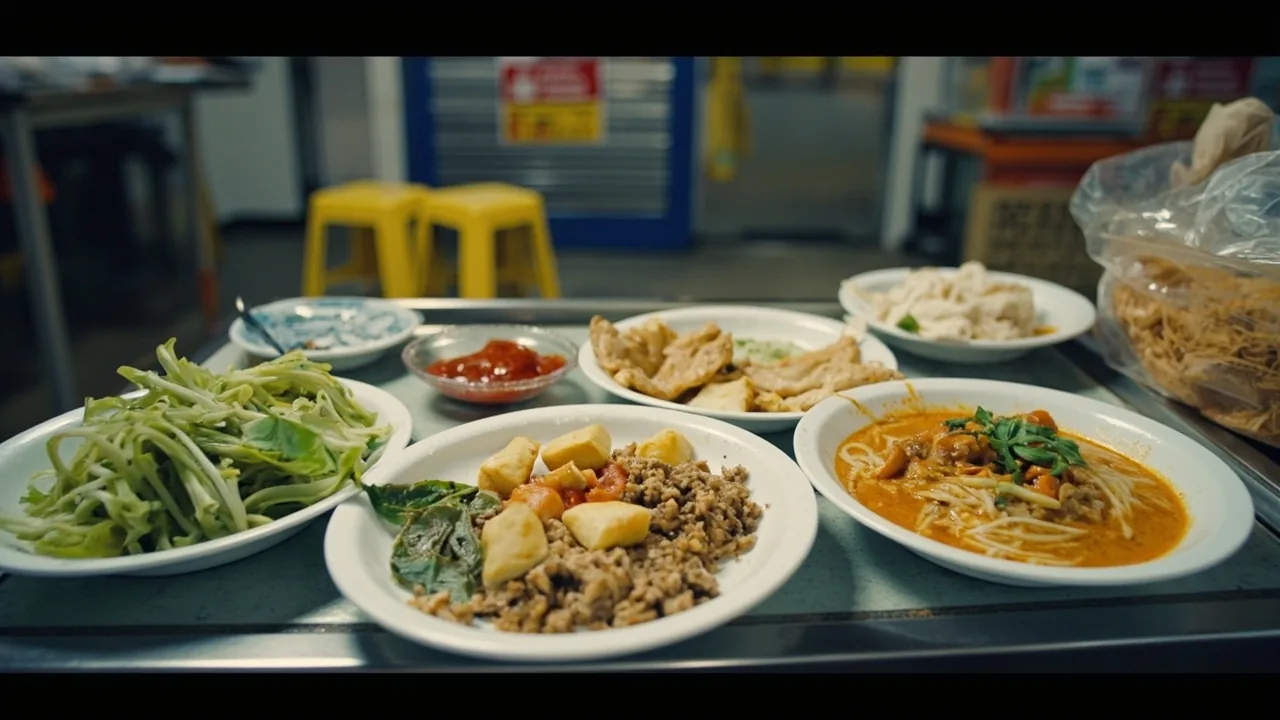
Vegan Malaysian Street Food: A Plant-Based Guide to the Best Stalls
Malaysian street food is one of the great bargains of Southeast Asia, but for plant-based travellers it can feel like navigating a minefield. Fish sauce, shrimp paste (belacan), oyster sauce, and lard show up in dishes you’d swear were vegetarian. The good news: with a handful of phrases and a short list of safe staples, you can eat well across KL, Penang, and Melaka. For related planning, see our guide on Sea Backpacking Hub.
Quick Answers
| What | Answer | Price (INR) |
|---|---|---|
| Average plant-based hawker meal | Mixed rice (nasi campur) with tofu, vegetables, no sambal belacan | ₹95 (~$0.98) |
| Cheapest fully vegan dish | Vegetarian loh mei fun or fried noodles, ask no egg | ₹75 (~$0.78) |
| Local phrase to learn first | ”Sayur sahaja, tanpa ikan, tanpa udang” (vegetables only, no fish, no shrimp) | |
| Where to find Indian-veg fallback | Brickfields in KL, Little India in Penang | |
| Bottled water (500 ml) at hawker stalls | Standard, drink this not tap | ₹19 (~$0.20) |
The Local Culinary Landscape
Malaysian hawker food is loud, smoky, and built around three traditions (Malay, Chinese, and Indian) that overlap at every corner stall. For vegan travellers this overlap is mostly good news: Indian-Muslim (Mamak) and South Indian stalls have always carried lacto-veg options, and Chinese Buddhist-style stalls tend to default to garlic-vegetable stir fries. The problem is the hidden animal products.
Four ingredients to watch for, ranked by how often they sneak in:
- Sambal belacan (chilli paste with fermented shrimp). Served as a side at almost every Malay stall. Looks red, looks veg. It is not.
- Fish sauce (kicap ikan). The default Chinese stir-fry seasoning. Even “plain” kailan gets a splash.
- Shrimp paste (belacan) and dried prawns. The backbone of laksa, char koay teow, and many noodle soups.
- Lard and pork floss. Old-school Chinese hawker woks are sometimes seasoned with lard. Ramen shops are an obvious risk.
Subodh’s Pro Tip: Local staff at Malay stalls will often assume “vegetarian” includes seafood or chicken unless you say otherwise. Saying “no meat, no fish, no shrimp, no egg” works. Saying “vegetarian” alone does not.
A separate issue: halal certification is everywhere in Malaysia, and halal rules forbid pork but permit fish, so even a fully halal stall is rarely vegan. Look for two specific signals instead, Chinese Buddhist stalls (red/yellow signage, often Chinese characters only) and Indian vegetarian stalls (green dot or yellow flag, often in Mamak areas or Little India neighbourhoods).
For a wider Malaysian food overview including non-veg dishes and regional differences, see our Malaysia food guide. For budget ceiling rates on what Indian veg travellers pay across the country, our vegetarian food prices article is a useful sanity check.
Key Phrases in Bahasa Malaysia
Pronounce these slowly and clearly. Most hawker aunties and uncles are patient, and the effort itself earns goodwill.
| English Phrase | What It Means | Local Script | Pronunciation |
|---|---|---|---|
| I am vegetarian | Tells them you’re not ordering meat | Saya vegetarian | ”sah-yah veh-jeh-teh-ree-un” |
| No meat or seafood | Critical clarification | Tanpa daging, tanpa makanan laut | ”tahn-pah dah-gheeng, tahn-pah mah-kah-nahn la-ut” |
| No fish sauce | The single most important phrase | Tanpa kicap ikan | ”tahn-pah kee-chap ee-kahn” |
| No egg | Common in fried noodles and rice | Tanpa telur | ”tahn-pah teh-loor” |
| No onion, no garlic | For Jains and stricter plant-based eaters | Tanpa bawang | ”tahn-pah bah-wahng” |
| Vegetables only | When picking mixed rice | Sayur sahaja | ”sah-yoor sah-hah-jah” |
| Just coconut oil / vegetable oil | When in doubt about cooking fat | Minyak kelapa sawit sahaja | ”meen-yak keh-pah-lah sah-wee sah-hah-jah” |
Keep these in your phone’s notes app. Screenshot the table. Show it to the stallholder rather than trying to speak over a noisy wok.
Safe Local Street Food Dishes
These are dishes Malaysian hawker stalls commonly make in plant-based form, either because the original is vegetable-heavy or because vegan demand has grown enough that a “vegetarian version” is on the menu.
Mixed Rice (Nasi Campur / Nasi Lemak with Veg Sides)
Mixed rice stalls line up trays of pre-cooked dishes and you point at what you want. For plant-based eaters, the safe picks are: stir-fried kangkung (water spinach), tofu in soy sauce, tempeh sambal, cucumber salad, and plain white rice. Skip anything with dried shrimp (udang kering) on top.
Typical price at a KL or Penang hawker centre: ₹118-₹237 (~5-10 MYR or ~$1.23-$2.46) for a fully vegetable plate with rice.
Subodh’s Pro Tip: Order “nasi campur sayur, tanpa belacan, tanpa kicap ikan.” The rice itself is almost always plain. The danger is in the sides.
Loh Mei Fun and Fried Kway Teow (Veg Version)
A surprisingly easy win at Chinese hawker stalls. Loh mei fun (thick rice noodles) or fried kway teow tossed with bean sprouts, kai lan, carrot, and tofu is a one-plate meal. Ask for “tanpa telur, tanpa kicap ikan” and most stalls can do it.
A solid portion runs ₹142-₹237 (~6-10 MYR or ~$1.47-$2.46) at most Penang and KL hawker centres. The non-veg version (with cockles and Chinese sausage) is what makes the headlines. The veg version is rarely advertised but is almost always possible.
Curry Vegetables with Rice or Roti
Mamak stalls (Indian-Muslim open-air restaurants) keep a permanent vegetarian section with dhal, mixed vegetable curry (sayur campur), and brinjal (terung) curry. The dhal is almost always vegan. The vegetable curries often have a small amount of dried shrimp, so ask.
Roti canai at Mamak stalls is mostly made with flour, water, ghee, and egg. For the fully vegan version ask for “roti canai tanpa telur, tanpa susu” and confirm only vegetable oil goes on the griddle.
Popiah (Fresh Spring Rolls)
These are a near-perfect vegan street snack: a thin crepe wrapped around jicama, carrot, bean sprouts, tofu, and crushed peanuts. The only non-veg risk is the sweet sauce (hoisin), which is sometimes shrimp-based. Ask “tanpa udang” (no shrimp). A popiah runs ₹47-₹95 (~2-4 MYR or ~$0.49-$0.98) each at most hawker stalls.
Curry Puffs and Fried Snacks
Vegetable curry puffs (karipap sayur) are sold at most morning markets and some hawker stalls. The filling is potato, onion, and mild curry powder. Confirm no egg wash and that the oil is fresh. A curry puff is ₹36-₹71 (~1.50-3 MYR or ~$0.37-$0.74), two or three of them is a filling snack.
Cendol and Other Non-Dairy Desserts
Cendol is the dessert to know: shaved ice, coconut milk, pandan jelly noodles, and palm sugar. The default version uses coconut milk and is vegan. Skip the kidney beans topping if you want a cleaner option, sometimes cooked with animal fat.
A bowl runs ₹71-₹118 (~3-5 MYR or ~$0.74-$1.23) at dedicated cendol stalls, often marked so non-Malay customers know what they’re ordering.
Recommended Plant-Based Hawker Stalls and Cafes
These are widely cited spots in current traveller write-ups and reviews.
Local / Plant-Based Focused
- niàn Cafe (plant based food) (rating 4.9). Chill plant-based cafe with a focus on healthy eating. A useful fallback in central KL when you want a sure-thing meal without translating phrases. Try the set lunch.
- Armani Food Garden (rating 4.9). Enjoy local Malay cuisine with a cozy garden atmosphere. Malay-style vegetable dishes done without belacan if you ask. Better in the evening when the garden seating is open.
- Seeds Origin - Healthy Food Cafe Kuala Lumpur (rating 4.8). Healthy cafe with a variety of nutritious options. Bowls and plant-based plates that take the guesswork out of ordering.
- Food Stalls (rating 4.3). A category mention rather than a single address: across Malaysia, night-market “Food Stalls” sections are where you’ll find the most vegan variety, especially in larger cities on weekends.
Indian and Vegetarian Fallback Spots
For days when you don’t want to translate or negotiate ingredients, these Indian and veg-focused restaurants are the cleanest fallback.
- Madam Priya’s House of Curries @ Beach Street (rating 4.7). This casual Beach Street venue specialises in South Indian food. Pure vegetarian kitchen, no guesswork.
- FOOD PARADISE RESTAURANT & BISTRO Pakistani & Indian Cuisine (rating 4.8). Authentic Pakistani and Indian cuisine in a lively setting. A solid option for a more familiar meal, with clear vegetarian labels.
- Preeti’s Farsan Vegetarian & Vegan (rating 4.8). Gujarati snacks and vegetarian delights in a family-friendly environment. Useful for breakfast snacks and travel-friendly packaged items.
- Ponmalar Indian Stall, Kedai Ponmalar (rating 4.8). Family-run Indian stall in the Cameron Highlands serving dosai, idli, and simple veg thalis.
- Danish Briyani House Chulia Street (rating 4.6). Rich Hyderabadi biryanis served casual and street-side in Penang. The veg section is reliable, ask for the paneer or vegetable biryani.
- Bombay Grand Indian Cuisine - Brickfield Branch (rating 4.8). Upmarket dining with authentic Mumbai street food and North Indian curries. Brickfields is KL’s Little India, the easiest cluster to navigate as a vegetarian traveller.
For more spots in this cluster, our Indian restaurants in Malaysia guide goes deeper by city.
For a broader sweep including budget hawker spots under RM15, see cheap and nice halal food in KL. For the Mamak culture specifically, our Mamak stall guide explains which items at these 24-hour joints are safe for plant-based eaters.
Subodh’s Pro Tip: In Penang, the hawker centres in George Town (Lebuh Cintra, Lebuh Chulia, and New Lane) have at least one dedicated vegetarian stall each. Look for the green banner with Chinese characters meaning “vegetarian.” In KL, the fastest clusters are Brickfields (Indian veg) and the Buddhist vegetarian stalls inside larger Chinese hawker centres like Imbi or OUG.
Food Safety and Hygiene
Malaysian hawker hygiene is generally good, and the regulatory framework is stricter than in Thailand or Vietnam. Still, basic precautions matter.
- Pick busy stalls. A high turnover means fresh food. If a stall has ten people queuing and the wok is fired up every two minutes, you are safer than at the lonely one nearby.
- Drink only bottled or filtered water. Tap water is not drinkable. A 500 ml bottle runs 1 MYR at any convenience store. Ice in drinks at established stalls is generally factory-made and safe. At small stalls, ask “ais kilang?” (factory ice?).
- Eat cooked-to-order dishes. Stir-fries and noodle soups that come off a hot wok are safer than pre-cooked mixed rice that has been sitting in open trays for hours, especially in the afternoon heat.
- Avoid raw vegetables at unknown stalls. Salads and ulam (raw herb plates) are fine at clean establishments, risky at small stalls.
- Carry ORS. Pharmacies (Guardian, Watsons) stock it everywhere. Useful if you do get a stomach bug. Costs about ₹71-₹118 (~3-5 MYR or ~$0.74-$1.23) per sachet.
- Trust your nose. If a stall smells off, walk. If a dish tastes sour in a way that doesn’t match the dish, stop eating.
For wider health and safety context including emergency numbers and insurance, see our Malaysia safety guide.
Getting Connected
You will translate, look up maps, and search for the nearest vegetarian stall, so a working data connection from day one matters. Local SIMs (Hotlink, Maxis, Celcom, U Mobile) all work well and can be picked up at KLIA, Penang International, or any mall kiosk. Budget around ₹710 (~30 MYR or ~$7.37) for a week of data. ESIMs are also a clean alternative if your phone supports them: Get Nomad eSIM covers Malaysia with no physical swap needed.
Common Food Mistakes Indians Make
Mistake 1: Ordering “vegetarian” and assuming that’s enough. What happens: The stallholder assumes seafood is fine. You get a vegetable stir-fry seasoned with fish sauce and a side of sambal belacan. Fix: Always say “tanpa daging, tanpa ikan, tanpa udang” (no meat, no fish, no shrimp) at every order, even if it feels redundant.
Mistake 2: Trusting the green “vegetarian” sign without checking the dish. What happens: A “vegetarian” stall serves Chinese Buddhist-style food cooked with egg, garlic, and sometimes oyster sauce. Fix: Look for the sign, but still confirm. Egg is the most common hidden ingredient in noodles and rice dishes.
Mistake 3: Assuming roti canai is vegan. What happens: The standard recipe uses egg and ghee. You get a non-vegan meal you thought was safe. Fix: Ask for “roti canai tanpa telur” (no egg) and confirm vegetable oil only.
Mistake 4: Drinking fruit juice with ice at roadside stalls. What happens: The ice is fine but the water used to wash the fruit or dilute the juice is tap. You get Delhi belly. Fix: Stick to bottled drinks, or fresh fruit you peel yourself (bananas, mangosteen, rambutan).
Mistake 5: Trusting “vegetarian laksa” without asking. What happens: Even veggie laksa often uses shrimp paste in the broth base. You don’t see it, you taste it later. Fix: Skip laksa unless you are at a fully vegetarian Chinese stall, or order the curry version (laksa lemak with coconut milk) and ask specifically for the no-shrimp version.
FAQ
Is McDonald’s or Burger King safe for vegans in Malaysia? Both chains offer some plant-based options. McDonald’s carries a Veggie McWrap and Burger King has offered a Bean Burger in some markets. Availability varies by outlet and over time, so check the menu board at the specific location.
Can I get Jain food at hawker stalls? Strictly Jain (no onion, no garlic, no root vegetable) is rare outside of dedicated Jain restaurants, which mostly exist in larger Indian-community areas like Brickfields in KL. Hawker-level Jain food is not realistic. If Jain is essential, plan around Indian-veg restaurants rather than hawker stalls.
Is fish sauce in everything? At Chinese hawker stalls, yes, almost always. At Malay stalls, less so (they prefer belacan). At Indian-Mamak stalls, much less (curry is the main seasoning). The phrase “tanpa kicap ikan” is the single most useful phrase you will learn.
Is halal food safe for vegans? Halal rules forbid pork but permit fish and most seafood. A halal stall is not necessarily vegan. Look for the additional signals (Buddhist-style Chinese stalls, Indian-veg stalls) as covered above.
What about durian and other fruits? Durian is fully vegan. The whole fruit is meat-free. So are mangosteen, rambutan, langsat, jackfruit, and cempedak. The risk is only if you eat street-cut fruit washed in tap water. Buy whole and peel yourself.
Do I need to learn Mandarin or Tamil? No. Bahasa Malaysia phrases are enough at hawker stalls. Chinese-only stalls exist but the operators often speak enough Bahasa to confirm “vegetable, no fish sauce.” If you’re at a Chinese-only stall, point to the table of phrases and ask.
How strict are custom checks at KLIA for plant-based snacks? No issues. Packaged vegan snacks, Indian sweets, and instant noodles are all fine. Liquid restrictions are standard international rules.
Subodh’s Take
Malaysia is one of the easier Southeast Asian countries to eat plant-based at street level, but only if you commit to the phrases. Print the table, screenshot it, and use it at every stall for the first week. Planning your broader route? Our 7-day Malaysia itinerary from India lines up the key hawker stops city by city. After that you’ll start recognising which stalls in your neighbourhood are reliable and which to skip. Indian-veg restaurants in Brickfields or Little India are always the safety net, but don’t let that stop you from the hawker centres, that’s where the actual food is.
