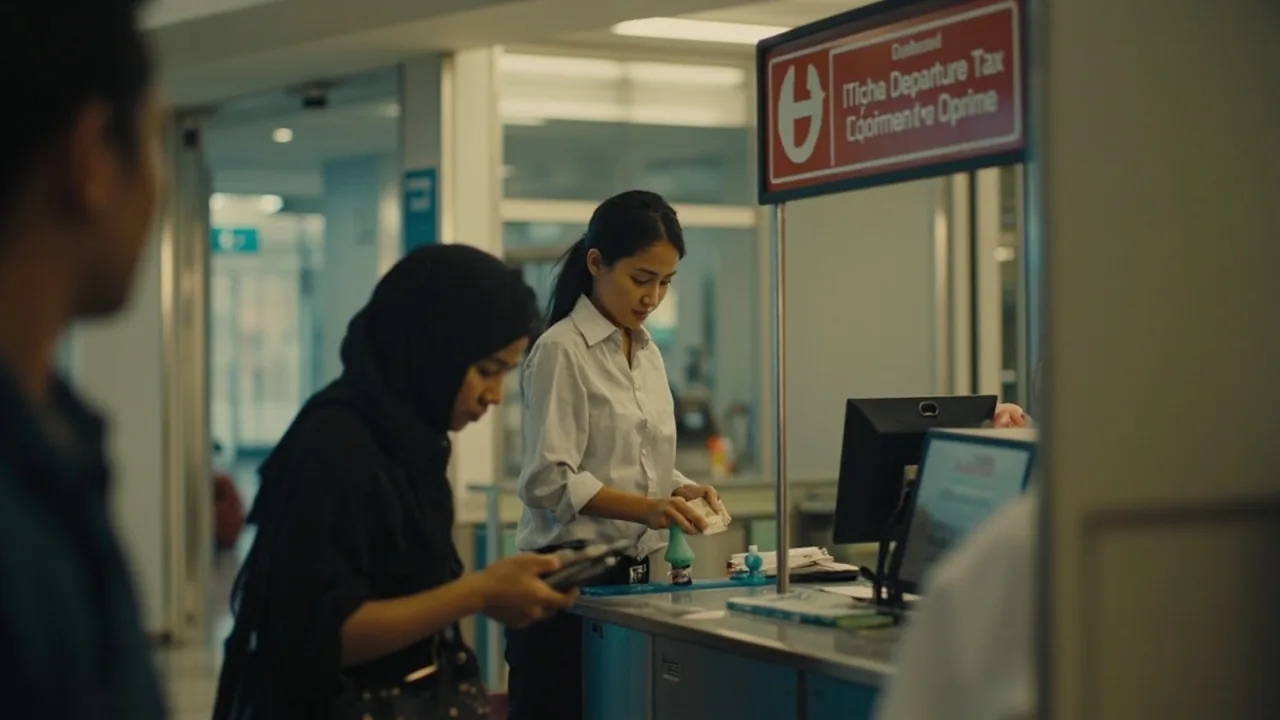
Vietnam Departure Tax: What You Pay at the Airport (And What’s Free)
`
Quick answer for anyone staring at their boarding pass: there is no separate Vietnam departure tax that you pay at the airport. The international departure fee used to exist as a paper ticket stamp decades ago, and older travel blogs still quote it, but it has been rolled into your airfare for years. What you do pay, on top of your ticket, is a small airport service fee, a security charge, and sometimes a fuel surcharge baked into the airline’s tax line. None of those need cash at the gate.
This guide walks through what shows up on your airline ticket, what you don’t pay, and the one real cash event that catches Indian travellers off guard at the departure hall: the VAT refund counter. Read it before you fly out of Tan Son Nhat (Ho Chi Minh City), Noi Bai (Hanoi), or Da Nang, and you won’t be fumbling with your passport at the wrong counter.
Subodh’s Pro Tip: Keep your shopping receipts for VAT refund items in your carry-on, not checked luggage. Customs officers at the VAT counter need to physically see the goods.
Quick Answers
| What | Answer | Price (INR) |
|---|---|---|
| Is there a Vietnam departure tax for international flights? | No separate cash departure tax. All government levies are folded into the airline ticket. | Included in fare |
| Is there a Vietnam departure tax for domestic flights? | No separate cash departure tax. Same setup: built into the fare. | Included in fare |
| What airport service fees show up on my ticket? | Airline-collected passenger service charge and security fee, shown in the “taxes” line of your booking. | ₹294 (~80,000 VND or ~$3.06) to ₹552 (~150,000 VND or ~$5.73) |
| How much cash should I keep ready at the airport? | Just enough for VAT-refund processing fees, a Grab to the airport, and a coffee. | ₹736 (~200,000 VND or ~$7.64) to ₹1,840 (~500,000 VND or ~$19.10) |
| Can I claim a VAT refund as a tourist leaving Vietnam? | Yes, at the airport VAT refund counter, after Customs inspects the goods. | 85% of VAT paid (after fees) |
The fee ranges above are the published passenger service charges at Vietnam’s international airports as of mid-2026. Low-cost carriers (VietJet, Bamboo) quote the same baseline.
What “Vietnam Departure Tax” Means in 2026
The phrase trips people up because it’s a relic. Vietnam used to levy a separate international passenger service charge, but it has long been consolidated into your airfare. Your booking confirmation’s “taxes and surcharges” line contains:
- Passenger service charge (the formal government levy, paid by the airline on your behalf)
- Aviation security fee
- A fuel surcharge, where applicable (VietJet and Bamboo adjust this monthly)
That’s it. You don’t queue up at a “departure tax counter” in the terminal. No one will ask you for a separate payment after you check in.
What you do see at the airport:
- The airline counter, where you drop bags and collect boarding pass
- Immigration (passport control)
- Security screening
- The duty-free and gate area
The only airport-side payment you’ll likely make is the VAT refund processing fee, covered below, if you shopped in Vietnam as a tourist.
Safety Alert: Ignore anyone in the terminal wearing anything that looks like a “departure tax” or “airport fee” vest. This is a known hustle. Vietnam has no separate cash departure tax, and airport staff in uniform don’t collect extra fees from passengers. If someone insists, walk away and find the nearest airline counter.
The Real Charges Hidden in Your Ticket
This is what an airline’s “tax” line typically includes for an international flight out of Vietnam, based on a roundtrip booking on Vietnam Airlines from Tan Son Nhat to Bangkok, checked in July 2026:
- Passenger service charge: ₹294 (~80,000 VND or ~$3.06) to ₹552 (~150,000 VND or ~$5.73)
- Aviation security fee: ₹74 (~20,000 VND or ~$0.76) to ₹110 (~30,000 VND or ~$1.15)
- Fuel surcharge (varies monthly): 0 VND to ₹736 (~200,000 VND or ~$7.64) per leg for low-cost carriers, often embedded for full-service airlines
- International departure/arrival fee where applicable: 0 VND to ₹184 (~50,000 VND or ~$1.91)
For a domestic Vietnam flight (say Hanoi to Da Nang on VietJet), the same structure applies at a smaller scale, typically ₹184 (~50,000 VND or ~$1.91) to ₹294 (~80,000 VND or ~$3.06) total in government levies on top of the base fare.
The line items differ by airline because each carrier reports them differently. Vietnam Airlines typically bundles them into one number. VietJet and Bamboo Airways itemize. Neither approach changes the bottom line: you pay them when you buy the ticket, and you don’t pay anything again at the airport.
For broader context on how Vietnamese airports handle these charges and what to expect at the gate, see our Vietnam airport rules guide.
Domestic vs International: Is the Departure Tax Different?
Short answer: no, they’re structured the same way, just at different price points.
International flights out of Vietnam carry a slightly higher passenger service charge because the airport handles more layers: customs, immigration, larger security footprint. Domestic flights have a lower fee because the process is lighter. Both are still folded into your ticket, not collected at the gate.
If you’re flying Hanoi to Ho Chi Minh City on a domestic leg, expect to see ₹184 (~50,000 VND or ~$1.91) to ₹294 (~80,000 VND or ~$3.06) in “taxes” on your confirmation email, and that’s where the government takes its share. There’s no separate counter to visit.
For a breakdown of all the international gateways in the country, including which airports handle which flight types, our international airports in Vietnam guide is a useful companion read.
If you’re planning how long to spend in Vietnam before you fly out, our how many days do you need in Vietnam guide helps you size up the trip.
The VAT Refund Counter: What It Is and How to Use It
This is where many Indian travellers miss out on real money. Vietnam allows foreign tourists to claim back the 10% VAT (called GTGT in Vietnam) on eligible goods purchased at registered retailers. The catch: the refund only happens at the airport, after Customs physically inspects the goods, and it’s processed by a private operator that takes a cut.
Here’s how it works at Tan Son Nhat, Noi Bai, and Da Nang:
- Shop at VAT-refund-registered stores (look for the “VAT Refund for Tourists” sign at checkout). Ask the cashier for a VAT refund invoice at the time of purchase; they need your passport number.
- Keep the goods unwrapped in your carry-on. Customs officers at the airport will want to inspect them. If you used them, you may be denied.
- Arrive at the airport early, at least 2.5 hours before departure for international flights. The VAT refund counter closes 60 minutes before takeoff.
- Find the VAT refund counter before immigration at Tan Son Nhat (Terminal 2, Level 3, near the airline check-in halls) or Noi Bai (Terminal 2, Level 3). At Da Nang, it’s consolidated in Terminal 2.
- Present your passport, the VAT refund invoice, the goods, and your boarding pass to the Customs officer, who stamps the form.
- Take the stamped form to the refund operator’s desk (the same area, often right next to Customs). You’ll get cash VND or a card refund, minus processing fees.
The math: the operator keeps a percentage, plus a flat handling fee. The standard tourist rebate lands around 85% of the VAT paid, after fees. On a ₹3,680 (~1,000,000 VND or ~$38.20) purchase with ₹368 (~100,000 VND or ~$3.82) in VAT, you’d walk away with roughly ₹313 (~85,000 VND or ~$3.25) in your pocket.
What qualifies:
- Goods purchased at registered VAT-refund stores (most large malls, big-brand outlets)
- Minimum purchase: ₹7,360 (~2,000,000 VND or ~$76.40) per receipt, per day, per store
- Items must leave Vietnam within 30 days of purchase
What doesn’t qualify:
- Food, beverages, tobacco, alcohol
- Services (hotel stays, restaurant meals)
- Goods that are consumed in Vietnam
- Items bought at non-registered stores (street markets, most small shops)
Bring your passport when shopping, not at the airport. The invoice needs your passport number printed on it, and the cashier won’t go back and add it later.
For more on managing money across Vietnam, including how to convert leftover VND before you fly out, see our INR to Vietnam currency exchange guide.
What Cash to Keep Ready at the Airport
You don’t need much. Most travellers walk through Vietnam’s airports with nothing but a boarding pass and a phone. The realistic cash needs at the departure hall:
- VAT refund processing fee (only if you’re claiming): handled by the operator, deducted from your refund, so technically zero cash needed
- A coffee or sandwich at the gate: ₹110 (~30,000 VND or ~$1.15) to ₹294 (~80,000 VND or ~$3.06)
- A Grab to the airport on arrival: ₹147 (~40,000 VND or ~$1.53) to ₹294 (~80,000 VND or ~$3.06)
- Bottled water past security: ₹37 (~10,000 VND or ~$0.38) to ₹74 (~20,000 VND or ~$0.76)
Keep ₹736 (~200,000 VND or ~$7.64) to ₹1,840 (~500,000 VND or ~$19.10) in your wallet for the entire departure process. Anything more is dead weight you could have spent at the Ben Thanh night market the night before.
Subodh’s Pro Tip: Before heading to the airport, convert any leftover VND back to USD or INR. Airport exchange counters at Tan Son Nhat and Noi Bai offer worse rates than city-center shops. The exception: a small amount of VND for the VAT refund itself, if you’re claiming in cash.
Airport-by-Airport: Where to Find the VAT Refund Counter
Tan Son Nhat International Airport (SGN, Ho Chi Minh City) Terminal 2 handles international flights. The VAT refund counter sits on Level 3, near the airline check-in area, before you clear immigration. Look for the “VAT Refund for Foreign Tourists” sign in Vietnamese and English. Allow 30 to 45 minutes for the inspection and refund process.
Noi Bai International Airport (HAN, Hanoi) Terminal 2 is the international terminal. The VAT refund counter is on Level 3, in the public departures area before security and immigration. It’s run by a private operator under Customs supervision. Lines can stretch on weekend departures.
Da Nang International Airport (DAD) The international terminal (Terminal 2 since 2017) has the VAT refund counter near the airline check-in area on Level 2. Smaller airport, shorter lines, but the same procedure.
Cam Ranh International Airport (CXR, Nha Trang) Smaller operation, but still has a VAT refund counter for international flights. Slower processing because there’s only one operator.
If you’re connecting from a domestic flight to an international one, claim your VAT refund at the international departure airport, not the domestic origin. Customs needs to see the goods leaving Vietnam, not just leaving the city.
What Doesn’t Get Charged (Common Misconceptions)
Several fees that Indian travellers expect to pay at the airport don’t exist:
- Boarding gate departure tax: not a thing. You board after immigration and security.
- Airport improvement fee: rolled into the ticket, not collected at the door.
- Cash exit fee: no Vietnamese airport accepts a cash “departure fee” at any counter.
- Customs duty on personal items: only triggers if you’re carrying undeclared goods above your personal exemption (5,000,000 VND for tourists).
- Tipping at immigration or security: not expected and not customary. A smile is plenty.
For a broader rundown of which documents you should have ready at immigration, our Vietnam e-visa guide for Indian travellers walks through the basics.
VAT Refund Eligibility for Indian Tourists
Vietnam’s VAT refund program applies to all foreign passport holders, including Indians on an e-visa. The rules:
- You must be physically present as a tourist (no Vietnamese residency, no local work permit)
- Goods must be purchased at VAT-refund-registered stores
- Minimum single-store, single-day purchase: ₹7,360 (~2,000,000 VND or ~$76.40)
- Goods must leave Vietnam within 30 days
- You must present the goods, receipts, and passport at the airport counter
If you’re flying out from a land border (Cambodia to Vietnam, for example), the process differs. Our Cambodia to Vietnam overland border guide covers that case.
Quick Pre-Departure Checklist
Before you leave your hotel for the airport:
- VAT-refund-eligible goods unwrapped in carry-on, with original receipts and passport-number invoices
- e-visa printout (Vietnam requires a physical printout at immigration for some passport categories; carry it just in case)
- Return or onward flight booking confirmation
- ₹736 (~200,000 VND or ~$7.64) to ₹1,840 (~500,000 VND or ~$19.10) in cash for incidental airport purchases
- Pen in cabin bag (for any forms you might need to fill in on the plane)
- Phone charged (for Grab if you arrive late, mobile boarding pass if applicable)
- Customs declaration form (only if carrying USD 5,000 or more, or goods above duty-free threshold)
FAQ
Do I need to pay anything in cash at the Vietnam airport before my international flight? No. All government departure-related fees are built into your airfare. The only cash transaction you’d realistically make is the VAT refund claim, which deducts fees from your refund.
Is the airport fee different for domestic flights inside Vietnam? The structure is the same, but the dollar amount is smaller. Domestic passenger service charges run ₹184 (~50,000 VND or ~$1.91) to ₹294 (~80,000 VND or ~$3.06), also built into the ticket.
How much VAT can I get back as a tourist? Up to 85% of the VAT paid on eligible goods, after the refund operator’s processing fee. Items must total ₹7,360 (~2,000,000 VND or ~$76.40) or more per receipt at a registered store.
Where exactly is the VAT refund counter at Tan Son Nhat? Level 3 of Terminal 2, near the airline check-in halls, before immigration. Allow 30 to 45 minutes for the process.
Can I claim a VAT refund if I’m flying to Cambodia overland? No, the airside VAT refund counter is the only standard channel. Overland departures have different procedures, and most cross-border tourists don’t claim refunds at land borders.
Do I need a printout of my Vietnam e-visa to leave the country? Vietnam’s immigration system is increasingly digital, but carrying the printout costs nothing and removes the risk of a system glitch at the boarding gate. Airports have been known to ask for it.
Is there a departure tax for children or infants? Infants under 2 on a parent’s lap typically pay 10% of the adult fare plus 0% in government taxes. Children with their own seat pay the same tax structure as adults. Airlines itemize this on the booking.
Subodh’s Take
I’ve flown out of Vietnam six times in the last three years, and the airport departure “scare” is mostly a tax (pun intended) on outdated information. No one will ask you for a separate cash departure payment at Tan Son Nhat or Noi Bai. What does catch Indian travellers is the VAT refund counter. Most don’t know it exists, walk past it, and leave ₹368 (~100,000 VND or ~$3.82) to ₹1,840 (~500,000 VND or ~$19.10) on the table from big-ticket shopping at Vincom or Saigon Centre. If you’re spending serious dong on clothes, watches, or electronics, set aside 45 minutes at the airport, keep the tags on, and claim it. Otherwise, relax, board, and don’t pay anyone anything at the gate.
