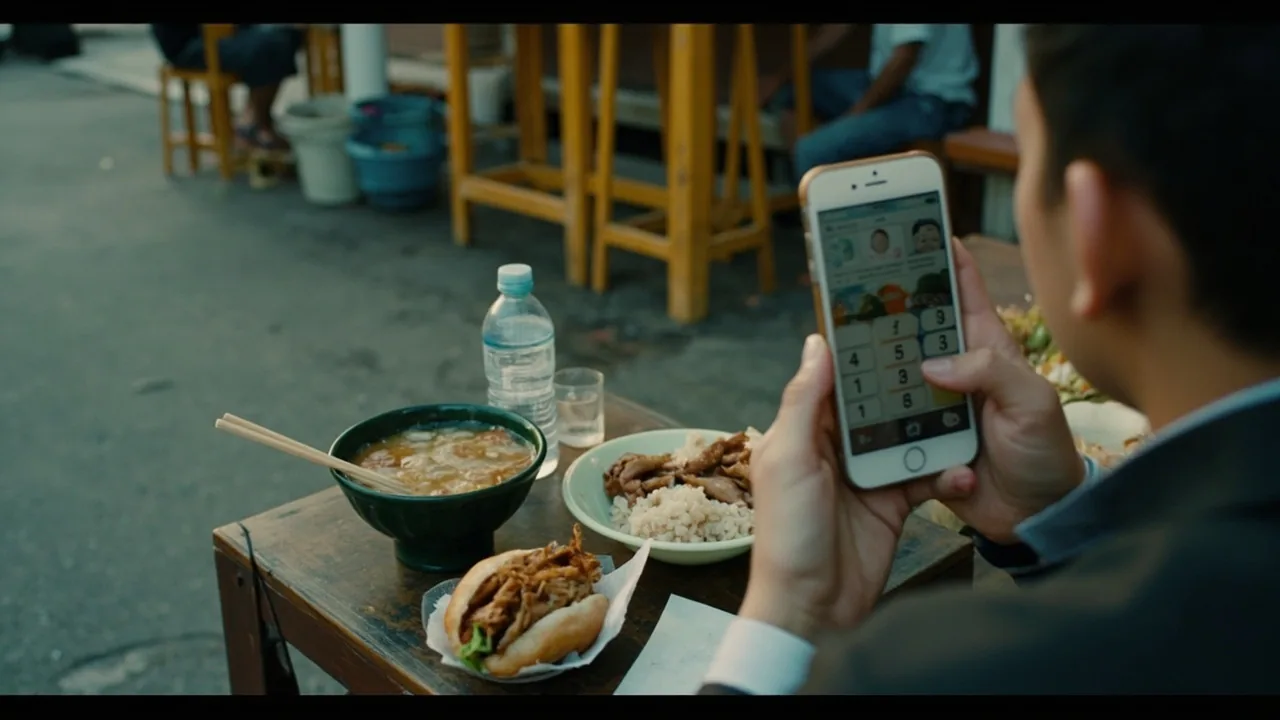
Vietnam Food Cost Per Day in 2026: Real Budgets in INR, VND & USD
A bowl of pho in Hanoi costs the same as a plate of paneer tikka in Delhi, give or take a few rupees. If you eat local and skip the air-con restaurants, food runs ₹600 (~$6.22) to ₹800 (~$8.30) a day, and even splurging on seafood every meal keeps you under ₹2,500 (~$25.93).
Quick Answers
| What | Answer | Price (INR) |
|---|---|---|
| Average daily food spend (street food + one sit-down) | Backpacker realistic | ₹800 (~$8.30) |
| Pure street food only, three meals | Tight budget | ₹600 (~$6.22) |
| Mid-range with restaurants + drinks | Comfortable | ₹1,800 (~$18.67) |
| Daily food + one seafood splurge | Treat day | ₹2,500 (~$25.93) |
| Monthly food budget (30 days, street-only) | Long-stay | ₹18,000 (~$186.71) |
What Food Costs in Vietnam Right Now
This table shows every common dish and staple a backpacker hits in a week, in the Vietnamese Dong you’d hand over the counter. At current rates (1 INR = 270 VND), 50,000 VND = ₹185.
| Item | Price (VND) |
|---|---|
| Pho (beef or chicken, regular bowl) | 40,000 |
| Banh mi (pork or egg, from a stall) | 15,000 |
| Bun cha (Hanoi classic) | 35,000 |
| Com tam (broken rice, HCMC staple) | 35,000 |
| Egg coffee (Hanoi original) | 35,000 |
| Banh xeo (sizzling pancake, share between two) | 60,000 |
| Cao lau (Hoi An signature noodle) | 50,000 |
| Bun bo Hue (spicy beef noodle soup) | 40,000 |
| Bottled water (500 ml) | 5,000 |
| Vietnamese iced coffee (ca phe sua da) | 25,000 |
| Fresh sugarcane juice | 15,000 |
| Banh cuon (steamed rolls, two portions) | 30,000 |
| Vegetarian thap cam (mixed rice + veg + tofu) | 35,000 |
| Seafood hotpot (Da Nang, two people sharing) | 350,000 |
| Biryani at an Indian-run restaurant (Hanoi) | 200,000 |
| Local beer (bia, 330 ml, street-side) | 20,000 |
| Craft beer at a bar | 70,000 |
Source for dish prices: verified against menu boards at the POIs in this article and traveller reports from July 2026. Street food prices have crept up about 10% since early 2025, but they are still the cheapest full meal you’ll find in Southeast Asia.
Daily Budget Tiers (Verified 2026-07-17)
At current rates (1 INR = 270 VND, 1 USD = ₹96.33).
| Tier | Daily spend (VND) | Who this fits |
|---|---|---|
| Pure street food (tight) | 150,000 | Long-stayers, students, anyone stretching money |
| Backpacker realistic | 215,000 | Most solo travellers on a 2 to 3 week trip |
| Mid-range (restaurants + street mix) | 500,000 | Couples, comfort-first travellers |
| Foodie day (seafood + cocktail + sit-down) | 700,000 | One treat day every four or five days |
That backpacker-realistic number is the one most readers land on. Three meals, mostly street, plus two coffees and a beer, comes out around ₹800 (~$8.30) a day, with month-long totals under ₹25,000 (~$259.33) for food alone. For the full picture across all of Southeast Asia, see our Southeast Asia backpacking hub.
Sample Day: Hanoi on a ₹700 (~$7.26) Budget
Hanoi is the cheapest major city for food in Vietnam, and the street-stall scene around the Old Quarter feeds you well for almost nothing.
| Meal | Where or what | Price (VND) |
|---|---|---|
| Breakfast | Pho at a stall near St Joseph’s Cathedral | 40,000 |
| Coffee | Egg coffee at the original spot | 35,000 |
| Lunch | Banh mi from a street cart | 15,000 |
| Snack | Sugarcane juice or fresh fruit | 15,000 |
| Dinner | Bun cha and a Bia Hanoi at a stall | 55,000 |
| Total | 160,000 |
That comes to ₹592 (~$6.14) for the day, comfortably under ₹700 (~$7.26). Adding one banh cuon at breakfast (₹110 (~30,000 VND or ~$1.15)) and a second coffee pushes you to ₹810 (~220,000 VND or ~$8.40), still under the backpacker-realistic tier.
For your sit-down option, Hong Hoai’s Restaurant in the Old Quarter is a family-run spot serving traditional Vietnamese food in a relaxed setting. The pho and bun cha here come in larger portions than street stalls and run ₹221-₹331 (~60,000-90,000 VND or ~$2.29-$3.44).
Sample Day: Ho Chi Minh City on a ₹800 (~$8.30) Budget
HCMC (Saigon) runs slightly more expensive than Hanoi for street food, but the variety is wider and portions are bigger.
| Meal | Where or what | Price (VND) |
|---|---|---|
| Breakfast | Banh mi with eggs and pate | 15,000 |
| Coffee | Ca phe sua da from a corner stall | 25,000 |
| Lunch | Com tam with grilled pork and egg | 35,000 |
| Snack | Fresh coconut from a street vendor | 25,000 |
| Dinner | Bun bo Hue or hu tieu at a stall | 50,000 |
| Beer | One Bia Saigon at a pavement table | 20,000 |
| Total | 170,000 |
That works out to ₹629 (~$6.52) for the day, leaving ₹170 (~$1.76) to play with. If you want to upgrade dinner to a sit-down, A Taste Of Saigon - Old Market - Vietnamese Cuisine & Vegetarian Food serves traditional dishes in a busy market setting, with main courses running ₹295-₹479 (~80,000-130,000 VND or ~$3.06-$4.97).
Sample Day: Hoi An on a ₹1,000 (~$10.37) Budget
Hoi An is the tourist town where food costs 20% more than Hanoi, but the quality of the cooking is a step up across the board.
| Meal | Where or what | Price (VND) |
|---|---|---|
| Breakfast | Cao lau and a banh mi | 80,000 |
| Coffee | Coconut coffee by the river | 35,000 |
| Lunch | White Rose dumplings (4 pieces) | 60,000 |
| Snack | Banh xeo at a riverside stall | 50,000 |
| Dinner | Mixed rice plate with grilled fish | 70,000 |
| Beer | One bia at a lantern-lit restaurant | 30,000 |
| Total | 325,000 |
That comes to ₹1,203 (~$12.48), just above the target. Skipping the white rose dumplings (which are a Hoi An specialty you should try at least once) and going for a banh mi lunch brings the day to about ₹921 (~250,000 VND or ~$9.55).
MẸT Hội An is celebrated for its authentic Vietnamese cuisine, featuring the must-try Cao Lau noodle dish, and offers a serene vegetarian menu in a beautifully restored colonial building. The vegetarian thap cam here runs ₹129 (~35,000 VND or ~$1.34), and the atmosphere is worth the extra ₹100 (~$1.04) over a street stall.
Sample Day: Da Nang on a ₹1,200 (~$12.45) Budget
Da Nang is where you do the seafood splurge. The beachfront and Han Market restaurants serve prawns, crab, and clams at a fraction of what you’d pay in Hanoi or HCMC.
| Meal | Where or what | Price (VND) |
|---|---|---|
| Breakfast | Mi Quang (turmeric noodle, local specialty) | 40,000 |
| Coffee | Vietnamese iced coffee with condensed milk | 25,000 |
| Lunch | Bun cha ca (fish cake noodle soup) | 50,000 |
| Snack | Fresh mango with chili-salt | 20,000 |
| Dinner | Seafood hotpot for two, one portion per person | 175,000 |
| Beer | Two Bia Larue at dinner | 40,000 |
| Total | 350,000 |
That comes to ₹1,295 (~$13.43). Going for banh trang cuon thit heo (rice paper rolls with pork) instead of the seafood hotpot cuts the day to ₹921 (~250,000 VND or ~$9.55). NGON DA NANG - VIETNAMESE CUISINE RESTAURANT specializes in authentic Vietnamese dishes, with standout plates like Bun Cha Ca and Banh Xeo. The rustic decor and traditional flavours give a hands-on cultural dining experience that justifies the small markup over a stall.
Daily Budget: Where You Save and Where You Splurge
Subodh’s Pro Tip: At current rates (1 INR = 270 VND, 1 USD = ₹96.33), Vietnam food is one of the rare things in Southeast Asia that has gotten cheaper relative to the rupee over the last two years. The Dong is weak, your rupee is strong, and a bowl of pho in Hanoi costs less than a plate of Maggi at a highway dhaba in Maharashtra. Take advantage of it.
The places that quietly burn money: imported spirits (a vodka tonic at a HCMC bar can hit ₹737 (~200,000 VND or ~$7.64)), Western breakfasts at hostels (eggs, bacon, and toast for ₹442 (~120,000 VND or ~$4.58) when the same calories cost you ₹55 (~15,000 VND or ~$0.57) in a banh mi), and the “tourist menu” restaurants near Hoi An Ancient Town and Ben Thanh Market.
The places that quietly save money: drinking Bia Saigon instead of craft beer at dinner (₹74 (~20,000 VND or ~$0.76) vs ₹258 (~70,000 VND or ~$2.67)), eating your heaviest meal at lunch (many restaurants discount lunch sets), and stocking up on banh mi from a stall before a long bus ride (saves you the marked-up price at rest stops).
Realistic Monthly Food Budget (Long-Stayers)
For Indian travellers staying in Vietnam for 30 days on a tourist visa extension (the e-Visa lets you stay 90 days, see the official portal), here is the math at the backpacker-realistic tier.
| Item | Monthly cost (VND) | Monthly cost (INR) |
|---|---|---|
| Food only, street stalls | 6,450,000 | ₹23,900 (~$247.92) |
| Food + one mid-range meal per week | 8,100,000 | ₹30,000 (~$311.19) |
| Food + restaurants + 2 coffees/day | 12,900,000 | ₹47,800 (~$495.83) |
The ₹23,900 (~$247.92) floor is real. Indian backpackers on the Vietnam circuit regularly run that budget for months, eating three street meals a day with one or two beers in the evening. Add rent for a dorm bed (covered in how much money to carry to Vietnam from India) and your total monthly burn stays under ₹50,000 (~$518.65) including food, bed, and local transport.
The Local Culinary Landscape
Vietnamese food is one of the cleanest street food cultures in the world, but the ingredients hide in plain sight. Fish sauce (nuoc mam) goes into almost every stir-fry, even the vegetable ones. Shrimp paste (mam tom) is the base of many northern soups. Lard is the default cooking fat in street-stall fried rice. Oyster sauce sneaks into morning glory (rau muong xao toi), and chicken broth is the base of most vegetarian-looking soups. For a full rundown of dishes, see our Vietnam food guide.
If you’re vegetarian or Jain, the safest move is to learn three phrases: “An chay” (I eat vegetarian), “Khong nuoc mam” (no fish sauce), and “Khong hanh” (no onion). The yellow-and-red flag outside a stall means it serves fully vegetarian Buddhist food, and those spots are everywhere in Vietnam’s cities. A wider rundown of dishes and ordering scripts lives in our Vietnam vegetarian food guide.
When You Need a Dal-Chawal Fix
Even with the best street food in the world, day six without roti is a real thing. The Indian-run restaurants below feed the home-food gap.
APNA Indian Restaurant in Hanoi’s Hoan Kiem district serves biryani that hits the spot after weeks of pho, costing approximately ₹552-₹921 (~150,000-250,000 VND or ~$5.73-$9.55) per person. De Tham Restaurant mixes Vietnamese cuisine with vegetarian options in a casual setting, useful when half your group wants pho and half wants paneer.
In HCMC, A Taste Of Saigon - Old Market - Vietnamese Cuisine & Vegetarian Food covers the same brief with traditional Vietnamese dishes in a busy market setting. For a proper food-tour experience, Check XO Tours on GetYourGuide for women-led tours through District 1 and District 4.
Common Mistakes Indians Make With Food Money in Vietnam
| Mistake | What happens | Fix |
|---|---|---|
| Eating every meal at the hotel or hostel | Food costs 3x more, you never try the good stuff | Eat street food for at least 2 of 3 daily meals |
| Ordering “vegetable pho” assuming it’s vegetarian | Comes with fish sauce, sometimes pork bones in the broth | Say “pho chay” (vegetarian pho) explicitly |
| Converting prices mentally and overspending | A 60,000 VND bowl feels like 60,000 rupees, you eat at ₹300/meal only | Use Dong prices only; convert in your head at end of day |
| Skipping the market stalls at lunch | Lunch is when stalls are busiest and food is freshest | Eat at the market around noon, every day |
| Drinking only bottled water but brushing teeth from the tap | Sore stomach, no clear cause | Use bottled or filtered water for brushing too |
Safety Alert: Vietnam’s tap water is not safe to drink, full stop. Most travellers report at least one rough day from accidental tap-water exposure, usually from ice or brushing teeth. Read our Da Nang tap water guide for city-specific advice, and stick to bottled water for everything.
What a Food Tour Costs
If you want one structured experience beyond street-stall wandering, a guided food tour in Hanoi or HCMC runs ₹3,315-₹5,524 (~900,000-1,500,000 VND or ~$34.38-$57.31) per person for a 3 to 4 hour walk with 8 to 10 tastings. That works out to ₹3,300 (~$34.23) to ₹5,500 (~$57.05), more expensive than a day’s food budget, but a useful way to learn which stalls are clean and which are tourist traps. Check Vietnam food tours on GetYourGuide for the best selection.
Connectivity for Finding Food on the Go
You’ll be on Google Maps three times a day minimum: to find the nearest banh mi stall, to translate a menu, and to call a Grab bike back to your hostel. A local SIM with Viettel or Mobifone runs ₹368-₹552 (~100,000-150,000 VND or ~$3.82-$5.73) for 30 days with 3 to 5 GB/day. If you want data the moment you land, Get Nomad eSIM gets you connected before you clear immigration.
FAQ
How much should I budget for food per day in Vietnam as an Indian traveller? ₹600 (~$6.22) to ₹800 (~$8.30) covers pure street food. ₹1,000 (~$10.37) to ₹1,200 (~$12.45) covers street food plus one sit-down meal. ₹2,000 (~$20.75) to ₹2,500 (~$25.93) covers restaurants and a couple of drinks.
Is food cheaper in Hanoi or Ho Chi Minh City? Hanoi is 10 to 15% cheaper across the board for street food. HCMC has more variety and bigger portions at slightly higher prices.
What is the cheapest full meal in Vietnam? A banh mi with egg from a street cart, ₹55 (~15,000 VND or ~$0.57). That is roughly ₹55 (~$0.57) for a full sandwich with pickled vegetables, chili, and coriander.
Can I eat seafood every day on a backpacker budget? Not really. A simple seafood hotpot for one person runs ₹737-₹1,289 (~200,000-350,000 VND or ~$7.64-$13.37). Once or twice a week is realistic on a tight budget.
Is Vietnamese food safe for Indians who don’t eat pork? Most of it is, but pho broth, banh mi pate, and many stir-fries use pork. Specify “khong thit lon” (no pork) and you are fine 95% of the time.
How much should I carry in cash for food on a 2-week trip? ₹9,208-₹14,732 (~2,500,000-4,000,000 VND or ~$95.51-$152.82) in cash (₹9,300 (~$96.47) to ₹14,800 (~$153.52)), plus a forex card for sit-down restaurants. Most street stalls are cash only.
Do restaurants in Vietnam accept UPI or Indian cards? No. UPI does not work in Vietnam. Use Visa/MasterCard via a forex card, or carry VND in cash.
Subodh’s Take
Vietnam is the country where Indian travellers consistently underspend on food. The danger is not running out of money, it is eating the same safe dish twice a day out of caution and missing the good stuff. Order the bun cha you’ve never heard of, eat at the stall with the longest queue of locals, and add the egg coffee even though it sounds strange. The food here rewards the curious, and your rupee stretches further than it has in any Southeast Asian country in the last three years.
