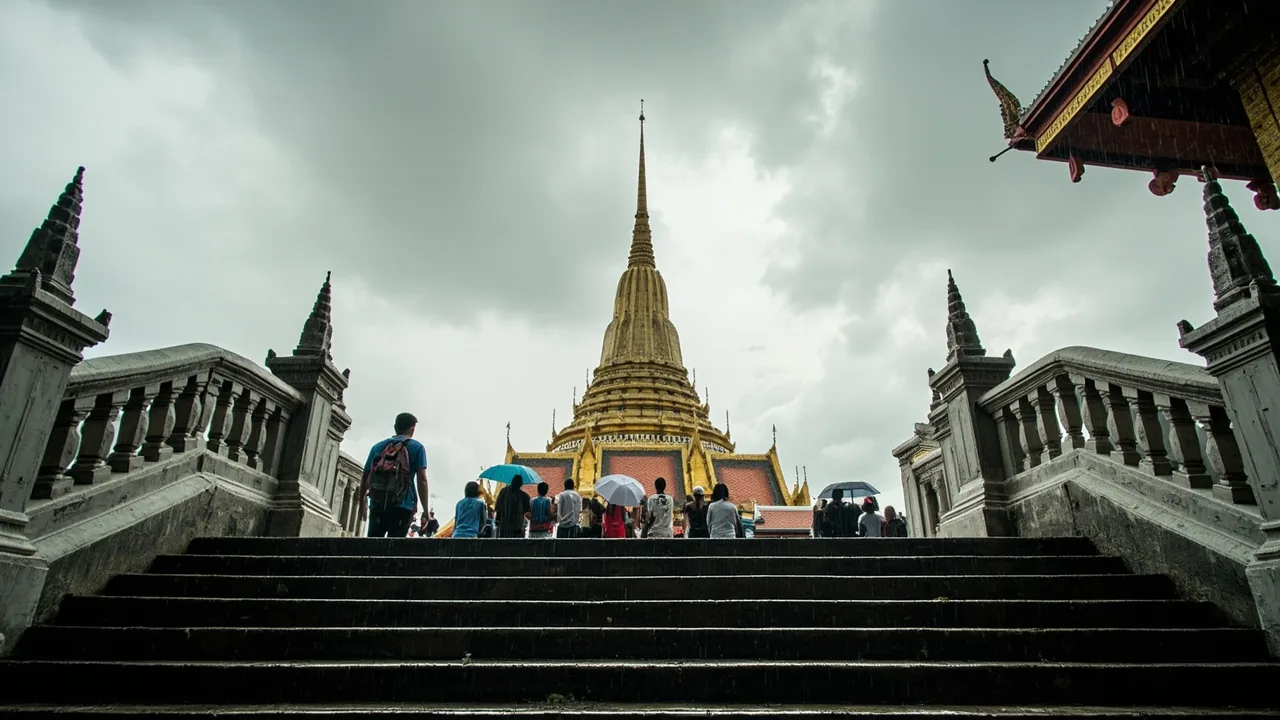
Visiting Thailand in May: Weather, Crowds, Prices & Events (Worth It?)
May is Thailand’s awkward middle child. The high season is long gone, Songkran crowds have packed up, and the southwest monsoon has started flexing. Whether that’s worth the daily afternoon rain depends on what kind of trip you want. For related planning, see our guide on Sea Backpacking Hub.
We checked 2026 flight prices from India, dorm rates across Bangkok, Chiang Mai, and the islands, and the Thailand Meteorological Department’s May rainfall averages to put this guide together.
The short version: Bangkok stays hot and humid with short burst rains, the islands (Phuket, Koh Samui, Koh Phangan) get hit harder, and Chiang Mai is still warm but starts seeing pre-monsoon showers. Temperatures across the country hover between 28°C and 35°C. If you’re a budget-first backpacker who can roll with the occasional flooded street, May is one of the cheapest months to land in Thailand. If you’re a beach-first traveller who needs guaranteed blue skies, wait until November.
Quick Answers
| What | Answer | Price (INR) |
|---|---|---|
| Is May monsoon season in Thailand? | Yes, early monsoon (southwest monsoon onset) | ₹0 |
| Average temperature? | 28°C to 35°C across regions | ₹0 |
| Cheapest flight from India? | Mid-May, around ₹14,000 (~$145.32) round trip | ₹14,000 (~$145.32) |
| Dorm bed in Bangkok? | ₹715-₹1,115 (~250-390 THB or ~$7.42-$11.57) in Khao San/Silom | ₹720-₹1,120 (~$7.47-$11.63) |
| Is it safe to visit Thailand in May? | Yes, with normal monsoon precautions | ₹0 |
Month-by-Month Breakdown (April to July)
The progression from April into July shows how Thailand transitions from the dry heat of Songkran into the wet monsoon proper.
| Month | Weather | Crowds | Cost Level | Verdict |
|---|---|---|---|---|
| April | Hot, humid, 35°C+ | high (Songkran) | Peak (₹₹₹) | Festival fun, expensive |
| May | Hot, humid, daily 1-2 hour rains | Low | Budget (₹) | Best balance of price and weather |
| June | Heavy rain, 4-6 hours/day | low | Cheapest (₹) | For hardcore budgeters |
| July | Heavy rain, monsoon established | Low | Cheap (₹) | Green landscapes, occasional flooding |
April is the Songkran month; expect packed airports, water fights on Khao San, and full-moon party week prices on Koh Phangan (dorm beds hit ₹4,288-₹6,290 (~1,500-2,200 THB or ~$44.51-$65.29) that week). By May, the festival crowds have gone home, the monsoon has started, and prices drop significantly. June is the rainiest month in most of Thailand, but also the absolute cheapest. July stays wet but the greenery is at its peak and the southern Andaman coast (Phuket, Krabi) starts clearing up by mid-July.
If you’re weighing May vs June, the practical difference is: May has more sunshine breaks between storms, June has more continuous rain but even lower prices. Both are valid monsoon-season choices. For the full June picture, see our Thailand in June guide.
May in Thailand: Pros and Cons
Pros:
- Dorm beds drop to ₹715-₹1,115 (~250-390 THB or ~$7.42-$11.57) in Bangkok, ₹686-₹1,001 (~240-350 THB or ~$7.12-$10.39) in Chiang Mai
- Beaches are empty; you can find a beachfront bungalow for roughly half peak-season prices
- Air quality in the north is still relatively good (the burning season ended in April)
- Fewer tourists at major temples and attractions
- Flights from India are at their annual low
Cons:
- Daily 1-2 hour downpours, usually in the late afternoon, can disrupt island-hopping itineraries
- Choppy seas mean some ferry routes to the southern islands get cancelled
- Humidity is brutal, above 80% on most days
- Some budget island bungalows without proper drainage close for the season
- The Gulf coast (Koh Samui, Koh Phangan, Koh Tao) gets more direct monsoon exposure and rougher seas, though the Andaman side (Phuket, Krabi) records higher total rainfall
The key thing to understand about May rain in Thailand is that it’s not London-grey drizzle or Mumbai-monsoon continuous downpour. It’s tropical convection: the sun beats down all morning, humidity builds to saturation, and then a 60-to-90-minute thunderstorm dumps everything in the early evening. After that, the streets drain fast (Thai drainage is genuinely good in tourist areas) and the night is warm and clear. You plan your day around the rain window: beach or pool in the morning, lunch indoors, nap or café during the storm, evening plans after 7pm.
The islands are where it gets trickier. The Gulf coast (Koh Samui, Koh Phangan, Koh Tao) faces the southwest monsoon head-on, so seas are rougher and ferry cancellations between Chumphon and Koh Tao are common, even though the Andaman coast (Phuket, Krabi, Koh Lanta) records higher total rainfall. If you have your heart set on a specific island in May, check the operator’s cancellation policy. Most ferries offer free rebooking if the captain calls the trip off.
What to Pack Specifically for May
May is not a “pack light” month. You need rain gear and quick-dry everything.
- Quick-dry shirts (2-3): cotton stays wet for hours; merino or synthetic dry in 30 minutes
- Packable rain jacket or poncho: a ₹572 (~200 THB or ~$5.94) poncho from any 7-Eleven works fine
- Dry bag for electronics: your phone and power bank need a ziplock at minimum
- Microfiber towel: hostel towels are slow to dry in monsoon humidity
- Sandals with grip: wet tile floors in temples and 7-Elevens are slippery
- Lightweight long pants: for temple visits and the occasional cool evening in Chiang Mai
- Mosquito repellent: standing water after rain brings mosquitoes out in the evening
Subodh’s Pro Tip: Pack one pair of cheap flip-flops you don’t mind throwing away. Wet shoes that won’t dry overnight are the real misery of monsoon travel, not the rain itself.
Season Costs Comparison
This is where May wins. The savings versus the December-February peak are dramatic.
| Item | Peak Season (Nov-Feb) | May (Monsoon Onset) | Low Season (Jun-Oct) |
|---|---|---|---|
| Flight from India (round trip) | ₹25,000 (~$259.50) | ₹14,000 (~$145.32) | ₹12,000 (~$124.56) |
| Dorm bed in Bangkok (per night) | ₹1,715 (~600 THB or ~$17.81) | ₹858 (~300 THB or ~$8.90) | ₹715 (~250 THB or ~$7.42) |
| Dorm bed in Chiang Mai (per night) | ₹1,429 (~500 THB or ~$14.84) | ₹800 (~280 THB or ~$8.31) | ₹686 (~240 THB or ~$7.12) |
| Dorm bed on Koh Phangan (normal week) | ₹2,287 (~800 THB or ~$23.74) | ₹915 (~320 THB or ~$9.50) | ₹743 (~260 THB or ~$7.72) |
| Private bungalow on Koh Lanta (per night) | ₹7,147 (~2,500 THB or ~$74.19) | ₹3,431 (~1,200 THB or ~$35.61) | ₹2,573 (~900 THB or ~$26.71) |
| Street food meal (pad thai, som tam) | ₹172-₹229 (~60-80 THB or ~$1.78-$2.37) | ₹172-₹229 (~60-80 THB or ~$1.78-$2.37) | ₹143-₹200 (~50-70 THB or ~$1.48-$2.08) |
The flight price drop is the biggest single saving. December flights from Delhi, Mumbai, or Bangalore to Bangkok regularly hit ₹25,000-₹30,000 (~$259.50-$311.40). Mid-May flights can be booked for ₹14,000-₹16,000 (~$145.32-$166.08) round trip on budget carriers. That’s a ₹10,000 (~$103.80)+ saving on the flight alone, which covers a week of hostel stays and food.
On the ground, dorm beds in Bangkok sit at ₹715-₹1,115 (~250-390 THB or ~$7.42-$11.57) in the Khao San and Silom areas during May, down from ₹1,429-₹2,001 (~500-700 THB or ~$14.84-$20.77) in peak season. Chiang Mai dorms run ₹686-₹1,001 (~240-350 THB or ~$7.12-$10.39). The islands are even cheaper outside of specific event weeks. Street food prices barely change because the vendors are local-economy businesses, not tourist-priced, but the slight dip is real.
Bangkok in May
Bangkok in May is hot, humid, and wet, but it doesn’t stop. The city’s drainage handles the daily storms well, and life continues at the same frantic pace. The benefit is that tourist spots like the Grand Palace, Wat Pho, and Chatuchak Market are not the arm-to-arm crowds of December. You can walk through Chatuchak without losing your group.
Dorm beds in the Khao San and Silom areas run ₹715-₹1,115 (~250-390 THB or ~$7.42-$11.57). If you’re river-side (Phra Khanong, Bang Phlat) you can find cheaper beds for under ₹572 (~200 THB or ~$5.94), but the tradeoff is a 30-minute BTS ride to the main sights.
For food, Bangkok’s Indian restaurant scene is strong year-round, so you don’t need to worry about going veg-only and starving. Indian restaurants in the Sukhumvit, Silom, and Khao San areas serve thali, biryani, and South Indian dosa at reasonable prices.
Chiang Mai in May
The north is a few degrees cooler than Bangkok, with daytime highs around 32-34°C and nights down to 23-25°C. Rain is less intense than the islands but still arrives daily. The good news is that Chiang Mai’s old city is compact and walkable, so getting caught in a storm is a minor inconvenience rather than a logistical problem.
Dorm beds in the old city and Nimman area run ₹686-₹1,001 (~240-350 THB or ~$7.12-$10.39). The Nimman coffee-shop scene is excellent for rainy-afternoon café-hopping, and several co-working spaces in the area offer day passes for under ₹572 (~200 THB or ~$5.94) if you need to work during a storm.
Chiang Mai’s highlight in May is the green: the mountains around the city are vivid, Doi Suthep is lush, and the trekking routes to Pai and Mae Hong Son are open and beautiful. The downside is that some waterfalls have stronger currents and swimming is restricted.
If you’re considering Pai as a side trip from Chiang Mai, check our Pai trekking guide for season-specific advice.
Islands in May
The islands are where May travel gets conditional. Here’s the honest picture:
- Koh Phangan / Koh Samui (Gulf coast): Heavy rain, choppy seas, some ferry cancellations. This is the worst region for May. If you have a set number of days and need a guaranteed island experience, skip the Gulf coast and go to the Andaman side.
- Koh Tao: Similar to Koh Phangan, the Gulf coast exposes it to the southwest monsoon. Visibility for diving is also reduced. The Similan Islands National Park is closed from May through October, so liveaboard diving trips aren’t available either. Our Similan visibility guide covers when the water clears.
- Phuket / Krabi / Koh Lanta (Andaman coast): Better than the Gulf side but still sees storms. Seas are manageable, ferries run on schedule most days, and the beach infrastructure is better equipped to handle rain. Phuket dorms run ₹858-₹1,487 (~300-520 THB or ~$8.90-$15.43) in May, and you can find beachfront bungalows on Koh Lanta for ₹2,573-₹3,431 (~900-1,200 THB or ~$26.71-$35.61) per night.
For the Andaman coast, a useful rule: check the 3-day forecast before booking ferry tickets. If a storm system is moving through, wait 24 hours. If the forecast is clear, go.
Regional Weather Snapshot
| Region | May Rainfall | May Days with Rain | Notes |
|---|---|---|---|
| Bangkok | 220-280mm | 16-18 | Daily short storms, city handles it well |
| Chiang Mai | 150-180mm | 14-16 | Less intense, cooler nights |
| Phuket / Krabi | 280-350mm | 18-20 | Bigger storms, rougher seas |
| Koh Samui / Phangan | 200-260mm | 15-17 | Southwest monsoon exposure |
| Pai | 180-220mm | 16-18 | Mountain storms, cooler |
These are averages. Some Mays are drier (early monsoon onset) and some are wetter (late onset). The Thailand Meteorological Department publishes monthly forecasts, and checking these 2-3 weeks before your trip gives you a much better picture than generic “monsoon season” advice.
What About Events?
May is the quiet month for Thai festivals. Songkran ended in April, and the next major Buddhist holiday, Visakha Bucha, usually falls in May or June depending on the lunar calendar. In 2026, Visakha Bucha falls on June 1, which is a public holiday. Expect temple visits to be crowded on that day, but it’s not a multi-day festival like Songkran.
The Royal Ploughing Ceremony (held in May or early June at Sanam Luang in Bangkok) is a traditional event marking the start of rice-planting season. It’s a cultural event, not a tourist festival, and worth seeing if you’re in Bangkok.
For backpackers, the bigger “event” in May is the absence of events. No full moon party crowds, no Songkran water wars, no Christmas rush. The islands are quiet, the hostels are calm, and you can have a conversation at the bar.
Getting Connected
A local SIM or eSIM is useful in May for real-time weather alerts, ferry cancellation notifications, and Grab/Bolt when the rain hits. AIS, TrueMove, and DTAC all sell tourist SIMs at the airport for ₹855-₹1,427 (~299-499 THB or ~$8.87-$14.81) with 7-15 days of data. For a digital alternative, Get Nomad eSIM works before you fly and activates on landing.
Visa and Entry for Indian Travellers
Thailand is visa-free for Indian passport holders for stays up to 60 days. The bilateral agreement is current and stable. You will need:
- A passport valid for at least 6 months from your entry date
- A completed TDAC (Thailand Digital Arrival Card) at the official portal: https://tdac.immigration.go.th
- Proof of onward travel (a return flight ticket or bus/flight ticket to a third country)
The TDAC is free, takes 5 minutes to fill out, and must be done before boarding. The QR code or PDF printout is accepted at immigration. No embassy visit, no visa fee, no photos.
If you want to extend your stay beyond 60 days, the extension fee is $56 USD (compute at the current rate of 1 USD ≈ ₹96.53, so roughly ₹5,405). You can extend once at a Thai immigration office for an additional 30 days.
Safety in May
Thailand in May is safe for Indian travellers. The main monsoon-related risks are:
- Flash floods in low-lying areas of Bangkok after heavy downpours (avoid Khlong Toei and some sois in Bang Phlat during peak storms)
- Rip currents at beaches on the Andaman coast during rough seas (red flag = don’t swim)
- Ferry cancellations in the Gulf (plan for a buffer day)
Standard travel safety applies: watch for tuk-tuk overcharges, keep your phone secure in crowded areas, and use Grab/Bolt for fixed-price rides. For Indian-specific safety advisories, check the MEA travel page at mea.gov.in before departure.
FAQ
Is it worth going to Thailand during the monsoon?
Yes, if your priority is budget and fewer crowds. May is monsoon-onset, not monsoon-peak, so rain is short and predictable. Prices are 30-50% lower than peak season. If you need guaranteed beach weather, go in December or January instead.
How much does a 7-day Thailand trip cost in May?
Budget backpacker: ₹25,000-₹35,000 (~$259.50-$363.30). Mid-range: ₹50,000-₹70,000 (~$519-$726.60). Luxury: ₹100,000 (~$1,038)+. The flight is the biggest variable; a ₹14,000 (~$145.32) May flight vs a ₹25,000 (~$259.50) December flight saves more than a week of accommodation.
What are the monsoon-season deals for Indian backpackers?
Flight prices drop 30-40% from peak. Hostels run ₹715-₹1,144 (~250-400 THB or ~$7.42-$11.87) per night in Bangkok and Chiang Mai. Island bungalows on Koh Lanta and Koh Chang drop to ₹2,287-₹3,431 (~800-1,200 THB or ~$23.74-$35.61). Street food stays at ₹143-₹229 (~50-80 THB or ~$1.48-$2.37) per meal. The biggest deals are on Agoda and Booking.com for the islands, where properties slash prices to fill empty rooms.
Is May or October better for Thailand?
October is the tail end of monsoon, with rains easing off and prices still low. May is the start of monsoon, with more sunshine but starting the rainy cycle. Both are shoulder-season choices. October is slightly better for the Andaman coast because the monsoon is ending. For a month-by-month comparison, see the Thailand in September guide.
What should I do if my ferry is cancelled due to rain?
Stay flexible. If you’re in Koh Samui or Koh Phangan and a ferry is cancelled, you wait. Most operators offer free rebooking for the next available departure. If you have a tight schedule, consider flying from Bangkok to Koh Samui instead. For more on ferry and route planning, our Thailand monsoon guide covers what to expect.
Are typhoons a risk in May?
The typhoon season in Thailand’s region (the western Pacific) is typically June to November, with peak intensity in August-October. May sees the occasional tropical storm but typhoons are rare. The affected region is usually the Andaman coast and the upper Gulf. For specific seasonal risk, our Thailand typhoon guide covers the details.
Can I still do island-hopping in May?
Yes, but on the Andaman coast (Phuket-Krabi-Koh Lanta route), not the Gulf coast. The Andaman ferries run more reliably in May. The Gulf coast (Koh Samui-Koh Phangan-Koh Tao) sees more cancellations. Plan your itinerary with the Andaman side if islands are non-negotiable.
Subodh’s Take
May is the month for backpackers who understand that Thailand is more than beaches. The rain is real but manageable, the prices are unbeatable, and the lack of crowds means you get to experience the country without the filter of tourism. If you go in with the expectation that you’ll spend some afternoons in a café or hostel common room while a storm passes, you won’t be disappointed. If you go expecting December weather, you’ll be miserable. Bring a poncho, book a flexible ferry, and use the savings to extend your stay.
