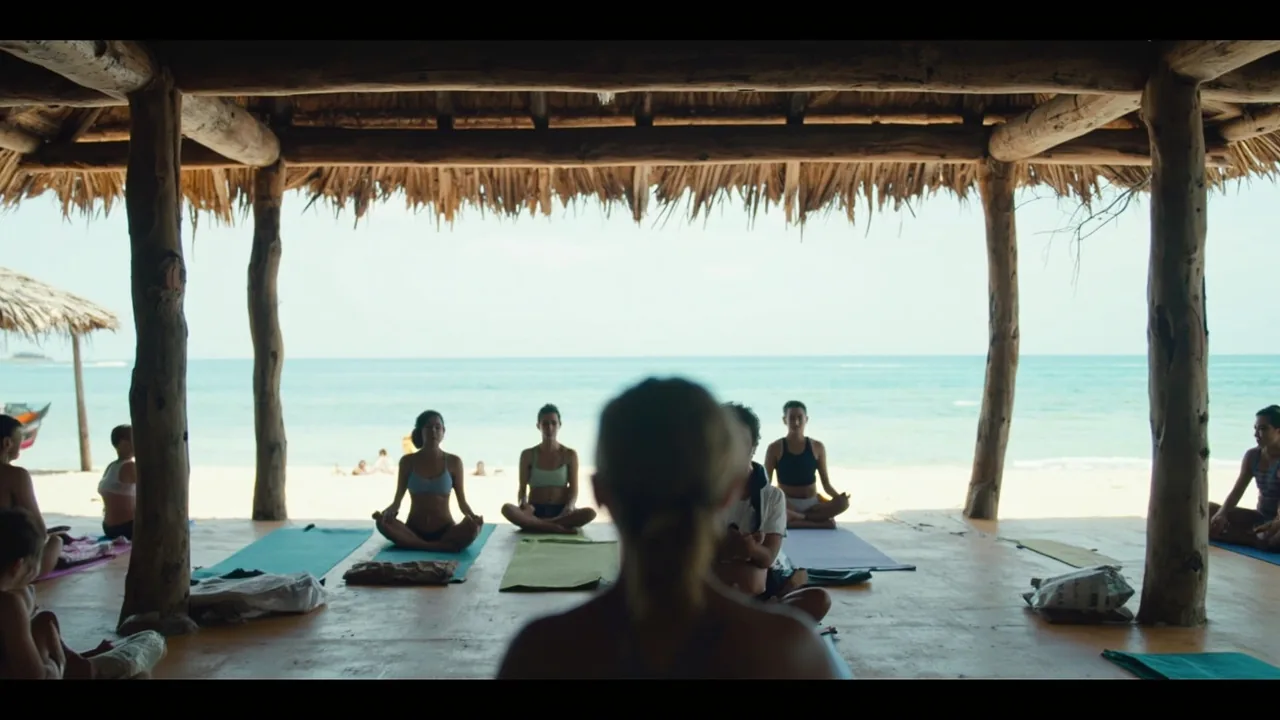
Yoga Retreats by the Sea in Koh Phangan: How to Pick the Right One
The honest answer first: you pick the right Koh Phangan sea-side yoga retreat by matching three things to each other, the month you arrive, the food you want to eat for a week, and the kind of silence or social energy your nervous system needs. Get those three right and the rest is logistics. Get them wrong and you spend four days in a community you can’t stand eating food you can’t stomach on a beach that’s beautiful but you can’t enjoy it. Here’s the order to think it through. For related planning, see our guide on Sea Backpacking Hub.
Quick Answers
| What | Answer | Price (INR) |
|---|---|---|
| Typical 7-day retreat (shared room, 2 yoga classes/day) | ₹71,472-₹157,240 (~25,000-55,000 THB or ~$741.89-$1,632.15) | , |
| Vegan/detox upgrade | Add ₹8,577-₹22,871 (~3,000-8,000 THB or ~$89.03-$237.40) | , |
| Private oceanfront bungalow | ₹128,651-₹257,301 (~45,000-90,000 THB or ~$1,335.39-$2,670.79) for 7 nights | , |
| Best months | January to April (dry, calm sea) | , |
| Worst months | October to November (storms, ferry cancellations) | , |
| Busiest full-moon overlap | Every full moon + 2 nights either side | , |
| Drop-in day pass (no booking) | 800-1,500 THB | , |
| At current rates (1 THB ≈ ₹2.87), 30,000 THB ≈ ₹86,070 | , | , |
Step 1: Lock in the Month Before You Book Anything
The first filter that matters is the calendar, and most guides bury this at the bottom. Don’t. Here’s the actual breakdown.
December to March is the safe window. Calm Andaman Sea, mostly dry, sun rises cleanly over the Gulf of Thailand side where most of the oceanfront shalas sit. Mornings on the mat by 6:30 AM are pleasant, not punishing.
April and May are hot. 32-35°C, high humidity, the kind of heat that makes 90-minute vinyasa feel like a punishment. Some retreats run a quieter schedule in summer. If you want the social side, this is when a lot of yoga teacher trainings happen, so you’ll meet serious practitioners, not just tourists.
June to September is the monsoon shoulder. It rains for an hour most afternoons but the sea stays swimmable on the east coast. Prices drop 20-40%. The retreats that survive on reputation rather than foot traffic stay open and you’ll get more attention from teachers. If you want a quiet stretch with the same teacher every day, off-peak is when it happens.
October to November is when ferries from the mainland get cancelled and some of the smaller oceanfront shalas literally shut. Don’t book a retreat in this window unless you’re already on the island and the retreat has confirmed it stays open through your dates.
If you’re layering a retreat onto a wider Thailand trip and you want the sea calm for a swim after class, target late December through March. If you want a discount and don’t mind humidity, target June through early September. If you want to combine it with the Full Moon Party scene, check the full moon calendar dates for that year and book two nights away from it.
Step 2: Match the Food to What You’ll Eat for a Week
This is where most retreat descriptions lie to you. “Healthy meals included” usually means a thai-style buffet with tofu options, not a true vegan plan. “Detox available” usually means a juice fast add-on at extra cost, not a week-long cleanse. Read the menu before you book, not the headline.
Vegetarian, but not vegan: Almost every retreat on the island does this by default. Eggs, dairy, and Thai-style fish sauce are still on the plate. Rasta Baby is the rare exception, the Caribbean-Jamaican menu is genuinely built around vegan stews as a default, so if you’re strict-veg, it’s the one meal you don’t have to interrogate.
Full vegan: This narrows you to a smaller set of retreats. Look for language like “plant-based kitchen” or “no animal products on site.” Some retreats run vegan weeks and non-vegan weeks alternately. Ask.
Detox / juice fast: This is almost always an add-on at ₹8,577-₹22,871 (~3,000-8,000 THB or ~$89.03-$237.40) on top of the retreat price. You get 4-6 juices a day, no solid food, sometimes a colonic or herbal supplement kit. Travellers report the first three days are genuinely rough on Koh Phangan if you’re also doing two yoga classes a day, bring electrolytes.
Eat-your-own-food flexibility: A few retreats include only breakfast and one main meal, leaving lunch open. This is the right setup if you want to wander into Haad Khuad Cafe for their coconut pancakes at lunchtime or pick up lunch at Tamarind Tales Thai Restaurant without committing to the retreat kitchen. Mama Ann is the family-run spot if you want home-style Thai in a non-retreat setting.
Subodh’s Pro Tip: Before paying a deposit, message the retreat and ask for two days of sample menu in writing. If they can’t produce one, that’s your answer.
Step 3: Pick the Vibe (Quiet, Social, or Training-Focused)
The third filter is the most often ignored, and the one that decides whether you’ll be glad or sorry.
Quiet, solo, oceanfront, almost no one around: This is the Srithanu and Hin Kong side of the island, west and northwest. Retreats here tend to be 8-15 people max, no night music, silence after 9 PM, and the shala literally opens onto sand. Good for first-time retreaters, writers, anyone recovering from a city. Check the policy on phones in the shala and in the dining area before you commit, some enforce “no phones at meals” and that can feel like a punishment if you’re not ready for it.
Social, mixed-level, healthy party-adjacent: This is the Baan Tai and Sri Thanu border area. Drop-in classes are common, you’ll meet other travellers who are also there for 5-10 days, evening kirtans or fire circles a few nights a week, and a generally lighter vibe. Good for first-time solo travellers, anyone who wants the yoga retreat to also include friends.
Teacher training / 200-hour YTT: A different product entirely. 24-28 days, 6 hours of practice a day, anatomy, philosophy, practicum, and an exam at the end. Most teacher trainings on the island run January to April and July to September, and most require at least one year of consistent practice before applying. If that’s what you want, the retreat question is the wrong question, you want the YTT question, and that’s a different article.
Step 4: Check the Actual Sea Access
“By the sea” gets thrown around a lot. Here are the three things that matter:
-
Distance from the shala to the high-tide line. Some retreats advertise “ocean views” from a yoga deck that’s 80 metres inland. Walk the property on Google Earth satellite view. If you can see a road between the deck and the water, it’s not sea-side.
-
Swim-safe beach, or view-only beach. Some west-coast beaches are gorgeous and have strong rips in the dry season. Look up the specific beach name on a surf-report site to see wave height in your travel month. If you can’t swim where you stay, it’s not a sea-side retreat.
-
Sunset direction. Koh Phangan’s west coast faces the sunset. East coast faces the sunrise. Most travellers want sunset. If you’re an early-riser, sunrise is also excellent. Just pick what you want.
Safety Alert: Beach swimming in low season (October to December) is genuinely dangerous on some west-coast beaches. Rips and undertow pull people out every year. Even confident swimmers should check local conditions the morning of, not assume a retreat host will warn you in time. For current travel advisories before departure, check the Indian MEA travel advisory page and the Thai government’s own advisory site.
Step 5: Book Through the Right Channel
Two real options, one trap.
Direct with the retreat: Email or WhatsApp the retreat, ask for the dates you want, pay a 30-50% deposit by bank transfer or Wise. This is the cheapest route. You’ll get the real room, not the “comparable room.” You can ask the dietary questions from Step 2 in writing.
Through a booking platform: Aggregator sites mark up 10-20% and the retreat’s deposit policy may not apply the same way. If you must use a platform because the retreat doesn’t reply, at least cross-check the price on the retreat’s own Instagram or Facebook page first.
The trap: Yoga retreat marketplaces with stock photos that don’t match the actual property. If the photos look like a Bali villa and the price is ₹71,472 (~25,000 THB or ~$741.89) for a week, the property is either much smaller than advertised, much further from the sea, or shared rooms. Ask for current guest photos.
Common Mistakes Indians Make
Mistake 1: Booking the cheapest retreat in the busiest month. November is the worst combo: stormy weather, full moon overlap, and retreat prices drop because of cancellations, which sounds good until you arrive and the teachers are exhausted from a rough month. Aim for shoulder months with experienced teachers, not peak discounts.
Mistake 2: Assuming “vegan” means South Indian thali. A Koh Phangan vegan kitchen uses a lot of coconut, lemongrass, ginger, mushrooms, tempeh, and tropical fruit. It’s delicious, it’s just not sambar-and-rice. Eat at Rasta Baby once before committing to a vegan retreat, so you know whether the flavour profile works for you.
Mistake 3: Underestimating the heat and overbooking classes. Most retreats include two 90-minute classes a day. In April that’s two sessions of 90 minutes of movement in 33°C. Drink 4-5 litres a day, take electrolytes, and don’t add a third class from a drop-in studio unless you’re acclimatized.
Mistake 4: Paying in cash Thai baht without a receipt. Some retreats quote in THB and ask for a cash deposit “to lock the room.” Pay by bank transfer or Wise and keep the email confirmation. Cash deposits on Koh Phangan are the single most common source of refund disputes travellers report.
Mistake 5: Ignoring the visa clock. For Indian passport holders, Thailand currently allows visa-free entry for 60 days. If your retreat is 30 days, you have visa margin. If you’re stacking a retreat onto a longer Thailand trip, check your budget and days carefully so you don’t have to leave mid-retreat.
What Most Guides Don’t Tell You
The full-moon overlap is real and you can’t escape it. Koh Phangan has one of the world’s loudest beach parties and it falls within a few kilometres of most sea-side retreats. The retreat usually isn’t the party beach, but you’ll hear it from 2-5 AM if you’re on the south coast. If you sleep lightly, pick a west-coast or north-coast retreat and check the full moon dates for your month before booking.
Drop-in classes are cheaper than retreats and almost as good. If you’re not sure you want a full week, drop-in classes on the island run ₹1,429-₹3,431 (~500-1,200 THB or ~$14.84-$35.61) each at studios that often use the same teachers who lead retreats. Moonsoon’s Restaurant area near Baan Tai has a couple of studios that do drop-ins by the sea. You can build your own “retreat” of 5-6 classes over a week for ₹11,436-₹17,153 (~4,000-6,000 THB or ~$118.70-$178.05), eat where you want, sleep where you want.
The Andaman-side day trip is the natural counterpoint. On your rest day, Koh Phangan: Ang Thong Day Tour with Kayak, Snorkel & Lunch tour gets you out to the marine park for a swim and kayak. It’s the natural reset after 4-5 days of two-a-day yoga.
Connectivity on a “digital detox” retreat is a real problem. Some retreats genuinely enforce no-phones-in-the-shala or no-phones-at-meals. That’s fine if you’re ready. If you’re on a working retreat (writing, freelancing), ask about the Wi-Fi situation in the bungalows before booking. For general island connectivity, the cheapest option is a local AIS or TrueMove tourist SIM at ₹855 (~299 THB or ~$8.87) at the airport, or Get Nomad eSIM before you fly if you’d rather land connected.
FAQ
Is Koh Phangan a good place for a first yoga retreat? Yes, if you pick a small retreat (under 15 people) in the dry season (January to March) and avoid the full-moon week. The drop-in studio scene also means you can build your own retreat without the structure if that feels safer.
Can I do a 7-day yoga retreat on Koh Phangan as a strict vegetarian Indian? Yes. Strict vegetarian is easy (most retreats default to this). Strict vegan is doable but you must confirm the kitchen in writing. Egg-fish-sauce vegetarian is the path of least resistance.
How much should a 7-day sea-side yoga retreat cost in Koh Phangan in 2026? For a shared room, two classes a day, and a vegetarian meal plan, ₹71,472-₹157,240 (~25,000-55,000 THB or ~$741.89-$1,632.15) is the realistic range. Private oceanfront bungalow with the same package runs ₹128,651-₹257,301 (~45,000-90,000 THB or ~$1,335.39-$2,670.79). Anything below ₹57,178 (~20,000 THB or ~$593.51) for the week is either a bunk dorm, off-season-only, or has hidden fees.
What is the best yoga retreat on Koh Phangan? There’s no single “best” because it depends on the three filters above. Search for retreats on the Srithanu side for quiet, the Baan Tai area for social, and the west coast for sunset views. Cross-reference reviews on YogaTrade and BookRetreats, not just the retreat’s own testimonials page.
Can I combine a yoga retreat with scuba diving on Koh Phangan? Yes. Some retreats let you skip the second class on certain days. The Koh Tao and Nang Yuan snorkel day trip is the standard add-on. Look at the Koh Phangan: Koh Tao & Nang Yuan Day Tour w/ Snorkel + Lunch tour for the day-trip version. PADI open-water certification takes 3-4 days and most dive shops are flexible about retreat schedules.
Is it safe to travel to Koh Phangan solo as an Indian woman? Koh Phangan is generally safe for solo female travellers. Standard precautions apply: don’t walk alone on unlit roads after midnight, use registered taxis or the Bolt app, and keep valuables in the retreat’s safe. For more on the broader regional context, read the solo female travel guide.
Subodh’s Take
Most retreat marketing on Koh Phangan sells you a photo of a sunset shala with five people on it. The real product is seven days of one teacher’s pace, one kitchen’s flavour profile, and one beach’s morning light. Get those three right and you don’t need to pick the “best” retreat, you pick the right one for the trip you’re on.
