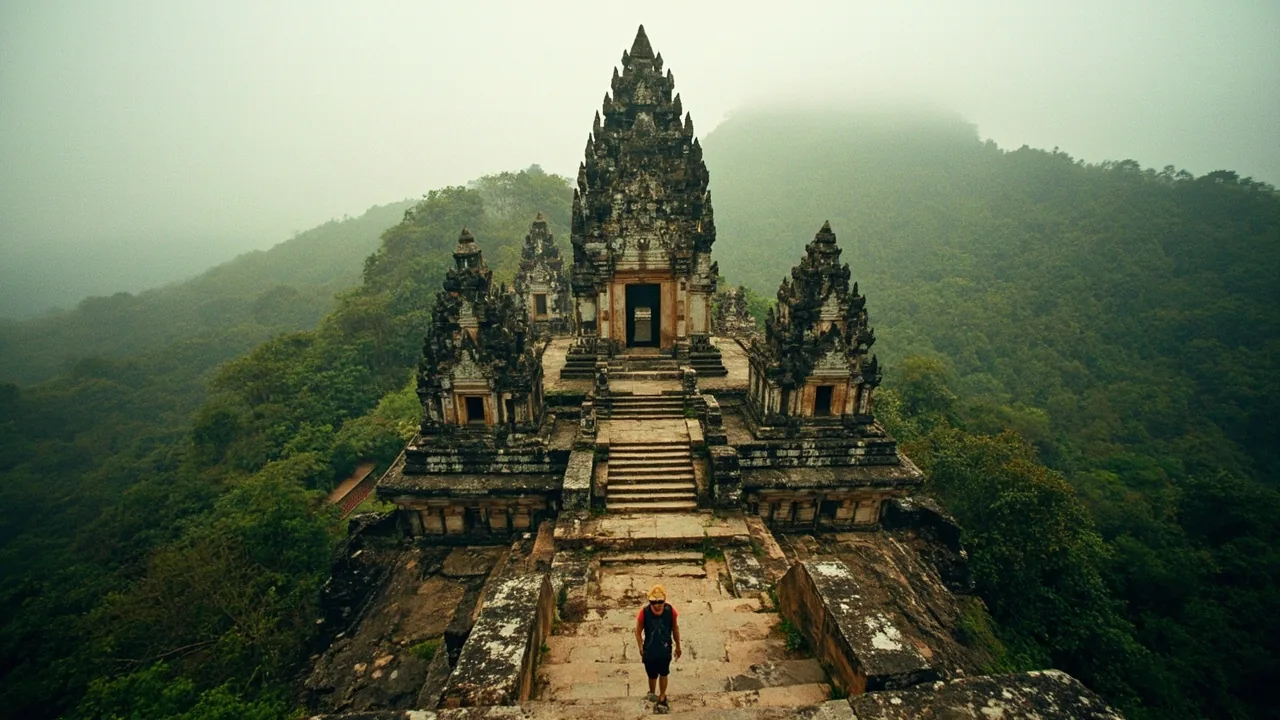
3-Week Southeast Asia Temple Trail: Multi-Country Itinerary for Indian Backpackers
📍 Distance: 2,800 km overland + 1-2 internal flights (depending on route option) ⏱️ Fastest option: 18 days at pace, 21 days comfortable 💰 Cheapest realistic budget: ₹45,000 (~$466.79) overland (ex-Bangkok, ex-flights from India) ✅ Best option: Bangkok → Ayutthaya → Vientiane → Vang Vieng → Luang Prabang → Siem Reap
Every stop on this loop is visa-friendly for Indian passport holders (Thailand is visa-free for 60 days as of June 2026; Laos and Cambodia offer visa-on-arrival), and the trail covers six major temple complexes across three countries in 21 days. Visa fees, border transit times, and temple opening hours were verified against official sources in July 2026. Three weeks is tight but workable. Here is the breakdown without skipping the sites that matter.
This route covers six temple complexes that punch above their weight and gives you the exact timings, fees, and dress rules at each one.
Quick Answers
| What | Answer | Price (INR) |
|---|---|---|
| Is 3 weeks enough for SEA temple trail? | Yes, if you focus on the 6 major sites on this route | |
| Cheapest realistic day budget | Dorm + street food + buses | ₹3,446 (~1,200 THB or ~$35.74) |
| Thailand visa for Indians | 60-day visa-free (bilateral agreement, verify before travel) | Free |
| Indian visa-on-arrival fee (Laos) | 30-day VOA (passport photo required) | ₹2,500 (~30 USD) |
| Indian visa-on-arrival fee (Cambodia) | 30-day VOA (passport photo required) | ₹2,500 (~30 USD) |
| Angkor Wat 1-day pass | Sold at the official Angkor Enterprise counter | ₹3,567 (~37 USD) |
| Luang Prabang night market food bowl | Khao soi, mok pa, baguette stalls | ₹108 (~25,000 LAK or ~$1.12) |
| Bangkok → Ayutthaya train | 3rd class, no reservation needed | ₹57 (~20 THB or ~$0.60) |
Option 1. Cheapest Way Through the Temple Trail
The cheapest version of this trail skips one internal flight and treats every long-distance move as an overnight bus or slow boat. Start in Bangkok, take the 3rd-class train up to Ayutthaya (₹57 (~20 THB or ~$0.60), 1.5 hours), spend one full day in the historical park, then overnight train to Chiang Mai or direct bus to Nong Khai. Cross to Vientiane by friendship bridge, slow boat or bus up to Luang Prabang, then fly Luang Prabang → Siem Reap. Air Asia, Lao Airlines, and Cambodia Angkor Air run that final leg for ₹7,712-₹12,532 (~80-130 USD).
This version lands at roughly ₹45,000 (~$466.79) overland + ₹18,000 (~$186.71) round-trip flights from India = ₹63,000 (~$653.50) all-in for 21 days, including dorms, street food, and every visa. The trade-off is real: you will lose a full day at every border, the Chiang Mai detour adds 800 km if you take it, and you will skip the northern Thai detour. The Chiang Mai detour is optional. If you treat Ayutthaya as your northern Thai anchor, you can save a day and skip it.
Option 2. Best Experience (Recommended)
The recommended route (dry season, Nov-Feb): Bangkok (2 nights) → Ayutthaya (1 night) → sleeper train to Chiang Mai (1 night) → flight Chiang Mai → Luang Prabang (1 night) → Luang Prabang (3 nights) → slow boat or VIP bus to Vang Vieng (1 night) → Vang Vieng (1 night) → bus to Vientiane (half day) → flight Vientiane → Siem Reap (1 night) → Siem Reap (3 nights). Twenty-one days, six temple complexes, three border crossings, one internal flight. In burning season (March-May), skip Chiang Mai and take Option 1’s direct Nong Khai route instead.
Why this is the better experience in dry season: the Chiang Mai detour buys you Doi Suthep and the Sunday Walking Street market (skip this in burning season, March-May, when AQI regularly hits 200+), the Luang Prabang stay gives you the alms-giving ceremony at sunrise and the Kuang Si Falls as a temple-trail palate cleanser, and the Vang Vieng stop breaks up the bus with limestone-karst scenery. Siem Reap gets three full days because Angkor alone justifies it. Compare prices on 12go for the Chiang Mai to Luang Prabang segment; Bangkok to Chiang Mai sleeper trains and the Luang Prabang to Vang Vieng VIP bus both show live inventory there.
Option 3. Fastest (When Time is the Constraint)
If you genuinely only have 18 days, cut Chiang Mai and Vang Vieng. Bangkok (2) → Ayutthaya day trip → overnight train or direct bus to Nong Khai → cross to Vientiane → fly Vientiane to Luang Prabang (1) → Luang Prabang (2) → fly Luang Prabang to Siem Reap (1) → Siem Reap (3) → fly back to Bangkok (1) → fly home. Eighteen days, three countries, two flights inside SEA. Add ₹12,000-₹18,000 (~$124.48-$186.71) per person to the budget versus the slower route but reclaim three full days. Worth it if you are taking limited leave from work.
Border Crossings You Will Hit
Chiang Khong → Huay Xai (Thailand to Laos). The friendship bridge crossing at Chiang Khong is the standard overland route for anyone heading to Luang Prabang by slow boat. From Chiang Mai, take the Greenbus to Chiang Khong (₹804 (~280 THB or ~$8.34), 6 hours), tuk-tuk to the immigration window on the Thai side, walk across, Lao immigration on the far side. The slow boat (₹3,589 (~1,250 THB or ~$37.23), 2 days, pakbeng overnight) is the photogenic option; the speedboat (₹4,307 (~1,500 THB or ~$44.68), 6 hours) is the practical option and is faster but louder. Indian passport holders get visa-on-arrival at Huay Xai for ₹2,500 (~30 USD); bring a passport photo and clean US dollars (other currencies may be accepted at a worse rate).
Vientiane → Bangkok (if you loop back through Thailand). The friendship bridge at Nong Khai/Vientiane is the most relaxed border on the trail. Thailand is currently visa-free for Indians for 60 days under a bilateral agreement, but this changes without notice. Always check the Thai immigration site (immigration.go.th) within 7 days of travel.
Siem Reap → Bangkok (or Poipet → Aranyaprathet overland). Most people fly Siem Reap back to Bangkok (₹4,820-₹8,676 (~50-90 USD), 1 hour). If you are on a tight budget and have the time, the overland crossing at Poipet/Aranyaprathet works but is widely reported as the most chaotic border on the trail. Travellers report long waits, fixers offering “fast-track” services, and persistent taxi touts on both sides. If you take it, arrive before 9am. The overland cost is roughly ₹2,297 (~800 THB or ~$23.83) in combined bus fees.
Indian Passport Specifics
The temple trail is friendly to Indian passports, with three caveats. First, Laos VOA is ₹2,500 (~30 USD) cash and they will ask for a passport photo, so carry two spare photos from home. Second, Cambodia VOA is ₹2,500 (~30 USD) on arrival. Alternatively, apply for an e-visa in advance at evisa.gov.kh to skip the airport queue entirely (e-visa costs $36 total and takes 3 business days). Third, Thailand is currently visa-free for Indians for 60 days but the policy can change on 30 days’ notice; verify within a week of departure.
Carry ₹19,281 (~200 USD) in clean, undamaged bills for visa fees, a printed onward ticket (immigration in Vientiane and Poipet may ask), and proof of funds for the Thai leg if you are asked. Keep passport photos in a ziplock, they get damp on the slow boat. If you lose your passport mid-trail, the nearest Indian embassy is in Bangkok (hci.bangkok), and there is an honorary consulate in Siem Reap that handles emergency document cases.
When NOT to Take This Route
June through September is monsoon season across the mainland temple trail. Ayutthaya floods; the slow boat on the Mekong runs but Pakbeng gets heavy rain; Angkor’s temples are still accessible but the approach roads turn to mud. If you must travel in monsoon, fly more and bus less. Best places to visit during monsoon season covers which temple complexes stay open. For money-saving tricks across the region, see local hacks and free stuff by city.
March and April are burning season in northern Thailand and Laos. Chiang Mai and Luang Prabang both hit AQI 200+ from March into early May. Skip the Chiang Mai detour if you are sensitive to smoke; Angkor and Ayutthaya stay clean. November to February is the dry-season window and the best time for the full trail.
Getting Connected
Wi-Fi at hostels and cafes is solid in all three capitals. On the slow boat and the Chiang Khong border, signal drops in and out, so download offline maps for the Luang Prabang segment. Thai SIMs (AIS, dtac) are cheap and work across borders with roaming; Lao and Cambodian SIMs are cheaper locally but need passport registration. For a no-physical-SIM option that covers all three countries, Get Nomad eSIM before you fly out of India.
Temple Timings and Dress Code Cheat Sheet
| Temple | Open Hours | Entry | Dress Code |
|---|---|---|---|
| Wat Pho, Bangkok | 08:00-19:00 | ₹574 (~200 THB or ~$5.96) | Shoulders + knees covered |
| Ayutthaya Historical Park | 08:00-18:00 | ₹144 (~50 THB or ~$1.49) per site, ₹632 (~220 THB or ~$6.55) combined | None strict |
| Wat Phra That Doi Suthep, Chiang Mai | 06:00-18:00 | ₹86 (~30 THB or ~$0.89) | Shoulders + knees covered |
| Haw Pha Bang + Royal Palace, Luang Prabang | 08:00-17:00 | ₹129 (~30,000 LAK or ~$1.34) | No shoes inside |
| Wat Xieng Thong, Luang Prabang | 06:00-18:00 | ₹86 (~20,000 LAK or ~$0.90) | Shoulders covered |
| Angkor Wat, Siem Reap | 05:00-17:30 (sunrise 05:00) | ₹3,567 (~37 USD) 1-day pass | Modest dress at Bakan tower |
Subodh’s Pro Tip: At Angkor Wat, the upper Bakan tower (the five-tower cluster) closes at 17:00 and requires a separate queue. Get there by 16:00. Sunrise at Angkor is the famous shot, but sunset from Phnom Bakheng is less crowded and equally photogenic.
Where to Stay (Hostel Picks Per Stop)
For hostel booking at each stop, compare live dorm prices on Hostelworld or Booking.com before you go; availability in Ayutthaya and Vang Vieng is tight in high season.
| Stop | Area | Typical dorm/night | Book |
|---|---|---|---|
| Bangkok | Khao San / Banglamphu area | ₹1,292-₹1,436 (~450-500 THB or ~$13.40-$14.89) | Check prices |
| Ayutthaya | Near historical park | ₹861 (~300 THB or ~$8.94) | Check prices |
| Chiang Mai | Old City / Nimman area | ₹718 (~250 THB or ~$7.45) | Check prices |
| Luang Prabang | Near night market | ₹345 (~80,000 LAK or ~$3.58) | Check prices |
| Vang Vieng | Town centre | ₹302 (~70,000 LAK or ~$3.13) | Check prices |
| Vientiane | Near Mekong riverfront | ₹388 (~90,000 LAK or ~$4.03) | Check prices |
| Siem Reap | Pub Street / Old Market area | ₹771-₹868 (~8-9 USD) | Check prices |
| For vegetarian and Indian food along the trail, every hostel-dense area has a cluster of Jay restaurants (Buddhist vegetarian eateries identifiable by yellow flags). In Bangkok, the Khao San Road and Soi Rambuttri area has several Indian thali spots (₹172-₹345 (~60-120 THB or ~$1.79-$3.57)). In Chiang Mai, the Sunday Walking Street has ten-plus Jay stalls. In Luang Prabang, the night market has a dedicated vegetarian section. In Siem Reap, the Pub Street area has Indian restaurants serving paneer dishes. Do not rely on hostel kitchens for veg meals; the gas setups are slow and spice availability is poor. |
FAQ
Is 3 weeks enough for South East Asia? Yes for a focused itinerary like this temple trail. No if you want to add side trips outside this route. The 1-month SEA backpacking route covers what 3 weeks skips. See also the Thailand-Laos-Vietnam-Cambodia 3-week loop for a similar route with Vietnam added.
What are the Angkor Wat sunrise timings? Gates open at 05:00 daily. The reflection pond (the famous shot) is on the west side of the entrance road. Arrive by 04:45 in high season (Nov-Feb); 05:15 in low season is fine.
Do I need to pre-arrange any visa on this trail? No. Thailand is visa-free for 60 days for Indian passport holders. Laos and Cambodia both offer visa-on-arrival. Cambodia’s e-visa is faster at the airport if you want to skip the queue.
Can I use Indian rupees at any stop? Only at a few Indian restaurants in Bangkok and Siem Reap, and at a poor rate. Carry USD for visa fees and the local currency for daily spend. See the monthly cost breakdown for detailed budgeting across all three countries.
What is the dress code at SEA temples? Shoulders and knees covered at Buddhist temples across Thailand, Laos, and Cambodia. Carry a sarong or long scarf in your daypack; the ones sold at night markets for ₹50-₹100 (~2-4 USD) work fine.
Is the slow boat Chiang Khong to Luang Prabang safe for solo female travellers? Travellers report it as comfortable and well-policed, with a guesthouse overnight stop in Pakbeng. Book the 2-day slow boat over the 6-hour speedboat for comfort.
Subodh’s Take
Three weeks is exactly enough for this trail if you accept that you cannot see everything. The route covers six major temple complexes and three countries without burning out on buses. If you are a first-time Indian backpacker looking for a high concentration of major temples in a compact region, this is the loop. Read up on the ancient temples SEA itinerary if you want to extend it to four weeks and add Bagan, or see the SEA backpacking hub for the full Southeast Asia overview.
- Subodh
