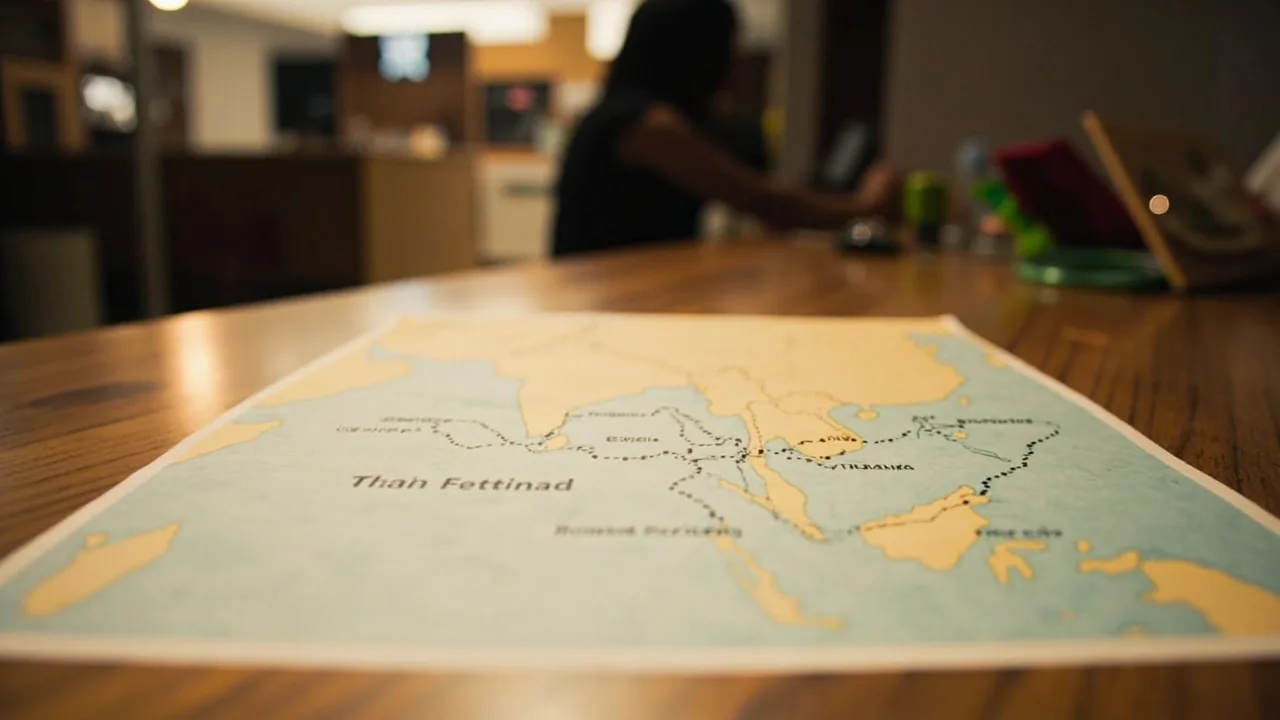
The Complete Banana Pancake Trail Route: 21 Days Through Southeast Asia (2026)
📍 Total distance: ~4,200 km overland ⏱️ Fastest option: Bangkok to Ho Chi Minh in 21 days (this route) 💰 Cheapest version: ~₹45,000 (~$466.18) overland (excluding flights from India) ✅ Best option: Slow boat on the Mekong, sleeper trains where they exist, night buses everywhere else
This article lays out the 21-day version of that route, the one Reddit threads keep asking about and the one we run on our own trip. It is not the full two-month loop (that’s a different animal, covered below). It’s the compressed version that hits the core stops and gets you out before your visa runs dry.
Subodh’s Pro Tip: The 21-day version skips northern Vietnam and most of Cambodia’s coast. If you have 30+ days, add Sapa or Phnom Penh to Kep. If you have under 21 days, cut Chiang Mai and fly Bangkok to Luang Prabang.
Quick Answers
| What | Answer | Price (INR) |
|---|---|---|
| How long is the full 21-day route? | 21 days on the ground, plus 2 buffer days recommended | ₹0 |
| What does the overland version cost? | ~₹45,000-₹55,000 (~$466.18-$569.78) excluding flights from India | ₹45,000 (~$466.18) |
| Is the slow boat from Huay Xai to Luang Prabang included? | Yes, 2 days, the trail’s signature leg | ₹2,500 (~$25.90) |
| How many countries does this cross? | 4: Thailand, Laos, Vietnam, Cambodia | ₹0 |
| Best month to run this route? | November to February (dry season across all 4 countries) | ₹0 |
The History (Briefly, Because Everyone Asks)
The name “Banana Pancake Trail” first appeared in print in the early 1990s in backpacker forums and zines like Loki and Southeast Asia on a Shoestring discussion threads. The pancakes themselves came from the hippie trail through India and Nepal in the 1970s, where banana-and-Nutella became a staple at guesthouses in Manali and Pushkar. When the same traveller crowd shifted east in the 1990s, they carried the recipe with them. Guesthouse owners in Pai, Vang Vieng, and Khao San Road picked it up because it cost almost nothing to make and tourists ordered it three times a day.
By the late 1990s, the route itself had crystallised: enter through Bangkok, drift north to Chiang Mai, cross to Laos via the Mekong, drift down the slow boat to Luang Prabang and Vang Vieng, cross to Vietnam at Hanoi or Da Nang, push south to Ho Chi Minh City, then loop west into Cambodia and out through Phnom Penh or Siem Reap. The Vietnam War backpacker trail ran roughly parallel but stayed coastal. The Banana Pancake Trail was the inland, slow, river-and-bus version.
What changed it: the 2000s brought low-cost airlines (AirAsia, VietJet) and the trail fragmented. You could now skip entire legs in three-hour flights. The 2010s brought Instagram and overtourism. Vang Vieng went from sleepy river town to tubing-and-shots party strip and back again after a 2018 crackdown. Today the 21-day route is the compressed version of what used to be a 3-month drift. The full 60-day version is still doable but requires intentional slow-downs.
The 21-Day Route, Day by Day
This is the exact sequence. Days 1-7 are Thailand, 8-12 are Laos, 13-18 are Vietnam, 19-21 are Cambodia. Each day’s transport, sleep, and a one-line “what to do” note are below.
| Day | Location | Transport In | Sleep | What to Do |
|---|---|---|---|---|
| 1 | Bangkok | Flight from India | Hostel in Khao San area | Grand Palace, Wat Pho, Khao San Road cheap dinner |
| 2 | Bangkok → Chiang Mai | Overnight train (Bangkok to Chiang Mai) | Train berth | Arrive 6am, breakfast, Old City walk |
| 3 | Chiang Mai | Free day | Same hostel | Doi Suthep, Sunday Walking Street if it’s Sunday |
| 4 | Chiang Mai → Pai | Minivan (4 hrs, windy roads) | Pai guesthouse | Walk the Pai canyon at sunset |
| 5 | Pai | Free day | Same guesthouse | Hot springs, bamboo bridge, White Buddha |
| 6 | Pai → Chiang Mai → Chiang Khong | Minivan back, then bus to Chiang Khong | Border-town guesthouse | Arrive evening, prep for border crossing |
| 7 | Chiang Khong → Huay Xai → Pakbeng | Friendship Bridge border, slow boat (morning departure, half-day on Mekong) | Pakbeng guesthouse | Mekong river views, village walk |
| 8 | Pakbeng → Luang Prabang | Slow boat (second day, full day) | Luang Prabang hostel | Wat Xieng Thong, night market |
| 9 | Luang Prabang | Free day | Same hostel | Alms-giving ceremony at sunrise, Kuang Si Falls |
| 10 | Luang Prabang → Vang Vieng | Minivan (6-7 hrs, mountainous) | Vang Vieng hostel | Tham Chang Cave, riverside dinner |
| 11 | Vang Vieng → Vientiane | Bus to Vientiane (4 hrs) | Vientiane guesthouse | Wat Si Saket, Patuxai monument |
| 12 | Vientiane → Hanoi | Flight from Vientiane to Hanoi | Hanoi Old Quarter hostel | Pho for dinner, Bia Hoi corner |
| 13 | Hanoi | Free day | Same hostel | Hoan Kiem Lake, Temple of Literature, Train Street |
| 14 | Hanoi → Ninh Binh → sleeper bus to Hue | Day trip to Tam Coc/Trang An, then overnight bus to Hue | Sleeper bus | Ninh Binh karst scenery |
| 15 | Hue → Hoi An | Bus via Hai Van Pass (4 hrs) | Hoi An hostel | Old Town walk, tailor fittings if you want |
| 16 | Hoi An | Free day | Same hostel | An Bang Beach, cooking class, lanterns at night |
| 17 | Hoi An → Da Nang → Ho Chi Minh City | Train to Da Nang, fly to HCMC (1 hr) | HCMC hostel | Walk Nguyen Hue, Bui Vien Street |
| 18 | Ho Chi Minh City → Phnom Penh | Bus (6 hrs) or speed boat (4.5 hrs) | Phnom Penh hostel | Riverside, Royal Palace |
| 19 | Phnom Penh | Free day | Same hostel | Tuol Sleng, Killing Fields, Central Market |
| 20 | Phnom Penh → Siem Reap | Bus (6 hrs) | Siem Reap hostel | Pub Street, night market |
| 21 | Siem Reap | Angkor Wat sunrise + temple loop | Same hostel or fly home | Angkor Wat sunrise, Bayon, Ta Prohm, fly out |
Why this sequence and not others? The Chiang Mai → Huay Xai → slow boat → Luang Prabang → Vang Vieng leg is the trail’s signature and the single most scenic chunk. Cutting it loses the reason to do this route. The Hanoi → Hoi An stretch compresses a full north-to-centre Vietnam into 4 days, which is tight but doable. The HCMC → Phnom Penh → Siem Reap leg closes the loop by bringing you to the temples.
Book through your hostel or via 12go to compare prices on every leg.
The 21-Day vs 2-Month Version
The 2-month version of the Banana Pancake Trail is what the route was originally, before low-cost airlines compressed it. If you have 60 days instead of 21, here’s what you add back in:
Extra stops in the 60-day version:
- Chiang Mai (5-7 days, not 3)
- Northern Thailand loop: Chiang Rai, Pai, Mae Hong Son
- Full Laos north: Nong Khiaw, Muang Ngoi (added 3-4 days)
- Sapa and Ha Giang Loop in northern Vietnam (added 5-7 days)
- Central Vietnam coast: Nha Trang, Da Lat (added 3-4 days)
- Mekong Delta in southern Vietnam (added 2-3 days)
- Cambodia coast: Kampot, Kep (added 3-4 days)
The 21-day version assumes you fly from Vientiane to Hanoi and from Da Nang to Ho Chi Minh. The 60-day version does every leg overland.
Which one is right for you? If this is your first multi-country Southeast Asia trip and you have the time, take the 60-day version. The slow boat is the same either way, but the breathing room changes the trip from “checking boxes” to settling into the rhythm. The 21-day version is for people with limited leave, returning travellers, or anyone testing whether they like Southeast Asia enough to come back for the longer version.
For more on the longer route, see our 1-month Southeast Asia itinerary. Planning the wider region? Our Southeast Asia backpacking hub covers the full multi-country route.
Border Crossings: What Indians Need
Three border crossings on this route. Each is straightforward but the visa mechanics differ.
Thailand → Laos (Chiang Khong to Huay Xai, Day 7):
- Friendship Bridge, open 6am-10pm
- Indian passport holders get visa-on-arrival: ₹2,896-₹4,054 (~30-42 USD) depending on nationality fee tier, plus one passport photo
- Fill the form on the bus or at the counter
- Total time at border: 45-90 minutes
- Have USD cash ready; Thai baht is also accepted at poor rates
Laos → Vietnam (Vientiane to Hanoi): The 21-day version flies out of Vientiane, so no land border. If you extend and go overland, the most common crossing is at Nam Phao-Cau Treo, ₹2,896 (~30 USD) for Vietnamese visa stamp.
Vietnam → Cambodia (Moc Bai to Bavet, Day 18):
- The bus handles the border stop
- Vietnamese exit stamp on one side, walk across 200m no-man’s-land, Cambodian visa-on-arrival on the other side
- ₹2,896 (~30 USD) plus passport photo
- Cambodia also offers e-visa online beforehand; it costs more than VoA once the processing fee is added, but saves time at the border
Subodh’s Pro Tip: Carry USD 200 in cash, in small denominations (₹97 (~1 USD)). Four countries on this route all prefer or require USD at borders. Thai baht gets you through Thailand, Vietnamese dong handles Vietnam, but the borders themselves run on clean, unfolded US bills. Creased or torn notes get rejected at Cambodian and Lao counters.
For Indian-passport specifics on every country (visa fees, embassy contacts, what to declare at customs), check the dedicated country articles.
Costs: What the 21 Days Cost
Indian travellers consistently report these 2026 prices. All in local currency (the rate shown above).
| Category | Daily Average | 21-Day Total |
|---|---|---|
| Hostel dorm bed | ₹574-₹1,148 (~200-400 THB or ~$5.94-$11.89) | ~₹18,000-₹22,000 (~$186.47-$227.91) |
| Street food + one sit-down meal | ₹287-₹574 (~100-200 THB or ~$2.97-$5.94) | ~₹10,000-₹12,000 (~$103.60-$124.32) |
| Transport (buses, slow boat, 2 short flights) | Bangkok-HCMC segment ~₹22,952-₹34,428 (~8,000-12,000 THB or ~$237.77-$356.66) equivalent | ~₹15,000-₹18,000 (~$155.39-$186.47) |
| Visas (Laos + Cambodia on arrival) | ₹2,896 (~30 USD) + ₹2,896 (~30 USD) | ~₹5,800 (~$60.09) |
| Activities (temples, Angkor pass, Kuang Si) | Variable | ~₹4,000-₹6,000 (~$41.44-$62.16) |
| Beer / nightlife (optional) | Variable | ~₹3,000-₹5,000 (~$31.08-$51.80) |
| Total on the ground | ~₹55,000-₹65,000 (~$569.78-$673.37) |
Excluded from this number:
- Flight from India: ~₹18,000-₹25,000 (~$186.47-$258.99) round trip (book 6-8 weeks ahead for best fares)
- SIM card / eSIM: ₹965-₹1,448 (~10-15 USD) for a multi-country plan
- Vaccinations (consult your doctor; Japanese Encephalitis and Hepatitis A are commonly recommended for this route)
For a more detailed breakdown of a similar route, see our Southeast Asia on $50/day guide and the digital nomad 1-month route if you’re working remote.
Where to Stay (Per Stop)
Hostels in this section come from the same Thai-Vietnam-Lao-Cambodia shortlist the rest of the site uses. I have not stayed in every one of these personally, so I’m flagging traveller-reported ratings and price ranges instead of inventing personal anecdotes.
| Stop | Hostel | Price/Dorm | Book |
|---|---|---|---|
| Bangkok | Mad Monkey Hostel (Khao San) | ₹1,004-₹1,434 (~350-500 THB or ~$10.40-$14.86) | Check prices |
| Chiang Mai | Stamps Backpackers | ₹574-₹1,004 (~200-350 THB or ~$5.94-$10.40) | Check prices |
| Pai | Common Grounds Pai | ₹717-₹1,148 (~250-400 THB or ~$7.43-$11.89) | Check prices |
| Pakbeng | Monsane Guesthouse (basic, not a hostel) | ₹346 (~80,000 LAK or ~$3.58) | Book on arrival |
| Luang Prabang | Funny River View Hostel | ₹259-₹389 (~60,000-90,000 LAK or ~$2.69-$4.03) | Check prices |
| Vang Vieng | Vang Vieng Rock Backpacker Hostel | ₹259-₹432 (~60,000-100,000 LAK or ~$2.69-$4.48) | Check prices |
| Hanoi (Old Quarter) | Hanoi Old Quarter Hostel | ₹552-₹920 (~150,000-250,000 VND or ~$5.72-$9.53) | Check prices |
| Hoi An | Tribee Bana Hostel | ₹663-₹1,104 (~180,000-300,000 VND or ~$6.86-$11.44) | Check prices |
| Ho Chi Minh City | The Common Room Project | ₹736-₹1,288 (~200,000-350,000 VND or ~$7.63-$13.35) | Check prices |
| Phnom Penh | Onederz Hostel Phnom Penh | ₹676-₹1,158 (~7-12 USD) | Check prices |
| Siem Reap | Onederz Hostel Siem Reap | ₹676-₹1,158 (~7-12 USD) | Check prices |
Note: Pakbeng has no real hostel; it’s a one-night slow-boat stop. Book the guesthouse on the boat or via your slow-boat operator.
Getting Connected
SIM coverage is solid in cities and on most buses but drops on the slow boat (Pakbeng stretch has patchy Laos Telecom signal). The cheapest path is buying local SIMs at each airport: AIS in Thailand, Unitel in Laos, Viettel in Vietnam, Cellcard/Smart in Cambodia. Budget ₹965-₹1,448 (~10-15 USD) total for a multi-country physical SIM rotation.
If you’d rather skip the SIM-swap dance, get a multi-country eSIM before you fly. One purchase, all four countries covered:
The eSIM activates when you land in Bangkok and roams across the four countries on the route without physical swaps.
When NOT to Take This Route
June to September (monsoon): Northern Thailand and Laos see heavy rain; the slow boat can be cancelled if the Mekong is rough, which scrambles the whole 21-day sequence. The Hue-Hoi An stretch floods in September. The Angkor temples stay accessible year-round.
Late December to mid-January: Christmas/New Year crowds double prices in Vang Vieng, Pai, and Hoi An specifically. Budget an extra 30-40% or shift by a week.
Vietnamese Tet (late January or early February): Hostels and buses fill up with domestic travellers, prices spike, and many family-run guesthouses close for the holiday. Avoid the first week of Tet entirely. For more detail, see our monsoon season breakdown and dry-season route guide.
Common Reddit Questions, Answered Honestly
“Is the slow boat still worth it?” Yes. Two days, 200+ km on the Mekong, the most relaxed stretch on the route. Don’t skip it.
“Can I do this route on USD 30/day?” Yes if you stay in dorms, eat street food, and skip internal flights. The two flights (Bangkok-Hanoi and Da Nang-HCMC) are the single biggest cost you can cut by adding 24 hours of sleeper buses.
“Do I need to book the slow boat in advance?” Yes, 2-3 days ahead in high season (Nov-Feb), walk-up is fine in low season. Book through your hostel or on 12go.
“Is it safe for solo female Indian travellers?” Yes, with normal precautions. The route is well-trodden and hostels are social. For specifics, see our solo female route guide.
“What about food for vegetarians?” Thailand and Cambodia are manageable. Vietnam is hardest for strict vegetarians (fish sauce in everything). Laos has good Indian food in Vientiane and Luang Prabang. See our vegetarian food tour.
“Can I add the Ha Giang Loop?” Not in 21 days. It’s a 4-day motorbike loop in northern Vietnam. If you have 30+ days, add it after Hanoi, then continue south. See our Ha Giang Loop guide.
“Should I run this route in reverse?” Yes, it’s equally good. Bangkok is the most common starting point because of cheap flights from India, but the same route runs Siem Reap to Bangkok with the same stops flipped.
FAQ
Do Indian passport holders need a visa for Thailand? Visa-free entry for 60 days as of 2026. Carry your return ticket and proof of funds.
Do Indian passport holders need a visa for Laos? Yes, visa-on-arrival at the Friendship Bridge, ₹2,896-₹4,054 (~30-42 USD).
Do Indian passport holders need a visa for Vietnam? Yes, e-visa online beforehand, ₹2,413 (~25 USD), or visa-on-arrival at airports for ₹2,413 (~25 USD).
Do Indian passport holders need a visa for Cambodia? Visa-on-arrival, ₹2,896 (~30 USD), or e-visa online for the same price.
Is the slow boat from Huay Xai to Luang Prabang safe? Yes, it runs year-round except during extreme Mekong flood events (rare in dry season). Two days, basic but safe.
Can I run this route with carry-on luggage only? Yes if you do laundry every 4-5 days. Most hostels on the route offer laundry service for ₹97-₹193 (~1-2 USD) per kilo.
What’s the FX rate this article uses? Rates are checked at publication; treat all rupee conversions as a snapshot rather than a locked rate.
Subodh’s Take
The 21-day Banana Pancake Trail is the right answer for most Indian backpackers doing Southeast Asia for the first time. It’s not the version backpackers did in 2004, but it’s the version the trail has become: tighter, faster, more expensive than it used to be, but still the same core stops. The slow boat hasn’t changed. The temples haven’t changed. The banana pancakes still cost ₹145 (~1.50 USD) in every guesthouse from Pai to Phnom Penh.
If you’re trying to decide between this and the 60-day version: take 21 days, see if you like the rhythm, and book the longer one next year. Almost everyone who runs this route once comes back for the full loop.
