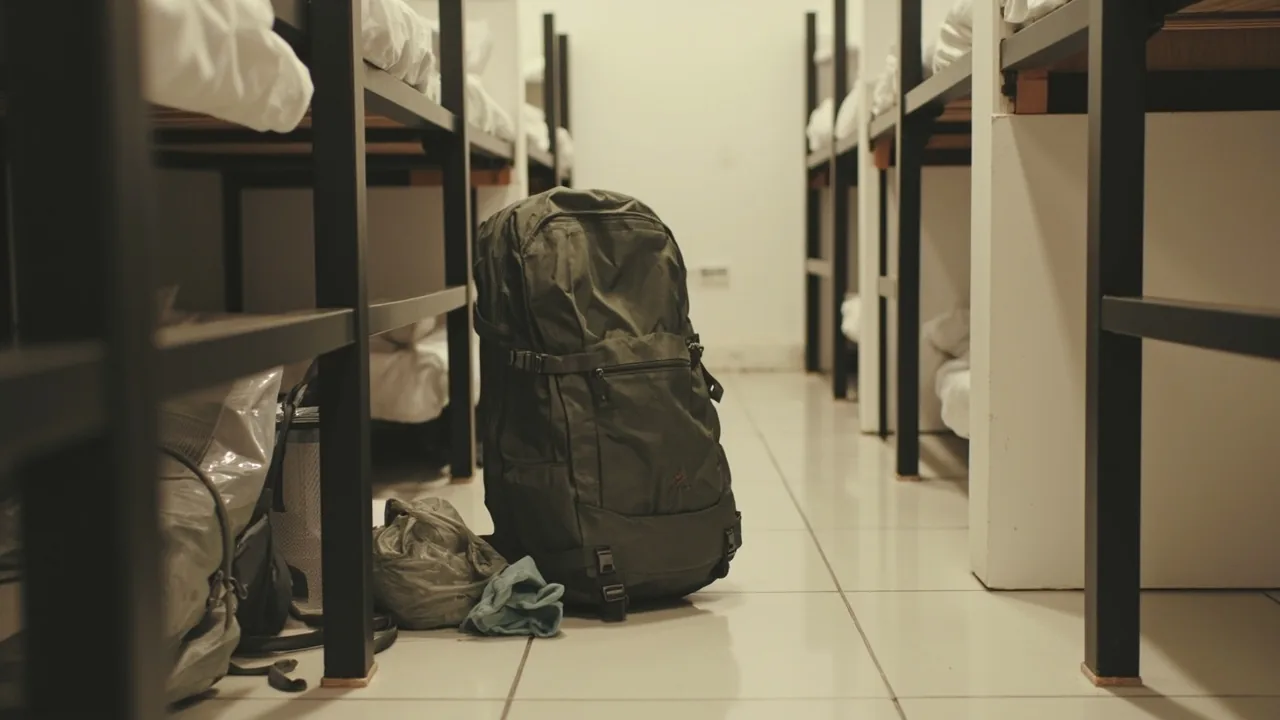
Is 40L Backpack Allowed in Cabin Baggage? The Solo Traveler’s Gear Guide (2026)
A 40L pack typically meets cabin baggage dimensions on most major Asian carriers and fits standard hostel lockers, which is why it has become the default size for Southeast Asia loops.
This guide covers the cabin baggage rules every Indian backpacker gets wrong, the laundry reality of hostel life, and the exact gear setup that survives a full loop through Thailand, Vietnam, Laos, and Cambodia.
Quick Answers
| What | Answer | Price (INR) |
|---|---|---|
| Is a 40L backpack allowed in cabin baggage? | Yes on IndiGo (under 7 kg), yes on AirAsia if dimensions fit 56×36×23 cm, varies on VietJet (some routes weight-limit it) | Free |
| Best 40L backpack brand for SEA loops | Decathlon Forclaz Travel 100, Osprey Farpoint 40, Cabin Zero Classic 40L | ₹4,000 (~$41.44) to ₹14,000 (~$145.03) |
| Hostel laundry cost per kg | ₹144-₹230 (~50-80 THB or ~$1.49-$2.38) in Thailand, ₹74-₹129 (~20,000-35,000 VND or ~$0.76-$1.34) in Vietnam, ₹65-₹108 (~15,000-25,000 LAK or ~$0.67-$1.12) in Laos, ₹96 (~1 USD) to $1.50/kg in Cambodia | ₹140 (~$1.45) to ₹240 (~$2.49) |
| Dry time for hostel-washed clothes | 8 to 14 hours on a hostel rooftop or balcony in dry season, 24+ hours in monsoon | Free (sun) |
| Best laundry bag for hostel | Mesh compression cube (40L), separate dry/wet zip-lock, 5L dry sack | ₹600 (~$6.22) to ₹1,200 (~$12.43) |
40L Backpack Cabin Baggage Rules: What Indian Airlines Allow
The headline rule is simple. Most full-service and budget carriers accept a 40L backpack as cabin baggage if it fits within their published dimension box and stays under their weight cap. The trap is the dimension box, because 40L backpacks are taller than what most airlines allow when fully packed. For budget tips on long-haul Thai routes, see our Thailand budget guide.
The Dimension Problem Most People Miss
A 40L backpacking pack like the Osprey Farpoint 40 measures roughly 54×35×23 cm when empty. The moment you strap a jacket, a sandals pair, or a sleeping bag to the outside, you push past 55 cm tall. IndiGo’s cabin limit is 55×35×25 cm and 7 kg. AirAsia’s limit is 56×36×23 cm at 7 kg (extra weight costs ₹1,800 (~$18.65) to ₹4,000 (~$41.44) at the gate). VietJet caps cabin bags at 56×36×23 cm but weight-limits them at 7 kg on some ASEAN routes and 5 kg on promo fares. Air Cambodia accepts 56×36×23 cm at 7 kg.
Three real consequences:
- A 40L pack with external straps full is borderline. If you stuff it to the top and clip a jacket on, you will be asked to gate-check it on AirAsia and VietJet.
- A 40L pack worn as a “personal item” instead of cabin baggage only works on airlines that allow two bags (IndiGo does not, most full-service carriers do).
- Some backpackers call a 40L a “personal item” on US carriers. This does not apply on Asian routes. Stick to one-bag unless the carrier explicitly allows two.
For the SEA loop, the practical rule is: keep your 40L pack at 54 cm tall or shorter when fully loaded, and weigh it before you fly. A ₹500 (~$5.18) digital luggage scale pays for itself the first time it saves you a ₹3,000 (~$31.08) gate-check fee.
40L vs 60L Backpack: Which Do You Need
The 60L looks like freedom on day one and becomes a prison by week two. It forces you to pack more than you need, costs more at budget airline baggage counters (₹2,000 (~$20.72) to ₹6,000 (~$62.16) per checked leg on IndiGo, AirAsia, VietJet), and cannot go up narrow guesthouse staircases without bashing walls. A 40L forces discipline: six t-shirts, two pants, one rain shell, one fleece, seven underwear, seven socks, a sleeping bag liner, a packable daypack, and toiletries. That covers a six-week loop.
If you are carrying a laptop, a drone, or serious camera gear, bump to a 45L with a clamshell opening like the Peak Design Travel Backpack 45L or the Tortuga Travel Backpack 40L. Anything above 50L gets checked.
The Carry-On Compliance Checklist
Before you fly, run these four checks:
- Measure the bag fully packed: width and depth must be under 36 cm and 23 cm. Height under 55 cm (IndiGo) or 56 cm (AirAsia, VietJet, Air Cambodia).
- Weigh it with a luggage scale: under 7 kg for budget carriers, under 10 kg for full-service.
- Remove every external strap loop: clip straps flat against the bag, or shorten them so nothing sticks out.
- Pack liquids in a 1L zip-lock, every bottle under 100 ml. Toothpaste, sunscreen, deodorant, mosquito repellent, all under 100 ml. Anything bigger goes in checked baggage or gets bought at a 7-Eleven after landing.
Hostel Laundry Hacks: What Works
Hostel laundry is one of those things every guide promises to cover and almost no guide does well. Here is what consistently works across mainland SEA hostels.
The Hostel Laundry Reality
Every decent hostel in SEA offers either a wash-and-fold service (drop your bag in the morning, pick it up in the evening) or a self-service machine (paid per load). Costs in 2026:
- Thailand: ₹144-₹230 (~50-80 THB or ~$1.49-$2.38) per kg, or ₹287-₹431 (~100-150 THB or ~$2.98-$4.47) for a full wash-and-fold bag
- Vietnam: ₹74-₹129 (~20,000-35,000 VND or ~$0.76-$1.34) per kg, often bundled with free pickup
- Laos: ₹65-₹108 (~15,000-25,000 LAK or ~$0.67-$1.12) per kg in Vientiane, ₹108-₹173 (~25,000-40,000 LAK or ~$1.12-$1.79) in Luang Prabang and Vang Vieng
- Cambodia: ₹96 (~1 USD) to ₹145 (~1.50 USD) per kg, around 4,000-6,000 KHR
A full bag of clothes (4 to 5 kg) runs ₹900 (~$9.32) to ₹1,200 (~$12.43), cheaper than a meal out and far cheaper than washing in a Bangkok hotel.
A few honest notes:
- “Wash and fold” usually means everything goes in one machine at 60°C and comes back folded. Your black shirt and white socks will be the same shade of grey by day four.
- Hostels lose socks. Count your socks before drop-off, count them after. If you are missing two, the hostel has them. Most will replace them out of a lost-and-found pile. Petty theft and dorm scams are common enough that our Cambodia safety guide is worth a read before you commit.
- Self-service machines in SEA hostels are usually older top-loaders with no dryer cycle. Clothes come out wetter than you expect.
The Best Laundry Bag for Hostel Life
Three bags solve the problem:
- A 40L mesh compression cube (Decathlon, Sea to Summit, or generic Amazon Basics): this is your main laundry bag. Mesh lets air flow, the compression zipper shrinks the volume so your half-wet pile does not eat your whole dorm locker.
- A 5L dry sack (Sea to Summit, Magcom, or any outdoor brand): for dirty underwear and socks you do not want the rest of the bag to smell.
- A heavy-duty zip-lock bag (1 to 2L): for wet swimwear after a Ha Long Bay or Koh Rong trip. Wet swimwear in a mesh bag = everything else in the bag smells like chlorine and salt.
Total cost for the three-bag setup: ₹600 (~$6.22) to ₹1,200 (~$12.43). They last the entire loop.
Drying Clothes in a Hostel: The Honest Method
Most SEA hostels have a rooftop, a balcony, or a drying room with ceiling racks. A few realistic tips:
- Clothes dry in 8 to 14 hours in dry season (Nov to April), 24+ hours in monsoon (May to October). Plan laundry for the day you arrive in a new town, not the day you leave.
- Hang small items (socks, underwear) inside-out on hangers over the dorm bunk rail at night. They dry by morning under air-con airflow.
- Hang shirts and pants on the rooftop line from the shoulder seam, not the hem. Hem-hanging stretches the fabric and your t-shirt fits like a tent by week three.
- Bring four to six plastic clothespins. They cost ₹100 (~$1.04) at any Daiso and prevent your underwear from blowing onto the street below.
- Never dry inside the dorm. Humidity plus closed air-con plus wet cotton = dorm smells like a wet dog by morning. Your roommates will hate you, and they are right to.
The “Sink Wash” Backup Plan
Some hostels charge too much, the machine is broken, or you need one shirt washed tonight. The sink-wash method:
- Fill the bathroom sink with cool water.
- Add a pea-sized blob of Dr. Bronner’s or a hostel soap bar.
- Wash one shirt at a time, never six at once.
- Rinse twice in clean water, no soap residue.
- Wring by rolling the shirt in a dry towel and stepping on the towel.
- Hang on the rooftop line.
A sink wash takes 8 minutes per shirt. It is cheaper than paying the hostel and you keep the shirt separate from the communal wash. Downside: it does not work for jeans, jackets, or anything heavy.
Packing the 40L: The Six-Week SEA Loop Checklist
This is the exact kit list for a 40L pack on the Thailand-Vietnam-Laos-Cambodia loop. Everything is replaceable in Bangkok or Hanoi if it fails, so do not bring anything you cannot afford to lose.
| Category | Items | Notes |
|---|---|---|
| Tops | 6 t-shirts (3 quick-dry, 3 cotton), 1 long-sleeve, 1 fleece | Cotton for evenings, quick-dry for sweat |
| Bottoms | 2 travel pants, 1 pair shorts, 1 swim trunks | Prana, Decathlon, or Uniqlo stretch |
| Underwear/socks | 7 pairs each, plus 2 sports bras for women | Synthetic, not cotton |
| Footwear | 1 pair trail runners, 1 sandals (Tevas or Chacos), 1 pair hostel flip-flops | Trail runners do double duty as hiking shoes |
| Rain | Packable rain shell (Decathlon Quechua) | Ponchos are loud and tear fast |
| Sleep | Sleeping bag liner (silk or thermolite), inflatable pillow | Hostel blankets vary wildly |
| Tech | Laptop or tablet (optional), universal adapter, 10,000 mAh power bank, phone, e-reader | Vietnam and Laos have inconsistent plugs |
| Toiletries | 100 ml max liquids, 1L zip-lock bag, deodorant, sunscreen, mosquito repellent | Buy shampoo and conditioner in-country |
| Medical | Imodium, oral rehydration salts, ibuprofen, paracetamol, antihistamines, bandage pack, your regular prescriptions | Pharmacies in Bangkok and Hanoi sell everything else |
| Documents | Passport, two passport photos, visa printouts, travel insurance PDF, forex card, emergency cash ₹19,281 (~200 USD) | Spread across two locations in your bag |
| Misc | Microfiber towel, dry sacks, 4 to 6 clothespins, refillable water bottle with filter (Lifestraw or Grayl) | Filter bottle saves ₹500 (~$5.18) to ₹1,000 (~$10.36) a week on bottled water |
Total pack weight target: 7 to 8 kg. If your 40L pack weighs more than 9 kg fully loaded, you are overpacked. Leave the jeans.
The Gear Setup That Survives the Loop
Three pieces of kit earn their weight:
- A packable daypack (15 to 20L, folds to a fist): used as a personal item on the plane, your daily bag in town, and your carry-on for overnight buses. Decathlon makes one for ₹1,000 (~$10.36) that lasts the loop.
- A 10,000 mAh power bank (Anker, Mi, or Ambrane): buses in Laos and Cambodia lose power mid-route. A phone with a dead battery is a dead phone, and a dead phone means no Grab, no Bolt, no Google Maps, no translation.
- A universal adapter (Skross or generic): Vietnam, Laos, and Cambodia all use different plugs, sometimes within the same country. One universal adapter kills the problem.
SIM Cards and Connectivity on the Loop
Buying a local SIM at each border is the cheapest option, but it eats half a day every week. Two cleaner approaches:
- One regional SIM: a Cambodia-Vietnam-Thailand regional SIM from Cellcard, Mobifone, or AIS covers three or four countries on one card. Costs ₹861-₹2,297 (~300-800 THB or ~$8.94-$23.83), valid 15 to 30 days, 6 to 15 GB data.
- One regional eSIM: easier, no physical swap, activate on landing. A regional eSIM covers all four countries on the loop from around ₹868 (~9 USD) to ₹1,446 (~15 USD) for 5 to 10 GB over 30 days. Works on Indian-locked Airtel and Jio phones if your handset is eSIM-compatible (most post-2022 models are).
Dead zones to expect:
- Northern Laos, between Vang Vieng and Luang Prabang on the slow boat: zero signal for 4 to 6 hours. If you are still deciding whether Luang Prabang deserves the detour, our Luang Prabang verdict breaks down the trade-offs.
- The Ha Long Bay cruise: limited 4G, expect 2G or no signal in the inner bay.
- The Cambodia-Thailand border crossing at Poipet: weak signal until you reach the Aranyaprathet side.
Plan for offline Google Maps downloads before each bus or boat segment.
Transport Hacks: Moving a 40L Pack Around SEA
A 40L pack moves easier than a 60L. Three rules:
- Wear it on overnight buses: airline-style luggage does not fit overhead, hostels usually offer free storage for the day, and the bus company does not want a 40L under the seat. Wearing it is the cleanest answer. Overnight bus realities on the Bangkok-Chiang Mai leg are covered in our Bangkok to Chiang Mai guide.
- Tie a bright ribbon or paracord to the grab handle: in a luggage pile at a Vientiane bus station or a Phnom Penh guesthouse, your bag is the one you pull out.
- Use a hostel luggage scale at the entrance: most SEA hostels in tourist zones have a ₹193 (~2 USD) scale by the door. Weigh before you fly. Gate-check fees are not refundable.
For multi-leg transport booking across the loop, use a regional transport aggregator to compare prices for buses, trains, and ferries between Bangkok, Chiang Mai, Hanoi, Hoi An, Phnom Penh, and Siem Reap.
When NOT to Take This Loop (Or, Why Monsoon Matters)
The gear works year-round, but the laundry math does not. June through September is monsoon across most of mainland SEA. Rooftop drying fails in Hanoi and Phnom Penh, hostel humidity spikes, and your pack weighs more than it should because every shirt is 80% dry.
If you are locked into monsoon travel:
- Add a second mesh laundry cube so you can carry 48 hours of laundry while the first batch dries.
- Treat every wash with anti-mildew spray on cotton items (₹300 (~$3.11) at any Indian pharmacy, kills the dorm smell).
- Plan laundry for the first day in a new city, not the last. Drying takes longer than you think.
December to February is dry season. Laundry dries by lunch, the loop is at its busiest, and prices are at their peak. Book hostels two to three days ahead for Bangkok, Pai, and Hoi An.
FAQ
Is a 40L backpack allowed as cabin baggage on IndiGo? Yes, if it fits within 55×35×25 cm and weighs under 7 kg. A fully-packed Osprey Farpoint 40 or Decathlon Forclaz 40 sits at 54×35×23 cm empty and pushes 6 to 8 kg loaded. Weigh it before you fly.
Is a 40L backpack a personal item or a carry-on? On Asian carriers it counts as your one carry-on bag. Personal-item privileges (a second bag under the seat) apply on US domestic routes and some full-service Asian carriers, but not on IndiGo, AirAsia, VietJet, or Air Cambodia.
How much does hostel laundry cost in Southeast Asia? ₹144-₹230 (~50-80 THB or ~$1.49-$2.38) per kg in Thailand, ₹74-₹129 (~20,000-35,000 VND or ~$0.76-$1.34) in Vietnam, ₹65-₹108 (~15,000-25,000 LAK or ~$0.67-$1.12) in Laos, and ₹96 (~1 USD) to $1.50/kg (around ₹95-₹143 (~4,000-6,000 KHR or ~$0.99-$1.48)) in Cambodia. A full 4 kg bag costs ₹900 (~$9.32) to ₹1,200 (~$12.43).
What is the best laundry bag for hostel travel? A 40L mesh compression cube for the main pile, a 5L dry sack for dirty underwear, and a 1L zip-lock for wet swimwear. Total cost ₹600 (~$6.22) to ₹1,200 (~$12.43).
40L vs 60L backpack for the SEA loop? A 40L is enough for six weeks if you commit to sink-wash top-ups and hostel laundry every four to five days. A 60L encourages overpacking, gets checked at budget airline counters for ₹2,000 (~$20.72) to ₹6,000 (~$62.16) per leg, and is harder to carry up guesthouse staircases. Go 40L.
Can I bring a refillable water bottle through SEA airport security? Empty it before security. Fill at the airport water fountain after the checkpoint, or buy a 1.5L bottle past customs. A Lifestraw or Grayl filter bottle saves you ₹500 (~$5.18) to ₹1,000 (~$10.36) a week on bottled water across the loop.
Subodh’s Take
The 40L pack is the single best decision you can make before flying to Bangkok. It forces discipline on what you pack, it keeps you inside budget airline cabin rules, and it makes every overnight bus, every tuk-tuk, and every narrow guesthouse stairwell easier. The laundry part is the unglamorous half of the loop that nobody talks about, and it is the part that decides whether you smell like a hostel by day twenty or stay reasonably human. Buy a luggage scale, buy a mesh compression cube, and commit to washing every four days. Everything else works itself out.
Travel Insurance: A standard travel medical insurance policy covers Indian travelers from ~$62/month (~₹5,900). Includes COVID, trip interruption, and medical evacuation across Southeast Asia.
— Subodh---
