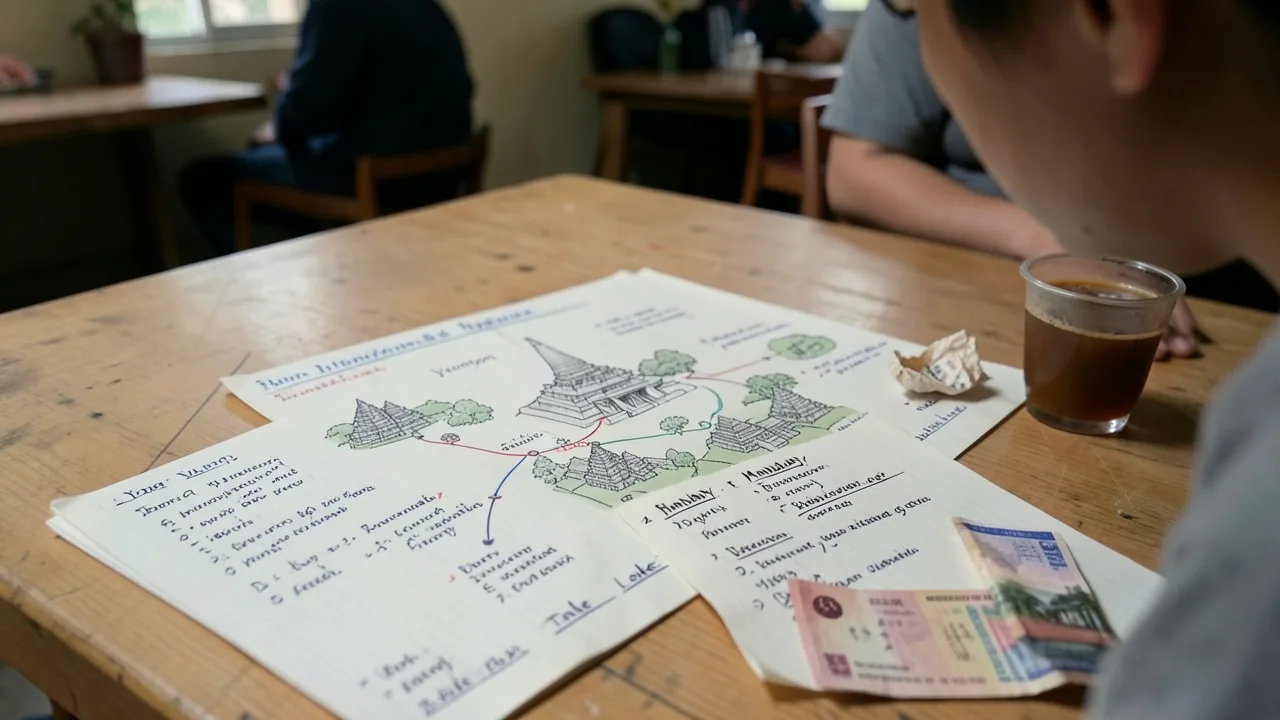
7-Day Myanmar Itinerary from India: Yangon, Bagan, Mandalay & Inle Lake in One Week
A week is the sweet spot for Myanmar on a first visit from India. It is long enough to see the four anchor stops every traveller talks about, Yangon’s Shwedagon, Bagan’s temple plain, Mandalay’s royal rim, and Inle’s floating villages, without burning through the 28-day e-visa limit on buses. It is short enough that you fly once into Yangon and once out of Mandalay or Heho, instead of doubling back. For related planning, see our guides on Sea Backpacking Hub and Yangon to Mandalay Bus Guide.
Two things to know before you read the day-by-day. First, the e-visa is now the only reliable option: ₹4,817 (~50 USD) per person, applied online at evisa.moip.gov.mm, and processed in roughly three business days. Second, Myanmar’s safety picture is genuinely variable right now. Check the current Indian MEA travel advisory for Myanmar before you book, and pair that with the destination country’s own advisory page. If anything in those two pages is red, push the trip. You may also find Myanmar Beaches Ngapali Ngwe Saung Sittwe useful for this trip.
This guide assumes you fly into Yangon International and out of either Mandalay or Heho. It is built around an overnight bus to Bagan (the price-to-time ratio is the best on the route), a daytime bus or train to Mandalay, and either a flight or a road transfer down to Inle. For the full regional transport picture across the country, see Myanmar corridors explained for Indian travelers.
Quick Answers
| What | Answer | Price (INR) |
|---|---|---|
| Myanmar e-visa fee (Indian passport) | ₹4,817 (~50 USD), apply at evisa.moip.gov.mm | ₹4,826 (~$50.09) |
| Cheapest Yangon to Bagan transfer | Overnight bus, 9 to 10 hours | ₹771-₹1,445 (~8-15 USD) |
| Yangon to Mandalay, best option | Daytime upper-class bus, 8 to 9 hours | ₹963-₹1,734 (~10-18 USD) |
| Airport taxi Yangon city centre | Official airport taxi counter, 45 to 60 minutes | ₹771-₹1,156 (~8-12 USD) |
| One week total on the ground (excluding flights) | Dorm beds, street food, buses, entry fees | $220-320 (~₹18,000-26,000) |
All conversions above use 1 USD = ₹96.53, current at time of writing.
Day 1, Arrive Yangon
Land at Yangon International, clear immigration, and step outside to the official taxi counter. A fixed-fare taxi to the city centre runs ₹771-₹1,156 (~8-12 USD) and takes 45 to 60 minutes depending on traffic. Counter price is non-negotiable, which is the point: walk-ins get quoted double by drivers who loiter at the door.
Drop bags at your hostel and head straight to Shwedagon Pagoda. The entrance fee for foreigners is around 8,000 MMK and the visit takes two to three hours if you walk all four covered terraces. Go at sunset for the gold-and-light moment, or first thing in the morning for fewer tour groups.
For dinner, try Unique Myanmar Restaurant, one of the few spots in Yangon serving a proper multi-course Burmese set with mohinga (the fish-noodle soup that runs about 2,500 MMK a bowl at street stalls), laphet thoke (tea-leaf salad), and curries balanced the way Burmese cooks do it, sour, salty, oily, all at once. Dinner for two with drinks runs around 18,000 to 25,000 MMK.
Yangon dorm beds run ₹500-₹1,000 (~$5.19-$10.38) a night in the downtown backpacker zone near Sule Pagoda.
Subodh’s Pro Tip: Skip the airport SIM kiosk. Walk out and buy at any official MPT, Telenor, or Ooredoo store within 5 km of the airport, you’ll pay 20-30% less for the same data pack. Tourist SIMs run 5,000-7,000 MMK for 5 to 7 GB.
Day 2, Yangon to Bagan (Overnight Bus)
Take the morning for one more Yangon stop: either the National Museum (5,000 MMK) or a walk around colonial-era downtown if you skipped it on day one. Catch a late lunch at a tea shop, mohinga plus sweet tea, around 2,500 MMK.
Board the overnight VIP bus to Bagan between 6 pm and 8 pm. The Yangon to Bagan corridor is one of the most heavily serviced in the country, with multiple operators and departures nightly. Buses range from ₹771-₹1,445 (~8-15 USD) for a standard sleeper up to ₹2,408 (~25 USD)+ for the top-tier 1+1 lie-flat. Travellers report the upper end is worth the extra on this particular run: roads are decent, the bus is climate-controlled, and you wake up at 5 am steps from Old Bagan.
Compare prices and book on 12go
If overnight buses are not your thing, there is also an early morning flight option (Yangon to Nyaung U airport, around 1 hour, ₹5,780-₹8,671 (~60-90 USD) one way), and a daytime bus if you want to give up one day in Bagan. Both are listed on 12go’s Myanmar hub.
Day 3, Full Day Bagan
You arrive early, which is the right way to enter Bagan: sunrise over the temple plain, hot-air balloons lifting in the distance (October through February only), and you on a small temple roof with maybe five other people. The balloon ride itself runs ₹11,561-₹14,451 (~120-150 USD) if you want to book, and you can check Bagan balloon availability on GetYourGuide.
Spend the day on a half-day e-bike loop or a horse-cart ride if you are feeling slower. Entry to the Bagan Archaeological Zone costs 25,000 MMK, single biggest line item of the day. Most temples are free to enter; the few with entry fees (Ananda, Dhammayangyi, Shwezigon) charge 5,000 MMK each.
For a vegetarian dinner fix, head to The Moon Vegetarian Restaurant in Nyaung U, which serves a full Indian-leaning vegetarian menu. Most Indian travellers land here at least once during their Bagan stay, portions are generous, and a thali runs around 5,000 to 7,000 MMK.
Bagan dorms run ₹500-₹1,200 (~$5.19-$12.46) a night; private rooms with breakfast start around ₹2,000 (~$20.76).
Day 4, Bagan to Mandalay
Two real options here. The standard bus takes 4 to 5 hours and costs ₹771-₹1,156 (~8-12 USD). The river ferry from Bagan to Mandalay runs only in the dry season, October through roughly April, takes 10 to 12 hours, costs ₹2,408-₹3,372 (~25-35 USD), and is one of the most scenic transport experiences in the country. Travellers who have done both say the ferry is a once-in-a-trip experience if weather cooperates. In monsoon, the road bus is the safe call.
Either way, you land in Mandalay by late afternoon. Check into a dorm (₹400-₹800 (~$4.15-$8.30) a night in central Mandalay), and catch sunset from Mandalay Hill, which is free, has wide views over the palace walls and the river, and is the single best photo spot in the city.
Day 5, Full Day Mandalay
Mandalay is best done at walking pace. Start at Mahamuni Pagoda at 4 am if you can stomach the early start; the male-only face-washing ceremony opens the temple at 4:30 am and is one of the more unusual things you’ll see in Southeast Asia. Skip it if you want a normal morning: start at 9 am with Shwenandaw Monastery (gold teak carvings, 5,000 MMK) and Kuthodaw Pagoda (the world’s largest book, carved on 729 stone slabs, 5,000 MMK).
Afternoon: cross the river to Sagaing, hire a motorbike or tuk-tuk, and do a loop of the hilltop monasteries. Most are free, the views are worth the climb, and you’ll have most of them to yourself.
Dinner in Mandalay is good and cheap. Shan-style noodles (Shan khao swè, around 2,500 MMK), grilled fish curries, and the city’s famous Mandalay beer at most rooftop restaurants. Budget 8,000-12,000 MMK for dinner with a beer.
Day 6, Mandalay to Inle Lake
Two routes again. The express bus Mandalay to Taunggyi (the gateway to Inle) takes 8 to 9 hours and runs ₹963-₹1,445 (~10-15 USD). The flight from Mandalay to Heho is 30 minutes and costs ₹4,817-₹7,707 (~50-80 USD) one way; from Heho it’s a 45-minute taxi to the lake (₹963-₹1,445 (~10-15 USD)). On a 7-day clock, the flight is the honest call. The bus eats a full day and you arrive tired.
Either way, settle into Nyaung Shwe, the small town at the lake’s north end, by mid-afternoon. Nyaung Shwe dorms run ₹500-₹900 (~$5.19-$9.34) a night, and the town has a handful of vegetarian spots, including Indian-run restaurants serving dal, paneer, and chapati at honest prices (around 5,000 MMK for a full thali).
Evening canal walk or visit to the night market for Shan food.
Day 7, Inle Lake, then Fly Out
Hire a long-tail boat for the day. The standard route covers floating gardens, stilt-house villages, the Intha fishermen doing their one-legged rowing trick, and ends at Phaung Daw Oo Pagoda. A full-day boat for two people runs 18,000-25,000 MMK.
Take the late afternoon flight out of Heho to either Yangon (to connect onwards) or directly to your international departure airport. If you fly Yangon-Heho at the start of your next connection, plan a buffer of at least four hours in Yangon for the international transfer.
Subodh’s Safety Tip: Myanmar’s situation has been fluid through 2025 and into 2026. Beyond the basics (carry your passport, dress modestly at religious sites, use registered taxis at night), check the Indian MEA travel advisory for Myanmar and the Myanmar government’s own advisory page before booking. Local ground transport unions and convoy rules can change without notice, and tour operators sometimes cancel routes on short notice. If anything in those advisories is red-flagged for your dates, push the trip.
Getting Connected
Coverage in Yangon, Mandalay, and around Inle Lake is reliable on MPT, Telenor, and Ooredoo; in rural Bagan and on the Mandalay-Taunggyi bus, signal drops for stretches of up to an hour. Buy a physical SIM at any official store with your passport and e-visa printout. If you’d rather arrive connected, Get Nomad eSIM covers Myanmar on most plans and activates before you board the flight from India.
Indian Passport Specifics
The Myanmar e-visa is the only practical route for Indian passport holders, and Indian travellers have reported no specific issues at Yangon or Mandalay immigration beyond the usual fee-and-stamp. Carry printed copies of your e-visa approval, your return ticket, and proof of accommodation for at least the first two nights. Myanmar uses the left-hand drive system and most rural roads are unpaved; if you hire a motorbike in Bagan or Inle, check your travel insurance covers it.
Indian Embassy in Yangon: 545-547, Merchant Street, Botahtaung Township. Phone: +95-1-391-281.
When NOT to Take This Route
Monsoon (roughly May through early October) closes the Bagan-Mandalay ferry, makes the Mandalay-Taunggyi road a slow affair, and floods some Inle Lake stilt villages. If you’re travelling in August, consider swapping to a 10-day itinerary that stays mostly on the Yangon-Bagan-Inle corridor and skips Mandalay, or pivot to a different country entirely. The Myanmar 10-day itinerary covers that variant.
Late September through early November also overlaps with the post-monsoon restoration period, and some temple sites in Bagan have intermittent closures.
FAQ
Is one week enough for Myanmar from India? Yes, if you stick to the Yangon-Bagan-Mandalay-Inle corridor and use one internal flight. Trying to add Ngapali beach or Hsipaw pushes you into 10 to 14 days.
Do I need the Myanmar e-visa in advance? Yes, apply at evisa.moip.gov.mm before you fly. ₹4,817 (~50 USD), three business days, and visa-on-arrival is currently suspended.
What’s the best transport between Yangon and Bagan? The overnight VIP bus. Cheap, comfortable, saves a hotel night, and arrives for sunrise. The flight is faster but costs ₹5,780-₹8,671 (~60-90 USD).
Is Myanmar safe for Indian travellers in 2026? Check the current MEA travel advisory and the destination country’s own advisory before booking. Most of the standard tourist corridor (Yangon, Bagan, Mandalay, Inle) has been operating normally, but the situation is variable.
What currency should I carry? Myanmar kyat (MMK) for everything local. Most hotels and bigger restaurants accept USD cash as backup, but small guesthouses and buses are MMK-only. Bring crisp, unmarked USD bills in $20s and $50s; torn or older notes get rejected at the bank.
Can I use UPI in Myanmar? No. UPI does not work in Myanmar. Carry a forex card plus USD cash, and withdraw MMK from ATMs in Yangon or Mandalay on arrival.
Subodh’s Take
Myanmar in 2026 is one of those places where the trip is genuinely better than the logistics. The e-visa is straightforward, the corridor is well-served by night buses, and Yangon, Bagan, Mandalay, and Inle still feel like Southeast Asia did 20 years ago, calm, polite, cheap, and not yet churned through by tourism. The catch is the safety picture, which is genuinely variable and worth checking twice before you book. If both advisories come back green for your dates, this 7-day route is one of the better deals you’ll find on the region.
