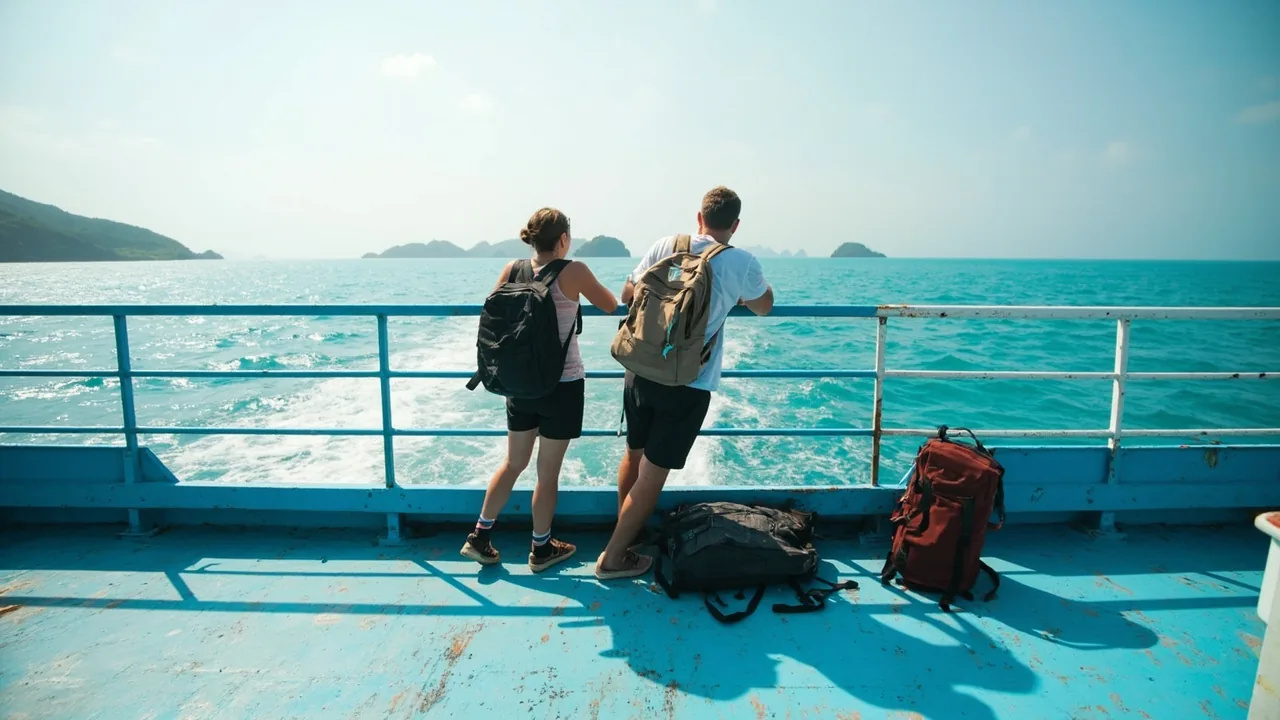
Southeast Asia Adventure Route: The Ultimate 3-Week Multi-Country Itinerary (2026)
📍 Distance: ~3,200 km overland + 1 short flight ⏱️ Fastest option: 21 days done at a steady pace 💰 Cheapest option: ₹60,000-₹75,000 (~$622.80-$778.50) all-in (excluding flights from India) ✅ Best option: Bangkok → Chiang Mai → Luang Prabang → Hanoi → Halong Bay → Hoi An → Siem Reap → Bangkok loop
For related planning, see our guide on Sea Backpacking Hub.
This 3-week sea adventure route is enough, but only if you skip the “I should see everything” trap. The honest answer to “is 3 weeks enough for Southeast Asia” is that it is enough for one good loop, not four. You pick a theme, accept that you will miss something, and make peace with a second trip later. Travellers who try to cram Thailand, Vietnam, Cambodia, Laos, and Bali into 21 days end up spending 60% of their time on buses and planes, and the rest in a daze.
This route is built around adventure and movement: jungle treks, motorbike loops, slow boats, limestone karsts, and at least one sunrise that earns your camera roll. It runs the classic Bangkok → Chiang Mai → Laos → Vietnam → Cambodia loop, the one that already exists in the Banana Pancake Trail geography, tightened into a 3-week frame for travellers who cannot afford a month.
Quick Answers
| What | Answer | Price (INR) |
|---|---|---|
| Is 3 weeks enough for Southeast Asia? | Yes, for one tight loop covering 4 countries | , |
| Total budget (excluding India flights) | ₹60,000-₹75,000 (~$622.80-$778.50) on a backpacker spend | ₹60,000-₹75,000 (~$622.80-$778.50) |
| Number of borders crossed | 3 (TH→LA, LA→VN, VN→KH) | Free for Indians (VOA) |
| Visa cost for Indian passport | ₹0 (VOA in TH, LA, KH) + ₹2,085 (~25 USD) for VN e-visa | ₹2,085 (~25 USD) |
| Best adventure highlight | Ha Giang Loop motorbike in northern Vietnam | ₹14,584-₹20,053 (~$150-$210) for the Easy Rider tour |
The 3-Week Adventure Route: Day by Day
I am going to lay this out as a flat 21-day itinerary, then break each leg down so you can adjust for weather, energy, and how badly your lungs tolerate sleeper buses.
| Day | Where | What the day is |
|---|---|---|
| 1–2 | Bangkok, Thailand | Arrive, recover, Khao San Road done once |
| 3 | Bangkok → Chiang Mai | Sleeper train, 14 hours |
| 4–6 | Chiang Mai | Jungle trekking, ethical elephant sanctuary, Muay Thai class |
| 7 | Chiang Mai → Huay Xai | Flight to Chiang Rai, then bus to the Mekong border |
| 8 | Huay Xai → Luang Prabang | 2-day slow boat down the Mekong |
| 9 | Luang Prabang | Kuang Si Falls, town loop |
| 10 | Luang Prabang → Hanoi | Flight via Bangkok or direct if you find one |
| 11–12 | Hanoi | Old Quarter food crawl, Hoan Kiem Lake, Beer Street |
| 13 | Hanoi → Ha Giang | Night bus, 7 hours |
| 14–15 | Ha Giang Loop | Motorbike loop, 2 days, Ha Giang Loop guide |
| 16 | Hanoi → Hoi An | Flight to Da Nang, 1.5 hours |
| 17 | Hoi An | Old Town lantern walk, cooking class |
| 18 | Hoi An → Siem Reap | Flight via Ho Chi Minh City |
| 19 | Siem Reap | Angkor Wat sunrise, Bayon, Ta Prohm |
| 20 | Siem Reap → Bangkok | Flight, 1 hour |
| 21 | Bangkok | Departure |
Subodh’s Pro Tip: Days 1–2 and Day 21 are travel days. Build your actual adventure expectations around the middle 17 days. Anyone who tries to “add Laos on the end” or “squeeze in Phnom Penh” is going to lose a country to fatigue.
Option 1. Cheapest: The Overland Route
The cheapest version of this loop is the one backpackers have been running since the 1990s. It skips both flights inside the region (Hanoi to Da Nang and Siem Reap to Bangkok) and accepts longer bus rides in exchange.
What it is:
- Bangkok → Chiang Mai: 2nd class sleeper train, ~₹2,300-₹3,500 (~$24-$36) in a fan-cooled carriage
- Chiang Mai → Huay Xai: overnight bus to Chiang Khong, walk across the Mekong bridge
- Huay Xai → Luang Prabang: 2-day slow boat, ~₹2,500-₹2,800 (~$25.95-$29.06) with a basic guesthouse stopover in Pakbeng
- Luang Prabang → Hanoi: bus to Vientiane, then sleeper bus to Hanoi, ~₹2,800-₹3,500 (~$29.06-$36.33), 24+ hours
- Hanoi → Hoi An: sleeper bus, ~₹1,800-₹2,500 (~$18.68-$25.95), 12 hours
- Hoi An → Siem Reap: bus via Ho Chi Minh City and the Bavet/Moc Bai border, ~₹2,500-₹3,000 (~$25.95-$31.14), 18 hours total
- Siem Reap → Bangkok: bus direct, ~₹2,408 (~$25), 10-12 hours including border
Total overland transport cost: roughly ₹15,000-₹17,000 (~$155.70-$176.46) for the full loop.
The honest experience: This is the version you will hear backpackers romanticize. The slow boat is genuinely beautiful. The sleeper buses are genuinely brutal. The Cambodia-Vietnam overland border at Moc Bai/Bavet is the most chaotic of the three crossings, with touts surrounding the bus the moment it parks. The Bangkok-Siem Reap direct bus is acceptable but the last 90 minutes before the border are pitch black and the bus stops in odd places.
Comfort rating: 4/10. You will sleep when your body gives up, not when the schedule says so.
Where to book it: Compare all options on 12go, which aggregates buses, trains, ferries, and flights across the region. Book slow boat tickets 2–3 days ahead in Chiang Mai or Huay Xai, walk-ups usually work but peak season (Nov. Feb) fills up.
Option 2. Best Experience: The Hybrid
This is the recommended version of the route. It mixes the slow boat (the one experience that is genuinely better than flying) with three short flights that save the sanity-destroying bus legs.
What it is:
- Bangkok → Chiang Mai: overnight sleeper train, 14 hours. The 2nd class fan carriage is fine, the 1st class air-con is worth the extra ₹600 (~$6.23) if you have the budget.
- Chiang Mai → Huay Xai: minivan to Chiang Khong, 5 hours, then walk across the friendship bridge to Huay Xai.
- Huay Xai → Luang Prabang: 2-day slow boat, ~₹2,500-₹2,800 (~$25.95-$29.06). The boat stops overnight in Pakbeng, basic guesthouses are included-style, you can book a slightly better one for ₹800-₹1,000 (~$8.30-$10.38).
- Luang Prabang → Hanoi: flight, 1.5 hours with a layover in Bangkok or Vientiane, ~₹7,500-₹10,000 (~$77.85-$103.80) on Lao Airlines, Vietnam Airlines, or AirAsia.
- Hanoi → Hoi An: flight to Da Nang, 1 hour, ~₹2,500-₹3,500 (~$25.95-$36.33) on VietJet or Vietnam Airlines.
- Hoi An → Siem Reap: flight via Ho Chi Minh City (rare direct), 2.5 hours total, ~₹5,000-₹7,000 (~$51.90-$72.66).
- Siem Reap → Bangkok: flight, 1 hour, ~₹3,500-₹5,000 (~$36.33-$51.90) on AirAsia, Bangkok Airways, or Thai Vietjet.
Total hybrid transport cost: roughly ₹25,000-₹30,000 (~$259.50-$311.40).
Why the slow boat is the one thing worth keeping: The 2-day Mekong slow boat from Huay Xai to Luang Prabang is the only transport segment on this entire route where the journey itself is the destination. You are on a long-tail boat for 8 hours a day, riverbanks sliding past, kids waving from villages, the occasional fishing net. The flights are forgettable. The slow boat is the story you tell later.
Specific tips for the slow boat:
- Sit at the front of the boat, behind the driver. Better view, less engine heat.
- Bring a sarong or light jacket. The river is cold in the morning, brutally hot by noon.
- The Pakbeng overnight is a Mekong River town that exists almost entirely as a slow-boat stopover. Book a guesthouse in advance or the touts on the dock will herd you.
- Do not book the “speed boat” alternatives if anyone offers them on the Chiang Mai end. They are dangerous and widely discouraged for safety reasons.
Option 3. Fastest: Full Flight Loop
If 21 days is tight and you do not want to spend 3 of them on buses, you can fly every regional segment and skip the slow boat entirely. This is the version for travellers who have 15 days and are calling it 21.
What it is: Bangkok → Chiang Mai flight → Luang Prabang flight → Hanoi flight → Hoi An flight → Siem Reap flight → Bangkok flight.
Total cost: ₹35,000-₹45,000 (~$363.30-$467.10) for the regional flights, depending on how far ahead you book.
When it is worth it: First-time visitors who care more about hitting Hanoi, Hoi An, and Angkor Wat than the slow boat. Travellers visiting during monsoon (June. October) when the Mekong route has weather risk. People who have already done the slow boat on a previous trip.
When it is not: Anyone who has the time and wants the experience. Flying Luang Prabang to Hanoi skips the entire Mekong stretch, which is the most scenically rewarding overland segment in the region. The flights are cheap, but you are paying in experience, not rupees.
Border Crossings: Indian Passport Specifics
This route crosses three borders. Each one is a separate logistical event, and the Indian passport is treated differently at each.
Thailand → Laos (Chiang Khong / Huay Xai)
The crossing: A modern, well-organised bridge. You walk across, no boats involved.
Indian passport: Visa on arrival is free for Indian citizens as of 2026. You get 30 days. Carry two passport photos (though at this border they often accept photos taken on the spot for a small fee) and a printed hotel/hostel address in Laos.
Process: Thai exit stamp on the Thai side, walk across the bridge (15 minutes), Lao visa on arrival on the other side. For Indian citizens the visa on arrival is issued at no charge; carry cash anyway in case staff discretion or fee changes apply at the desk.
Time: 1–2 hours total, including the visa form.
Money exchange: Skip the official booths inside the Lao immigration hall. Walk 200 metres into Huay Xai town and exchange at any of the gold shops. Better rates, no commission.
Laos → Vietnam (Luang Prabang / Hanoi flight)
The crossing: You fly, so technically there is no overland border. The flight touches immigration formally but you stay in the airport.
Indian passport: Vietnam requires an e-visa for Indian citizens. Apply at the official Vietnamese immigration portal. Cost is ₹2,085 (~25 USD), processing 3 working days, valid for 90 days multiple entry. Carry a printed copy of the e-visa, plus 2 passport photos as backup.
Money exchange: Do not exchange at Luang Prabang airport. Do not exchange on arrival at Hanoi. Use the gold shops in Hanoi Old Quarter or an ATM (HDBank, Vietcombank, TPBank all work with Indian debit cards).
Vietnam → Cambodia (HCMC / Siem Reap flight)
The crossing: Flight, immigration formal only.
Indian passport: Cambodia visa on arrival for Indians, ₹2,890 (~30 USD), valid 30 days. Carry exactly ₹2,890 (~30 USD) in cash, no change given. Bring 1 passport photo. The visa form is filled out on the plane or at the counter.
Process: Fill the form, hand it over with the photo and the ₹2,890 (~30 USD), get stamped, walk out. 15–20 minutes at Siem Reap airport.
Indian Passport Specifics
Beyond the standard passport + visa dance, here are the practical things that matter:
- Cash as backup: Carry ₹19,000-₹29,000 (~200-300 USD) in clean, post-2006 bills for the entire trip. Cambodia and Laos love USD cash. Vietnam rarely needs it but the border formalities expect it.
- Embassy contacts: The Indian embassy in Bangkok, Hanoi, and Phnom Penh can issue emergency travel documents if your passport is lost or stolen. Save the contact details before you leave.
- Visa photos: Carry 6 photos total (roughly 2 per border). Most borders will accept photos taken on the spot for a small fee, but bringing your own is faster.
- Document copies: Keep a colour photocopy of your passport’s bio page, Indian address proof, and onward ticket on your phone (offline) and printed in your bag. Borders ask for proof of onward travel.
- Border scam watch: At the Moc Bai / Bavet crossing (if you take the overland version), the Vietnamese side has aggressive money changers who give terrible rates. The Cambodian side has taxi touts who triple the fare. Walk past both, negotiate from a position of already knowing the price.
Safety Alert: Border regions can see periodic tension, especially the Laos-Vietnam overland crossing along Route 8 and Route 12. Before departure, check the official Indian MEA travel advisory at mea.gov.in for the current status of any region you plan to cross overland. Also check the destination country’s own advisory pages.
When NOT to Take This Route
June through October (monsoon): The Mekong slow boat gets cancelled in heavy rain. The Ha Giang Loop has landslides. Angkor Wat becomes a mud pit. The whole route still works, but you need to swap the slow boat for a flight and accept that northern Vietnam will be wet. For a monsoon-season alternative, the Southeast Asia dry season route guide has the November. May version.
Late December / early January: Peak season. Prices up 30–40%, hostels booked weeks ahead, the slow boat is sold out days in advance. Book everything from India before you fly.
Chinese New Year (late January / February): Massive Asian domestic travel spike. Sleeper trains out of Bangkok and Hanoi sell out. If you must travel in this window, book transport 2–3 weeks ahead.
Muay Thai training in Chiang Mai: Most camps require a minimum 1-week stay. If you have fewer than 5 days in Chiang Mai, skip the camp and just watch a fight at the stadiums.
Getting Connected
SIM coverage is generally good across this route, with three dead zones worth flagging: the Mekong slow boat has no signal for stretches of the river, the Ha Giang Loop has spotty 4G in the mountain passes, and the Cambodia-Vietnam border region drops to 2G. Get a local SIM at each arrival (AIS in Thailand, Lao Telecom in Laos, Viettel in Vietnam, Smart or Cellcard in Cambodia). Most offer 7-day tourist packs for 200–500 local currency worth of data. Get Nomad eSIM if you want one eSIM per country without swapping physical cards.
Where to Stay
For accommodation along this route, book hostels and guesthouses on Hostelworld or Booking.com. Prices start at ₹500-₹800 per night for dorms. Check availability on Hostelworld for your dates.
FAQ
Is 3 weeks enough for Southeast Asia? For one focused loop, yes. For four countries in any depth, no. Pick the 4-country loop above and skip the “I should also do Bali and Myanmar” temptation. Southeast Asia 2-week starter route exists if you have less time.
Can I take the slow boat with an Indian passport? Yes, no issue. The slow boat is a domestic Lao transport, no separate visa or stamp required beyond your Thai exit and Lao entry at the bridge.
How much cash should I carry for the borders? ₹19,268-₹28,902 (~200-300 USD) across the whole trip, mostly for the Cambodia visa (₹2,890 (~30 USD)) and Laos backup. ATMs work in every major city on this route, including Luang Prabang and Siem Reap.
Is the Ha Giang Loop safe for first-time riders? The “Easy Rider” guided version (you ride pillion behind an experienced local rider) is the standard recommendation. The self-ride version is technically possible but requires an International Driving Permit and serious mountain-road experience. The Ha Giang Loop guide has the full breakdown.
Do I need to book the Angkor Wat pass in advance? No, but you can. The 1-day pass is ₹3,565 (~37 USD), 3-day pass is ₹5,973 (~62 USD), 7-day pass is ₹6,936 (~72 USD). Buy at the main ticket centre, open 4:30 AM for sunrise. Check GetYourGuide for Angkor Wat sunrise tour options if you want a guide to handle the logistics of the sunrise crowd.
What if I get sick on the road? Travel insurance covers hospital visits and emergency evacuation across all four countries. Pharmacies in Chiang Mai, Hanoi, and Phnom Penh stock most basics without prescription. The big hospitals in Bangkok and Ho Chi Minh City have English-speaking staff.
Subodh’s Take
Three weeks is the honest minimum for this loop, and even then it is tight. If you can stretch to four weeks, add the southeast-asia beach itinerary days around Hoi An, or spend a slow week in Luang Prabang instead of rushing through. If you cannot, this route is the one that delivers the most adventure per rupee and per day. The slow boat is non-negotiable. The Ha Giang Loop is non-negotiable. Bangkok at the start and end is just logistics. Everything else is in service to those two experiences.
