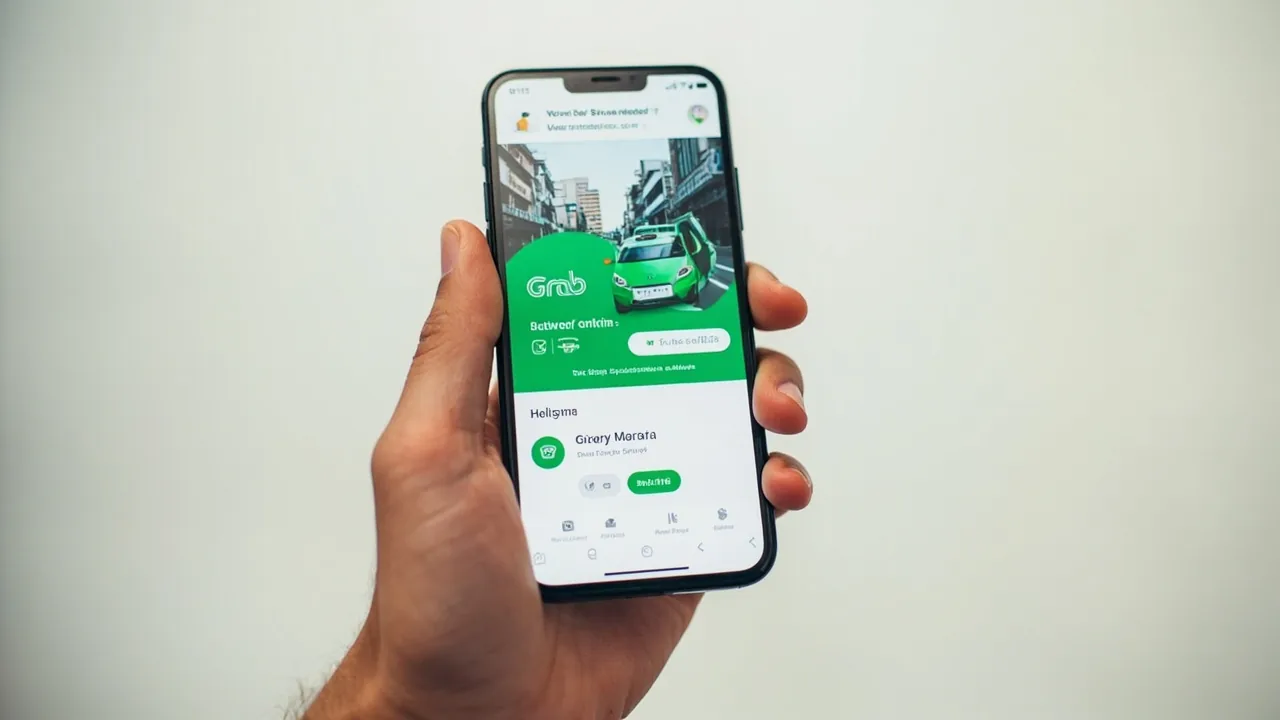
Grab vs Tuk-Tuk vs Walking: How to Get Around Southeast Asia
If you’re deciding whether to use the Grab app southeast Asia travellers rely on, pick Grab for a fixed price with no haggling. Pick a tuk-tuk for the experience or a tight street where cars can’t go. Walk if the trip is under 25 minutes and the heat isn’t a problem, because nothing beats free.
This guide compares the three the way Indian backpackers use them: at street level, after the airport, in a Bangkok soi at 11pm, and in Hanoi’s Old Quarter at rush hour.
Grab is now the dominant ride-hailing app across Southeast Asia, and the Grab app southeast Asia travellers install on arrival covers eight countries. The company, founded in Malaysia in 2012 and listed on NASDAQ under ticker GRAB, controls roughly 55% of the region’s ride-hailing market and operates in 8 Southeast Asian countries. It has been profitable in its home market Malaysia since 2023, and the wider group turned adjusted-EBITDA positive in 2024. What that means for a backpacker is simple: Grab is the default app almost everywhere you’ll travel, and you’ll spend more time choosing between Grab options than between Grab and local apps.
Quick Answers
| What | Answer | Price (INR) |
|---|---|---|
| What is Grab, in one line? | Southeast Asia’s dominant ride-hailing super app, founded in Malaysia in 2012, now used in 8 SEA countries including Thailand, Vietnam, Cambodia, and Singapore. | Free to download |
| Does my Grab app work across countries? | Yes. Switch region from the home screen (tap the city/country flag or go to Settings > Region). Payment, history, and saved cards follow you. | Free |
| Cheapest option for 3 km in Bangkok? | Walking (free) for under 25 min, otherwise GrabBike. | ₹172 (~60 THB or ~$1.79) |
| Cheapest option for 3 km in Ho Chi Minh City? | GrabBike; walking is faster than tuk-tuks in District 1 gridlock. | ₹55 (~15,000 VND or ~$0.57) |
| Should I pay cash or card in Grab? | Card for safety (no cash disputes), cash if your card gets unexpectedly declined (happens often with Indian forex cards in Vietnam). | — |
Quick Comparison Table
| Factor | Grab | Tuk-tuk / local taxi | Walking |
|---|---|---|---|
| Cost per 3 km (Bangkok) | ₹172-₹258 (~60-90 THB or ~$1.79-$2.68) | ₹230-₹431 (~80-150 THB or ~$2.38-$4.47) | Free |
| Cost per 3 km (HCMC) | ₹55-₹92 (~15,000-25,000 VND or ~$0.57-$0.96) | ₹92-₹147 (~25,000-40,000 VND or ~$0.96-$1.53) | Free |
| Cost per 3 km (Phnom Penh) | ₹193-₹289 (~2-3 USD) | ₹289-₹482 (~3-5 USD) | Free |
| Fixed price before ride | Yes (app shows fare) | No, you haggle | n/a |
| English-speaking driver | Usually yes, app-based | Rarely | n/a |
| AC | Yes (GrabCar) | Sometimes | n/a |
| Safety at night | High (GPS tracked) | Low-moderate (no record) | Low (varies by city) |
| Fun factor | Low | High (in daylight, short trips) | Highest (you see the city) |
| Best for | Airport runs, rainy days, late nights, solo women | Tourist quarters, photo ops, short market hops | Under 25 min, daylight, flat cities |
| Worst for | Tight alleys (motorbikes only) | Long distances, rainy season | Heat, late nights, monsoon |
When to Use Each One
Choose Grab if…
- You’re landing at the airport and want a fixed price with no “meter broken” arguments. Bangkok’s Suvarnabhumi pre-paid taxi desk charges ₹2,010 (~700 THB or ~$20.85) flat; a GrabCar is often ₹1,005-₹1,292 (~350-450 THB or ~$10.43-$13.40) for the same Silom/Sukhumvit run. See our Bangkok backpacking guide for more on getting around the city.
- You’re a solo female traveller moving after dark. GPS tracking, driver photo, and the ability to share your trip are the difference between fine and a problem.
- You’re going more than 5 km. Tuk-tuks quoted over ₹287 (~100 THB or ~$2.98) in Bangkok, ₹184 (~50,000 VND or ~$1.91) in HCMC, or ₹482 (~5 USD) in Phnom Penh are usually scams or near-scams.
- You have heavy bags. A tuk-tuk driver is under no obligation to help you load, and most won’t.
- Your debit or forex card works in-app. Card payment means no cash disputes if the driver takes a “scenic detour” (rare but documented in Bangkok).
Choose a tuk-tuk (or local motorbike taxi) if…
- You’re in a narrow soi where cars physically can’t enter. Bangkok’s old town, Hanoi’s Old Quarter, Melaka’s Jonker Street area.
- The trip is under 2 km and you’re not in a hurry. Drivers will quote ₹144-₹230 (~50-80 THB or ~$1.49-$2.38) in Bangkok, ₹55-₹74 (~15,000-20,000 VND or ~$0.57-$0.76) in HCMC, ₹193-₹289 (~2-3 USD) in Phnom Penh.
- You want the experience. Tuk-tuks are loud, colourful, and a rite of passage in Bangkok, Siem Reap, and Phnom Penh.
- You’re at a tourist attraction where locals are lined up and pricing is standard (Grand Palace area in Bangkok, Angkor Wat in Siem Reap).
- Grab is surge-priced beyond 2x. This happens most Friday and Saturday nights in Thonglor (Bangkok) and District 1 (HCMC).
Choose walking if…
- The trip is under 1.5 km and it’s morning or late afternoon. Bangkok’s Siam to Lumphini park is 25 minutes. HCMC’s District 1 grid is walkable in 20-30 minutes between most cafes and museums.
- You’re in Hanoi, Chiang Mai, Luang Prabang, or Hoi An’s old town. These cities are flat or compact and designed for pedestrians.
- You have time to soak in the city. Walking is the only transport where you stumble into the thing you didn’t know you came for (a back-street Indian restaurant, a temple that’s not on any list, a market where locals shop). For overnight travel between cities, compare sleeper bus vs train options.
- You want to save the ₹172-₹431 (~60-150 THB or ~$1.79-$4.47) for street food.
Grab. Pros and Cons
Pros:
- Fixed price shown before you book. No haggling, no “meter broken.”
- Same app works in Thailand, Vietnam, Cambodia, Malaysia, Singapore, Indonesia, Philippines, and Myanmar (Myanmar has limited service since 2021 events).
- Multiple service tiers: GrabBike (motorbike, cheapest, fastest in traffic), GrabCar (sedan, AC), JustGrab (nearest car regardless of brand), GrabShare (cheaper if you don’t mind sharing), and Premium (bigger cars).
- Cash and card both work. Cards save you the need to find an ATM.
- Safety features: live trip sharing, driver photo, plate number, in-app emergency button.
Cons:
- Surge pricing at peak hours (commute, rain, weekends). Bangkok after a downpour can hit 1.5-2x.
- Doesn’t serve everywhere. Most narrow sois in Bangkok, pedestrian-only zones in Hoi An, and certain Phnom Penh riverside streets are outside the service area.
- In Vietnam and Cambodia, drivers sometimes cancel to take a higher-paying street fare. App shows a “driver cancelled” message and you rebook.
- Cash payment drivers in Vietnam have been known to “lose change.” Pay with in-app card or count your cash before paying.
Tuk-Tuk / Local Taxi. Pros and Cons
Pros:
- Available everywhere, no app needed, no signal required.
- Negotiable fare means you can sometimes get a much better price than the app (especially off-tourist-trail).
- Real local interaction. Drivers often recommend food, translate, point out things apps never will.
- In Cambodia and Laos, tuk-tuks are still the default; Grab/PassApp coverage is patchy outside Phnom Penh and Vientiane.
Cons:
- No fixed price. Drivers at airports and tourist spots quote 3-10x the local rate to foreigners.
- Zero safety record. No GPS, no plate sharing, no in-app emergency.
- Most drivers don’t speak English. Communication = Google Translate on your phone.
- “Tuk-tuk scam” is real in Bangkok: driver offers a ₹57 (~20 THB or ~$0.60) tour that ends at three gem shops where they get commission. Politely decline and pay per ride.
- No AC in most tuk-tuks. Hot, dusty, and loud.
Walking. Pros and Cons
Pros:
- Free.
- You see the city. Markets, street art, hidden cafes, daily life.
- No waiting, no app, no surge, no language barrier.
- Healthy. Most backpackers underestimate how much they walk on a real trip.
Cons:
- Heat and humidity between 11am and 3pm. A 30-minute walk in Bangkok’s April heat can leave you wrecked.
- Monsoon rain. A 10-minute downpour floods Bangkok sois and HCMC streets within minutes; you can be soaked in 90 seconds.
- Night safety varies. Bangkok’s main roads are fine at 11pm; HCMC’s District 4 back streets are not. Singapore is walk-anytime. Vientiane is walk-anytime.
- Long distances are impractical. Walking 5 km in Phnom Penh’s riverside heat is a mistake.
Cost Comparison in Real Prices
This is what you’ll pay in 2026, in local currency, across the three main options.
Bangkok, 3 km / 15-minute trip
| Option | Price | Notes |
|---|---|---|
| Walking | Free | ~25 min on foot from Siam to Lumphini |
| GrabBike | ₹172-₹258 (~60-90 THB or ~$1.79-$2.68) | Cheapest app option; expect rain premium |
| GrabCar (JustGrab) | ₹258-₹431 (~90-150 THB or ~$2.68-$4.47) | AC sedan, 4 seats |
| Tuk-tuk | ₹230-₹431 (~80-150 THB or ~$2.38-$4.47) | Negotiated; tourist-area markup to ₹574 (~200 THB or ~$5.96) common |
| Metered taxi | ₹172-₹230 (~60-80 THB or ~$1.79-$2.38) | By meter; rare outside Bangkok |
| BTS/MRT (where available) | ₹46-₹126 (~16-44 THB or ~$0.48-$1.31) | Free if under 25 min on foot anyway |
Ho Chi Minh City, 3 km / 15-minute trip
| Option | Price | Notes |
|---|---|---|
| Walking | Free | District 1 grid is flat and walkable |
| GrabBike | ₹55-₹92 (~15,000-25,000 VND or ~$0.57-$0.96) | Fastest in District 1 traffic; wear a mask for pollution |
| GrabCar | ₹129-₹203 (~35,000-55,000 VND or ~$1.34-$2.10) | AC, safer at night |
| Xe ôm (motorbike taxi) | ₹55-₹92 (~15,000-25,000 VND or ~$0.57-$0.96) | Street-hail; no app, no record |
| Vinasun taxi | ₹166-₹221 (~45,000-60,000 VND or ~$1.72-$2.29) | Metered; reliable alternative to Grab |
Phnom Penh, 3 km / 15-minute trip
| Option | Price | Notes |
|---|---|---|
| Walking | Free | Riverside and BKK1 are walkable; not recommended after dark |
| Grab / PassApp car | ₹193-₹289 (~2-3 USD) | PassApp has more drivers in Phnom Penh |
| Grab tuk-tuk | ₹241-₹386 (~2.50-4 USD) | Standard; drivers often speak some English |
| Street tuk-tuk | ₹193-₹289 (~2-3 USD) | Negotiated; same drivers, slightly cheaper |
| Cyclo | ₹289-₹482 (~3-5 USD) | Tourist-oriented; slow but photogenic |
Verified 2026-07-17 against Grab’s Bangkok, Ho Chi Minh City, and Phnom Penh fare estimators. Approximate conversions: 1 USD ≈ 96 INR; 1 THB ≈ 2.9 INR; 1,000 VND ≈ 4 INR.
The Bananarchy Take
Use all three, on the same day, in the same city. That sounds like a non-answer but it’s the honest one. The travellers who overspend are the ones who default to Grab for everything (including a 600-metre hop from their hostel to a 7-Eleven) and the ones who try to “live like a local” by refusing to open an app at 11pm in a city they arrived in that morning. The winners use Grab for airport runs, late nights, and rainy days. They walk for anything under 25 minutes in daylight. They take exactly one tuk-tuk per city, for the photo, and then negotiate the rest like a normal person. Grab is now a public utility in Southeast Asia, not a hack. Use it the way you’d use the Delhi Metro. If you’re still deciding which country to visit first, our Thailand vs Vietnam comparison covers cost, food, and ease of travel side by side.
One more thing on Grab itself. It’s not just a ride app. Once you have it open in Thailand or Singapore, you’ll see food delivery, parcel sending, and GrabMart (convenience-store delivery). The food prices are higher than walking to the stall yourself, but at 11pm after a 14-hour bus ride, that premium is worth every rupee. The app also handles cross-border switching cleanly. Travel Bangkok → Chiang Mai → Hanoi, and the same app shows you local options in each city without a separate download. Tap the city/flag in the corner of the home screen or go to Settings > Region and pick the new country.
For city-specific transport guides, see our Phnom Penh guide. If you’re weighing whether to fly or travel overland between countries, our overland vs flying in SE Asia comparison breaks down the trade-offs.
How to Switch Grab Countries
The app is one install, but you have to manually switch regions because the driver pool is country-specific.
- Open Grab.
- Tap the city/flag at the top of the home screen, or go to Settings > Region.
- Pick the new country. The app redraws the map and reloads driver availability.
- Your payment methods, saved addresses, and trip history stay. Your promo credits are country-specific and reset.
You can be in Bangkok in the morning and Hanoi by evening, open the same app, and book a GrabBike at the airport within 60 seconds of landing. No second download, no second login.
Safety and Scams Worth Knowing
Every Southeast Asian city has a transport scam worth knowing in advance.
- Bangkok tuk-tuk 20-baht tour: Driver offers an unrealistically cheap city tour, ends at three gem shops or tailors where they get commission. Politely decline, pay per ride, and never follow a “today is government holiday, all sights are closed” line (it is almost never true).
- Hanoi xe ôm no-meter: Always agree on price before mounting. Drivers will quote ₹184 (~50,000 VND or ~$1.91) for a ₹55 (~15,000 VND or ~$0.57) trip to foreigners. See our Ho Chi Minh City guide for more Vietnam transport tips.
- Phnom Penh tuk-tuk overcharging: Agree on the price before you sit down. Drivers at the riverside and Central Market mark up 2-3x for tourists.
- Grab driver cancellations: Especially common in HCMC at peak hour. Don’t wait; rebook immediately. Surge pricing drops back within 5-10 minutes.
- Vietnam cash change: Always count your change when paying cash to a GrabBike driver. Most are honest; the few who aren’t count on tourists being flustered.
For a deeper dive on transport scams, see our tuk-tuk scam guide. For a general safety check before any trip, see your government’s official travel advisory. Indian travellers can find the latest MEA advisory at mea.gov.in, and country-specific advisories from the US State Department, UK FCDO, and Australia Smartraveller cover transport safety, regional tensions, and current events in detail.
Getting Connected
You need data to run Grab. In Thailand, the tourist eSIMs from AIS, dtac, and TrueMove give 5-15 GB for 7 days at ₹859-₹1,720 (~299-599 THB or ~$8.91-$17.84). In Vietnam, Viettel and Mobifone sell tourist SIMs at the airport for ₹626-₹921 (~170,000-250,000 VND or ~$6.49-$9.55) with 3-5 GB per day for 7-15 days. In Cambodia, Cellcard and Smart tourist SIMs run ₹482-₹964 (~5-10 USD) for similar packages. Cambodia also has a strong eSIM market.
If you’d rather skip the airport SIM stall, Get Nomad eSIM delivers a regional Southeast Asia plan that works in Thailand, Vietnam, Cambodia, Malaysia, and Singapore on one QR code. Activate before you fly, land with data on, and Grab works before you clear immigration. For a full breakdown of SIM options by country, see our Thailand SIM card guide.
FAQ
Does the Grab app work in Thailand, Vietnam, and Cambodia? Yes. Grab operates in all three. Vietnam uses GrabBike and GrabCar; Cambodia has Grab alongside the local PassApp; Thailand has the most complete service including food and parcel delivery.
Can I use my Grab app in other countries without re-downloading? Yes. The same app works across all 8 Southeast Asian Grab countries. You only need to switch the region in Settings, which takes about 10 seconds. Your payment methods and trip history stay.
How do I change country in the Grab app? Tap the city name or country flag at the top of the home screen, or go to Settings > Region. Pick the new country. The map reloads, and you can book a ride immediately.
Is Grab cheaper than tuk-tuks in Bangkok? Yes, usually. A 3 km GrabBike in Bangkok is ₹172-₹258 (~60-90 THB or ~$1.79-$2.68) versus a tuk-tuk’s negotiated ₹230-₹431 (~80-150 THB or ~$2.38-$4.47). The gap widens on longer trips where tuk-tuk drivers have more room to overquote.
Is Grab safe for solo female travellers? Generally yes, and safer than hailing unmarked taxis or tuk-tuks. Every trip is GPS-tracked, the driver photo and plate are visible, and there’s an in-app emergency button. Use GrabCar (not GrabBike) after dark.
What about Bolt and other Grab alternatives? Bolt works in Bangkok and a handful of other SEA cities. The driver pool is smaller, so wait times are longer and surge is more aggressive. For Vietnam, Cambodia, and most of SEA, Grab is the only practical ride-hailing app. For a deeper dive on Grab vs Bolt specifically, see Grab vs Bolt in Bangkok.
Should I pay cash or card in Grab? Card is safer (in-app record, no cash disputes). Cash is more reliable in Vietnam and Cambodia, where many drivers are “cash-only” and Indian forex cards occasionally get declined mid-trip. Carry small notes.
