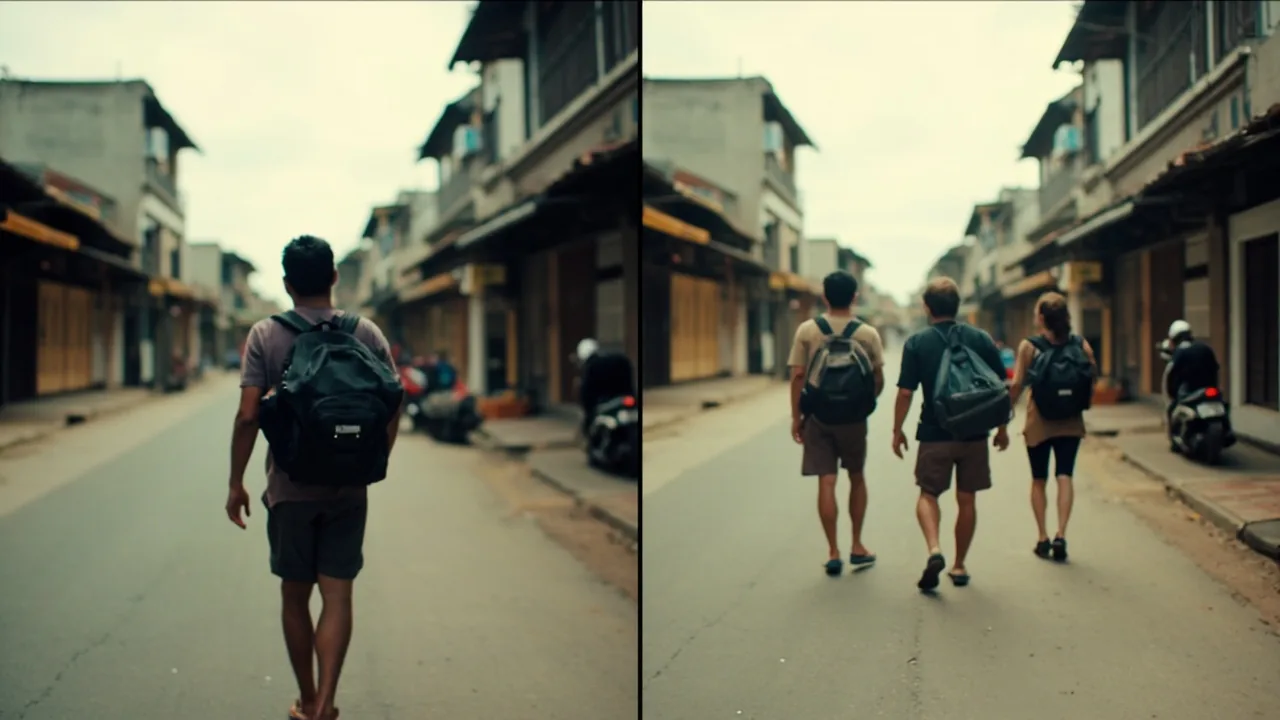
Solo vs Group Backpacking Southeast Asia: Which One Is Right for Indian Travelers?
Solo travel vs group travel in Southeast Asia: a 14-day solo trip runs ₹45,000-₹60,000 (~$467.10-$622.80), while an organized group trip runs ₹75,000-₹110,000 (~$778.50-$1,141.80). Pick based on your comfort with planning and how much freedom you want. For related planning, see our guide on Sea Backpacking Hub and Bali vs Se Asia.
I’ve watched plenty of Indian travellers land in Bangkok or Hanoi with one backpack and a return ticket, then watch them end up going either way. Some go full solo by day three and love it. Some bail into a group tour within a week and never look back. Both are valid. This guide will help you figure out which one you’ll be before you book the flight. You may also find Backpacking vs Tour useful for this trip.
Quick Answers
| What | Answer | Price (INR) |
|---|---|---|
| Cheapest option overall | Solo (₹18,000-₹22,000 (~$186.84-$228.36)/ ~₹18,000-₹22,000 (~186.84-228.36 USD) for 14 days possible) | ₹18,000 |
| Easiest option for first trip | Group tour (logistics handled) | — |
| Best for vegetarian Indian food | Group (Indian meals usually included) | — |
| Best for total freedom | Solo | — |
| Best way to meet people | Solo at hostels (tie-breaker: group trips) | — |
| Safety level for solo Indian women | Both are fine; solo requires more street smarts | — |
Quick Comparison Table
| Factor | Solo Backpacking | Group Trip |
|---|---|---|
| Daily budget (low end) | ₹1,500-2,000/day | ₹3,500-5,000/day |
| Daily budget (mid range) | ₹2,500-3,500/day | ₹5,000-7,500/day |
| Visa for Indians | E-visa for TH/VN/KH, easy | Same visa, agency usually assists |
| Best months | Nov-Feb across SEA | Same, group trips follow season anyway |
| Veg food availability | Harder, Jay restaurants + research | Easy (Indian meals on most itineraries) |
| Safety (solo female) | Fine with hostel + Grab + street smarts | Easier (you travel with 10-15 people) |
| English spoken | Good in TH, VN; basic in LA/KH | Same, but group leader helps translate |
| Flexibility | Total | Low, fixed daily plan |
| Friend-making | Excellent at hostels, mixed in private stays | Forced-friend culture, sometimes intense |
| Best for | Confident, flexible, social introverts who recharge by being alone | First-timers, time-poor travellers, anyone who hates planning |
| Vibe | You set the pace every day | Wake-up calls, group dinners, shared vans |
Choose Solo If…
- You’ve travelled inside India independently and feel comfortable figuring out trains, buses, and cheap hotels on your own. If you can handle an unplanned overnight bus from Manali to Leh, Hanoi to Sapa will feel easy by comparison.
- You’re on a tight budget and want to skip the tour operator markup. The same 14-day Thailand-Vietnam route costs ₹22,000 (~$228.36) solo or ₹55,000 (~$570.90)+ on a group trip, and most of the difference goes to the operator, not the experience.
- You’re a light packer who wants the freedom to stay three extra nights in Pai because you like it, then skip Hoi An entirely because the weather turned.
- You like meeting strangers and find group-size outings draining. Solo travellers at hostels are approachable in a way 12-person-group dinners never are. See also: Grab vs Tuk Tuk.
Choose a Group If…
- This is your first international trip and the word “visa” makes you nervous. Most group trip operators handle the visa invitation letter, the airport pickup, the SIM card, and the SIM registration. You show up with a passport.
- You want Indian food covered. Operators that run SEA loops know where the legit veg thalis are, which restaurants in Bangkok and Hanoi use separate utensils for veg prep, and which night markets are safe for veg street food. Solo, you spend hours on Reddit figuring this out.
- You’re female and don’t want to think about solo-female logistics on day one. Travelling with a mixed group of 10-15 young Indians is the easiest way to skip the “is this Grab safe at 11pm” question, at least for the first week.
- You have 7-14 days, not 30. A group trip covers Bangkok, Chiang Mai, Pai, Luang Prabang, Vang Vieng, and Hanoi in two weeks. Solo, that route takes 3-4 weeks if you do it slowly. For related planning, see our guide on Overland vs Flying Se Asia.
Solo Backpacking. Pros and Cons
Pros:
- Cheapest possible version of the trip. You control every rupee. Dorm beds, street food, overnight buses, and self-walking tours add up to a SEA trip that costs less than a week in Goa during peak season.
- Total flexibility. Miss your bus? Take the next one. Don’t like the city? Leave tonight. Found a hidden waterfall you want to spend three days at? Stay.
- Solo travellers at hostels meet more people than group-trip travellers do. Hostel common rooms, walking tours, and pub crawls are specifically designed for one backpackers bumping into each other. A girl from Germany on day 14 of her solo trip will talk to you; a group trip’s group leader has already assigned tables for dinner.
- You build actual travel skills. By day 10, you can negotiate a tuk-tuk, read a bus station timetable, and find an Indian restaurant in a Vietnamese alley by instinct. Group trips shield you from this growth, and the growth is the point for a lot of young Indians.
Cons:
- Decision fatigue is real. Four micro-decisions every hour (where to eat, which bus, which hostel, which side of town to sleep in) wears down even experienced travellers by day 5.
- Safety requires more attention. Solo female travellers, especially first-timers, get hit on more than group travellers do, and Grab scam attempts on solo riders happen often enough that most backpackers have a story.
- You eat alone a lot. Most nights in SEA, especially outside Bangkok and Hanoi, the only vegetarian option at a random street stall is “fried rice, no egg.” Solo, this gets lonely fast.
- Logistics tax. Booking the sleeper train from Bangkok to Chiang Mai, then the slow boat from Chiang Mai to Luang Prabang, then the night bus to Vang Vieng, then the bus to Vientiane is a 3-hour spreadsheet job. Get it wrong and you miss a connection in a town without a Google Maps listing for its bus terminal.
Group Trip. Pros and Cons
Pros:
- Zero planning. You pick the trip, you pack, you fly. The rest is the operator’s job: visas, buses, hostels, breakfast, group dinner most nights, and a WhatsApp group for any question that pops up.
- Built-in friend group. The 14 other 22-year-olds on the same bus become your travel crew by day 3. Travellers report the post-trip WhatsApp groups stay active for 6+ months. Solo takes longer to reach the same depth of friendship.
- Indian food handled. A good SEA loop serves a veg thali or paneer dish at most dinners, knows which Chiang Mai restaurant does separate veg kitchens, and pre-checks the night markets for veg vendors. Solo travellers find this out the hard way.
- Faster route coverage. A 14-day group loop covers 6-8 cities; solo, the same route in 14 days is rushed and unenjoyable, especially for first-timers.
Cons:
- Costs 1.5-2x as much. A ₹45,000-₹65,000 (~$467.10-$674.70) group trip covers what ₹22,000-₹30,000 (~$228.36-$311.40) covers solo. The gap is the operator margin, the group dinners, the private vans, the airport transfers, and the guide’s salary.
- Fixed itinerary. If you fall in love with Hoi An and want to stay three extra days, you can’t. The bus is leaving with or without you. Solo, you skip Hoi An if it’s raining and stay in Da Nang for the beach.
- Forced-friend vibes. Twelve people eating dinner together every night, doing the same tour every morning, is intense for anyone who recharges alone. Solo travellers who choose a group for friend-making often realize they made 3 close friends and 9 acquaintances.
- Skip-the-line culture. Group trips improve for “see the highlights,” not “stay long enough to love a place.” You’ll see Halong Bay; you won’t kayak into a quiet corner of it at 6am.
Cost Comparison
Solo daily costs and group trip costs (the typical organized 14-day Thailand-Laos-Vietnam loop). Solo prices reflect real backpacker budgets at standard hostels and street food. Group trip prices are all-inclusive except flights and insurance.
| Expense | Solo (₹) | Group Trip (₹) |
|---|---|---|
| Dorm bed / shared room (per night) | ₹900 (~9.34 USD) | Included |
| Street food meal | ₹80-₹180 (~$0.83-$1.87) | Included (mostly) |
| Restaurant meal | ₹350-₹700 (~$3.63-$7.27) | Included (group dinners) |
| Local transport (per day) | ₹250-₹500 (~$2.60-$5.19) | Included |
| SIM card (tourist) | ₹855 (~299 THB or ~$8.87 USD) | Usually included |
| Visa fee (Thailand + Vietnam, total) | ₹2,500 (~$25.95) | Often included |
| Top activity (one-day tour, e.g. Chiang Mai) | ₹1,500-₹2,500 (~$15.57-$25.95) | Included |
| Beer (per drink) | ₹130-₹200 (~$1.35-$2.08) | ₹200-₹400 (~$2.08-$4.15) |
| International flight DEL-BKK | ₹18,000-₹25,000 (~$186.84-$259.50) | Same |
| 14-day total (budget) | ₹45,000-₹60,000 (~$467.10-$622.80) | ₹75,000-₹110,000 (~$778.50-$1,141.80) |
| 14-day total (comfortable) | ₹70,000-₹90,000 (~$726.60-$934.20) | ₹1,10,000–₹1,50,000 (~$1,139.70–$1,554.00) |
Exchange rate at time of writing: 1 THB ≈ ₹2.87, 1 VND ≈ ₹0.0037, 1 LAK ≈ ₹0.0043, 1 USD = ₹96.53.
The gap shrinks once you add in comfort-ups (private rooms, nicer tours, more Western meals) to a solo trip, but for a like-for-like “see the same places, same duration” comparison, group trips cost roughly 1.6x what solo costs. Solo can also drop lower than the budget line if you stay in 8-bed dorms, eat only street food, and use sleeper buses for transport.
The Bananarchy Take
If you’re a confident first-time international traveller who has done independent trips inside India, go solo for your first SEA trip. The hostel culture in Bangkok, Chiang Mai, Hanoi, and Vientiane is set up for one travellers, the English level is high enough that you can get through the trip with zero local language, and the hostel common rooms make friends for you. You will save ₹30,000 (~$311.40)+ and you’ll learn more travel skills in 14 days than a semester of YouTube prep could teach you.
If you’re a first-timer, female, time-poor, or hate planning, go with an organized group for your first trip and switch to solo for the second one. The group experience gets you past the “I don’t know how to take a sleeper bus” hump, and by the second trip you’ll have enough SEA comfort to go independent.
The one option I’d skip: a “group of friends” going together. Travelling with friends in SEA works only if every friend handles early-morning buses, cheap food, and limited private space well. If even one person in your friend group is a slow riser, you’ll be on different schedules by day three and resent it by day seven. Either go fully solo or go with an organised group of strangers; the middle option is the most common cause of trip-ruining fights.
Getting Connected
SEA’s SIM situation is similar solo or group: buy a tourist SIM at the airport or any 7-Eleven in Thailand, Vietnam, Cambodia, and Laos. Operators are AIS Thailand, Viettel Vietnam, Smart Cambodia, Unitel Laos. A 7-15 day 4G data pack runs ₹855 (~299 THB or ~$8.87 USD), about ₹734 (~200,000 VND or ~$7.62 USD), and ₹482 (~5 USD). Buy at the airport if it’s your first night, at any 7-Eleven from day two onwards.
For one-trip travellers who don’t want to swap physical SIMs every border, an eSIM works across all four countries on a single plan. Get Nomad eSIM and pick a SEA regional plan before you fly out from Delhi.
Can You Do Both?
Yes, and the most common pattern is “group first, solo extension after.” Fly into Bangkok, do a 10-day group loop through Chiang Mai, Pai, and overland to Chiang Rai, then peel off and solo-traveller your way back down through Sukhothai, Ayutthaya, and Khao Yai for 4-5 days before flying home. This gives you the visa/bus/lodging handling for the new-country parts and the flexibility of solo for the places you want to slow down in.
The reverse (solo first, group extension) doesn’t work as well, because you’ll have already burned your best photo ops and best dorm days on solo. Most solo travellers who switch to group mid-trip end up wishing they’d just kept doing solo.
A combined 21-day trip (7 group, 14 solo) costs roughly ₹90,000-₹120,000 (~$934.20-$1,245.60) all-in from Delhi, versus ₹60,000-₹80,000 (~$622.80-$830.40) for 21 fully solo days. Premium for the group week: ₹15,000-₹25,000 (~$155.70-$259.50).
FAQ
Is solo travel cheaper than group travel in Southeast Asia? Yes, by a wide margin. A 14-day solo trip runs ₹45,000-₹60,000 (~$467.10-$622.80) budget; the same trip on an organized group runs ₹75,000-₹110,000 (~$778.50-$1,141.80). Most of the difference is operator margin, private transport, and paid guide time.
Is solo travel in Southeast Asia safe for Indian women? Yes, with the same street smarts you’d use in Delhi at 11pm. Stick to well-reviewed hostels in city centres, use Grab instead of walking alone at night, dress modestly at temples, and avoid the seedier stretches of Khao San Road and Walking Street after midnight. Most solo Indian women travellers report zero serious incidents. Travellers who joined group trips for their first SEA trip cite this as the main reason.
Can you meet people as a solo traveller in SEA? Easily. Hostels in Bangkok, Chiang Mai, Hanoi, and Vientiane run nightly social events, walking tours, and group dinners. On any given day you’ll meet 5-10 other solo travellers in your dorm, at breakfast, or on the free walking tour. The “solo is lonely” Reddit fear is mostly unfounded for hostel-age travellers (18-35) in the main SEA backpacker towns.
Should I go solo or with friends for my first SEA trip? Solo, unless your friend group has done group travel together before. Most friend groups that travel internationally together for the first time break down by day 5-7 over small things: wake-up time, budget, drinking pace, food preferences. Solo, you never have to compromise. If you want company, a group trip with strangers has a 90% friend-making success rate, and you don’t have to see them again if it doesn’t work.
How old are solo travellers in Southeast Asia? Most solo travellers you’ll meet are 21-32. Hostels skew younger (21-26), private-stay travellers skew slightly older. Both solo and group trip demographics in SEA lean 22-30 if you’re going with an organized operator.
Do I need to speak English to travel solo? Yes, basic English is required. Outside Bangkok, Hanoi, HCMC, and Singapore, English drops to hit-or-miss. In Laos and rural Cambodia, your Google Translate camera scanner does most of the work. Group trips have guides who translate, which helps here.
Subodh’s Take
I’ve seen first-time solo travellers turn into year-two SEA addicts, and I’ve seen solo-veterans finally try a group trip and love it. The honest answer is that solo and group aren’t opposites, they’re the next two trips in your travel career. Go with whichever one you’ll book this month. The trip you take beats the trip you keep planning.
