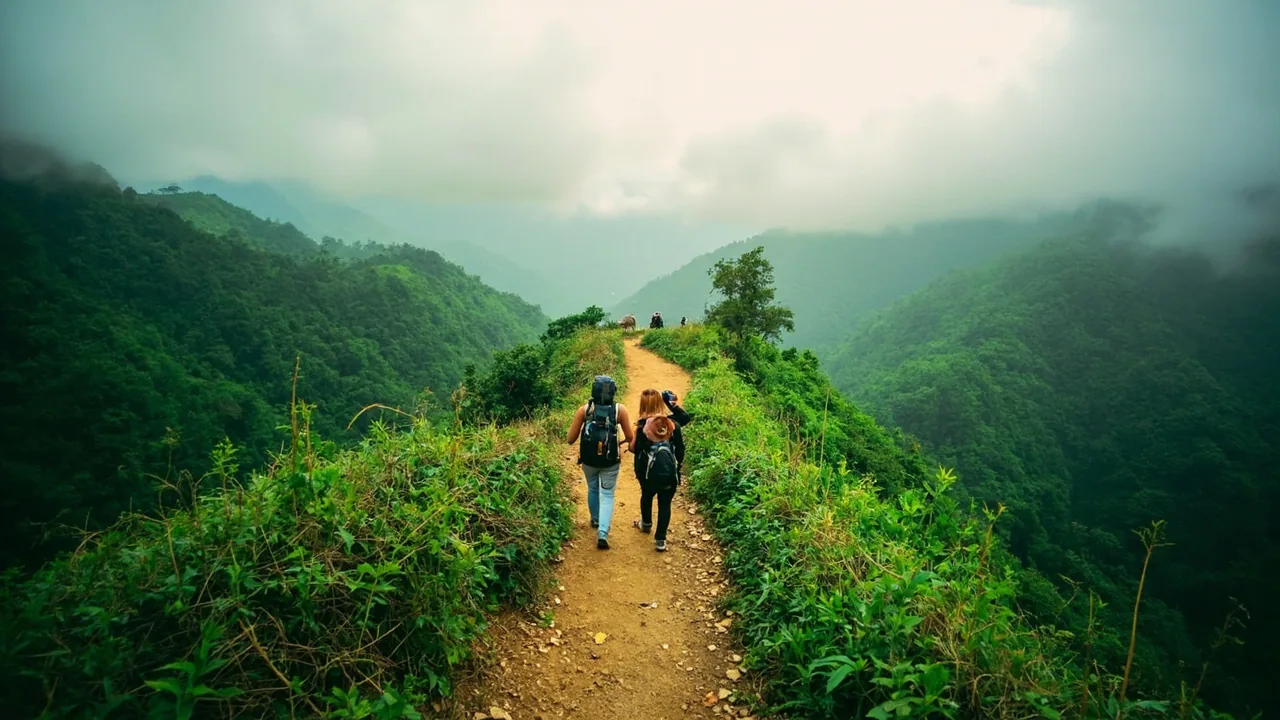
Best Trekking Trails in Southeast Asia: Routes, Seasons & Costs
The best trekking in Southeast Asia spans six countries and four different ecosystems. Rice terraces in Vietnam’s far north, misty limestone in Laos, cloud-forest ridges in northern Thailand, jungle summits in Bali and Lombok, and volcanic ridge traverses in the Philippines. Done right, three or four of these routes can fit into a one-month loop from Bangkok or Hanoi without breaking the budget. Done wrong, you turn up in monsoon, pay tourist-trap prices, and walk away thinking trekking here is overhyped. This guide covers the routes worth flying for, the months each one is in season, and what each costs on the ground. For related planning, see our guide on Sea Backpacking Hub.
What Is Trekking in Southeast Asia?
Trekking in Southeast Asia usually means multi-day walking through rural landscapes with a local guide and porters, sleeping in homestays or tents, and covering between 10 and 25 kilometres per day. Homestay treks are the most common format: you walk village to village, eat what the family eats, and sleep on a roll-out mattress under a mosquito net. Tea-house-style mountain lodges do exist in northern Vietnam and on Bali’s Mt Rinjani, but the region leans much more heavily on homestays than the Himalayas or the Andes. Distances, altitudes, and costs are also smaller. A 2-day trek in Sapa costs less than a single day’s wages at home.
Quick Answers
| What | Answer | Price (INR) |
|---|---|---|
| Cheapest famous trek | Sapa 1-day (hostel group, Vietnam) | ₹1,200-₹1,800 (~$12.46-$18.68) |
| Best value multi-day | Sapa 2D/1N homestay, full board | ₹3,500-₹5,500 (~$36.33-$57.09) |
| Bucket-list pick | Mt Rinjani 3D/2N summit, Indonesia | ₹9,500-₹13,000 (~$98.61-$134.94) |
| Best season for most SEA treks | Nov to Mar (dry, cool) | , |
| Rainy season to avoid | Jun to mid-Oct in most of SEA | , |
| Best trek for beginners | Doi Inthanon day trek, Thailand | ₹1,200-₹2,000 (~$12.46-$20.76) |
| Most challenging | Mt Kinabalu via ferrata, Malaysia | ₹12,500-15,000 |
All conversions use the current rate at time of writing: 1 USD = ₹96.5. Multi-currency equivalents appear on screen after the price.
How to Pick the Right Trek
Three filters decide what makes sense for you: season, fitness, and how much of your trip budget you’re willing to spend on a single activity. Indian backpackers tend to underestimate the season filter and overestimate the fitness filter, then blame the weather.
Filter 1: Season
The single biggest mistake is rocking up to Sapa or Rinjani in July and expecting the views. Southeast Asia has two broad trekking windows:
- November to March: the dry, cool season across most of mainland SEA. Northern Vietnam, Laos, and northern Thailand are at their best. Mornings are cold at altitude (5-10°C in Sapa in December), days are clear.
- April to October: this is when Bali, Lombok, and parts of the Philippines shine. The Indonesian dry season runs roughly June to September, overlapping with the worst mainland rains.
Subodh’s Pro Tip: If your only travel window is May or June, default to Indonesia. If it’s December or January, default to Vietnam or Thailand.
Filter 2: Fitness
Most SEA treks are rated easy to moderate, with two exceptions: Mt Kinabalu in Malaysian Borneo and the summit night on Mt Rinjani. Both involve 1,500-1,800m of vertical gain in a single push, with Rinjani’s summit night starting at 2 AM. Anyone who walks 5 km at home without getting winded can handle Sapa, Doi Inthanon, or Kuang Si Falls. For Rinjani or Kinabalu, do at least a month of stair-climbing before you fly.
Filter 3: Budget
Trekking in SEA is much cheaper than in Nepal or Peru, but the gap between cheap and reasonable is large. Sapa 1-day group treks run ₹1,715-₹2,573 (~600-900 THB or ~$17.81-$26.71)-equivalent; private 2-day homestays run ₹7,147-₹11,436 (~2,500-4,000 THB or ~$74.19-$118.70)-equivalent. Rinjani 3D/2N licensed treks start at ₹18,830 (~3,500,000 IDR or ~$195.46). Anything suspiciously cheap is unlicensed, uninsured, and often unsafe.
The 6 Treks Worth Flying For
This is the shortlist, not a ranked list. Each entry below is a route I think an Indian backpacker should pick for a specific reason. Costs are in the local currency on the ground; multi-currency equivalents expand at the conversion layer.
1. Sapa, Vietnam: Rice Terraces and Homestays (2D/1N or 3D/2N)
The classic. Hmong and Red Dao villages, terraced rice fields that flood in May and turn gold in September, and overnight stays in family homes with home-cooked meals. Most travellers do 2 days 1 night out of Sapa town. The 3-day version reaches more remote villages and costs only marginally more.
- Season: March to May (water-flooded terraces, bright green), or September to early November (harvest gold). Avoid July-August (heavy rain, leeches) and December-February (cold and foggy at altitude).
- Cost: ₹5,508-₹9,180 (~1,500,000-2,500,000 VND or ~$57.17-$95.29) for a 2-day 1-night homestay trek including guide, porters, meals, and homestay. Cheap group options start at ₹2,938 (~800,000 VND or ~$30.49).
- Logistics: Sleeper bus or train from Hanoi. Book through hostels in Hanoi or directly with a Hmong-run operator in Sapa town.
Safety Alert: Always book through a registered Vietnamese operator. Several unregistered agencies have been fined or shut down in recent years. Your hostel in Hanoi can usually point you to a vetted list.
2. Mt Rinjani, Lombok, Indonesia: 3-Day Summit Trek
The single best mountain experience in Indonesia. A 3-day 2-night route climbs to the summit (3,726m), drops into a crater lake, and finishes through tropical forest to the trailhead. The summit push starts at 2 AM and reaches the rim for sunrise over Bali and the Gili Islands.
- Season: April to December. Closed most of January-March for the rainy season and trail restoration. The park service (TNGR) checks the closure calendar every year.
- Cost: ₹18,830-₹26,900 (~3,500,000-5,000,000 IDR or ~$195.46-$279.22) for a licensed 3D/2N trek including guide, porters, tent, food, and park fees. Summit-only 2D/1N starts at ₹13,450 (~2,500,000 IDR or ~$139.61).
- Logistics: Fly into Lombok (Praya, LOP) from Bali. Operators arrange pickup and drop-off. Book at least two weeks ahead in July-August.
3. Doi Inthanon, Northern Thailand: Day Trek
Thailand’s highest point (2,565m) and the easiest “real” trek in the country. A popular 8-12 km day route climbs through Hmong and Karen villages, past waterfalls, and along a ridge with views to Chiang Mai on clear days. Most operators pick you up from Chiang Mai at 6 AM and drop you back by 7 PM.
- Season: November to February (cool, dry). March-April is burning season in northern Thailand; smoke from slash-and-burn agriculture can reduce visibility to under 50m. Avoid.
- Cost: ₹2,287-₹4,288 (~800-1,500 THB or ~$23.74-$44.51) per person in a group of 6-10. Private treks run ₹7,147-₹11,436 (~2,500-4,000 THB or ~$74.19-$118.70).
- Logistics: Minivan from Chiang Mai (2 hours). Operators handle transport.
4. Kuang Si Falls and Hmong Villages, Luang Prabang, Laos: Day Trek
Less famous than Sapa but the same kind of rice-terrace walking, with limestone karst scenery and a stunning waterfall finale. The typical route starts at a Hmong village 12 km outside Luang Prabang and finishes at the turquoise pools of Kuang Si.
- Season: November to March (dry, cool). Trails get muddy from June to September.
- Cost: ₹859-₹1,503 (~200,000-350,000 LAK or ~$8.92-$15.60) per person including transport, guide, and Kuang Si entry. A cheaper DIY version using the Luang Prabang-Kuang Si minibus plus an arranged local guide runs ₹558-₹859 (~130,000-200,000 LAK or ~$5.80-$8.92).
- Logistics: Book through any guesthouse in Luang Prabang. The minibus to Kuang Si is easy to jump on independently.
5. Mt Kinabalu, Sabah, Malaysia: 2-Day Summit + Via Ferrata
The highest peak in Malaysia (4,095m) and one of the few places in SEA where you can climb with a via ferrata afterward (the world’s highest via ferrata, certified). The summit push starts at 2 AM from Laban Rata resthouse. The via ferrata adds a half-day of climbing on permanent steel cables fixed to the rock face.
- Season: February to April, or July to August (dry windows). The mountain is climbable year-round but rain and slippery rock are real risks outside those windows.
- Cost: ₹28,273-₹42,410 (~1,200-1,800 MYR or ~$293.48-$440.21) total including park permit, guide, hut, meals, and via ferrata (if added).
- Logistics: Fly into Kota Kinabalu (BKI), then 2 hours by bus or minivan to Kinabalu Park HQ. Permits must be booked 4-6 months ahead during peak season.
6. Banaue and Batad Rice Terraces, Philippines: Day or 2-Day Trek
The “eighth wonder of the world.” The Ifugao people have carved these terraces into the Cordillera mountains over 2,000 years. The 2-day trek from Banaue to Batad, then back over the saddle to Bangaan, is the most rewarding route in the country. Fewer tourists than Sapa, more authentic villages.
- Season: March to June (dry). Avoid July-October (typhoon risk, landslides).
- Cost: 1,500-3,000 PHP for a 2-day 1-night trek with a local Ifugao guide. 1,000-1,800 PHP for a Batad day walk from Banaue.
- Logistics: 9-hour bus from Manila to Banaue. Or fly to Cauayan, then 4-hour van. Most operators pick up at your Banaue guesthouse.
Step-by-Step: How to Plan and Book Any of These Treks
- Pick the country by season, then pick the trek. November-March is your window for Vietnam, Laos, Thailand. April-December is your window for Indonesia and the Philippines. If your travel dates are fixed, the country picks itself.
- Set your daily budget ceiling. Multi-day treks usually mean one or two fewer hostels and meals in the city. Calculate ₹7,147-₹20,012 (~2,500-7,000 THB or ~$74.19-$207.73)-equivalent per trekking day on top of your normal daily budget.
- Book a licensed operator. In Vietnam, that means a tour company registered with the local Sapa/Lai Chau tourism office. In Indonesia, it means an operator on the TNGR list for Rinjani. In Malaysia, only Sutera or Mountain Torq are licensed for Kinabalu. Avoid any operator who won’t show you their permit.
- Confirm what’s included. Every legitimate trek price includes guide, meals, accommodation, and park fees. If porter is included, that’s a bonus for 3D/2N routes. Insurance is rarely included; cover yourself separately.
- Train lightly before you fly. 30 days of daily 30-minute stair walks is enough for Sapa, Doi Inthanon, and Kuang Si. For Rinjani summit or Kinabalu, add 60 minutes and one longer 10-km weekend walk.
- Pack correctly. See the packing list guide. The non-negotiables: broken-in trekking shoes (not new ones), rain jacket, headlamp, dry bag, refillable water bottle, and quick-dry layers.
- Get insurance. Standard travel insurance usually excludes mountain trekking above 3,000m. Rinjani summit and Mt Kinabalu both cross that line. Buy a policy that explicitly lists the mountain.
- Bring cash. Most treks in SEA are cash-only on the day. ATMs are rare in villages; your last stop before the trailhead is your last chance to withdraw.
See best trekking in Southeast Asia tours on GetYourGuide
Common Mistakes Indians Make
- Trekking in the wrong month. The number one error. If you go to Sapa in July, the terraces are lush but the trail is leech-infested and fogged out. If you go to Rinjani in February, the trails are closed. Match season to country.
- Booking through unverified Instagram operators. Several Thai and Vietnamese Instagram pages run “pop-up” treks with no insurance, no licensed guides, and no fallback if a guest is injured. Book through a hostel that has booked the same operator ten times, not a stranger on DM.
- Underestimating summit nights. Rinjani and Kinabalu both start at 2 AM. You’ll be hiking 4-6 hours in the dark on cold, steep ground. People who skip prep turn around 200m from the summit. Be honest about your fitness.
- Skipping travel insurance. Most Indian travellers carry a ₹1,000/year domestic policy thinking it covers overseas. It doesn’t. You need a policy that covers trekking up to 6,000m and includes helicopter evacuation. Without it, a Rinjani rescue can run ₹200,000 (~$2,076)+.
- Wearing new shoes. Sounds obvious. Indian travellers show up to Sapa with brand-new hiking boots and get blisters on day one. Break them in for at least 10 km before the trip.
What Most Guides Don’t Tell You
- Rinjani summit is closed most years from January through March, sometimes into April. The trail gets badly damaged by rain and the park service does emergency restoration. Operators will still take bookings for those months, but you’ll only get to the crater rim, not the actual summit. Check the TNGR calendar before booking flights.
- Sapa in December-February is genuinely cold. The town sits at 1,600m and nighttime temperatures drop below 5°C. Indian travellers packing for “Southeast Asia tropical weather” freeze on homestay mattresses with one thin blanket. Pack a fleece and long underwear.
- Mt Kinabalu permits sell out 4-6 months ahead for the March-April and July-August peaks. If you book a flight to Kota Kinabalu first and try for a permit after, you’ll likely find nothing. Reverse the order: book the permit, then the flight.
- Most Sapa and Rinjani operators include “all meals” but mean basic rice and vegetables. Indian vegetarians get fed adequately but boringly. Bring protein bars and snack mix if you’re picky about quantity.
- Leeches in the Sapa lowlands from May to October. Salt and a small torch solve most encounters. Don’t wear open sandals.
Subodh’s Pro Tip: Book your trek through the hostel where you’re staying, not through an online aggregator. Hostels use the same operator repeatedly, so if something went wrong last month, they’ll know. Aggregators have no idea which operator showed up.
Getting Connected: SIM and eSIM
Trek routes in SEA pass through villages with poor or zero signal. Don’t expect 4G on the trail. AIS in Thailand, Viettel in Vietnam, Indosat in Indonesia, and Globe in the Philippines all sell 7-15 day tourist SIMs at airports for ₹858-₹2,001 (~300-700 THB or ~$8.90-$20.77)-equivalent with 15-50 GB. If you’d rather skip the airport queue, an eSIM works in your phone before you land. Get Nomad eSIM covers Thailand, Vietnam, Indonesia, and the Philippines in one bundle.
FX and Daily Budget
At current rates, 1 USD = ₹96.5. That means 1,000 THB ≈ ₹2,869 and 1,000,000 VND ≈ ₹3,700 (~$38.41). A standard backpacking day in mainland SEA runs ₹2,500-₹4,000 (~$25.95-$41.52) including hostel, food, and transport. A trekking day runs ₹3,500-₹6,500 (~$36.33-$67.47) once you add the guide, porter, and meals-on-the-trail. The cheapest route on this list (Doi Inthanon day) costs less than a single night’s hostel in Bangkok.
For the bigger picture on spending, see the Southeast Asia trip cost from India breakdown.
Subodh’s Take
Six treks is the right number for this list. Sapa and Rinjani cover 80% of backpacker demand. The other four fill specific gaps: Doi Inthanon for Thailand-bound travellers who only have one day, Kuang Si for Laos-loop travellers, Kinabalu for the Malaysia Borneo side, and Batad for Philippines-Cordillera. If you only have time for two, do Sapa and Rinjani in opposite seasons. They’re the same standard of scenery as Nepal’s Annapurna base camp, at less than half the price.
FAQ
Which is the cheapest famous trek in Southeast Asia? The Doi Inthanon day trek in northern Thailand at around ₹2,287-₹4,288 (~800-1,500 THB or ~$23.74-$44.51) per person in a group. It includes lunch, transport, and a licensed guide. The trade-off is shorter distance and less dramatic scenery than Sapa or Rinjani.
What is the best trekking season for most of Southeast Asia? November to March covers mainland SEA (Vietnam, Laos, Thailand, Cambodia) and overlaps with the start of the Indonesian dry season. For Indonesia and the Philippines specifically, April to September is the cleaner window.
Do I need trekking experience to do these routes? Not for Sapa, Doi Inthanon, Kuang Si, or Batad. Basic walking fitness is enough. For Rinjani and Kinabalu summit pushes, you need at least two months of regular cardio and ideally one test hike over 10 km with 800m of gain.
Are these treks safe for solo female travellers? Yes, with normal precautions. Homestay-based treks (Sapa, Kuang Si, Batad) are family-run; you’ll sleep in the family home. Group treks on Doi Inthanon, Rinjani, and Kinabalu keep you with a guide and 4-10 other trekkers at all times. Standard advice: read the solo female travel Southeast Asia guide before you go.
Should I book the trek online before I arrive or in person? Book in person once you’re in the country. Most operators don’t require a deposit and you’ll pay 10-20% less without the aggregator layer. The exception is Mt Kinabalu, which requires advance online booking 4-6 months ahead due to permit quotas.
What about the rainy season in Southeast Asia? June to mid-October across mainland SEA, with regional variations. Northern Vietnam is wettest in July-August; Bali and Lombok are wettest in November-March. Check the Vietnam peak season guide and the rainy season guide if your travel window is locked.
Do I need a permit for these treks? Sapa, Doi Inthanon, Kuang Si, and Batad: no individual permit, your guide handles registration. Rinjani and Mt Kinabalu: yes, park service issues a permit linked to your guide, often booked weeks or months ahead.
