Beyond Angkor: Ethical Cambodia for Indian Travelers (2026)
The most rewarding ethical experiences Cambodia offers sit east of Phnom Penh: ethical elephant sanctuaries in Mondulkiri, wild Irrawaddy dolphins on the Mekong at Kratie, and the Kampot pepper crab market in Kep. This guide covers all three. For related planning, see our guides on Sea Backpacking Hub and Siem Reap.
Quick Answers
| What | Answer | Price (INR) |
|---|---|---|
| Phnom Penh to Mondulkiri (Sen Monorom) | Giant Ibis or Mekong Express minivan, 8-9 hrs | ₹2,900 (~115,000 KHR or ~$30) |
| Ethical elephant sanctuary visit in Mondulkiri | Choose an observation-only program with no riding, bathing, or performances | — |
| Phnom Penh to Kratie | Minivan via Mekong Express, 6-7 hrs | ₹2,320 (~92,000 KHR or ~$24) |
| Irrawaddy dolphin viewing near Kratie | Confirm current regulated viewing options locally and observe from a distance | — |
| Phnom Penh to Kep | Bus or minivan, ~3 hrs | ₹1,450 (~58,000 KHR or ~$15) |
| Sihanoukville verdict | Skip it for 2026 (see below) | — |
The Three Off-Radar Trips From Phnom Penh
These three are independent of each other. Pick one, two, or all three based on how many days you have after Angkor. They don’t chain into a single loop, so I’d recommend picking one base and doing it as a side trip from Phnom Penh rather than trying to string them together.
Trip 1: Mondulkiri and the Ethical Elephant Question
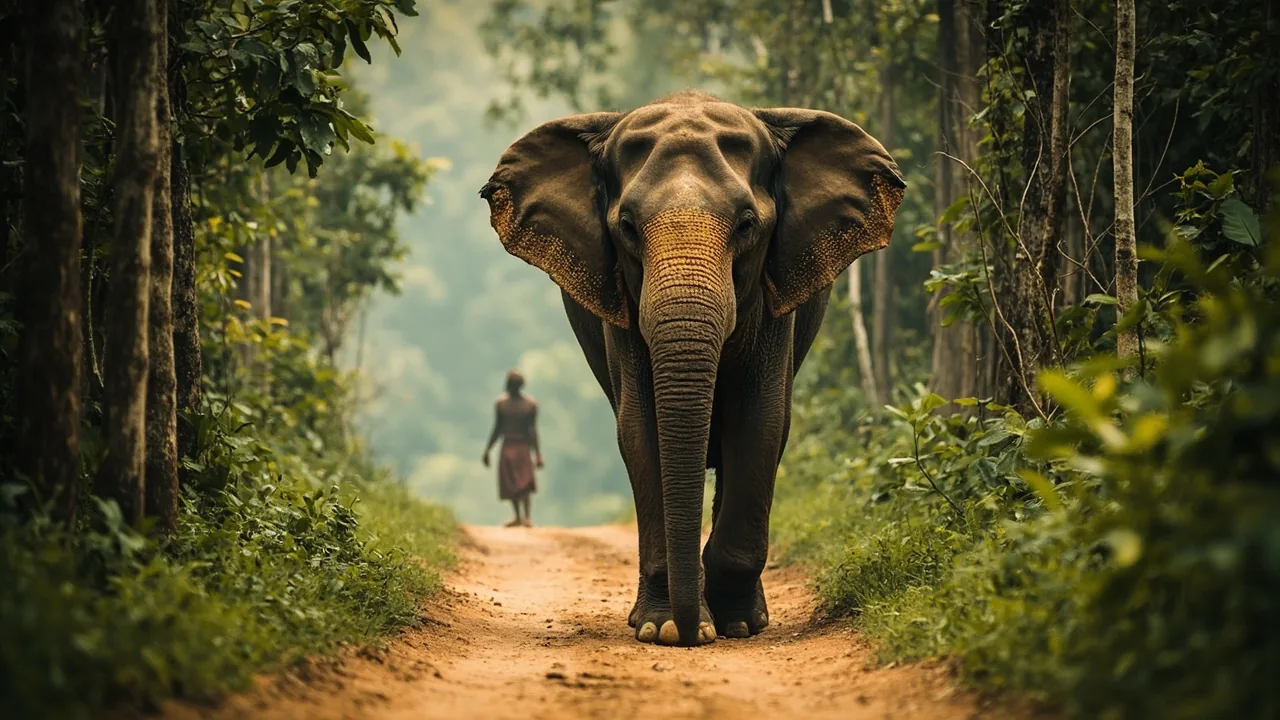
The hilly Mondulkiri province is eight to nine hours east of Phnom Penh, into red-earth country that looks nothing like the rest of Cambodia. Indian travelers come here for ethical elephant sanctuaries. Choose observation-only programs that prohibit riding, bathing, performances, and forced contact, and verify current welfare practices before booking.
What you do there: reputable observation-only programs typically involve guided forest walks where visitors watch elephants from a distance. Program lengths and inclusions vary, so confirm current schedules, prices, group sizes, and welfare policies directly before booking.
Booking: compare current sanctuary programs before reaching Sen Monorom, especially in the November-to-February high season. Ask each operator to explain its no-riding, no-bathing, no-performance, and no-forced-contact policies before paying.
How to get there: Phnom Penh to Sen Monorom town is 8-9 hours by minivan. Book on 12go. Giant Ibis and Mekong Express both run this. Tickets run around ₹2,896 (~30 USD). Sections of the road remain rough, and the last stretch into Sen Monorom can still be slow after rain.
From Sen Monorom town, confirm your chosen sanctuary’s meeting point and transfer arrangements before booking; locations and travel times vary by program.
Where to stay in Sen Monorom: Travellers report a handful of basic guesthouses in town. Book lodging in town and ask your accommodation to confirm current transport options to your chosen sanctuary.
Trip 2: Kratie and the Irrawaddy Dolphins
Kratie is a small Mekong-side town about 6 hours north of Phnom Penh. The draw is a critically endangered population of Irrawaddy dolphins, sometimes called “smiling dolphins” because of their curved mouths, in the Mekong deep pools near Kratie. Population estimates change, so check current conservation reports rather than relying on a fixed count.
What you do: arrange a regulated dolphin-viewing trip after checking current departure points locally. Choose a boat that keeps its distance, limits speed, and cuts the engine near dolphins. Sightings are never guaranteed; calmer dry-season water from December to May can make viewing easier.
Trip length, capacity, and price vary. Confirm all three before paying, and avoid any operator that chases dolphins or promises close contact.
How to get there: Mekong Express minivan, Phnom Penh to Kratie, 6-7 hours, around ₹2,317 (~24 USD). Book on 12go. Buses leave in the morning; allow a full travel day before planning any boat trips.
Where to stay in Kratie: Travellers report a handful of basic guesthouses along the riverfront. Ask your accommodation to confirm current options when you arrive. Dorm beds run around ₹579 (~6 USD), private doubles ₹1,158-₹1,448 (~12-15 USD) where available.
Trip 3: Kep and the Crab Market
Kep is a tiny coastal town 3 hours south of Phnom Penh, originally a French colonial beach resort that the Khmer Rouge emptied and that has spent the last decade slowly coming back. The “Kep National Park” surrounds the town on three sides (jungle hiking trails, free entry), and the famous Crab Market (Psar Krapeu) is the reason most day-trippers come.
What you do: arrive mid-morning, walk the Crab Market on stilts over the sea. Live crabs are picked from the holding pens, weighed, and either cooked for you on the spot or bagged for the trip home. The market also sells fresh fish, prawns, squid, and what the sellers call “sea eggs” (urchins, actually). You pick your live crab, hand it to one of the cooking stations along the boardwalk, pay ₹48-₹95 (~2,000-4,000 KHR or ~$0.49-$0.99) for the cooking, and eat it at plastic tables looking out at the Gulf of Thailand. A 1-kg mud crab runs around ₹596-₹954 (~25,000-40,000 KHR or ~$6.18-$9.88). A plate of Kampot pepper crab, which is what the area is famous for, runs ₹716-₹1,431 (~30,000-60,000 KHR or ~$7.41-$14.83).
The honest take: the crab is the whole point. Don’t come for the beach (the Kep beach itself is small, murky, and lined with abandoned shell buildings from the 1970s), don’t come for nightlife (there isn’t any), come for the morning market and stay through lunch.
How to get there: Mekong Express or Virak Buntham minivan, Phnom Penh to Kep, around 3 hours, ₹1,158-₹1,448 (~12-15 USD). Buses run multiple times a day.
Where to stay in Kep (if you’re overnighting):
Where to stay in Kep (if you’re overnighting): Travellers report a handful of basic guesthouses near the market and along the coast. Local drivers and Crab Market vendors can point you to current options. Budget rooms run around ₹965 (~$10), mid-range closer to ₹2,415 (~$25.02). Many Phnom Penh day-trippers do Kep as a long day and skip the overnight, which is also reasonable.
What to Eat in Cambodia (in These Regions)
Since this guide covers three small towns rather than one big city, I’ll keep the food section short and focused on the regional specialties, with a fallback to Phnom Penh’s Indian and Cambodian restaurants for the days you’re back in the capital.
Must-Try Dishes
- Kampot Pepper Crab (Kep). The dish the region exists for. Fresh mud crab stir-fried with green Kampot peppercorns and garlic. Sweet, peppery, not spicy. Around ₹716-₹1,431 (~30,000-60,000 KHR or ~$7.41-$14.83) at the Crab Market cooking stations.
- Amok (Cambodia-wide). Fish curry steamed in banana leaf with coconut, lemongrass, kaffir lime. Mild and aromatic. Around ₹358 (~15,000 KHR or ~$3.71) at a sit-down restaurant. A few places in Kratie and Kep serve it.
- Num Pang (Cambodia-wide). The Cambodian answer to the Vietnamese banh mi. Grilled meat or pate in a small baguette with pickled veg and chili. ₹119-₹191 (~5,000-8,000 KHR or ~$1.24-$1.98) from street stalls. Sold everywhere.
- Bai Sach Chrouk (Phnom Penh). Pork and rice, the breakfast of the country. Grilled pork over broken rice with pickled veg. ₹119-₹191 (~5,000-8,000 KHR or ~$1.24-$1.98) from morning stalls.
- Samlor Machu Trey (Cambodia-wide). Sweet-and-sour fish soup with tamarind, pineapple, and herbs. Khmer, underrated. ₹239-₹358 (~10,000-15,000 KHR or ~$2.47-$3.71).
- Fresh river fish, salt, lime, and Kampot pepper (Kratie). The simplest thing on any menu and often the best. Mekong fish done this way is a few dollars per dish.
Indian and Veg-Friendly Options
Cambodia’s smaller towns have thin Indian restaurant scenes. Phnom Penh is your best bet for Indian food in any of these trips, both at the start and the end. The three top-rated Indian options on the shortlist:
- Indian Restaurant (Phnom Penh). Basic, cheap, dal-chawal is the safe order.
- Galaxy Indian Restaurant (Poipet). Useful only if you’re crossing the border from Thailand through Poipet, but worth knowing it’s there. Big menu, clean kitchen.
- Saffron Indian Restaurant (Poipet). Same as above, slightly more upscale.
Subodh’s Pro Tip: Indian restaurants in smaller Cambodian towns often run out of fresh paneer by midweek. Phnom Penh is reliable for fresh dairy. For strict-veg days in Kratie or Kep, ask for “sahk joeum ot tiev” (no fish sauce, no shrimp paste, no meat) and stick to stir-fried veg, fried rice, and the Buddhist-noodle stalls.
Pork and Beef Note
Cambodian breakfast (Bai Sach Chrouk) and many Khmer stir-fries use pork. Fish sauce and shrimp paste are in most “non-veg” Khmer dishes as the foundational salt. Strict-veg travelers should default to the Indian restaurants or specifically ask for the Buddhist-vegetarian stalls, which exist but are rare.
What to Do Beyond the Three Trips
If you’ve got extra days and you’ve already done Angkor, Phnom Penh, Siem Reap, and the three trips above, here’s the short list:
- Kampot, 1.5 hours further west from Kep. Riverside town, pepper plantations, caves (Phnom Chhngok), the most laid-back backpacker scene in Cambodia. Worth an overnight. Read more in our Kampot guide.
- Koh Rong. The island off Sihanoukville (more on Sihanoukville below). Short ferry (around 45 minutes to 1.5 hours) from the mainland, real beaches, dorm beds from ₹772 (~8 USD). See our Koh Rong guide.
- Battambang, 5 hours west of Phnom Penh. Colonial town, bamboo train, bat cave at dusk. Often skipped, often regretted.
The Sihanoukville Verdict (2026)
This is the section Indian backpackers Google the most: “Is Sihanoukville still worth visiting?”
Short answer: No, skip Sihanoukville city itself in 2026.
Longer answer: Between 2016 and 2022, Sihanoukville’s downtown was redeveloped almost entirely by Chinese investment. Most of the old backpacker guesthouses, the beach, and the night market were either demolished or absorbed into casino-and-hotel complexes. Travellers who went in 2023 and 2024 reported a city that feels closed in the evenings, has few casual restaurants left, and has a backpacker infrastructure that isn’t there anymore. There’s a useful transport hub and ferry pier, but those work fine as pass-throughs.
Where to go instead: If you want beaches in Cambodia, go straight to Koh Rong or Koh Rong Samloem. The ferries leave from the Sihanoukville port but the islands themselves are a different world: white sand, backpacker hostels, ₹483 (~5 USD) dorm beds, and a night-life scene (especially Koh Rong’s Police Beach area). The ferry ticket is around ₹1,931 (~20 USD) return, and once on the island you don’t have to go back to Sihanoukville city unless your ferry leaves from there.
If you have 24 hours in Sihanoukville waiting for a ferry, stay near the Serendipity Beach area (which is what remains of the old backpacker strip) or at Otres Beach just south. Avoid the casino district.
Getting Connected
Cambodia uses Smart and Cellcard as the main tourist SIM brands. Both have airport counters at Phnom Penh and Siem Reap airports.
- Cellcard tourist SIM (7 days), ₹290 (~3 USD), includes ~10 GB data. Available at airport counters in Phnom Penh and at Cellcard shops.
- Smart tourist SIM (7 days). Similar price, similar data. Smart has better 4G coverage in the eastern provinces (Mondulkiri, Kratie), which matters if you’re heading that way.
Subodh’s Pro Tip: For Mondulkiri, compare current Smart and Cellcard coverage maps before buying. Coverage can weaken outside Sen Monorom, so download offline maps before any forest visit.
WiFi: Hostel WiFi in Cambodia’s small towns is patchy in the afternoons (peak heat, everyone online at once). A local SIM is more reliable than WiFi for navigation, especially for the Kep hike and Mondulkiri jungle treks.
Daily Budget Breakdown (Cambodia Eastern Loop)
| Category | Budget/day |
|---|---|
| Dorm bed | ₹580 (~23,000 KHR or ~$6) |
| Food (3 meals, mostly local) | ₹480 (~19,000 KHR or ~$5) |
| Local transport (tuk-tuk, motorbike) | ₹385 (~15,000 KHR or ~$4) |
| Activities (boat, park entry, etc.) | ₹770 (~30,000 KHR or ~$8) |
| Misc / drinks | ₹385 (~15,000 KHR or ~$4) |
| Total | ₹2,600 (~102,000 KHR or ~$27) |
This is what travellers report spending in Kratie, Kep, and Sen Monorom, not Phnom Penh prices, which are higher. Wildlife-viewing activities are not included because formats and prices vary; confirm current rates before paying.
Visa and Entry Notes
This guide assumes you’re already in Cambodia (Phnom Penh-based), so a quick reminder:
- Visa on arrival: ₹2,896 (~30 USD), available at Phnom Penh, Siem Reap, and Sihanoukville airports. 30-day single entry.
- e-Visa: ₹3,475 (~36 USD), apply at the official portal, avoid queues.
- Extension: ₹4,344 (~45 USD), 30-day extension at the immigration office in Phnom Penh.
For the full Cambodia visa process, see our Cambodia essentials for Indian tourists guide.
Safety Alert: Cambodia is generally safe for Indian travelers, but before booking any trip, check the current Indian MEA travel advisory at mea.gov.in for the latest guidance on land-border regions and any active advisories for Phnom Penh or the coastal provinces. For broader situational awareness, also check the destination’s own government advisory.
Common Mistakes Indian Backpackers Make on These Trips
- Trying to do all three trips in 5 days. You can, technically, but you’ll spend 18 hours on buses and see nothing. Pick two trips max if you’ve got a week, one trip if you’ve got 4-5 days.
- Booking the cheapest “elephant sanctuary” in Sen Monorom. Avoid any program that offers riding, bathing, performances, chains, or forced close contact. Ask about group size and animal-contact rules before paying.
- Exchanging money at the border or airport. The rates in Phnom Penh are better. For Mondulkiri and Kratie, USD is universally accepted, but bring small bills (₹97 (~1 USD)) because change is often unavailable.
- Skipping travel insurance for the “short” trips. The Mekong boat, the Kep coastal road, and the Mondulkiri dirt tracks are exactly where small accidents happen. Insurance is non-negotiable.
FAQ
Is Mondulkiri safe for solo Indian women travelers? Yes, with the standard SEA precautions. Sen Monorom is generally calm, but confirm transport and meeting points with your chosen sanctuary and avoid isolated transfers after dark. Use the same night-travel caution you’d use in any rural Southeast Asian town.
Can I get Indian vegetarian food in Kratie or Kep? No reliable Indian restaurants in either town. Phnom Penh, before and after your trip, is where you’ll find real Indian food. In Kratie/Kep, ask for “sahk joeum ot tiev” (no fish sauce) and stick to stir-fried veg and rice.
How many days do I need for Mondulkiri? Allow at least 3 days, 2 nights for travel from Phnom Penh plus one full sanctuary day. A shorter trip spends too much time in transit.
Is Kep crab market open every day? Yes, every day of the year, but mornings are best (9 AM-12 PM) when the boats have just come in and the live crabs are in the pens. Afternoons are quieter, late afternoons often closing up.
Should I bother with Sihanoukville in 2026? No, skip the city. Use the port as a transit point to Koh Rong.
What’s the cheapest way from Phnom Penh to Mondulkiri? Minivan on Mekong Express or Giant Ibis, around ₹2,896 (~30 USD) one way. There is no cheap local bus option on this route.
Are the Irrawaddy dolphins worth the trip to Kratie? Yes, if you’ve never seen Irrawaddy dolphins anywhere. They’re a unique sighting. No, if you’ve seen dolphins elsewhere and expect a 1-hour “swimming with dolphins” experience. Kratie is observational, not interactive, and that is the point.
Subodh’s Take
Angkor is the reason most Indians go to Cambodia, and it’s a legitimate reason. But the country is at its most rewarding east of Phnom Penh, in three places most travelers never bother to reach: a forest where retired elephants get to be elephants, a Mekong pool with one of the world’s last wild dolphin populations, and a stilted crab market where you point at what you want and it’s on the table ten minutes later. The buses are long, the towns are small, and that’s the point. Cambodia’s off-Angkor experiences reward travelers who trade Angkor’s crowds for a slower pace.