Vietnam Cultural Etiquette 2026: Temple Rules, Selfie Stick Laws & Lantern Festival Guide
This guide to vietnam travel etiquette and customs covers the cues that matter at temples, homes, and markets across the country. None of these are hard rules. They are small cues locals use to read strangers, and once you pick them up, the trip gets twice as rewarding.
Quick Answers
| What | Answer | Price (INR) |
|---|---|---|
| Are selfie sticks legal at Vietnamese temples? | No, they are banned inside most pagodas and temple halls. Guards will ask you to put them away. | ₹0 |
| Shoulders and knees covered at temples? | Yes, both must be covered. Carry a sarong or scarf for unexpected temple visits. | ₹300 (~$3.11) |
| When is the Hoi An Lantern Festival 2026? | The Full Moon Lantern Night falls on the 14th day of every lunar month; check the lunar calendar for 2026 dates. | Free entry |
| Best place to buy bamboo lantern frames in Hanoi? | Hang Be Lane and the night market stalls near Hoan Kiem Lake, around ₹110 (~30,000 VND or ~$1.15) per frame. | ₹112 (~$1.16) |
| How do you greet a Vietnamese elder? | Bow slightly with both hands together in front of chest, addressed as “Ong” or “Ba.” | ₹0 |
The Cultural Basics Every Indian Backpacker Should Know
The Bow, the Two Hands, the “Anh/Chị” Trick
Vietnamese greetings look formal on paper and feel casual in practice. In a temple, a home, or a small shop, the safe move is to press your palms together at chest level and give a small nod. Default to “Anh” for any man under 50 and “Chị” for any woman under 50, “Ong” and “Bà” for elders. It costs nothing and earns a smile at every counter.
Shoes Off, Always
Shoes come off at the door of every temple, pagoda, and most homestays. The threshold is also meaningful: do not step on it. Step over it. Same goes for the cushion in front of a Buddha statue, the mat at a shrine, or the doorway of a war memorial.
Subodh’s Pro Tip: Keep a pair of cheap slip-on sandals by the door of your hostel room so you’re not scrambling every time you visit a pagoda. A ₹110 (~30,000 VND or ~$1.15) pair from any market works.
Head Nods and Pointing
The head is considered sacred. Don’t pat anyone, especially children, on the head. Don’t point with one finger; use your whole hand, palm up, to gesture. These two slip-ups are the most common sources of awkward silences in family-run guesthouses.
Noise and Public Restraint
Vietnam is louder than India on the street but quieter than India inside restaurants, temples, and homes. Inside a pagoda hall, talking above a whisper reads as disrespectful. On the street, haggling is normal but keep your voice warm and use “không” (no) and “rẻ hơn” (cheaper) with a smile.
Tipping and Paying
Tipping is not required in street food or small eateries. In sit-down restaurants with service, a ₹184 (~50,000 VND or ~$1.91) tip for a ₹1,105 (~300,000 VND or ~$11.46) meal is generous. Don’t leave coins on the table; use small notes. For drivers, round up to the nearest ₹37 (~10,000 VND or ~$0.38).
Temple Rules and the Selfie Stick Question
What You Cannot Bring Inside
Most Vietnamese pagodas ban four things: selfie sticks, tripods, loud audio, and pointed shoes (heels can scratch the wooden floors). The selfie stick ban is taken seriously. Temple guards at major sites such as the Temple of Literature in Hanoi, the Marble Mountains near Da Nang, and Buddhist pagodas across the country will ask you to stow your stick in your bag.
What You Must Cover
Shoulders must be covered. Knees must be covered. Both. This is non-negotiable at Buddhist pagodas (such as Tran Quoc in Hanoi or Linh Ung near Da Nang) and Confucian or imperial sites (such as the Imperial City in Hue). At Hindu-influenced Khmer temples such as My Son, the same rule applies with the added requirement that you remove your hat inside the inner sanctuary.
Subodh’s Pro Tip: A thin cotton scarf tucked into your daypack saves you every time. A Vietnamese temple visit is rarely planned; it happens because you walked past a gate. The scarf works as a shoulder wrap in 30 seconds.
What You Should Not Do
- Don’t turn your back to a Buddha statue when posing for a photo. Stand or sit to the side.
- Don’t touch statues, altars, or offerings, especially during prayer.
- Don’t take wedding-style couples photos inside a pagoda hall. Couples shoot outside only.
- Don’t sit with your feet pointing at a Buddha statue or at the monks if they are seated nearby. Tuck them under you.
The Hoi An Lantern Festival: Dates and How to Enjoy It
When It Happens
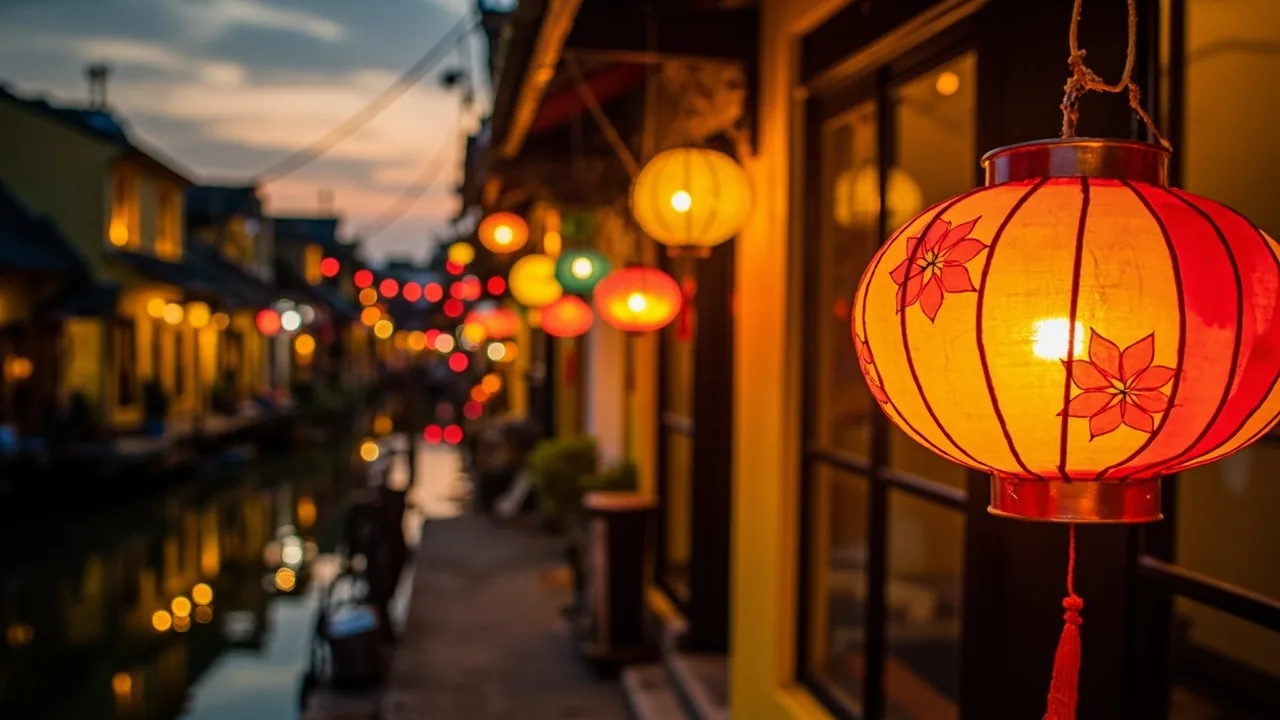
The Full Moon Lantern Night happens on the 14th day of the lunar calendar, once a month. In 2026, the major festival dates fall roughly around late January, late February, late March, late April, late May, late June, late July, late August, and so on. Travellers should check the exact lunar date for their travel month, since Hoi An’s old town switches off its electric lights on these evenings and relies on silk lanterns, candles on the river, and floating paper lanterns. It is the single most photogenic night in Vietnam.
The History Behind the Lanterns
Hoi An was a 16th-century trading port, with Chinese, Japanese, and Vietnamese communities each carrying their own lantern traditions. The silk lanterns you see today are a fusion of these traditions. Vietnamese locals have long associated lanterns with prosperity, family, and the launch of new ventures. Travellers report that floating a lantern on the Hoai River is not just a tourist ritual; many Vietnamese families do it on full moon nights to send prayers or commemorate ancestors.
What to Wear and Bring
Wear light layers. The riverside gets humid and warm, but the temple courtyards can feel cooler after sunset. Wear shoes you can slip off easily. Bring a small waterproof pouch (a zip-lock bag) for your phone. The river gets crowded with floating lanterns and small sampans, and spray is real.
Where to Eat and Drink During the Festival
If you’ve walked the old town all evening, you’ll want a sit-down dinner once the riverside crowds thin. Two reliable local options:
- Hong Hoai’s Restaurant is a family-run spot in Hoi An’s old town serving traditional Vietnamese dishes, including cao lầu noodles that are local to the area. A bowl runs around ₹221 (~60,000 VND or ~$2.29). A bowl runs around ₹221 (~60,000 VND or ~$2.29).
- Vietnamese Soul Food is a casual sit-down spot in Hoi An for travellers who want bánh mì and grilled skewers without navigating the night-market stalls.
For strictly vegetarian food that day, a vegetarian restaurant in town serves simple, fully vegetarian Vietnamese meals at around ₹295 (~80,000 VND or ~$3.06) a plate. Useful on the first and fifteenth of the lunar month, when many Vietnamese Buddhists eat vegetarian for the day.
DIY-Friendly Lantern Context: Where to Buy Frames and What to Know
Why Some Travellers Buy Frames, Not Pre-Made Lanterns
Pre-made silk lanterns run ₹552 (~150,000 VND or ~$5.73) to ₹1,105 (~300,000 VND or ~$11.46) in Hoi An’s old town, sized for carrying home as a souvenir. Travellers who want to do a one-hour DIY workshop at a Hoi An lantern studio usually pay ₹552-₹921 (~150,000-250,000 VND or ~$5.73-$9.55) for materials and instruction. Travellers who want to make their own at home often ask where to source raw materials.
Buying Bamboo Frames in Hanoi
For raw bamboo frames, head to the Hang Be Lane area near Hoan Kiem Lake, or the night-market stalls just north of the lake that sell craft supplies. Bamboo frames run ₹110-₹184 (~30,000-50,000 VND or ~$1.15-$1.91) for a medium-size lantern. For bulk packs of 10 to 20 frames, ask the vendor for “khung đèn” (lantern frames).
For full packing and gear tips before your trip, see our Vietnam packing guide. Bamboo frames run ₹110-₹184 (~30,000-50,000 VND or ~$1.15-$1.91) for a medium-size lantern. For bulk packs of 10 to 20 frames, ask the vendor for “khung đèn” (lantern frames).
For silk fabric, the same vendors stock pre-dyed silk squares, usually ₹92-₹147 (~25,000-40,000 VND or ~$0.96-$1.53) for a 50 cm square.
For glue and basic wiring, any craft or stationery shop in Hanoi’s Old Quarter will set you back around ₹74 (~20,000 VND or ~$0.76) for a tube.
LED Safety Note
Travellers who want a brighter, safer alternative to candles should use battery-operated LED tea lights. The 7-Eleven and Circle K near Hoan Kiem Lake stock them for around ₹92 (~25,000 VND or ~$0.96) a packet of three. Real candles in lanterns are a fire risk; LED is fine and accepted at most Hoi An workshops.
Safety Alert: A traditional candle lantern with a paper or silk shade is a small fire hazard. Keep it on a stable, non-flammable surface, away from curtains and dangling fabric.
Behavioural Cues Locals Will Read
Body Language in Religious Spaces
In a pagoda or temple, keep your voice low, your hands at your sides, and your head slightly bowed when walking past worshippers. Don’t block anyone who is praying. If a ceremony is in progress, wait at the edge until it ends before entering further. Monks and temple staff almost never say “don’t come in” out loud; they just look at you with a kind face and the cue is clear.
In Homes and Family-Run Stays
When you visit a Vietnamese home or homestay, the host will offer you tea first. Wait for them to pour. If they offer you the seat facing the altar, take it; that is the honoured guest seat. Bring a small gift if you’re staying with a family: fruit, sweets from your hometown, or a small souvenir from India.
In Markets and Bargaining
Bargaining is normal for clothing, souvenirs, and tourist goods. Food has set prices. A safe opening offer is 50% of the asking price, with a final price around 70%. Use a smile. Aggressive bargaining often ends with the vendor walking away, and you’ll have lost both the item and the chance to return to that stall tomorrow.
Quick Rules of Thumb
| Situation | Do | Don’t |
|---|---|---|
| Entering a pagoda | Remove shoes at the door. Bow slightly to the main altar. | Don’t point feet at the Buddha. Don’t use a selfie stick. |
| Meeting an elder | Press palms together, nod, address as “Ong”/“Bà.” | Don’t pat the head. Don’t address by first name. |
| At a family meal | Wait for the host to invite you to eat. Use both hands when pouring drinks. | Don’t stick chopsticks upright in rice. Don’t pass food with one hand. |
| Photographing people | Ask first, smile, show them the photo. | Don’t photograph altars, monks, or funeral processions without permission. |
| Receiving a gift | Receive with both hands. Wait to open it later. | Don’t open it in front of the giver. |
| Haggling in a market | Smile, offer 50%, settle near 70%. | Don’t raise your voice. Don’t insult the goods. |
Subodh’s Pro Tip: When in doubt, copy the person next to you. Vietnamese tourists at a temple are doing it right; if they remove their shoes and shoulder-covering before walking in, you should too.
What to Pack for an Etiquette-Heavy Trip
A few items save the day more than any temple-specific guidebook:
- A light cotton scarf or sarong (around ₹92 (~25,000 VND or ~$0.96) from any Hanoi market, or bring one from India).
- Slip-on sandals with closed toes for pagoda floors.
- A small reusable tote for shoe storage at temples.
- A spare zip-lock bag for phones during lantern festivals.
- A small notebook of key Vietnamese phrases: “Xin chào,” “Cảm ơn,” “Không,” “Rẻ hơn.”
Packing smart also matters for electronics. Vietnam uses Type A, C, and G sockets (the round two-pin common across SE Asia, plus the British three-pin in some older buildings). A universal adapter under ₹1,000 (~$10.36) works for the whole trip. The packing list has more detail if you want the full picture.
Common Etiquette Mistakes Indians Make
Cracking the Temple Dress Code at the Last Minute
What people do: Wear a vest or sleeveless top and shorts because it’s a hot day in Hanoi. What happens: They are refused entry at temple gates for uncovered shoulders and knees. How to avoid it: Carry the cotton scarf. It’s not a fashion choice, it’s a wardrobe fix.
Bargaining Too Hard
What people do: Offer 30% of the asking price and stand firm. What happens: The vendor walks off. Low-balling often ends the negotiation before it begins. How to avoid it: Open at 50%, settle around 70%, and walk away smiling if the price doesn’t suit you. You’ll get a fair deal most of the time.
Public Displays of Affection
What people do: Treat Hoi An’s old town like Goa. What happens: Couples get pointed stares and shop owners get quieter. Even holding hands is generally fine, but kissing in public draws uncomfortable attention. How to avoid it: Save it for the homestay room. Vietnamese culture is private about affection, especially in front of elders.
Loud Temple Visits
What people do: Take a full tour group into a pagoda and talk at full volume. What happens: Monks stop ceremonies or close sections early. The whole group has to move on. How to avoid it: Keep voices at a whisper, leave the selfie stick in the bag, and let your guide set the tone.
Handing Money With One Hand
What people do: Pay small change with one hand. What happens: The vendor doesn’t complain but the quiet difference registers. How to avoid it: When paying ₹184 (~50,000 VND or ~$1.91) or more, or handing over your passport at a hotel counter, use both hands. The convention is so common that a one-handed transfer reads as cold.
Subodh’s Pro Tip: Pack your patience. Vietnamese culture is not slow, but it is unhurried. A vendor who smiles and slowly counts your change is not cheating you. They are taking ten seconds to make sure the bill is right.
FAQ
Are selfie sticks banned everywhere?
Most active pagodas and temples ban them; signs are usually posted at the gate. The ban is strictest in Hanoi, Hue, and Hoi An’s lantern-night venues. Some open-air ruins, like My Son, are more relaxed, but a guard may still flag it. Stash the stick in your bag.
Do I need to remove shoes at every temple?
Yes, every Buddhist pagoda, Confucian temple, and most family shrines expect it. The threshold is also off-limits for shoes and feet. Step over it.
When exactly is the Hoi An Lantern Festival in 2026?
It happens on the 14th day of the lunar month. Travellers should check the lunar calendar for the exact dates around their travel month. The biggest festivals of the year fall in spring and autumn.
Can I take photos with monks or at ceremonies?
Ask first. A quiet “xin phép” (may I?) with palms together usually gets a nod. Photographing altars or funeral processions is not allowed even with permission.
Is bargaining expected at markets?
Yes, for clothing, souvenirs, and tourist goods. Food stalls have set prices and bargaining is uncommon. Open at half price and settle near 70%.
Are there vegetarian options on the 1st and 15th of the lunar month?
Yes, all over Vietnam. Most cities have at least one vegetarian buffet-style restaurant near the main market, and Hanoi has dedicated “quán chay” signs at dozens of small spots.
Is it rude to wear a Vietnamese ao dai as a tourist?
No, but travellers report that locals appreciate it when worn respectfully: at a homestay dinner, a wedding as a guest, or a Tet celebration. As a tourist strolling through Hoi An for photos, it’s fine. Don’t wear it into a pagoda that requires covered shoulders if the neckline is wide.
Subodh’s Take
Vietnamese culture rewards two things above all: respect for elders and a soft voice in religious spaces. Master those and the rest takes care of itself. Most etiquette mistakes on the road come from rushing, and Vietnamese locals, including monks, guards, and shopkeepers, will give you plenty of soft cues if you’re paying attention. One last thing: the lantern festival is not a photo set. Step back, watch the river, and float one lantern yourself. You’ll remember that longer than any temple selfie.
