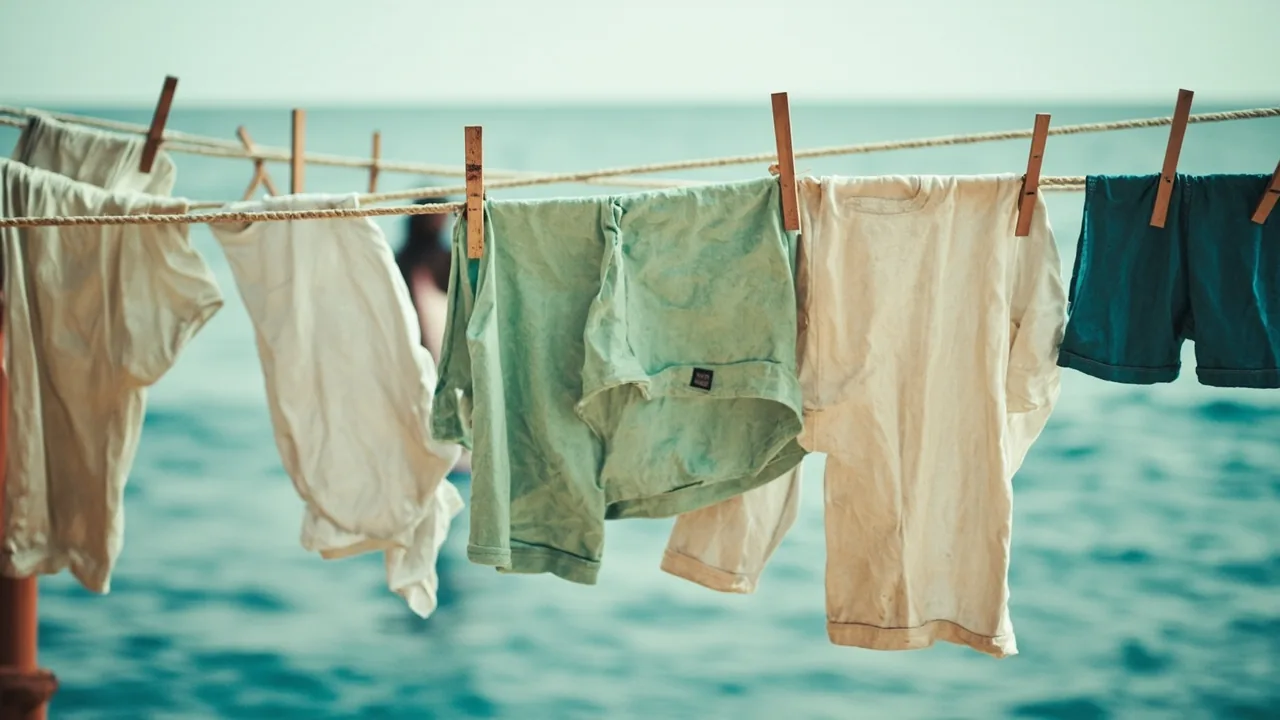
Laundry on the Road: Sea Water Hacks, Hostel Wash Tips & Travel Laundry Guide
Across Southeast Asia, sea water works for a pinch wash, but you need fresh water to rinse or your shirts crust over with salt by day two. This page is part of our Southeast Asia backpacking hub, where we cover laundry, transport, and on-the-ground logistics. See our backpacking mistakes guide for the most common laundry errors travellers make on the road. Hostel laundry service is the cheapest option: ₹86-₹229 per kilo in Thailand, ₹55-₹110 in Vietnam, ₹34-₹65 in Laos, ₹96-₹193 in Cambodia. Hand-wash at a sink with soap beats the ocean every time.
Rates below come from hostel notice boards across Bangkok, Hanoi, Luang Prabang, and Phnom Penh, plus ferry routes in Thailand and Vietnam.
Subodh’s Pro Tip: Pack a universal sink plug. Hostel sinks across SEA almost never come with one, and trying to wash a t-shirt under a running tap is a waste of water and time. A ₹100 (~$1.04) silicone plug from D-Mart solves a problem you’ll hit every third day.
Quick Answers
| What | Answer | Price (INR) |
|---|---|---|
| Can you wash clothes in sea water? | Yes, for washing. No, for the final rinse. | , |
| Does salt water damage fabric? | Salt crystals wear fibres over time if you skip the fresh rinse | , |
| Average hostel laundry cost (Thailand) | Per kilo, same-day turnaround | ₹86-₹229 (~30-80 THB or ~$0.89-$2.38) |
| Average hostel laundry cost (Vietnam) | Per kilo, same-day turnaround | ₹55-₹110 (~15,000-30,000 VND or ~$0.57-$1.14) |
| Average hostel laundry cost (Laos) | Per kilo, 24-hour turnaround | ₹34-₹65 (~8,000-15,000 LAK or ~$0.36-$0.67) |
| Average hostel laundry cost (Cambodia) | Per kilo, same-day turnaround | ₹96-₹193 (~1-2 USD) |
| Typical turnaround time | Same day (drop morning, pickup evening) | , |
| What “laundry service” means at a hostel | Staff washes, dries, and folds your clothes for a per-kg fee | , |
| Hand-wash at a hostel sink | Free, costs only your time and a bar of soap | Free |
What “Laundry Service” Means at a Hostel
When a hostel listing says “laundry service available,” it almost never means a coin-operated machine you run yourself. In Southeast Asia, it means a staff member or outsourced washer takes your clothes by the kilo, washes them in a commercial machine (sometimes by hand for delicate items), line-dries or machine-dries them, and folds them into a plastic bag. You drop a sack of dirty clothes at reception in the morning, you pick up clean clothes that evening or the next morning. See our hostel etiquette guide for the unwritten rules around drop-off timing, labelling, and tipping.
The per-kilo fee covers everything: detergent, water, drying. Most hostels set a minimum of 2 or 3 kilos so they don’t have to run a half-empty machine for one customer. If you only have a few items (two t-shirts and shorts), ask if they have a flat rate for under-minimum loads. Some hostels charge ₹287 (~100 THB or ~$2.97) flat instead of forcing you to weigh out 3 kilos.
Subodh’s Pro Tip: Check the hostel notice board before assuming laundry is included. A surprising number of hostels, especially in Thailand and Vietnam, offer “free laundry” for stays of 7 nights or longer. It is rarely advertised on Hostelworld; you only find it on the printed slip at reception.
Step-by-Step: The Three Ways to Get Clean Clothes on the Road
Option 1: Hostel Laundry Service (Easiest, Almost Always Cheapest)
This is what 80% of backpackers end up using once they’ve tried the other options.
Step 1. Locate the laundry bag at reception. Most hostels provide a plastic sack or a mesh bag near the front desk. If you don’t see one, ask.
Step 2. Fill the bag. Don’t overstuff it. A typical 5-kilo bag holds about 8 to 10 t-shirts, or 4 to 5 t-shirts plus 2 pairs of shorts and underwear. If you cram in more, your clothes come back still soapy.
Step 3. Weigh the bag at reception. Most hostels have a small digital scale behind the counter. Confirm the price per kilo before you commit. If the price is above ₹229 (~80 THB or ~$2.38) per kilo in Thailand or above ₹129 (~35,000 VND or ~$1.33) per kilo in Vietnam, walk to the next guesthouse and ask there.
Step 4. Drop it off before 10 a.m.** Same-day turnaround requires a morning drop. If you drop at 4 p.m., you get your clothes back the next day.
Step 5. Pick up before checkout.** Hostels will give your clean clothes to the next guest if you forget. Ask for a paper receipt or a numbered tag.
Cost breakdown across SEA:
| Country | Per kilo | 5-kg bag cost | Turnaround |
|---|---|---|---|
| Thailand | ₹86-₹229 (~30-80 THB or ~$0.89-$2.38) | ₹430-₹1,147 (~150-400 THB or ~$4.46-$11.89) | Same day |
| Vietnam | ₹55-₹110 (~15,000-30,000 VND or ~$0.57-$1.14) | ₹276-₹552 (~75,000-150,000 VND or ~$2.86-$5.72) | Same day |
| Cambodia | ₹96-₹193 (~1-2 USD) | ₹482-₹965 (~5-10 USD) | Same day |
| Laos | ₹34-₹65 (~8,000-15,000 LAK or ~$0.36-$0.67) | ₹172-₹323 (~40,000-75,000 LAK or ~$1.79-$3.35) | Same day or next morning |
The cheapest rates cluster in Luang Prabang and Vientiane; the highest cluster in Bangkok’s Khao San area (tourist tax).
Option 2: Hand-Wash at a Hostel Sink (Free, Takes 15 Minutes Per Outfit)
Worth doing for one or two items between laundry runs. Not worth doing for a full kit unless you’re desperate.
Step 1. Fill the sink with lukewarm water. Hot water from a hostel tap is rarely hot; aim for warm, not boiling.
Step 2. Add a small squirt of soap. A 100 ml travel bottle of liquid detergent lasts about 10 hand-wash sessions. Dr. Bronner’s Castile soap is the backpacker favourite because a single bottle covers body, hair, and clothes for two months.
Step 3. Submerge the clothes. Push them down so they’re fully underwater. Let them soak for 5 minutes.
Step 4. Agitate. Rub the dirtiest spots (collar, underarms, crotch) against themselves. Don’t wring; wringing stretches the fabric. Squeeze instead.
Step 5. Drain the sink. Refill with clean water. Rinse each item twice until the water runs clear.
Step 6. Roll the item in a dry towel.** Twist the towel and item together to squeeze out excess water. This cuts drying time by half.
Step 7. Hang to dry.** Most hostels have a rooftop drying area or a clothesline in the hallway. Avoid hanging anything important over a balcony in monsoon season; one gust and it’s gone.
Subodh’s Pro Tip: The biggest mistake with hand-wash is using too much soap. Soap residue is what makes your shirt stiff and smell funny after drying. Two drops per shirt, not a “generous squeeze.”
Option 3: Sea Water Wash (Emergency Only, Last Resort)
This is the answer to the literal question “how to do laundry at sea” that brings most people to this page. The short version: yes, it works for getting dirt and sweat out. No, it does not work as a complete solution because the salt will crust on the fabric and slowly damage it if you never rinse with fresh water.
When sea water is fine:
- One-off emergency wash on a multi-day boat trip (Mekong slow boat, Ha Long Bay cruise, overnight ferry from Surat Thani to Koh Tao)
- You have no access to fresh water and the clothes smell terrible
- You understand you’ll need a proper fresh-water rinse within 24 hours
When sea water will ruin your clothes:
- You have sensitive skin (salt residue causes rashes, especially in the groin and underarm area)
- The garment is technical fabric (merino wool, Gore-Tex, anything labelled “moisture-wicking”; salt destroys the treatment)
- You plan to wear the shirt for more than one day without a proper rinse
Step-by-step sea water wash:
Step 1. Collect sea water in a bucket or a tied-off plastic bag. Don’t try to wash directly in the surf; sand gets into everything. Pack a packing list for SEA that includes a small bucket if you expect to need this method.
Step 2. Filter out debris. Pour the water through a t-shirt or sock to catch leaves, sand, seaweed.
Step 3. Add soap. Dr. Bronner’s or a similar mild liquid soap. Sea water is alkaline, so a mild liquid soap (like Castile) mixes in more easily than powdered detergent.
Step 4. Wash the garment in the bucket. Same agitation technique as the sink method.
Step 5. Wring out the sea water. Don’t rinse yet; you don’t have fresh water yet anyway.
Step 6. Hang to dry. Salt water dries faster than fresh water because of the lower surface tension. The shirt will feel stiff when dry.
Step 7. Rinse with fresh water at the next opportunity.** Don’t wear the salt-stiff shirt for more than one day. As soon as you reach a hostel, soak it in fresh water for 10 minutes.
Mekong slow boat travellers have noted this method working for cotton t-shirts and shorts as long as the fresh-water rinse happens within 24 hours, though no formal survey backs the claim. Wool, silk, and anything stretchy does not survive the salt.
Common Mistakes Indians Make on the Road
Mistake 1: Packing too many clothes to “avoid laundry.”
What happens: Your bag weighs 14 kg at the start of the trip, your back hurts by day 4, and you still end up doing laundry because you sweat through everything in three days anyway.
Fix: Pack light enough to wash every 3 days. Your bag stays under 8 kg and you’ll always have something clean; exact counts vary by trip length and climate.
Mistake 2: Leaving valuables in the laundry bag.
What happens: Your wallet, AirPods, and that ₹3,000 (~$31.09) cash note end up in the hostel washing machine. Hostels are not responsible for items left in laundry bags.
Fix: Empty every pocket before you hand over the bag. Put cash, cards, and electronics in your daypack or the hostel locker.
Mistake 3: Assuming “free laundry” means free.
What happens: The hostel charges ₹143 (~50 THB or ~$1.49) per kilo for “free” laundry because it’s only free for stays of 7 nights or longer, which your booking confirmation fine print states.
Fix: Ask at check-in. Get the exact condition in writing or screenshot the booking terms.
Mistake 4: Drying clothes in your hostel room.
What happens: Your room smells like damp laundry for 48 hours, the humidity triggers mould on the walls, and the next guest complains.
Fix: Use the rooftop drying area or the hallway line. If the hostel doesn’t have one, find a guesthouse down the road that does and pay ₹57 (~20 THB or ~$0.59) to use their line for the afternoon.
Mistake 5: Using the bathroom shower to wash clothes.
What happens: You block the drain with sock lint, the shower floods, and the next guest has to call reception.
Fix: Use the sink, not the shower. Sinks are designed for this; showers aren’t.
What Most Guides Don’t Tell You
The hostel laundry price on Hostelworld is usually wrong.
Hostelworld lists the laundry fee at booking time, but the actual fee charged at reception is often higher, especially in low season when hostels are trying to make up for low occupancy. Always ask at check-in what the current rate is. Travellers report ₹143-₹287 (~50-100 THB or ~$1.49-$2.97) swings in Bangkok hostels between high season (November to February) and low season (May to October).
Same-day turnaround isn’t guaranteed on weekends.
Most hostel laundry contracts run through a small local laundry shop, not an in-house machine. The shop might not pick up on Sundays, which means your Saturday drop-off becomes a Monday pickup. Plan laundry drops for Monday through Friday if you need clothes for a specific event.
You can negotiate the price for bigger bags.
If you have 7 or 8 kilos of laundry, the hostel will sometimes knock ₹29-₹43 (~10-15 THB or ~$0.30-$0.45) per kilo off the listed rate just to keep the machine full. This works better in low season than high season. Don’t be shy; hostel staff expect it.
Sea salt residue attracts sand and bugs.
If you wash in sea water and don’t fully rinse, the residual salt on your clothes attracts sand flies and mosquitoes much more aggressively than clean fabric. Travellers on Thai island ferry routes report this as the main reason they don’t use sea water regularly: not because it damages clothes, but because it changes which insects target them for the next 24 hours.
Hand-wash soap bars last longer than liquid.
A 100 g bar of soap costs about ₹115 (~40 THB or ~$1.19) at a 7-Eleven and lasts roughly 15 hand-wash sessions. The equivalent liquid detergent costs the same and lasts only 8 to 10 sessions. Bars also pack lighter.
Cheapest Laundry Strategy by Region
Thailand
Hostel laundry at ₹86-₹229 (~30-80 THB or ~$0.89-$2.38) per kilo is genuinely the cheapest option once you factor in your time. A 5-kg bag at ₹115 (~40 THB or ~$1.19) per kilo costs ₹574 (~200 THB or ~$5.94) and saves you 90 minutes of hand-washing. Worth it. For islands and remote areas (Koh Tao, Koh Phangan, Pai), expect ₹143-₹229 (~50-80 THB or ~$1.49-$2.38) per kilo and 24-hour turnaround. Local laundry shops in Bangkok’s Banglamphu area undercut hostels at ₹72 (~25 THB or ~$0.74) per kilo if you walk five minutes off the main tourist strip.
Vietnam
Vietnam has the cheapest hostel laundry in SEA. ₹55 (~15,000 VND or ~$0.57) per kilo is standard in Hanoi and Ho Chi Minh City; backpacker areas in Hoi An and Da Nang charge ₹74-₹110 (~20,000-30,000 VND or ~$0.76-$1.14) per kilo but offer same-day pickup if you drop by 9 a.m. The cheapest option in Vietnam is street-side hand-washers, mostly older women with plastic tubs who charge ₹18 (~5,000 VND or ~$0.19) per item. Quality varies wildly. For anything delicate, use the hostel.
Cambodia
Most guesthouses in Phnom Penh and Siem Reap quote laundry in USD, not riel. Expect ₹96-₹193 (~1-2 USD) per kilo, same-day turnaround. The street-side “clothes washing” services advertised in Pub Street, Siem Reap, are tourist traps; the hostels are cheaper and the quality is more consistent.
Laos
Laos is the slowest turnaround in SEA. Luang Prabang hostels quote ₹43-₹65 (~10,000-15,000 LAK or ~$0.45-$0.67) per kilo but typically need 24 hours, not same-day. Vang Vieng and Vientiane are faster (same-day possible) but slightly more expensive. If you’re crossing the Thai-Lao border at Huay Xai, get laundry done in Chiang Khong (Thailand side) before you cross; it’s faster and cheaper.
Where to Do Laundry on Multi-Day Trips
Mekong Slow Boat (Huay Xai to Luang Prabang, 2 days)
No laundry facilities on board. Limited fresh water. Bring 4 days of clothes. If you must wash, do it at a sink stop in Pak Beng (the overnight village). Sea water is not an option; the Mekong here is fresh water but silty, which stains light-coloured fabrics grey. Skip the laundry until Luang Prabang.
Thai Island Ferries (Surat Thani to Koh Tao, Koh Phangan, Koh Samui)
Sea water wash only if you have no other option. Most ferries sell bottled water for ₹57 (~20 THB or ~$0.59) per litre; use half a litre per shirt as a fresh-water rinse after the sea water wash. The combo of salt wash plus fresh rinse gets clothes wearable for one more day.
Ha Long Bay Cruises (1 to 3 nights)
Most overnight cruises offer a laundry service for ₹184-₹368 (~50,000-100,000 VND or ~$1.91-$3.81) per kilo. Expensive, but you’re stuck on a boat. Alternatively, the boat staff will rinse your hand-wash for free if you ask politely; they have fresh water tanks for the kitchen.
Sleeper Trains (Bangkok to Chiang Mai, Hanoi to Sapa)
Use our Thailand sleeper train guide to pick the right carriage and pack a small soap bar for a sink wash at the station when you arrive.
No laundry facilities. Bring a small soap bar for a sink wash at the station when you arrive. Sink access at Bangkok’s long-distance train stations and Hanoi station is generally unrestricted for arriving passengers.
FAQ
Can you wash clothes in sea water?
Yes, for the wash cycle. No, for the final rinse. Sea water removes sweat and dirt but leaves salt crystals in the fabric that stiffen it, slowly wear down the fibres, and attract insects. Always do a fresh-water rinse as soon as possible.
What does “laundry service” mean at a hostel?
It means the hostel (or a contracted laundry shop) washes your clothes by the kilo for a fee. You drop a bag of dirty clothes at reception in the morning and pick up clean, folded clothes that evening or the next morning. Detergent and drying are included in the per-kilo price.
How much does hostel laundry cost in Southeast Asia?
Thailand: ₹86-₹229 (~30-80 THB or ~$0.89-$2.38) per kilo. Vietnam: ₹55-₹110 (~15,000-30,000 VND or ~$0.57-$1.14) per kilo. Cambodia: ₹96-₹193 (~1-2 USD) per kilo. Laos: ₹34-₹65 (~8,000-15,000 LAK or ~$0.36-$0.67) per kilo. Same-day turnaround is standard except in Laos, which usually needs 24 hours.
Can I wash just a few items without paying for a full kilo?
Most hostels have a minimum of 2 to 3 kilos. Some offer a flat rate of 100 THB for small loads. Ask before you drop the bag; the worst they can say is no.
Will laundry service shrink or damage my clothes?
Cotton, polyester, and synthetic blends handle hostel laundry fine. Wool, silk, and anything labelled “dry clean only” should be hand-washed only. Travellers report the main risk is colour bleed (red socks turning white shirts pink); wash new coloured clothes separately for the first two cycles.
Is it cheaper to hand-wash or use hostel laundry?
Hand-wash is free but costs 15 minutes per outfit. Hostel laundry costs ₹86-₹229 (~30-80 THB or ~$0.89-$2.38) per kilo but saves 1 to 2 hours. For a full bag of clothes, the hostel wins on time. For one or two items, hand-wash wins on cost.
What soap should I pack for hand-wash on the road?
Dr. Bronner’s Castile soap (100 ml bottle) covers body, hair, and laundry for about 6 weeks. A 100 g bar of generic soap from any pharmacy or convenience store covers laundry alone for about 2 weeks. Both are widely available at convenience stores across SEA.
Subodh’s Take
Laundry is the single most underestimated cost on a backpacking trip. Most first-timers budget for hostels, transport, and food, then realise on day 6 that they’ve spent ₹1,147 (~400 THB or ~$11.89) on laundry and still have dirty socks. Budget ₹2,294 (~800 THB or ~$23.78) per week for laundry across SEA and you’ll come out even. Hand-wash once between drops to stretch the bag. Skip sea water unless you’re on a boat with no other option. The hostel service exists for a reason: it’s cheap, it’s fast, and it frees up your afternoon for the part of the trip that matters.
, Subodh
