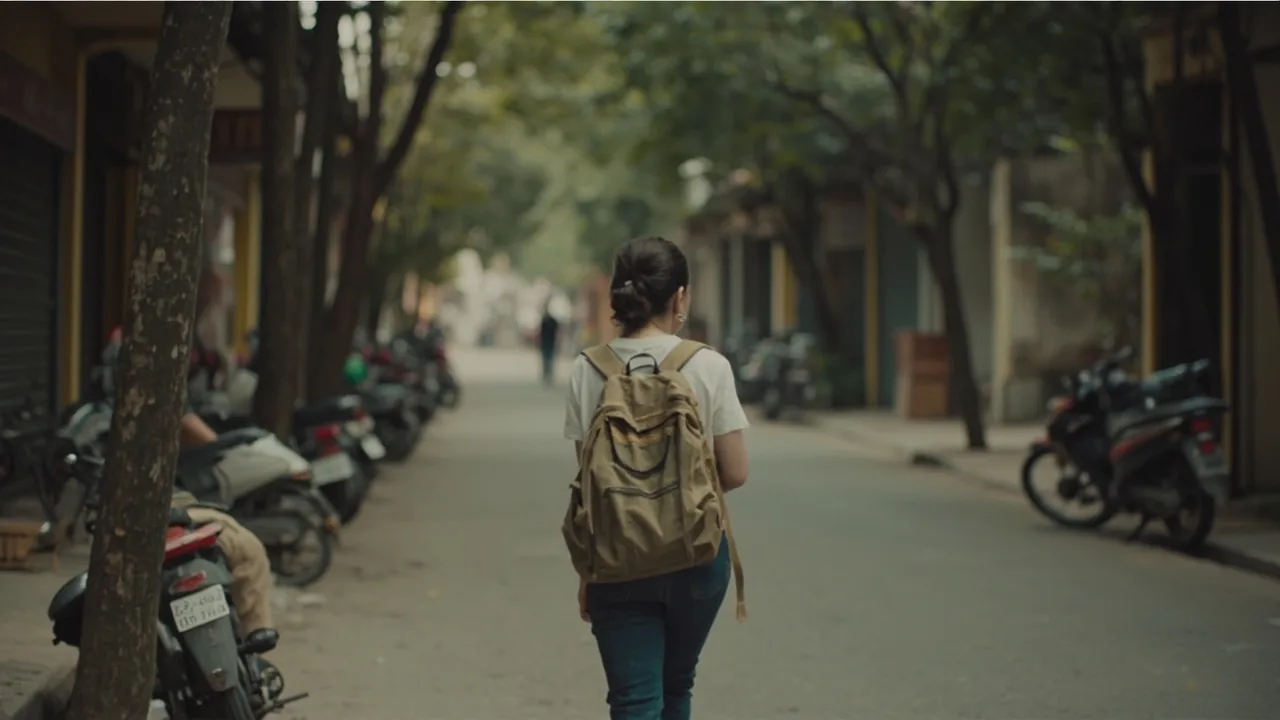
Solo Female Safety in Southeast Asia: A City-by-City Breakdown for 2026
Southeast Asia is genuinely one of the safer regions in the world for women traveling alone, and that includes Vietnam, which Indian women ask me about most. The street-level reality is calmer than most Indian metros: harassment is uncommon, locals are friendly, and public transport is usable at night in the main cities. The actual risks are scooter accidents, food poisoning, and the same handful of tourist-trap scams that target everyone, male or female. This guide walks you through the city-by-city picture, the scams worth knowing in advance, and the small set of habits that turn an already-safe trip into a smooth one. For related planning, see our guide on Sea Backpacking Hub.
I want to be specific. A solo female traveler asking “is Hanoi safe at night” deserves a better answer than “use your common sense.” So this article names the streets, the scams, the clinic costs, and the embassy numbers, with current 2026 prices and FX rates so you can budget the safety side of your trip properly.
Quick Answers
| What | Answer | Price (INR) |
|---|---|---|
| Is Vietnam safe for solo female travelers? | Yes. Violent crime against tourists is rare; main risks are scooter accidents and pickpocketing. | — |
| Is Hanoi safe for solo female travelers? | Yes, including at night in the Old Quarter. Stick to well-lit main streets after midnight. | — |
| Cheapest private clinic visit (Vietnam) | ~₹1,836 (~500,000 VND or ~$19.06) at a local clinic, ~₹5,508 (~1,500,000 VND or ~$57.17) at an international hospital | ₹1,836 (~500,000 VND or ~$19.06) |
| Travel insurance (SafetyWing, monthly) | Covers Indian travelers including medical evac across SEA | ₹5,973 (~62 USD) |
| Bottled water (1.5L, anywhere in SEA) | Always buy sealed; never drink tap | ₹37-₹73 (~10,000-20,000 VND or ~$0.38-$0.76) |
Subodh’s Pro Tip: Save the Indian embassy’s local number in your phone before you fly, not after you need it. The number is in the Indian-Specific Considerations section below.
The Real Risks (What to Worry About)
I rank these by what sends Indian women to clinics or police stations, not by what makes for dramatic Instagram captions.
| Risk | Likelihood | Impact | How to Avoid |
|---|---|---|---|
| Scooter accidents | High | Severe (broken bones, head injury) | Don’t ride without a valid IDP + helmet. Use Grab Bike instead. |
| Food poisoning (“Delhi Belly”) | High | Low (24-48 hrs) | Eat at busy stalls; bottled water only; carry ORS + Metrogyl from India. |
| Pickpocketing in tourist zones | Moderate | Low | Cross-body bag, front-pocket wallet, no phone in back pocket. |
| Taxi/Grab overcharging | Moderate | Low | Always book Grab, never hail a random taxi in Hanoi or Bangkok. |
| Bar drinks spiked | Low | Severe | Watch your drink, never leave it unattended, travel with a buddy on big nights out. |
| Violent street crime against tourists | Low | Severe | Standard street awareness; avoid dark empty alleys after 1am. |
| Scams (see next section) | High | Low-Medium | Know the script in advance. |
The scooter row deserves more attention than the others combined. Across Vietnam, Thailand, Laos, and Cambodia, the #1 cause of tourist hospitalization is a scooter crash, not anything else on this list. Most happen on Day 2 or Day 3, when you’re “just popping to the corner for a banh mi.” You don’t need a license, locals will rent you anything, the roads are chaotic, and a helmet that hasn’t been strapped properly is the same as no helmet. If you skip the scooter, you skip the single biggest risk on this entire trip.
Prevention and Preparation
Before you leave India, take care of these five things. None of them take more than an afternoon.
Vaccines. Book a travel clinic visit 4-6 weeks before departure. Recommended for the region: Hepatitis A and B (both), Typhoid, Tetanus booster, Japanese Encephalitis (rural stays over 1 month), and Rabies (pre-exposure series if you’ll be around street dogs, which you will). Yellow fever is not required unless you’re transiting through a yellow-fever country. Carry your yellow WHO vaccination card regardless; some border checkpoints ask.
Travel insurance. This is non-negotiable, not optional. A scooter crash with a broken collarbone in Hanoi can run ₹29,376-₹91,800 (~8,000,000-25,000,000 VND or ~$304.92-$952.89) at an international hospital. Medical evacuation from Laos or Cambodia to Bangkok can hit ₹963,390-₹2,890,170 (~10,000-30,000 USD). SafetyWing’s nomad insurance starts at around $62/month (~₹5,900) for Indian travelers and covers COVID, trip interruption, and medical evacuation across Southeast Asia. Read the scooter fine print: most policies require a valid motorcycle license from your home country AND an International Driving Permit (IDP) to cover two-wheeled vehicle accidents. Without those, your claim can be denied.
Documents. Photocopy your passport, visa, and insurance card. Save photos of each in a WhatsApp group with yourself and a family member. Email a set to your own Gmail. The day your bag gets snatched at a night market in Hanoi, you’ll thank yourself.
IDP. Get the International Driving Permit from your local RTO before you fly. Cost in India is ₹1,000-₹2,000 (~$10.38-$20.76) plus photos. The IDP is a grey booklet, valid for one year, and it must accompany your Indian license. Without it, your travel insurance won’t cover a scooter crash and the local police will fine you on the spot.
FX and cards. Carry a forex card (HDFK, ICICI, Axis all work well) plus a debit card for ATM withdrawals. UPI doesn’t work in Vietnam, Laos, or Cambodia, and works only at some Thai merchants. Have ₹19,268-₹28,902 (~200-300 USD) in cash for border crossings and emergency tuk-tuks. Current rate is roughly 1 INR = 0.35 THB, 270 VND, 232 LAK at time of writing, so ₹10,000 converts to about 3,500 THB or 2,700,000 VND.
Safety Alert: The single biggest mistake I see solo female travelers make is renting a scooter on Day 1 “to feel free.” It’s the fastest way to lose your trip. Use Grab, walk, or take the local bus for the first 3 days. Rent a scooter only if you’ve ridden in Indian traffic before AND you have an IDP.
City-by-City Scams and Gotchas
Every city on the main backpacker trail has 2-3 scams that run on repeat. They’re not dangerous, just annoying. Knowing the script is half the defense.
Hanoi (Vietnam). The most common scam is the “taxi meter runs fast” trick in old non-Grab cars. Always book Grab (the app works in Hanoi) or insist the meter is turned on before you sit down. The second is the “shoelace / shoe shine” scam near Hoan Kiem Lake: a vendor drops a brush or points out a scuff on your shoe, does a quick shine, and demands ₹367-₹734 (~100,000-200,000 VND or ~$3.81-$7.62). Smile, say “khong, cam on” (no, thank you), keep walking. Third, the “free tour to a factory” scam near the Old Quarter: a student-aged local invites you to a “free English practice” session, then steers you into an aggressive sales pitch at a silk or lacquerware shop. Politely decline after 5 minutes.
Ho Chi Minh City (Vietnam). Motorbike “drivers” at the airport who grab your luggage and steer you to an unmarked car with no meter. Pre-book a Grab or use the official Vinasun/Mai Linh taxi queue. The “cyclo ride to District 1” overcharge is rarer now but still happens at Ben Thanh Market. Agree the price in writing before you sit down, or skip cyclos entirely.
Bangkok (Thailand). The Grand Palace “it’s closed today” tuk-tuk scam: a friendly local near Khao San Road tells you the palace is closed for a Buddhist holiday, redirects you to a gem shop where they pay commission, then loops you back. The palace is almost always open. Check the official site the morning of. The second is the “flat fare 100 baht anywhere” tuk-tuk outside BTS stations: always negotiate the fare before you sit down, and treat anything below ₹429 (~150 THB or ~$4.45) for a cross-city ride as suspicious.
Chiang Mai (Vietnam). Wait, Chiang Mai is in Thailand. The most reported scam is the inflated elephant sanctuary ticket on the street: always book direct through the sanctuary’s own website. The second is the “Songkran water泼 (soaked)” harassment during the April festival: fun for groups, uncomfortable for solo women walking alone. Skip the street during peak Songkran hours if you’re solo.
Vientiane / Luang Prabang (Laos). Less scammy, more “overcharge” than scam. Tuk-tuk drivers in Luang Prabang quote ₹215-₹430 (~50,000-100,000 LAK or ~$2.23-$4.46) for a 2-km ride; the real price is ₹86-₹129 (~20,000-30,000 LAK or ~$0.89-$1.34). Walk away, wait 2 minutes, the next driver will take your number.
Siem Reap (Cambodia). The “baby milk” scam: tuk-tuk drivers or kids ask you to buy powdered milk for orphaned babies, then resell it to a pharmacy. Politely decline. The “pub street” drink-spiking risk is real here: never accept a drink from a stranger, watch your bartender pour your second round.
Phnom Penh (Cambodia). The “shooting range” pitch near Tuol Tom Poung market: friendly touts invite you to fire guns, then charge 4x the advertised rate. Skip it. The moto “1 dollar anywhere” promise becomes 5 dollars at the destination. Agree before you sit down.
The single biggest scam-defense habit: book everything through apps (Grab, 12Go, GetYourGuide, Booking.com) so your price is locked before any human tries to renegotiate it.
For a longer list of scams and physical-safety red flags specific to Cambodia and the Philippines, see our Philippines night safety guide and our Cambodia transport safety piece.
What to Do If It Happens
Three scenarios cover 90% of female-tourist emergencies in SEA. Memorize the steps.
Scenario 1: Scooter crash. Even if you feel fine, go to a clinic within 4 hours. Internal bleeding and concussion symptoms can show up late. Take photos of the bike damage, the road, your helmet, and your injuries before you leave the scene. Get the other driver’s plate, name, and insurance info. Report to the local tourist police within 24 hours or your insurance company may deny the claim. In Vietnam, tourist police in Hanoi and HCMC have English-speaking officers; in Cambodia and Laos, expect French or Khmer/Lao only, bring a translate app.
Scenario 2: Passport stolen. File a police report within 24 hours at the local district station (this is non-negotiable for an emergency travel document). Contact your nearest Indian embassy or consulate to apply for an emergency certificate. Carry two printed passport photos from India; passport offices in Bangkok, Hanoi, and Phnom Penh require them. The emergency certificate process takes 1-3 working days and costs around ₹2,859-₹5,718 (~1,000-2,000 THB or ~$29.68-$59.35) / ₹184-₹367 (~50,000-100,000 VND or ~$1.91-$3.81) / ₹2,890-₹4,817 (~30-50 USD) depending on the country.
Scenario 3: Severe food poisoning or fever. If you can’t keep water down for 12+ hours, have continuous high fever, or see blood in stool, go to a clinic. Most SEA cities have a 24-hour international clinic within a 10-km radius; your hotel will know the nearest. For dengue suspicion (high fever + severe joint pain + rash after a mosquito bite), insist on a dengue NS1 antigen test, it changes the treatment path.
Local emergency numbers across the region: Vietnam 113 (police) / 115 (ambulance), Thailand 191 (police) / 1669 (ambulance), Laos 191 (police) / 195 (ambulance), Cambodia 117 (police) / 119 (ambulance). Save all four before you fly.
Indian-Specific Considerations
Medicines from India to carry. Pack these in your checked bag, in original strips with the prescription label:
| Indian brand | Use | Local equivalent |
|---|---|---|
| Electral / ORS sachets | Rehydration | Available everywhere as “ORS” |
| Metrogyl 400 (Metronidazole) | Diarrhea, amoebiasis | Flagyl |
| Crocin / Dolo 650 (Paracetamol) | Fever, pain | Paracetamol, Panadol |
| Pantocid / Pan 40 (Pantoprazole) | Acidity | Omeprazole |
| Avomine 25 (Promethazine) | Motion sickness, nausea | Avomine |
| Ciplox / Norflox (Ciprofloxacin) | Traveler’s diarrhea, UTIs | Ciprofloxacin |
| Electrobian / Taxim (Cefixime) | Bacterial infections, UTIs | Cefixime |
| Combiflam | Pain + inflammation | Ibuprofen + Paracetamol combo |
| Benadryl cough syrup | Cough, mild allergy | Available locally |
For a longer breakdown of hospital costs and clinic networks across the region, see our hospital guide for Southeast Asia and our Vietnam tap water guide, which also covers ice and fruit-washing safety.
Indian Embassy Contacts (2026).
- Thailand (Bangkok): 44-45 Charoen Krung Road, Bang Rak. Tel: +66-2-205-3700. Email: [email protected]. Consular section: +66-2-205-3775.
- Vietnam (Hanoi): 58-60 Tran Hung Dao Street. Tel: +84-24-3852-3731. Email: [email protected]. Out-of-hours emergency: +84-91-208-0835.
- Laos (Vientiane): 002 Ban Wat Nai, Rue Bourbath, Siangvang Road, Vientiane. Tel: +856-21-352-401. Out-of-hours: +856-20-5551-9840.
- Cambodia (Phnom Penh): 50E (Norodom Boulevard). Tel: +855-23-210-912. Out-of-hours: +855-12-813-666.
Clinic visit / hospital deposit costs (2026).
| Service | Vietnam | Thailand | Laos | Cambodia |
|---|---|---|---|---|
| Local clinic consultation | ₹1,102-₹1,836 (~300,000-500,000 VND or ~$11.43-$19.06) | ₹1,429-₹4,288 (~500-1,500 THB or ~$14.84-$44.51) | ₹430-₹859 (~100,000-200,000 LAK or ~$4.46-$8.92) | ₹1,927-₹4,817 (~20-50 USD) |
| International hospital consultation | ₹5,508-₹11,016 (~1,500,000-3,000,000 VND or ~$57.17-$114.35) | ₹4,288-₹8,577 (~1,500-3,000 THB or ~$44.51-$89.03) | not applicable | ₹7,707-₹14,451 (~80-150 USD) |
| ER admission deposit | ₹18,360-₹73,440 (~5,000,000-20,000,000 VND or ~$190.58-$762.31) | ₹14,295-₹57,178 (~5,000-20,000 THB or ~$148.38-$593.51) | ₹4,295-₹12,885 (~1,000,000-3,000,000 LAK or ~$44.58-$133.75) | ₹48,170-₹144,508 (~500-1,500 USD) |
| Ambulance (private) | ₹3,672-₹7,344 (~1,000,000-2,000,000 VND or ~$38.12-$76.23) | ₹2,859-₹7,147 (~1,000-2,500 THB or ~$29.68-$74.19) | ₹2,148-₹4,295 (~500,000-1,000,000 LAK or ~$22.29-$44.58) | ₹2,890-₹7,707 (~30-80 USD) |
The international hospital row is the one that scares people: a single ER visit in Bangkok can run ₹42,884-₹71,472 (~15,000-25,000 THB or ~$445.13-$741.89) before any treatment. Travel insurance exists for exactly this reason.
Cultural comfort. Vietnam, Thailand, Laos, and Cambodia are all safe for women in shorts, t-shirts, and sleeveless tops in tourist areas and big cities. In rural Laos and Cambodia, cover shoulders and knees when visiting temples (mandatory, not a suggestion). Modest dress reduces staring more than it reduces actual risk, but it does reduce the latter as well in conservative provinces like Lao Cai or Ratanakiri.
Getting Connected
A working phone is the single fastest safety tool: Grab, Google Maps, embassy number, translate app, emergency call. Get a local SIM on Day 1 (Viettel or Vinaphone in Vietnam, AIS or DTAC in Thailand, Unitel in Laos, Cellcard or Smart in Cambodia). Airport counters are the simplest: Viettel offers a tourist SIM for around ₹734 (~200,000 VND or ~$7.62) with 3GB/day for 7 days, the same SKU at any 7-Eleven is roughly ₹73 (~20,000 VND or ~$0.76) cheaper. If you don’t want a physical SIM, Get Nomad eSIM covers all four countries with regional data plans.
For broader SEA water safety, including river crossings in Laos and coastal currents in Cambodia, see our water safety guide.
Solo-Female City Snapshots
Hanoi. Genuinely safe for solo female travelers. The Old Quarter is well-lit and busy at night, Grab works after dark, and street harassment is rare compared to most Indian cities. The actual things to watch: scooter traffic on the sidewalks, and the lakeside alleys after 1am on weekends. Females traveling solo here report feeling more comfortable than in Mumbai, less comfortable than in Singapore.
Ho Chi Minh City. Busier and slightly more “Western” feeling than Hanoi. District 1 walking around midnight is fine. Backpacker area (Pham Ngu Lao) is safe. Same scooter warnings apply. The District 4 side-streets after 2am feel sketchy, avoid those.
Bangkok. One of the safer megacities in the world for solo women, full stop. BTS, MRT, and Grab work till midnight. Khao San Road is rowdy but heavily policed. Sukhumvit Soi 4-22 is the standard solo-female-friendlier zone; some sois off Patpong are best avoided late at night for any traveler.
Chiang Mai. Safer than Bangkok for solo women in many ways: smaller, walkable, fewer scam touts. Old City moat area is calm. The Doi Suthep temple area gets quiet after sunset, take a songthaew back, not a scooter.
Siem Reap. Pub Street is loud and touristy but well-policed. The temples (Angkor Wat, Ta Prohm) are safe to visit solo even at sunrise, the trick is hiring a tuk-tuk driver for the day (~USD 15-25) rather than biking alone in the dark pre-dawn.
Phnom Penh. Safer than its reputation for female travelers in tourist zones (Riverfront, BKK1 area). Skip the darker alleys off Street 136 after 11pm. Tuk-tuks and PassApp (local Grab) are reliable.
Vientiane and Luang Prabang. Both feel more like quiet towns than cities. Solo female travelers consistently report the lowest stress levels of any SEA city in these two. Luang Prabang’s night market closing time (around 9pm) makes the town quiet at night, which is either peaceful or boring depending on your mood.
Quick Scam-Defense Cheat Sheet
| Scam | Where | What to say | What to do instead |
|---|---|---|---|
| Taxi meter runs fast | Hanoi, HCMC | ”Grab, please” | Always book Grab |
| Grand Palace closed | Bangkok | ”I’m going anyway” | Check palace website that morning |
| Tuk-tuk flat fare | Bangkok, Siem Reap | Negotiate before sitting, or | Use Grab or Bolt |
| Baby milk donation | Siem Reap | ”No, thank you” | Keep walking |
| Friendly “free English” | Hanoi | Decline after 5 min | Skip and walk on |
| Shoelace / shoe shine | Hanoi Old Quarter | ”Khong, cam on” | Ignore entirely |
| ”1 dollar anywhere” moto | Phnom Penh | Negotiate before sitting | Use PassApp |
| Pub Street drink | Siem Reap | Watch your drink, period | Order at the bar, hold your glass |
Where the Trip Gets Specifically Risky (And How to Skip the Risk)
A few routes and activities carry disproportionate risk for solo female travelers:
- Scooter in Vietnamese mountain passes (Hai Van Pass, Hai Giang loop). Roads are technical, weather can flip in 10 minutes, and a solo female rider with no local support is the worst-case scenario. Take the train to Hue instead, or join an organized Easy Rider tour with a guide.
- Full-moon party boat returns in Thailand. Boats run at 3am, drunk passengers, choppy water. Take the official ferry or skip the after-party.
- Mekong slow boat from Huay Xai to Luang Prabang. Mostly safe but the two-day journey puts solo women in a remote river setting. Bring a book, sit with other travelers, and stay sober on the river.
- Laos tubing in Vang Vieng. The river-current deaths over the years are well-documented. Locals discourage it now. If you do it, wear a life jacket and stay near the rope swing area, don’t float past the dam.
For island-specific solo-female advice, see our Koh Tao safety guide and Koh Chang safety guide.
FAQ
Is Vietnam safe for solo female travelers? Yes. Violent crime against tourists is rare in Hanoi, HCMC, and Da Nang. Standard solo-female habits apply: well-lit streets after 11pm, Grab instead of unmarked taxis, no scooter without IDP and helmet.
Is Hanoi safe for solo female travelers at night? Yes, in the Old Quarter and around Hoan Kiem Lake. Stick to the main walking streets (Ta Hien, Ma May, Hang Bac) after 10pm, avoid the lakeside alleys east of the lake after 1am on weekends.
What are the most common Vietnam solo female scams? The taxi-meter scam in Hanoi, the cyclo overcharge near Ben Thanh Market, and the “free English practice” silk-shop pitch. None are violent, all are predictable once you know them.
Do I need a yellow fever vaccine for Vietnam, Thailand, Laos, or Cambodia? No, none of the four require yellow fever for entry from India. The vaccine is required only if you’re transiting through a yellow-fever-endemic country. Carry your WHO yellow card anyway if you have one.
Is tap water safe to drink in Vietnam? No. Drink sealed bottled water only. Ice at reputable restaurants is fine. Our Vietnam tap water guide covers Hanoi, HCMC, and Da Nang specifically.
Should I worry about drink spiking in Southeast Asia? Low overall risk, higher in specific zones: Bangkok’s Patpong, Phnom Penh’s Bassac Lane, Siem Reap’s Pub Street. Watch your drink, never accept open drinks from strangers, order at the bar.
What’s the single biggest safety upgrade an Indian solo female traveler can make? Buy travel insurance and save the 24-hour Indian embassy emergency number in your phone. Together, they cover 90% of “what if” scenarios for less than ₹6,000 (~$62.28) total.
Subodh’s Take
Southeast Asia is one of the easiest regions in the world for a solo female traveler, and Vietnam is comfortably the safest country for women on the backpacker trail after Singapore. The actual risks are mundane: scooter crashes, food poisoning, and tourist-trap overcharges. The ones that scare you from Instagram (kidnapping, violent assault, foreign-prison horror stories) happen to one in a million tourists and almost never to women exercising the same street awareness they’d use in Bandra or Koramangala. Spend your worry budget on a good helmet, a sealed water bottle, and a ₹5,973 (~62 USD) insurance plan. The rest of the trip is yours.
