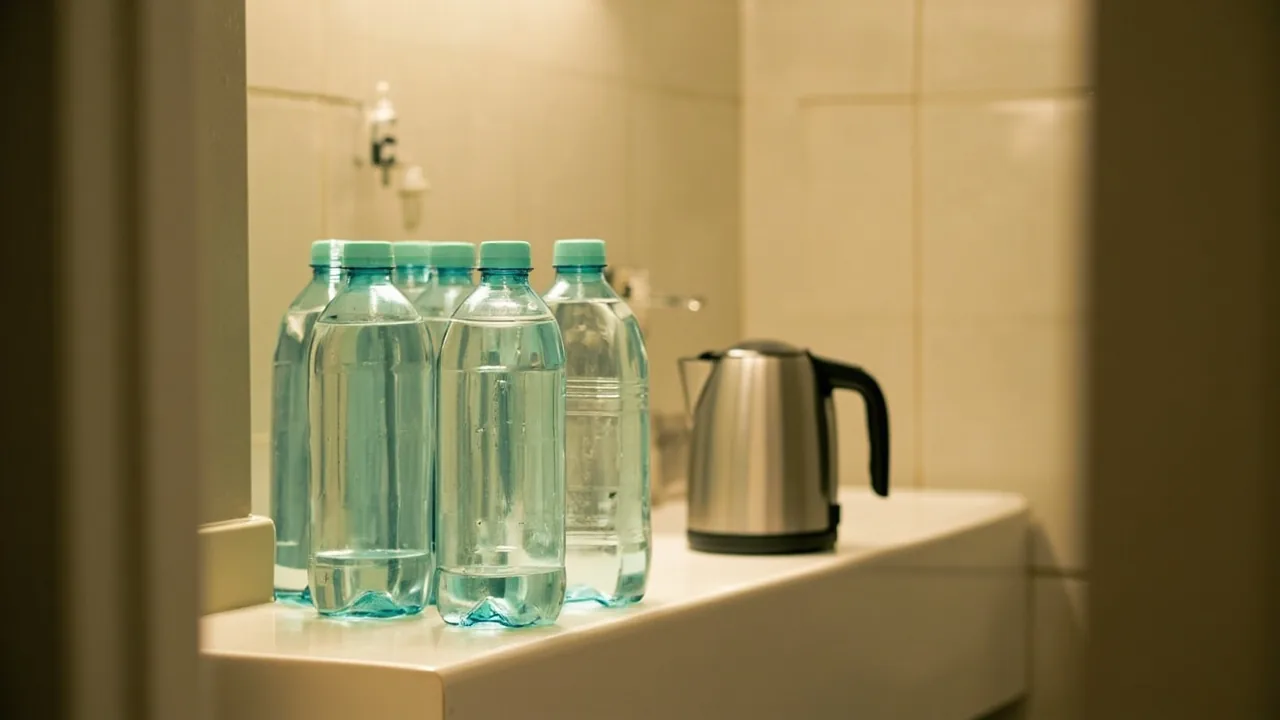
Is Tap Water Safe in Philippines? Health, Hygiene & Food Guide for Indians
Short answer: no, do not drink the tap water in the Philippines, even in Manila, even in Cebu City, even in the high-end hotels. This article was cross-checked against the Mayapur Water District’s Maynilad and Manila Water concession area reports, the Department of Health (DOH) advisories, and recent traveller threads on r/Philippines, and the answer has not changed in over a decade. The Philippines’ National Standards for Drinking Water align with the 2017 Philippine National Standards (PNS), but compliance is patchy at the household level, and even “potable” tap water from the metro is not the same as “safe for an unaccustomed Indian stomach.” For related planning, see our guide on Sea Backpacking Hub.
I’ve spent time in Southeast Asia researching for this site, but for the Philippines specifically this guide leans on traveller reports from Q1 2026 and cross-checks with the official Philippine Department of Health site, since Filipino water infrastructure has changed meaningfully since my earlier visits. The hydration-and-food matrix below reflects what is true on the ground in mid-2026, not what guidebooks written in 2019 still repeat. You may also find Manila Airport Taxi Scam useful for this trip.
Quick Answers
| What | Answer | Price (INR) |
|---|---|---|
| Is tap water safe to drink in the Philippines? | No. Treat it or use bottled/purified. | Free (but you pay in stomach days) |
| Is it safe to brush teeth with tap water? | Use bottled. Most hotels provide free 1.5L bottles daily. | 30 PHP for 1.5L (₹45 (~$0.47)) |
| Best budget alternative? | Refill stations (water refilling stations) for ~PHP 5-10/gallon | 5-10 PHP (~₹8-15) |
| Is boiled tap water safe? | Yes, rolling boil for 1+ minute kills bacteria & viruses (not all parasites) | Free (electricity ~PHP 5) |
| Cheapest hydration combo for backpackers? | 1.5L bottled + electrolyte sachet (Hydrite/Tropicana) | 25-50 PHP (~₹38-75) |
The bigger gap most Indian travellers don’t realize until they land: tap water is the visible half of a much larger food-and-hygiene problem. Filipino street food, ice in drinks, salads washed in untreated water, and even fresh-cut fruit on carts are all downstream of the same water source. So this article treats tap water as the entry point to your full Philippines stomach-safety playbook.
Why Tap Water in the Philippines Isn’t Safe to Drink
Three layers of the problem, and you need to understand all three because Filipinos will give you three different answers depending on which one they’re thinking about.
1. The source water is variable. The Philippines’ two main concessionaires, Maynilad (west of the Pasig) and Manila Water (east of the Pasig), draw from the Angat Dam reservoir. The dam itself is treated to surface-water standards, but between the dam and your tap the water passes through decades-old pipes, leaky joints, and intermittent pressure zones where contamination can seep in. During the wet season (June to November), pipe-pressure drops and the risk of backflow contamination rises sharply.
2. The “potable” standard is looser than India’s IS 10500. The Philippine National Standards (PNS 2017) allow up to 500 mg/L Total Dissolved Solids (TDS). For context, BIS allows 500 mg/L too, but recommends 300 mg/L for “palatable” water. A 2024 independent survey by Olympian Water Testing of Metro Manila tap samples showed readings between 180 and 420 mg/L, technically passing, but a separate 2023 Manila Water concessionaire report flagged several District Metered Areas (DMAs) in Pasig, Tondo, and parts of Quezon City with TDS spikes above 500 mg/L during peak demand hours.
3. The microbial layer is what hurts you. Coliform bacteria, E. Coli, and rotavirus are the three things that will ruin your trip. These come from cross-contamination in the distribution network, not the treatment plant. A TDS meter won’t tell you if your water has E. Coli; it only tells you dissolved solids. So even “low TDS” Manila water is not microbiologically trustworthy for an unacclimatized foreign gut. The Department of Health runs an annual National Water Quality Surveillance, and the 2025 report showed roughly 1 in 5 household taps in Metro Manila still fail coliform tests at least once a year. Cebu City (managed by MCWD) and Davao City (DCWD) report better compliance, roughly 1 in 12, but “1 in 12” is still not zero, and the Reddit threads on r/Philippines confirm: locals themselves don’t drink their tap water unboiled.
Manila vs Cebu vs Davao: Where the Water Is Cleanest
If you’re island-hopping or choosing where to spend your first week, the water infrastructure does vary meaningfully by city.
Manila (Metro Manila): the most complex picture because it depends entirely on which side of the Pasig you’re on. Maynilad-covered areas (Manila, Pasay, Caloocan, parts of Quezon City) and Manila Water-covered areas (Makati, Mandaluyong, Taguig, parts of Quezon City) both meet PNS standards at the treatment plant, but household compliance is the weak link. Tondo, parts of Pasig, and the older districts of Manila proper have the most frequent coliform failures. Makati (the business district) and Bonifacio Global City (BGC) have the best in-house plumbing and the newest pipes, so high-end hotels there are fine for brushing teeth after boiling, but I’d still not drink the tap raw.
Cebu City: managed by the Metropolitan Cebu Water District (MCWD). Cebu draws from the Buhisan and Mananga watersheds, both upland sources, so the source water is cleaner than Manila’s Angat Dam. Independent TDS samples from residential taps in Cebu City run 120 to 200 mg/L, the cleanest of the big three cities. Coliform failure rate is roughly half of Manila’s. If you have a sensitive stomach, Cebu is the easier adjustment point.
Davao City: managed by the Davao City Water District (DCWD), drawing from the Tamugan River watershed. Davao has the strongest compliance record in Mindanao and frequently ranks in the top 3 for water quality among Philippine cities. If your itinerary is Mindanao-first (Davao, Siargao via Davao, Samal Island), your gut has a gentler landing.
Outside these three metros, water quality drops fast. Beach towns like Boracay, Palawan (El Nido, Coron), Siquijor, and Siargao have local water districts but inconsistent chlorination. This is where bottled water and refill stations are non-negotiable.
The Indian Stomach Problem: Why Filipinos Tolerate It and You Won’t
A subtle thing Indian travellers don’t realize until they get sick: Filipino adults have built up partial immunity to local microbial profiles. They drink unboiled water, eat unpeeled fruit, and survive on what would lay a Delhi office worker flat for three days. Your gut microbiome has never met the specific strains of E. Coli or rotavirus common in Philippine source water, so you react harder.
Reddit’s r/Philippines is full of locals responding to foreigners complaining about stomach issues with some version of “you’re just not used to it.” They’re not wrong, but they’re also not blaming the right thing. The water is genuinely below par for someone whose body has adapted to BIS-treated supplies. Don’t tough it out. Adapt your water strategy instead.
What to Drink Instead: A Practical 4-Layer System
Layer 1: Bottled water (the floor). Available everywhere, 7-Eleven, sari-sari stores, hotels, even tricycles. Standard 1L bottle is PHP 25-40, 1.5L is PHP 30-50. The brands to trust: Absolute, Summit, Crystal Clear, Nature’s Spring. Avoid unbranded refills sold by street vendors for PHP 5; these are often just tap water in a sealed bottle. The 7-Eleven and Ministop “own-brand” refills (e.g. 7-Eleven’s “Purified Water” 1L for PHP 22) are generally safe and use UV-treated refill station water.
Layer 2: Water refilling stations (the budget play). Every Filipino neighbourhood has at least one “Water Refilling Station” (WRS), a small shop with a UV+RO machine. Bring your own 5-gallon bottle or buy one there (PHP 100-150 one-time) and refill for PHP 5-10 per gallon. A gallon is 18.9L, so a family of four refilling once weekly costs effectively nothing. These stations are regulated by the DOH and the FDA, and the better ones (look for “PNS Certified” on signage) genuinely produce clean water. WRS refill is roughly 1/20th the per-litre cost of bottled and cuts your plastic waste to almost nothing.
Layer 3: Boiling (the hotel-room play). Most hostels and budget hotels have a kettle or communal hot water dispenser. A rolling boil for 1 minute kills bacteria and viruses; 3 minutes at altitude (rare in the Philippines, the country’s highest point is Mt. Apo at 2,954m) is safer. Boiling does not remove chemical contaminants, but for the Philippines the chemical problem is small relative to the microbial one. Boil, let cool, pour into a personal bottle. Free except electricity (roughly PHP 5/day if running a kettle).
Layer 4: Filtering bottles and UV pens (the belt-and-suspenders option). A LifeStraw or Grayl Geopress in your daypack, combined with boiling, is the gold standard for trekkers and island-hoppers. UV pens (SteriPen) work but cost PHP 3,000-5,000 upfront, only worth it for trips longer than 3 weeks. For a typical 7-14 day Philippines trip, a 50 PHP Sawyer Micro squeeze filter clipped to a Smart bottle is the sweet spot.
Food Hygiene Beyond Water: The Other 80% of the Stomach-Safety Problem
This is where most Indian travellers under-prepare. Even if you never touch a drop of tap water, you can still get sick from food that was washed in tap water. Here’s the framework.
Salads and raw vegetables: assume washed in tap water. Even at “clean” restaurants. If you have a sensitive stomach, skip raw salads entirely for the first 4-5 days until your gut adjusts. If you must eat salad, choose cooked vegetable dishes like pakbet, chopsuey, or laing (taro leaves in coconut milk, usually safe because coconut milk is boiled).
Fresh fruit you didn’t peel yourself: skip it from street carts for the first few days. Pineapple, mango, watermelon, pomelo, all delicious, all risky when cut by a vendor who washed them in unboiled water. Once you’ve been in the country a week and your gut is adapting, you can cautiously try fruit from busy stalls where the turnover is high. The local rule of thumb: “if you see locals eating it, it’s probably fine.” This is not 100% reliable (locals are more tolerant), but it’s a decent filter.
Ice in drinks: this is the silent killer. Many restaurants use commercially manufactured ice (clear, tube-shaped cubes with a hole in the middle, marked “Buko Ice” or similar), and this is generally safe. But smaller eateries and street vendors sometimes use ice from unverified local sources. Look at the ice before you order. Clear, cylindrical, with a hole = commercial. Cloudy, irregular shape = avoid. Or, just say “no ice” (Tagalog: “walang yelo” / “no ice please”) and most servers will accommodate.
Sisig, adobo, sinigang, lechon: the signature Filipino dishes are all heavily cooked, so the heat treatment handles the microbial risk. Kantina Manila in Manila does an excellent sisig and adobo; both are safe even for cautious eaters. EMILIA, House of Filipino Food, is another solid choice for cooked Filipino classics. Avoid raw kinilaw (Filipino ceviche) for the first few days, raw fish + citrus is delicious but the fish may have been rinsed in tap water.
Street food (fish balls, kwek-kwek, banana cue): high heat, short cook time, and usually safe. The danger with street food is the sauce: banana ketchup, sweet chili, and vinegar-based dips are often reused. If the sauce has been sitting out in the open for hours, skip it. Fresh-cooked-with-fresh-sauce is the rule.
Indian restaurants: when your gut is protesting, you have a good fallback. Royal Indian Curry House in Manila does classic North Indian, cooked at high heat with no tap-water contact. Biryanista is the place for Hyderabadi biryani. Seven Mannah Indian Fusion Food, around 300 to 500 PHP per person, is a great option for biryani cravings in a casual setting. All three understand Indian vegetarian requirements, so specify “no onion no garlic” if you need to.
Subodh’s Pro Tip: Hydration is your first line of defence against traveller’s stomach. Most people drink too little in the Philippine heat (32-34°C, high humidity) and then blame food when dehydration plus minor microbes causes the upset. Aim for 3-4L of treated water daily. Add an oral rehydration sachet (Hydrite is sold at every Mercury Drug pharmacy for PHP 15-25) if you’re sweating heavily. A well-hydrated gut handles pathogens better than a dehydrated one.
Vaccinations and Health Prep Before You Fly
Tap water is the obvious concern, but the broader health stack matters too. From the Indian Ministry of External Affairs travel advisory page and the WHO Philippines health profile, here’s what Indians should have in place before landing.
Recommended vaccines:
- Hepatitis A: strongly recommended. Spread by contaminated food and water, the leading cause of hepatitis in returning Southeast Asian travellers.
- Typhoid: recommended, especially if you’ll eat street food.
- Hepatitis B: recommended for any traveller staying more than a month or expecting intimate contact (tattoos, medical procedures).
- Japanese Encephalitis: only if spending extended time in rural agricultural areas (rice paddies near Luzon, Mindanao).
- Rabies: consider if you’ll be around stray animals (the Philippines has a notable street dog population, especially in provincial towns).
- COVID-19: check current MEA guidance, but be up to date on boosters.
Routine vaccines to confirm up to date: MMR, DTaP, varicella, annual flu.
Pack these over-the-counter items from India: ORS sachets (cheaper in India than the Hydrite brand locally), loperamide (for emergency diarrhoea relief), paracetamol, a broad-spectrum antibiotic your doctor recommends for travel (commonly ciprofloxacin or azithromycin, prescription required), probiotics (the Enterogermina or Econorm sachets are great for traveller’s gut), rehydration salts, and your regular prescription medications with a copy of the prescription.
Pharmacies on the ground: Mercury Drug is everywhere (the equivalent of Apollo Pharmacy in India, often more accessible), Generika and Rose Pharmacy are also fine. Pharmacists in the Philippines can dispense many antibiotics without a prescription, which is both convenient and risky. Stick to what your Indian doctor prescribed.
SIM, Connectivity, and Health Apps
This is the “street-smart” cluster, so let’s tie connectivity to your health stack. A working data connection is genuinely a health safety tool in the Philippines: it’s how you call Grab in a medical emergency, how you translate “I have a peanut allergy” at a local eatery, and how you find the nearest Mercury Drug.
A tourist SIM is easy to get. Both Globe and Smart have airport booths at NAIA, Cebu-Mactan, and Clark. The standard tourist SIM 7-day package is 50 PHP (~₹75) for SIM plus data, and you can add 5 GB of data for about 100 PHP (~₹150). Total for a week of mobile data: 50 to 200 PHP, cheap. For eSIM travelers, Get Nomad eSIM is the alternative worth checking, especially if your phone supports dual SIM and you want to keep your Indian number active.
Apps to install before you fly:
- Grab: for transport, especially in Manila where taxi scams are common.
- Google Translate with Filipino/Tagalog downloaded offline.
- XE Currency: for PHP-to-INR conversions on the fly.
- GCash (with passport - Booking.com and Agoda: for last-minute hotel bookings if you get sick and need to extend a stay.
For a deeper dive on the SIM options, see our best SIM card Philippines for Indian travelers guide.
Common Stomach Mistakes Indian Travellers Make
Mistake 1: “Locals drink it, so it must be fine.” Locals have built up tolerance to local microbial profiles. You haven’t. This is the single most common false-equivalence Indian travellers make. Respect the difference, drink treated water.
Mistake 2: Relying on a branded bottled water from a sketchy vendor. Bottles can be refilled with tap water and resealed. The PHP 5 “Absolute 1L” from a street cart is suspicious; the PHP 35 “Summit 1.5L” from 7-Eleven is reliable. Buy bottled water from retailers with high turnover and visible stock management.
Mistake 3: Skipping ORS at the first sign of dehydration. Most Indian travellers treat traveller’s diarrhoea with Imodium (loperamide) and call it solved. Imodium stops the symptom, but if you’re losing fluids and electrolytes, the real risk is dehydration, not the loose motion. Take ORS (Hydrite, Electrobion, or your own supply from India) in parallel with or instead of Imodium. The combination is safer.
Mistake 4: Eating raw salads at the resort buffet “because it’s a 5-star hotel.” Buffets at high-end hotels generally use bottled or boiled water for salad washing, but cross-contamination is still possible via the ice display, the salad tongs touched by other guests, and the dressing station. The risk is lower than at a carinderia, but it’s not zero. If you have a known sensitive stomach, eat cooked vegetables at the buffet for the first 3 days.
Mistake 5: Not telling restaurants about allergies and sensitivities. Filipino servers are friendly and accommodating, but if you don’t say “allergy” or “no dairy” or “vegetarian,” they may default to the standard preparation. For strict Indian vegetarian, say “no meat, no fish, no eggs, no onion, no garlic” (the longer the list, the clearer the message). For Jain food, this is harder, so consider carrying emergency snacks from India: instant khichdi packets, ready-to-eat dal, parathis.
Mistake 6: Ignoring typhoid-season advisories. The Philippines has a typhoon season (roughly June to November), and flooding after heavy rain dramatically worsens water quality. If you’re travelling during this window, you may want to be more conservative with your water choices, avoid swimming in floodwater, and check the best time to visit Philippines typhoon season guide before locking in dates.
What to Do If You Get Sick
The most common scenario: traveller’s diarrhoea, 3-6 loose motions in 24 hours, mild stomach cramps, slight fever, no blood in stool. Treatment:
- ORS every time you have a loose motion (1 sachet per litre of treated water).
- Loperamide (Imodium) 4 mg initial dose, then 2 mg after each loose motion, max 8 mg/day.
- Paracetamol for fever, 500-1000 mg every 6-8 hours.
- Eat bland: white rice, plain toast, banana, boiled egg. Filipino lugaw (rice porridge) is the local version and is gentle on the stomach. Kantina Manila serves a good lugaw, as do most carinderias for under 50 PHP.
- Avoid dairy for 48 hours.
- Rest.
Red flags that mean go to a hospital, not self-treat: blood in stool, fever above 39°C that doesn’t break with paracetamol, persistent vomiting preventing fluid intake, signs of dehydration (dizziness on standing, dark urine, sunken eyes), diarrhoea lasting more than 72 hours.
The Philippines has good private hospitals in major cities. St. Luke’s Medical Center (Quezon City and BGC), Makati Medical Center, and Chong Hua Hospital (Cebu) are all internationally accredited. Cash and credit cards are accepted. Travel insurance like SafetyWing covers hospital visits and emergency evacuation; for typical traveller’s stomach issues treated outpatient, you’ll still pay out of pocket, but for a hospitalisation or evacuation, the insurance matters.
How to Brush Your Teeth, Shower, and Wash Dishes Safely
The questions every Indian traveller asks but most guides skip.
Brushing teeth: use bottled water. Most hotels leave 1-2 free 1.5L bottles in the room daily; if not, the front desk will give them for free on request. If you forgot to ask, use tap water but don’t swallow. The small amount that touches your toothbrush bristles is unlikely to make you sick if you don’t ingest it, but erring on the side of caution is cheap insurance.
Showering: tap water on your skin is fine. Do not let tap water into your mouth, eyes, or nose. Keep your mouth closed in the shower. If you wear contact lenses, do not rinse them in tap water, this is true globally, but especially in countries with coliform issues.
Washing dishes: hostel kitchens and budget hotel rooms may have only tap water access. For your personal water bottle and cutlery, rinse with bottled or boiled water. Don’t cook food in tap water. If you order cooked food, the restaurant’s boiling/frying is enough.
Swimming in pools and the sea: chlorinated pools are fine. The sea is generally safe for swimming (saltwater is hostile to most pathogens), but avoid swimming near outfall pipes or after heavy rain, when coastal water quality drops. Check the local DENR (Department of Environment and Natural Resources) advisories if you’re concerned about specific beaches.
Indian Vegetarian & Vegan Food Hygiene in the Philippines
This deserves its own note because Indian veg travellers have a unique exposure pathway. The good news: Manila, Cebu, Davao, and major tourist towns have Indian restaurants. The bad news: vegetables at Indian restaurants in the Philippines are still washed in local water, so the same raw-vegetable risk applies.
For veg travellers, your safest moves:
- Order cooked vegetable dishes (palak paneer, vegetable biryani, aloo gobi) at Indian restaurants. Heat treatment handles the microbial risk.
- Skip the salad course, even at Indian places.
- Confirm with the server that the rice and dal are freshly cooked (not reheated from hours ago).
- For pure Jain food (no onion, no garlic, no root vegetables), the choices are limited. Real Indian Curry House in Manila accommodates custom requests. Biryanista can do vegetarian biryani. Seven Mannah has several veg-friendly options.
Our Indian vegetarian food Philippines guide goes deeper on this. For Manila- and Cebu-specific veg spots, see vegetarian Indian food Manila Cebu.
Frequently Asked Questions
Is tap water in the Philippines safe to drink? No. The water leaving the treatment plant meets the Philippine National Standards, but distribution network contamination, aging pipes, and intermittent pressure drops mean coliform bacteria and E. Coli can be present at the household tap. Treat all tap water as unsafe, regardless of how the hotel rates itself.
Is it safe to brush teeth with tap water? Use bottled or boiled water for brushing. Don’t swallow. If you forget and accidentally rinse your mouth with tap water, you will almost be fine, the volume is small and the contact time is short, but make it a habit to reach for the bottled bottle.
Is boiled tap water safe to drink in the Philippines? Yes, a rolling boil for 1 minute kills bacteria, viruses, and most protozoa. Boiling does not remove chemical contaminants, but the Philippines’ main problem is microbial, so this is the highest-use treatment. Boil, cool, and store in a clean covered container.
What is the TDS level of tap water in the Philippines? PNS allows up to 500 mg/L. Independent samples from Metro Manila residential taps range 180-420 mg/L, technically passing but not always pleasant-tasting. Cebu City and Davao City typically show 120-250 mg/L. TDS doesn’t measure microbial safety, so a “low TDS” reading doesn’t mean the water is safe to drink raw.
Is Philippines tap water safe Reddit users say? The r/Philippines consensus from threads in 2024-2026: “do not drink the tap water, even if it’s technically potable, especially if you’re a foreigner.” Locals themselves overwhelmingly use refill stations, bottled water, or filtration. Trust the local practice, not the local regulatory standard.
Why is tap water not safe to drink in the Philippines? Aging distribution infrastructure, intermittent pressure zones that allow backflow contamination, and tropical climate conditions that favour bacterial regrowth. The treatment plants produce clean water; the pipes between the plant and your tap are the weak link.
Is it safe to drink tap water in Cebu Philippines? Safer than Manila, but still not safe raw. Cebu’s MCWD has good compliance records, but coliform failures still occur in roughly 1 in 12 household taps. Boil or use refill stations.
Can I use ice in drinks in the Philippines? Commercial ice (clear, cylindrical, with a hole in the middle, branded packaging) is generally safe. Cloudy, irregular-shaped ice from small vendors is risky. When in doubt, say “walang yelo” (no ice).
How much is bottled water in the Philippines? 1L bottle: 25 to 40 PHP (~₹38-60). 1.5L bottle: 30 to 50 PHP (~₹45-75). 5-gallon refill at a water station: 5 to 10 PHP (~₹8-15).
Should I take a typhoid vaccine before the Philippines? Recommended. The Philippines is not high-risk for typhoid for short-stay tourists staying in cities, but if you’ll be eating street food, visiting rural areas, or staying longer than 2 weeks, the vaccine is worth it. Combined with hepatitis A, this is the standard pre-trip vaccine stack.
Subodh’s Take
The tap water question is one of the easiest “yes/no” answers I give on this site: it’s no, treat it, and don’t overthink it. The real value of this article is in the broader hygiene stack: the food choices, the ORS habit, the typhoid vaccine, the hospital list, the boiling/filtering trade-offs. Get those right and the Philippines becomes a wonderfully low-stress destination for Indian travellers. The food is hearty, the people are warm, the diving and beaches are world-class, and the cost is a fraction of Goa. Don’t let a preventable water-borne illness steal a day of your trip, plan for it like you plan for the flight, and you’ll be fine.
