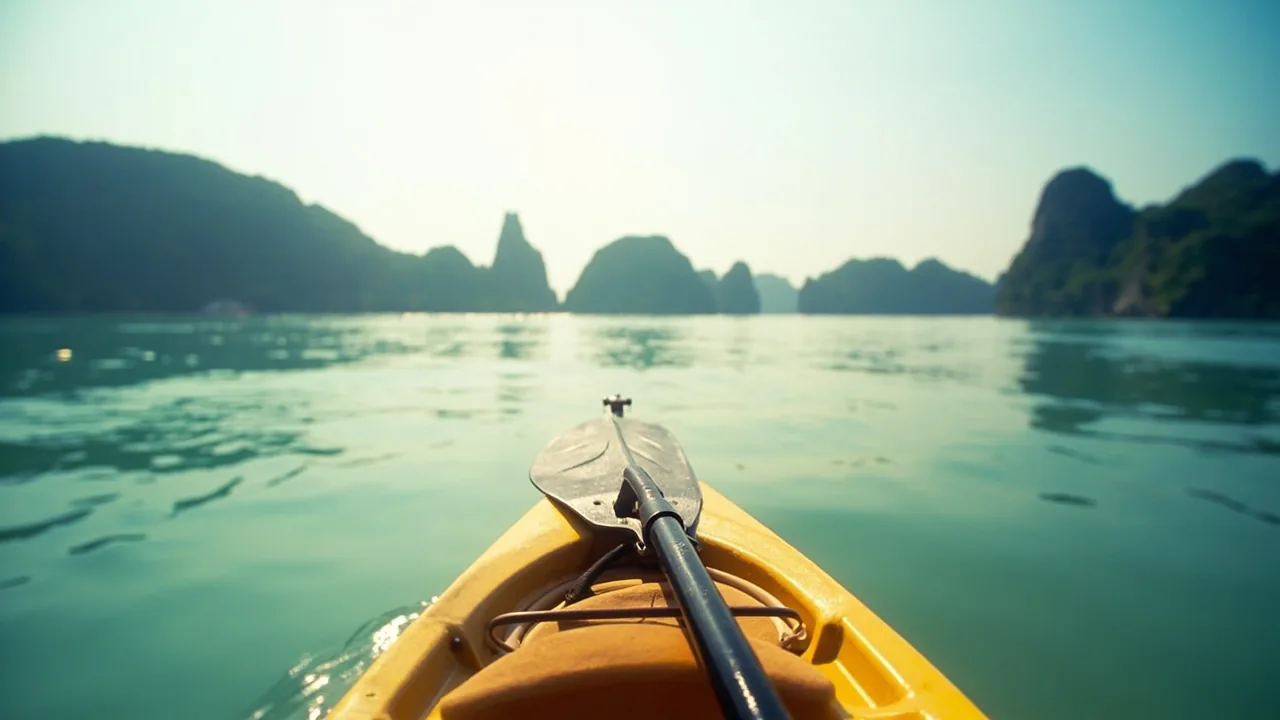
Kayaking in Phang Nga: Sea Cave & Lagoon Guide (2026)
✅ Last verified on-the-ground: 2026-07-17
Kayaking through Phang Nga’s limestone sea caves and hidden lagoons is the single most specific phang nga niche activity on Thailand’s Andaman coast, and the only phang nga niche activity that rewards a half-day detour from Phuket or Krabi. You paddle a two-person inflatable kayak into a slit in a 400-million-year-old cliff.
Everything around it (the operator, the transfer, the longtail boat ride, the national park entry fee) is a logistics puzzle that most guides explain badly. Planning the wider region? Our Southeast Asia backpacking hub covers the full multi-country route.
Quick Answers
| What | Answer | Price (INR) |
|---|---|---|
| Where | Ao Phang Nga National Park, between Phuket and Krabi | |
| Best base | Phuket (north coast) or Krabi (Ao Nang) | , |
| Tour type | Half-day, small-group, max 10 kayaks | , |
| Operator cost | ~₹5,169-₹7,179 (~1,800-2,500 THB or ~$53.62-$74.47) per person | ~₹5,169-₹7,179 (~1,800-2,500 THB or ~$53.62-$74.47) |
| National Park entry | ~₹861 (~300 THB or ~$8.94) per adult (foreign adult) | ~₹861 (~300 THB or ~$8.94) |
| Longtail boat transfer | Included in tour price | , |
| Kayak type | Two-person inflatable, sit-on-top, guide in lead boat | , |
| Best months | November to March (Andaman dry season) | , |
| Skill needed | Zero. You sit and paddle. | , |
What “Phang Nga Niche Activity” Means
Phang Nga Bay sits east of Phuket, a 400-square-km patchwork of vertical limestone karsts rising straight out of shallow green water, and it is the heart of the phang nga niche activity scene. From a speedboat, it’s photogenic. From inside a kayak, the cliffs turn into a labyrinth. The “niche activity” is paddling into the maze:
- Sea caves (called hongs in Thai when they’re partially enclosed): narrow tunnels through the karst that only exist at certain tide levels. At low tide they’re a crack. At mid tide, you paddle in.
- Hollow islands with hidden lagoons: paddle through a 1-metre-wide gap in a cliff face, pop out into a circular lagoon with 200-metre walls and a 30-metre ceiling of foliage. James Bond’s The Man with the Golden Gun filmed at one of these in 1974 and it’s been called James Bond Island ever since, though the kayak-in lagoon is a different rock entirely.
- Mangrove channels: paddling between the karst and the mainland through stilt-rooted mangroves, with macaques on the cliff above and monitor lizards in the mud below.
This isn’t whitewater kayaking. It’s drift, paddle, and look up. For what is low season in Thailand and how monsoon timing affects Phang Nga, the seasonal guide covers the overlap in detail. The skill ceiling is roughly the same as steering a shopping cart. The reward ceiling is, again, high.
Step-by-Step: Booking and Running the Day
1. Pick your base
If you’re already in Phuket or Krabi, day-trip from there. Phuket is closer (most operators launch from Ao Po on Phuket’s northeast coast, roughly 20–25 km from Phuket Town) and most tours include hotel pickup. Krabi operators (mostly Ao Nang based) launch from the north end of the bay and the ride is a bit longer.
Phuket pickups are typically smoother because the launch marinas are purpose-built. Krabi boats are typically converted longtails and the ride in is more scenic, less comfortable.
2. Book a small-group tour, not a party boat
There are three tiers of kayak tour in the bay:
- Big boat day-trip from Phuket: 30+ passengers, one zodiac with two kayaks, ten-minute paddle, back to the buffet. Skip this. The math says you’ll be standing in line for a kayak.
- Small-group half-day: 8 to 12 people, two-person inflatable kayaks, a lead guide in a separate kayak, a longtail boat that ferries you between the cave systems. This is the format that delivers the niche activity. Cost: ₹5,169-₹7,179 (~1,800-2,500 THB or ~$53.62-$74.47).
- Private charter: Just you, your partner, and a guide. ₹17,229-₹25,844 (~6,000-9,000 THB or ~$178.72-$268.08) per boat for half a day. Worth it if you’re a couple and want the lagoons without other kayaks in the shot.
For most Indian backpackers on a multi-week loop, the small-group half-day is the right call. Book on GetYourGuide and filter by “small group” and “max 12” to filter out the buffet boats.
3. Confirm what’s included
Email the operator (or read the fine print on the booking page) and confirm three things:
- National park entry: ~₹861 (~300 THB or ~$8.94) per adult foreign visitor is the standard 2026 fee. Some operators include it, most don’t. If not, bring exact change. The park rangers at the entry checkpoint prefer cash.
- Longtail boat transfer between cave systems: this should be included.
- Lunch or snacks: half-day tours usually include fruit and water, not a meal. Full-day tours include a Thai lunch on a floating village dock.
4. The day itself
Typical half-day timing:
- 07:00 to 08:00. Hotel pickup in Phuket or Ao Nang.
- 09:00. Arrive at launch marina. Life jacket, dry bag, waterproof phone pouch handed out. Brief on paddling (it’s five minutes and you’ll be fine).
- 09:30. Longtail boat into the bay. 30 to 45 minutes of scenery. James Bond Island (Khao Phing Kan) is visible from the boat and most operators do a 10-minute photo stop at the karst formation, but the actual kayak lagoons are different rocks and you paddle there after.
- 10:00 to 12:30. Three or four kayak rotations: a sea cave paddle, a hong lagoon entry, a mangrove channel. Lead guide goes first and signals the safe line through the cave openings. The longtail boat shadows you.
- 13:00. Fruit and water on a sandbar or floating village platform. Longtail back to marina.
- 14:00 to 15:00. Hotel drop.
Total water time: about 90 minutes of actual paddling across the three or four stops. The rest is boat transfer.
5. Tide matters more than time of day
This is the part most guides get wrong. The famous hongs (the partially enclosed lagoons) are only paddleable at mid to high tide; most operators time the launch to a published tide window. At low tide, the entrance is a wet slit you cannot fit through. Operators track this and shift their schedule, but if you’re booking independently (private charter), the best paddle window is two hours either side of high tide.
Phang Nga has a semi-diurnal tide pattern (typically two unequal high tides and two unequal low tides each ~24 hours). The Thai Meteorological Department tide tables are published monthly and the operator will have them.
What to Pack
Travellers who show up under-packed end up sunburned and soaked. Travellers who over-pack leave their phones in a soggy bag.
Bring:
- Quick-dry shirt and shorts that you don’t mind getting wet. You’ll be paddling and the splash is real.
- Reef-safe sunscreen (the park rules require it; chemical sunscreen is restricted in most Thai marine parks).
- Water shoes or old trainers with a heel strap. You’ll be wading in and out of the longtail on slippery concrete.
- Dry bag or ziplock for phone, passport copy, and cash. The operator usually provides a small dry bag but it’s not watertight forever.
- Hat with a strap that you can clip to your life jacket. Wind on the longtail boat is strong and hats fly.
- Reusable water bottle. 1.5 litres per person. The bay is hot and the fruit stop is not always enough.
Don’t bring:
- Flip-flops. They slide off the longtail ladder and sink. This is the single most common way phones die on the trip.
- A big backpack. The longtail has no dry storage beyond a shared plastic tub under the bench.
- A drone without a permit. Drones are restricted in the national park; the marine office at Ao Phang Nga has a permit process and most operators will tell you not to bother.
- Jewellery. Leave it at the hotel.
Common Mistakes Indians Make
Mistake 1: Booking the cheapest Phuket party boat
The ~₹3,446 (~1,200 THB or ~$35.74) “Phang Nga day tour with lunch” on Klook or local Thai booking sites is almost always the 30-person buffet boat. The kayak is a 10-minute formality. You do not see a single hong lagoon.
What happens: The boat parks at James Bond Island, the 30 passengers split into two groups, each gets a 10-minute kayak slot, the guide herds everyone back onto the boat, lunch on a floating restaurant, back to Phuket by 16:00.
How to avoid it: Filter for “small group,” “max 12,” and a published itinerary with at least two named hongs. The reputable operators are also the ones that publish the ₹861 (~300 THB or ~$8.94) national park fee as a line item.
Mistake 2: Assuming December to February is always best
December to February is the Andaman high season and the weather is good. The crowds are also bad. The hongs in December have 15 kayaks in them at a time. The lagoons echo.
Travellers report the same experience in noticeably better conditions in mid-November (just after monsoon ends) or early March (just before peak). The water is calm, the park isn’t full, the tide window is the same.
Mistake 3: Wearing cotton
A cotton t-shirt takes four hours to dry in tropical humidity. You’ll be cold and chafing by the second kayak rotation. Synthetic or merino, always. This is one of those things that sounds obvious but travellers do it anyway because the morning starts cool.
Mistake 4: Forgetting the ~₹861 (~300 THB or ~$8.94) in cash
The national park fee is collected at the entry checkpoint by the Department of National Parks, not by the tour operator. Cards are not accepted. Some operators include it, most don’t. If yours doesn’t, bring three 100-baht notes per person. If you forget, the operator sometimes has a float, but the rate is unfriendly and you don’t want to start the trip arguing about a 100-baht note.
Mistake 5: Booking from Krabi when you’re in Phuket (or vice versa)
The bay is between the two provinces. Phuket operators use the east coast marinas (Ao Po, Royal Phuket Marina), Krabi operators use Ao Nang and the north end of the bay. The boat ride is meaningfully shorter from the right side. If you’re staying five nights in Patong, a Krabi-based tour will eat 90 minutes in the van each way.
What Most Guides Don’t Tell You
The hongs are off-limits to solo kayaks
Independent rental of a kayak and paddling into the hongs on your own is not allowed. The park only permits licensed operators to take kayaks into the lagoon systems. This is for safety (the tide can trap you) and for the mangrove ecosystem (the lagoon floors are fragile). Travellers who try to DIY it are reportedly turned back at the park entry checkpoint or, worse, in the middle of a tide cycle with no exit.
If you want a more independent feel, the compromise is a private charter with one guide and one kayak for two people. Same route, no other kayaks, but you’re still on the licensed route.
Low season (May to October) is sometimes the best month, with one catch
The southwest monsoon brings rain and wind to the Andaman from May to October. Most kayak operators close or run reduced schedules in July and August. But early November (the first two weeks after the monsoon ends) and late May (the last two weeks before it starts) often have the calmest water of the year. November 5 to 20 is widely cited as a quieter window: low crowds, flat water, the park is technically open on a reduced schedule.
The catch: weather windows shift year to year. November monsoon onset has shifted later in some recent years, which can push the kayak season’s start date into late November; in other years the season is open from November 1. Check the operator’s social media a week before you fly.
The ~₹861 (~300 THB or ~$8.94) fee is split across park and province
When you pay the ~₹861 (~300 THB or ~$8.94), part goes to the Department of National Parks, Wildlife and Plant Conservation (DNP), and part goes to the Phang Nga Province. As of July 2026, the fee is still ~₹861 (~300 THB or ~$8.94), but treat this as a moving number. Travellers budgeting across Thailand should also weigh the average spend in Thailand per day so the park fee fits inside a realistic daily line item. The operator will have the current rate.
FAQ
Do I need kayaking experience for Phang Nga sea caves?
No. The activity is sit-on-top, two-person, inflatable kayaks in flat water. The lead guide sets the line through the caves and you follow. If you can steer a paddle board in a pool, you can do this.
Is the James Bond Island kayak tour the same as the sea cave tour?
No. James Bond Island (Khao Phing Kan) is the karst formation off the boat. The kayak lagoons (hongs) are different limestone islands that you paddle into. Most small-group tours do both: a 10-minute photo stop at James Bond Island by longtail, then kayak into two or three hongs.
Can I do this on a vegetarian or Indian-food diet?
Yes, but plan ahead. Most tours include fruit and water as the only food. If you need a meal, the full-day tours with a Thai lunch on a floating village dock are workable. Thai food is heavily veg-friendly (phad pak, som tam with no fish sauce, vegetarian green curry on request). For Indian food, the launch marinas near Phuket have a few Indian-run cafés around Ao Po, confirm with the operator the day before whether a strict veg or Indian-style meal can be arranged; otherwise plan to eat before the tour or carry your own food.
For Indian food specifically, confirm with the operator the day before whether a strict veg or Indian-style meal can be arranged; otherwise plan to eat before the tour or carry your own food. Indian and vegetarian options at the launch marinas are limited and vary by operator.
What’s the best age range for this activity?
Travellers report 7 to 70 with no issue, for how much money do I need for 5 days in Thailand budgeting that includes this day-trip, the linked breakdown helps. The hongs are not strenuous, the life jackets are mandatory, and the longtail boat is comfortable. Younger kids sit in the middle of the kayak with a parent. Older travellers who are mobile on a ladder can do it without help.
How do I get to Phang Nga from Bangkok?
Fly to Phuket (1 hour 20 minutes, Thai Airways, AirAsia, VietJet) or Krabi (1 hour 15 minutes). Phuket has the better kayak operators, more daily flights from Bangkok, and cheaper hotels. From Bangkok, sleeper train to Surat Thani plus a 2-hour minivan to Phuket is a budget alternative, around ~₹2,297 (~800 THB or ~$23.83) total but 14 hours door to door. See the Thailand sleeper train guide for the full breakdown.
Is Phang Nga kayak tour safe for solo female travellers?
Yes. Reputable small-group operators run mixed groups with two-person kayaks, so solo travellers get paired. The lead guide is almost always male in Thailand’s marine tourism; solo female travellers report feeling comfortable but recommend small-group operators over the big-boat day trips. For solo female travel in Southeast Asia more broadly, the broader safety guide is worth a read before you fly.
What insurance covers kayak tours in Phang Nga?
Standard travel insurance often covers recreational sea kayaking, but policies vary. Read the specific wording on “sea kayaking” versus “whitewater” before you book. Where in doubt, contact your insurer and confirm Phang Nga sea cave kayaking is included for the dates of your tour.
Subodh’s Take
Phang Nga is the one niche activity in Thailand’s Andaman that has not yet been destroyed by its own popularity, mostly because the hongs physically can’t fit a hundred kayaks. The caves and lagoons are the same ones the early kayakers were paddling in the 1990s, and the park service is doing a real job keeping the masses on longtail boats. Spend the extra for a small-group operator. Skip the buffet boat. Bring a dry bag. You’ll remember the thirty seconds in the first hong for years.