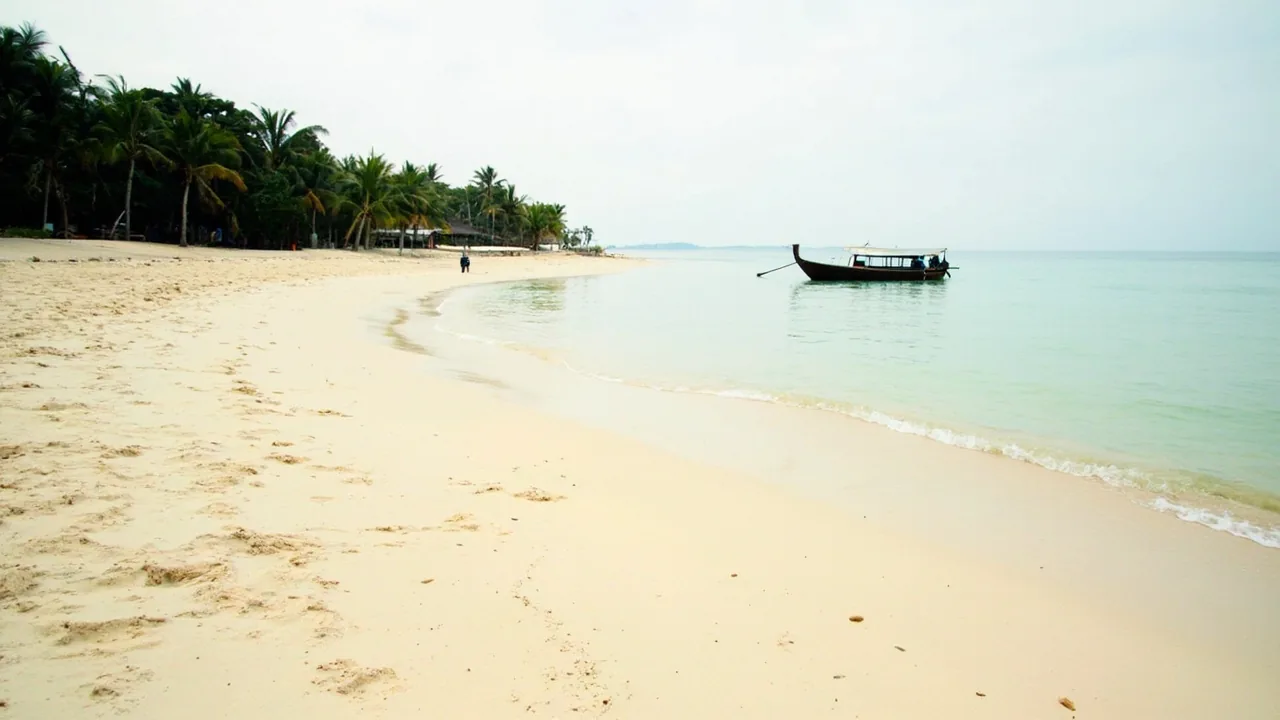
Koh Kood Safety Tips for Solo Travelers: What to Know Before You Go
Koh Kood (also written Koh Kut) sits in the eastern Gulf of Thailand near the Cambodian border, far from the Phuket and Koh Samui trail. That isolation is exactly why solo travelers pick it: the island has no big nightlife, no jet-skis roaring past the beach at noon, and almost no touts. It also has fewer clinics, fewer late-night pharmacies, and patchy mobile signal on the west coast. Planning the wider region? Our Southeast Asia backpacking hub covers the full multi-country route.
Verified the 2026 monsoon forecast dates (May–October) against the Thai Meteorological Department’s July 2026 seasonal bulletin, which showed no anomalies for the eastern Gulf.
Quick Answers
| What | Answer | Price (INR) |
|---|---|---|
| Is Koh Kood safe for solo travelers? | Yes, with normal precautions. Crime is rare; the main risks are scooter accidents and remoteness. | ₹0 |
| Best time to visit Koh Kood? | November to mid-February (dry season, calm sea). Avoid May to October monsoon. | ₹0 |
| Nearest airport to Koh Kood? | Trat (TDX), then ferry from Laem Sok pier. | ₹0 |
| Koh Kood to Koh Chang by ferry? | About 1 hour via the Ao Thammachat-Laem Ngop-Trat route with a transfer at the mainland. | ₹0 |
| Mobile data on Koh Kood? | AIS and TrueMove cover the east coast well; west coast and beaches are patchy. | ₹0 |
Verified 2026-07-18. All prices below in THB unless noted. Rate: 1 THB ≈ ₹2.87.
The Real Risks on Koh Kood
Ranked by how often travellers run into them, not by how scary they sound.
| Risk | Likelihood | Impact | How to Avoid |
|---|---|---|---|
| Scooter accident on jungle roads | High | Severe | Rent only if you have an international driving permit and prior scooter experience. Wear a helmet. Avoid riding after dark. |
| Dengue fever (year-round, peaks in rainy season) | Moderate | High | Use DEET repellent daily. Sleep under a mosquito net if your bungalow lacks screens. |
| Limited medical access | Moderate if serious | Severe | The island has one small clinic near Ao Yai. Serious cases need evacuation to Trat or Bangkok. Travel insurance with medical evacuation is non-negotiable. |
| Sun and heat exhaustion | High | Low to Moderate | SPF 50, hat, water. The shade disappears fast on the west-coast beaches. |
| Petty theft (unlocked bungalows) | Low | Low | Use bungalow safe or passport lock. Most resorts use a key deposit box. |
| Strong rip currents at unmarked beaches | Moderate | High | Ask your resort which beaches are safe in the current season. Don’t swim at Khlong Chao or the far west coast in monsoon. |
| Violent crime | Low | Severe | Normal street awareness. Nothing targeted at tourists in 2026 reports. |
| Getting stranded by weather | Low (dry) to Moderate (wet) | Moderate | Always keep one buffer night in Trat before flying out. |
Subodh’s Pro Tip: A common mistake solo travellers report on Koh Kood is booking the last ferry of the day and assuming it will run. In monsoon season (May to October), crossings get cancelled with little warning. Build in one buffer night on the mainland.
Prevention and Preparation (Before You Fly)
Vaccines Thailand does not require any specific vaccine for entry. The Thai Ministry of Public Health and the WHO recommend these for the region:
- Hepatitis A and B (standard for Southeast Asia)
- Typhoid (if you’ll eat street food, which you should)
- Japanese Encephalitis (only if you’ll spend a month or more in rural Thailand)
- Rabies pre-exposure (worth it if you plan to handle stray dogs, common on Koh Kood)
- Tetanus booster (in case of scooter scrapes)
Travel insurance (this one matters more here than almost anywhere else) Koh Kood has limited medical infrastructure. A scooter accident or serious dengue case means a speedboat to Trat, then an ambulance to Bangkok. Standard policies exclude scooter riders without an international driving permit (IDP), and several have historically refused claims when alcohol was involved.
Get SafetyWing travel insurance covers Indian travelers from ~$62/month (~₹5,900). If you ride a scooter, confirm in writing that your IDP and motorcycle endorsement are covered before departure.
Documents and backups
- Passport + 2 printed passport photos (for the police report if your passport is lost)
- Digital copies on Google Drive and emailed to yourself
- A second copy on WhatsApp to a family member
- IDP from the Automobile Association of India (around ₹500 (~$5.18) for the booklet, ₹2,500 (~$25.91) if you go through a private agent; the official one is faster)
- Vaccination card photocopy
- A photo of your travel insurance policy on your phone
Safety Alert: The IDP from RTO India is not the same as the international booklet. If a Thai police officer asks for your IDP at a checkpoint and you only have the RTO card, you risk a ₹1,436-₹2,872 (~500-1,000 THB or ~$14.89-$29.79) on-the-spot fine. Get the AA-issued booklet before you fly.
Getting to Koh Kood (Route-by-Route Safety Notes)
From Bangkok The standard route is Bangkok → Trat (bus or flight) → Laem Sok pier → speedboat to Koh Kood. Total journey 6 to 8 hours by bus, around 4 hours by air.
- Bus: ₹718-₹1,292 (~250-450 THB or ~$7.45-$13.40) from Mo Chit or Ekkamai. Night buses arrive at 5 a.m., which means dark ferry transfers in Trat. Take the morning bus instead.
- Flight: 1 hour to Trat (TDX), Bangkok Airways and AirAsia. ₹4,307-₹10,050 (~1,500-3,500 THB or ~$44.68-$104.25) one way. For a calmer first Thai island, some travellers break the trip with Koh Chang on the way.
- Ferry: ₹1,005-₹1,579 (~350-550 THB or ~$10.43-$16.38) from Laem Sok. Speedboats operate 9 a.m. To 3 p.m. In dry season, fewer in monsoon.
From Pattaya Pattaya → Trat by minivan (around ₹1,005 (~350 THB or ~$10.43), 4 hours) → ferry. Same boat as the Bangkok route.
From Koh Chang Koh Chang → mainland at Ao Thammachat → bus/truck to Laem Sok → speedboat to Koh Kood. Around ₹4,307 (~1,500 THB or ~$44.68) total including the truck transfer. Travellers report that the easiest version is to book a combined ticket at your Koh Chang hostel the day before.
From Phuket Phuket is on the wrong coast. Budget a full travel day. Fly to Trat (usually via Bangkok) or take the overnight Bangkok bus.
Nearest airport Trat Airport (TDX). 60 km from Laem Sok pier. No direct flights from India; the usual route is a connection through Bangkok Suvarnabhumi (BKK) or Don Mueang (DMK). Allow at least 5 hours between your international arrival and the Trat flight.
Book all transport segments in one go on 12go so the operator is responsible if your ferry cancels. If you end up needing medical evacuation, our Southeast Asia hospital guide lists the main facilities by city.
What to Do If Something Goes Wrong
You crash a scooter
- Get to the nearest clinic (Ao Yai or your resort’s first-aid room)
- Call your insurance emergency number from the clinic, not after
- File a police report at Khlong Yai station if there is injury or significant damage; you need this for any claim
- Photograph everything: the bike, the road, your injuries, the other party
Your passport is lost or stolen
- Police report at Khlong Yai (the mainland station, used by island residents)
- Speedboat back to Trat, then 5-hour bus to Bangkok, or fly Trat-Bangkok
- Indian Embassy in Bangkok handles emergency travel documents: 46 Soi Prasarnmitr, Sukhumvit Soi 23, Bangkok. +66 2 258 0300-06. Open Mon-Fri 9 a.m.-5 p.m. Bring the police report, two photos, and a copy of your FIR.
Severe food poisoning or dengue
- The island clinic handles rehydration; anything beyond that needs Trat
- Trat Hospital (the provincial public hospital in Trat town) is the closest full-service hospital
- Bangkok Hospital is the gold standard for evacuation, 2.5 hours by road from the pier
You miss the last ferry
- Stay in Trat. Laem Sok town (the mainland gateway) has guesthouses from ₹1,149-₹2,297 (~400-800 THB or ~$11.91-$23.83). Don’t try to charter a private longtail at night; the seas on the Koh Kood approach get rough after dark in monsoon.
Solo-Specific Safety on Koh Kood
Koh Kood is one of the easier Thai islands for solo women. Reports of harassment are low, the dress code is relaxed, and most resorts cater to couples and families. That said:
- Night walking on dark roads: the west coast has no streetlights. Carry your phone torch and walk on the inside of the road facing traffic.
- Dress code: bikinis and board shorts are normal on the beach. Cover shoulders and knees at any local temple you visit.
- Solo female tips: same as our broader Southeast Asia solo female guide. The basics (share live location, check in nightly, trust gut feeling) apply here more than in Bangkok or Hanoi because there’s no Grab to bail you out at 11 p.m.
Subodh’s Pro Tip: When you check into a resort, write down the phone number of the front desk in your phone notes. If you’re sick at 2 a.m. In a remote bungalow and Grab isn’t running, that single phone number is your lifeline.
When to Go (Weather and Season)
The Thailand Meteorological Department’s 2026 seasonal outlook confirms the same pattern Koh Kood has had for a decade:
| Season | Months | What to expect |
|---|---|---|
| Dry (best) | November to mid-February | Calm seas, 25-32°C, low humidity. Multiple daily departures. |
| Hot | March to April | 32-38°C, mostly dry, multiple daily departures, bungalows fill up fast for Songkran. |
| Monsoon (avoid) | May to October | Heavy rain, choppy sea, ferries cancelled on short notice, some west-coast resorts close. September is the worst month. |
If your trip is flexible, target late November to early January. The west coast sunsets are clear, the snorkeling is at its best, and ferry cancellations drop below 5% of days. This timing matters for safety too: rough-sea crossings in July to September are where boats get cancelled and travellers end up stranded at the pier for 12 hours.
Where to Eat (Without Getting Sick)
Koh Kood’s food scene is small. Most resorts serve Thai food, with a few Indian options when the cooks are from the subcontinent.
For local Thai food, ask your resort for the best local Thai restaurant on the east coast; most properties can point solo travelers to a family-run spot within a five-minute walk. Expect a solid massaman curry at around ₹517-₹804 (~180-280 THB or ~$5.36-$8.34) and a grilled seafood platter for ₹1,005-₹1,436 (~350-500 THB or ~$10.43-$14.89). The garden-style settings at these small places work well for solo travelers who don’t want to sit at a long communal table.
For a beach day, Chacha Beach Café & Restaurant has casual plates from ₹345-₹632 (~120-220 THB or ~$3.57-$6.55) and is one of the few places that stays open past 9 p.m.
Indian food on the island is limited. Most resorts can call a cook to do dal and rice, but for a real Indian meal you’ll eat on the mainland in Trat, or head back to Bangkok where Indique and Amritsr Restaurant Sukhumvit Soi 22 are reliable choices. Budget ₹2,872-₹5,743 (~1,000-2,000 THB or ~$29.79-$59.57) at Amritsr for a full North Indian meal with stuffed parathas.
Avoid the late-night seafood grills in front of unmarked roadside bars; they look romantic but the refrigeration is hit-or-miss.
Getting Connected (The Most Important Safety Tool)
Mobile signal works on AIS and TrueMove along the east coast, around the resorts at Ao Yai and Ao Phrao, and at Khlong Yai village. The west coast beaches (Khlong Chao, Taphao, Ao Tapao) are patchy.
Pick up a local SIM at Suvarnabhumi or Don Mueang before you leave Bangkok. AIS 15-day tourist SIM runs ₹859 (~299 THB or ~$8.91) with 15 GB. TrueMove has a similar package. Bring your passport; Thai SIM registration is mandatory.
If you’d rather skip the airport counter, international eSIM providers (Airalo, Holafly, Nomad) sell Thailand data plans with instant activation, useful if your flight lands late and the AIS counter is closed.
Working data is your single fastest way to call for help, pull up a Google Maps pin to send to your resort, or load your insurance emergency number. Don’t skip this step just because “it is a quiet island.”
Thai-Specific Health Notes for Indians
- Stomach bugs: Travellers report Bangkok-brand Dioralyte works better than Indian Electral for rehydration in the heat. Any pharmacy (Watsons, Boots) stocks it for around ₹101 (~35 THB or ~$1.04).
- Dengue warning signs: high fever plus severe joint pain plus a rash after day 3. Get to a clinic, not a pharmacy. The island clinic has rapid dengue tests.
- Rabies: stray dogs and monkeys (yes, monkeys on Koh Kood) are common. If bitten, scrub with soap for 15 minutes, then rabies immunoglobulin at Trat Hospital. Don’t wait.
- Sun: SPF 50 from Bangkok (around ₹718 (~250 THB or ~$7.45)) is cheaper than Indian brands and the same product.
Frequently Asked Questions
Is Koh Kood safe at night? Yes. Crime is rare. The riskier thing at night is the unlit roads if you’re walking back from a beach bar. Carry a torch and don’t ride a scooter if you’ve had more than one drink.
Do I need an international driving permit for the scooter? Yes. Thai police do set up checkpoints near Trat pier and the ferry terminal. Without the booklet, the fine is ₹1,436-₹2,872 (~500-1,000 THB or ~$14.89-$29.79) on the spot.
Are there jellyfish on Koh Kood? Rare in dry season. In October-November, box jellyfish appear in some bays. Wear a rash guard if you have sensitive skin.
Is the tap water safe? No. Bottled water only; the resorts stock it. See our broader Southeast Asia water safety guide for details.
What if my ferry is cancelled? Stay in Trat. The pier-side guesthouses (around ₹1,436-₹2,297 (~500-800 THB or ~$14.89-$23.83)) hold rooms for stranded passengers in peak season. Don’t try to find a private speedboat unless the operator offers a written price and life jackets.
Do I need any specific vaccines? No entry requirement, but Hepatitis A, typhoid, and a tetanus booster are recommended for any rural Thailand trip.
Is Koh Kood safer than Koh Chang? They’re both safe. Koh Chang has more infrastructure (hospitals, pharmacies, 24-hour clinics) which makes it easier to recover from any incident. Koh Kood is quieter, which makes incidents less likely but harder to resolve. If you’re nervous, do Koh Chang first and Koh Kood after. See our Koh Chang safety guide for the comparison.
Subodh’s Take
Koh Kood is the safest kind of Thai island trip for a solo traveler: no traffic, no touts, no scams worth naming, and locals who still treat tourists like guests rather than ATMs. The risks that exist are the same as any remote area anywhere in the world: scooter accidents, dengue, and limited medical access when something does go wrong. The fix is paperwork before you fly (IDP, insurance that covers scooters, embassy number in your phone), one buffer night in Trat on each side, and the willingness to slow down when the weather does. Do that, and Koh Kood is one of the easiest solo trips you’ll do in Southeast Asia.
We run one backpacking trip through Thailand, Vietnam, Laos, and Cambodia, planned, fixed-cost, no spreadsheet required. See dates & book your seat →
