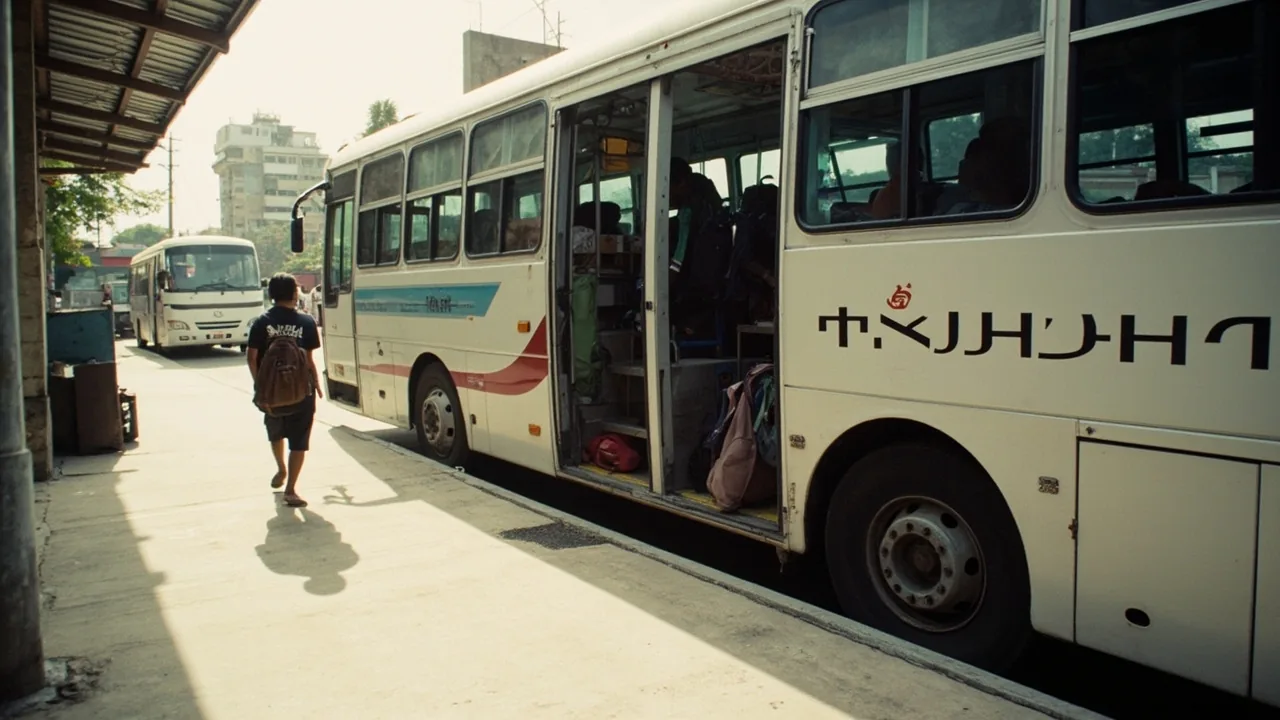
Malaysia-Thailand-Cambodia-Vietnam Bus Route (2026)
The Malaysia-Thailand-Cambodia-Vietnam bus route is a continuous overland corridor running roughly 4,500 km from Kuala Lumpur through Bangkok, Phnom Penh, and Ho Chi Minh City, ending in Hanoi (or reversed). Travellers typically do it in 10-14 days using a mix of long-distance VIP coaches, sleeper buses, and short minivan hops at border crossings. This guide covers the regional transport route specifically, including each border crossing in detail. The whole thing is doable on Indian documents (no special permits beyond standard tourist visas), and the total overland transport cost lands around ₹17,153-₹24,301 (~6,000-8,500 THB or ~$178.05-$252.24) equivalent if you string it efficiently. For related planning, see our guide on Sea Backpacking Hub.
Subodh’s Pro Tip: Don’t try to do this in under 10 days unless you’re flying long segments. The Bangkok-Phnom Penh border alone eats 6-8 hours door-to-door on a good day, and Poipet-Aranyaprathet (the main land crossing) has a reputation among Indian travellers for slow queues and confusing fee structures. Add a buffer day. You may also find Ngapali Temple Etiquette Guide How to Respect Local Customs At Pagodas Near the Beach useful for this trip.
Quick Answers
| What | Answer | Price (INR) |
|---|---|---|
| Route length | KL → Bangkok → Phnom Penh → HCMC → Hanoi (≈4,500 km) | , |
| Typical duration | 10-14 days overland | , |
| Total overland cost | ₹17,153-₹24,301 (~6,000-8,500 THB or ~$178.05-$252.24) equivalent | ₹17,200-₹24,400 (~$178.54-$253.27) |
| Borders crossed | 3 (Malaysia-Thailand, Thailand-Cambodia, Cambodia-Vietnam) | , |
| Visa required (Indian passport) | Yes, for all four countries | , |
| Book at | 12go.asia | , |
The Route at a Glance
The corridor has one classic shape: start in Kuala Lumpur, cross into southern Thailand at Padang Besar or Sadao, ride up through Bangkok, drop into Cambodia at Poipet/Aranyaprathet, continue to Phnom Penh, then cross into Vietnam at Bavet/Moc Bai, ride down to Ho Chi Minh City, push up the coast through Hoi An, Hue, and finish in Hanoi. The reverse works identically. See also: Southeast Asia Trip Budget Breakdown By City How Much a Backpacker Spends in.
If you only have time for half the route, the highest-value slice is Bangkok → Phnom Penh → Ho Chi Minh City. That’s the actual “Mekong overland” most people are searching for, and it’s the segment with the best sleeper buses. For related planning, see our guide on Southeast Asia Festival Calendar 2026 Month By Month Guide for Backpackers.
Step-by-Step: KL to Hanoi by Bus
Step 1: Kuala Lumpur to Bangkok (Direct or via Hat Yai)
Two options here:
Option A: Direct VIP coach KL → Bangkok. Operators like KKKL and Aeroline run direct overnight buses from Kuala Lumpur’s Terminal Bersepadu Selatan (TBS) to Bangkok’s Mo Chit (Northern Bus Terminal). Journey time: 14-16 hours including the Padang Besar border crossing. Price: ₹4,241-₹5,890 (~180-250 MYR or ~$44.02-$61.14).
Option B: Two legs via Hat Yai. KL → Hat Yai (5-6 hours by VIP coach, ~₹1,414 (~60 MYR or ~$14.67)), overnight in Hat Yai, then Hat Yai → Bangkok the next morning (13-15 hours by sleeper, ~₹2,287 (~800 THB or ~$23.74)). This breaks the brutal overnight into two halves and lets you sort out the Padang Besar crossing in daylight.
Subodh’s Pro Tip: If you’re on a tight visa window for Thailand (15-day visa exemption is back in 2026 for Indian passports), don’t break the journey in Hat Yai unless you have 3+ days in Thailand. The two-leg option eats a full day on top of travel.
Step 2: Bangkok to Aranyaprathet (Gateway to Cambodia)
From Bangkok’s Mo Chit terminal, take the 999 VIP bus (run by Transport Co.) straight to Aranyaprathet, the Thai side of the Poipet border. Journey time: 6-7 hours. Price: ₹743-₹915 (~260-320 THB or ~$7.72-$9.50).
The bus usually arrives at the Aranyaprathet “bus station” which is 7 km from the actual border crossing, so you’ll get bundled into a tuk-tuk for an extra ₹286-₹572 (~100-200 THB or ~$2.97-$5.94) per person to reach the border gate itself.
Step 3: Poipet-Aranyaprathet Border Crossing
This is where most Indian travellers hit friction. The border is open 7 AM to 8 PM Thailand time. On a normal weekday morning, count 1-1.5 hours total for immigration on both sides (Thai exit + Cambodian entry). On weekends, holiday eves, or after 2 PM, double that.
Cambodia charges an Indian passport holder ₹2,890-₹3,372 (~30-35 USD) for a visa on arrival (exact USD bills, no change given), plus a ₹193-₹289 (~2-3 USD) “processing” fee that’s technically optional but routinely demanded. Have photos printed (2 passport-size, 4x6 cm white background) before arriving. The e-visa portal at evisa.gov.kh avoids some of the queue, but not the tuk-tuk pressure on the Cambodian side.
Once you’re through, the Poipet casino shuttles or shared minivans to Phnom Penh run 9-10 hours and cost ₹1,001-₹1,287 (~350-450 THB or ~$10.39-$13.35) or ₹1,156-₹1,445 (~12-15 USD).
Step 4: Phnom Penh to Ho Chi Minh City (Bavet-Moc Bai Border)
Two reliable options:
- Giant Ibis direct sleeper bus: Departs Phnom Penh at 11:30 PM, arrives Ho Chi Minh City around 7 AM, includes the border crossing. Price: ₹2,119-₹2,697 (~22-28 USD).
- Mekong Express and Capital Express do similar night services.
Book these online 1-2 days ahead on 12go or the operator’s own site. Same-day tickets sometimes work, but Saturdays fill up. The Vietnamese e-visa (₹2,100 (~$21.80), 3 working days) is the cleanest way in; visa-on-arrival is technically available but the Moc Bai officers sometimes push Indian applicants toward e-visa anyway.
Step 5: Ho Chi Minh City to Hanoi
This is the long one. Buses take 30-40 hours and only make sense if you’re doing it for the experience. Most travellers fly this leg (VietJet, Vietnam Airlines, Bamboo Airways all run ₹3,854-₹7,707 (~40-80 USD) one-way fares).
If you do overland, the standard route is HCMC → Da Lat (8 hours), Da Lat → Nha Trang (12 hours), Nha Trang → Hoi An (12 hours), Hoi An → Hue (4 hours), Hue → Hanoi (12 hours sleeper). Total: 4-5 days, total cost ₹7,707-₹11,561 (~80-120 USD).
For a one-line summary: sleeper buses exist on every segment, sleeper trains exist in Vietnam (Hue-Hanoi and HCMC-Hanoi, 14-18 hours), but for Indian backpackers on a 2-week trip, flying the HCMC-Hanoi leg and busing everything south of Bangkok is the right move.
Booking Each Leg
All segments in this route book cleanly through one aggregator. Book on 12go handles Bangkok-Phnom Penh via the Bangkok-Phnom Penh search page. For the KL-Bangkok direct, the operator sites (KKKL, Aeroline) often beat 12go on price by ₹236-₹353 (~10-15 MYR or ~$2.45-$3.67), but 12go’s refund policy is safer if your upstream bus is late.
Subodh’s Pro Tip: Screenshot your booking confirmation before the bus leaves. Drivers in Poipet and Bavet have been known to “lose” the passenger list and charge walk-ups more.
Common Mistakes Indians Make
Booking KL-Bangkok and assuming the border is handled. The KKKL direct bus does cross Padang Besar for you, but you still walk your luggage through Thai immigration yourself. If you sleep through the boarding call, you wake up in Bangkok without having stamped in. Carry your passport on you, not in checked luggage.
Not having photos for Cambodia. The Poipet counter charges ₹143 (~50 THB or ~$1.48) per photo from a guy outside the gate with a Polaroid. Saves hassle: bring 2 prints from KL itself.
Mistaking the Aranyaprathet “bus terminal” for the border. It’s 7 km short. The ₹286 (~100 THB or ~$2.97) tuk-tuk is unavoidable but at least you’ll know what you’re paying for.
Trying to do Bangkok-Hanoi in 5 days. Even skipping HCMC-Dalat-Nha Trang and flying the Vietnam coastal stretch, the three borders eat 2 days. Five days means you spend the whole trip on a bus.
Using only Thai baht at the Cambodian border. The Poipet touts take THB but at terrible rates. USD is the cleanest currency on the Cambodia side, and Bavet-Moc Bai on the Vietnamese side accepts Vietnamese dong or USD.
What Most Guides Don’t Tell You
The Padang Besar crossing is now a sleeper bus option. Most older guides say you must overnight in Hat Yai, but some direct KL-Bangkok overnight buses cross Padang Besar around 2-4 AM and the border is staffed. Travellers report it works, but only if you’re awake and have your passport ready.
Cambodian e-visas have a “border use” filter. When applying at evisa.gov.kh, the portal asks which border you intend to use. Select Bavet/Moc Bai if you’re going to Vietnam. Selecting Poipet is fine, but some officers have refused Indian e-visas that list the wrong port. This is rare in 2026 but still happens.
The Bavet-Moc Bai Vietnamese side occasionally processes Indian passports at a separate counter. Vietnamese border officials route Indian applicants to a different desk than ASEAN or European travellers. The wait is the same, but the paperwork (especially if you arrived on a visa-on-arrival rather than e-visa) takes 30 extra minutes.
Thai immigration at Aranyaprathet sometimes asks for your onward ticket. Have your Phnom Penh bus booking printed or screenshotted. They have a checklist (return ticket, hotel, sufficient funds) they sometimes pull out for non-Thai-passport travellers.
Insect repellent is highly recommended on the sleeper buses. This sounds off-topic but it’s the single most common traveller complaint on the Poipet-Phnom Penh night run. The bus is open-window for airflow, the stops are rural, and mosquitoes at the rest stops are aggressive. Pack DEET.
FAQs
Do I need a visa for all four countries?
Yes, Indian passport holders need visas (or visa exemptions) for all four. Thailand offers 15-day visa exemption in 2026, Malaysia offers 30-day visa exemption, Cambodia requires either e-visa or visa-on-arrival, Vietnam requires e-visa or visa-on-arrival.
How many border crossings is this?
Three: Malaysia-Thailand (Padang Besar or Sadao), Thailand-Cambodia (Poipet/Aranyaprathet), Cambodia-Vietnam (Bavet/Moc Bai).
Is it cheaper than flying the whole thing?
Yes. Total overland transport runs roughly ₹17,000-₹24,000 (~$176.46-$249.12) if you do every segment by bus. Flying all four legs (KL-Bangkok, Bangkok-PNH, PNH-HCMC, HCMC-Hanoi) typically runs ₹30,000-₹45,000 (~$311.40-$467.10) on low-cost carriers.
Can I do this in 7 days?
Possible but miserable. You’d skip every city except sleep stops. 10 days is the realistic minimum, 14 is comfortable.
Is it safe for solo female Indian travellers?
The route is well-trodden and the main corridors have security and CCTV. Border crossings at night are where risk concentrates. Travellers recommend daytime border crossings for solo women, which means overnighting in Aranyaprathet or Bavet, not arriving at 3 AM. For more, see our solo female travel Southeast Asia guide.
What currency should I carry?
THB for Thailand, USD for Cambodia (Cambodian riel is the local currency but USD is accepted everywhere), VND for Vietnam. MYR for Malaysia. Carry USD clean, unfolded, post-2006 series, torn bills are refused at visa counters.
Subodh’s Take
The Malaysia-Thailand-Cambodia-Vietnam bus route is one of the great overland journeys you can still do on an Indian passport without expensive visas or special permits. The infrastructure is solid, the sleeper buses are real sleeper buses (not upright torture), and the borders, while slow, are predictable. Where the route falls apart is in the planning stage: most people try to do too much in too few days, then end up missing the actual places because they’re stuck at Aranyaprathet at 2 AM. Give it 12-14 days, pre-book the two hardest legs (Bangkok-Phnom Penh and Phnom Penh-HCMC), and treat the KL-Bangkok overnight as the only real “sleep on the bus” night. Everything else, you can do with daylight.
