Malaysia Vegetarian Food Prices: What Indian Veg Travellers Pay in 2026
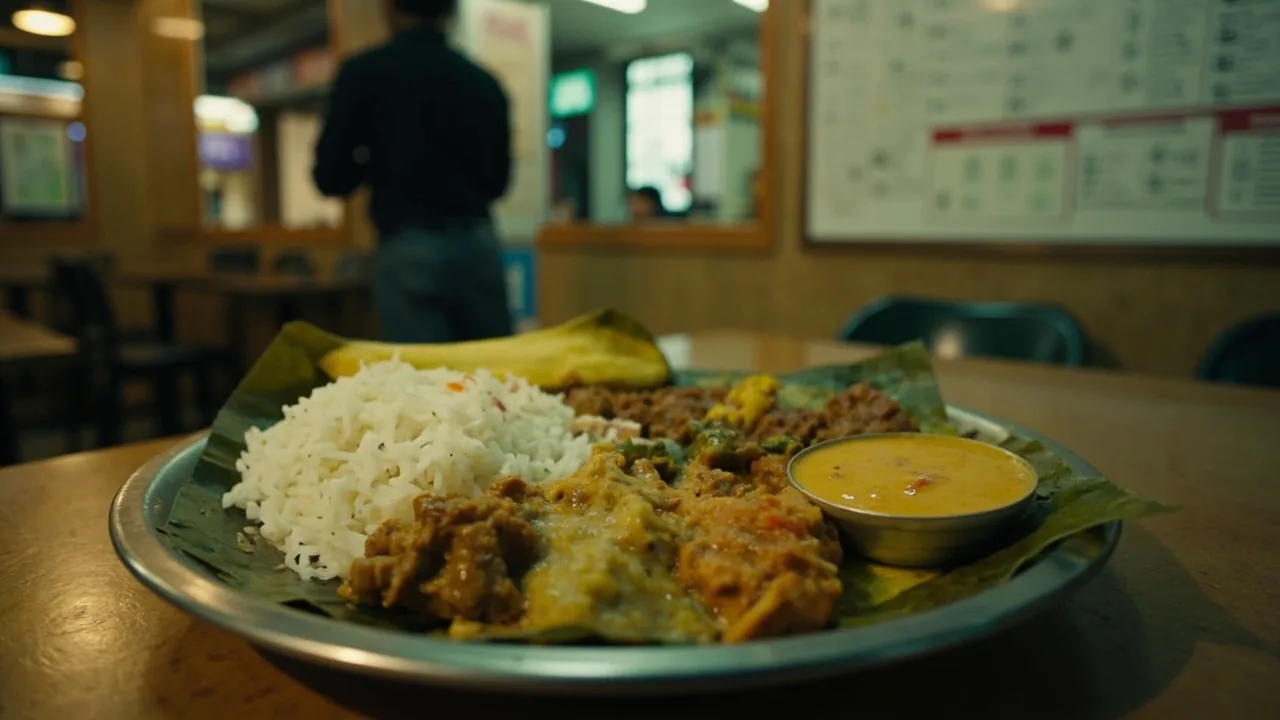
Malaysia veg food price is among the most affordable in Southeast Asia for Indian vegetarian travellers. A banana leaf rice in KL runs ₹188-₹353 (~8-15 MYR or ~$1.96-$3.67), a thali ₹353-₹589 (~15-25 MYR or ~$3.67-$6.11), and a Mamak meal under ₹236 (~10 MYR or ~$2.45). See our guide on Sea Backpacking Hub for related planning.
The figures below are drawn from commonly cited price points across KL, Penang, and Petaling Jaya for the 2026 season. Below is what you’ll pay, with named dishes and prices, then a side-by-side comparison with Bali and Singapore so you can budget honestly.
Quick Answers
| What | Answer | Price (INR) |
|---|---|---|
| Average veg meal at a Mamak stall in KL | ₹188-₹353 (~8-15 MYR or ~$1.96-$3.67) | ₹145-₹280 (~$1.51-$2.91) |
| Banana leaf rice (unlimited veg curries + rice) | ₹188-₹353 (~8-15 MYR or ~$1.96-$3.67) | ₹145-₹280 (~$1.51-$2.91) |
| Veg thali at a proper Indian restaurant | ₹353-₹589 (~15-25 MYR or ~$3.67-$6.11) | ₹280-₹475 (~$2.91-$4.93) |
| Roti canai + teh tarik (veg breakfast) | ₹71-₹141 (~3-6 MYR or ~$0.73-$1.47) | ₹55-₹115 (~$0.57-$1.19) |
| Street food dish (appam, idiyappam, pongal) | ₹75-₹190 (~4-10 MYR or ~$1.85-$4.65) | ₹75-₹190 (~$1.85-$4.65) |
| Bottled water (500ml) | ₹19 (~1 MYR or ~$0.24) | ₹19 (~$0.24) |
| Daily food budget (backpacker, eating local + 1 Indian meal) | ₹850-₹1,320 (~45-70 MYR or ~$8.80-$13.67) | ₹850-₹1,320 (~$8.80-$13.67) |
FX rate used: 1 MYR ≈ ₹23.59 at time of writing.
The Local Vegetarian Landscape
Malaysia has one of the largest Indian diaspora communities in Southeast Asia, which means vegetarian food is built into the daily food infrastructure, not bolted on as a tourist afterthought. Around 7% of the population is ethnically Indian, and Tamil, Malayalee, and Punjabi communities have run banana leaf restaurants, mamak stalls, and pure-veg joints for generations. This is the only major Southeast Asian country where you can walk into a random neighbourhood and find a fully vegetarian South Indian tiffin room within a 10-minute walk.
The two cuisines to know are Mamak (Indian-Muslim, what most people eat day-to-day: roti canai, maggi goreng, nasi kandar, teh tarik) and Indian vegetarian (Tamil South Indian, banana leaf, dosa, idli, thali). Both are reliably vegetarian-friendly, but the rules differ.
Hidden ingredients to watch for in Mamak food:
- Fish sauce and shrimp paste are used in many vegetable dishes, especially at lower-end stalls. Roti canai and teh tarik are safe. Maggi goreng and nasi goreng usually contain some form of animal-based seasoning unless you ask.
- Chicken or anchovy broth appears in some “vegetable” soups and curry bases. Ask “Sayur sahaja, takde ayam, takde ikan” (vegetables only, no chicken, no fish).
- Lard or ghee is occasionally used for frying. Pure-veg Indian restaurants use vegetable oil exclusively.
Local attitudes toward vegetarianism:
Malaysian Indian vegetarians are taken seriously and catered to. Almost every Indian restaurant has a “pure veg” section. Mamak stalls are less strict but will accommodate. The Malay and Chinese populations are less familiar with the concept, so stick to Indian-run places for guaranteed vegetarian food. Several Indian restaurants in KL’s Brickfields are reliable bets for a guaranteed veg meal.
For a broader look at Malaysia’s food scene beyond the vegetarian angle, the Malaysian food guide with vegetarian options covers the full spectrum.
Key Phrases in Bahasa Malaysia and Tamil
| English Phrase | What it Means | Local Script | Pronunciation |
|---|---|---|---|
| I am vegetarian | Saya vegetarian | Bahasa: “Saya vegetarian” | sah-yah veh-jeh-tah-ri-an |
| No meat, no fish | Takde daging, takde ikan | ”Takde daging, takde ikan” | tahk-deh dah-ghing, tahk-deh ee-kahn |
| No egg | Takde telur | ”Takde telur” | tahk-deh teh-loor |
| Pure veg (Indian term) | Sayur sahaja / Veg only | ”Sayur sahaja” | sah-yoor sah-hah-jah |
| No onion, no garlic (Jain) | Tanpa bawang | ”Tanpa bawang” | tahn-pah bah-wahng |
| Is this vegetarian? | Ini vegetarian ke? | ”Ini vegetarian ke?“ | ee-nee veh-jeh-tah-ri-an keh |
Most Malaysian Indian restaurants understand the word “veg” or “pure veg” in English. You don’t need to learn Tamil to eat well. The phrase that solves 90% of problems is simply: “Vegetarian, no egg, no fish sauce.”
Safe Local Street Food Dishes
These are dishes that are vegetarian or can be made vegetarian with a simple request:
1. Roti Canai (Roti Telur-less version) Crispy flaky flatbread, served with dhal and curry. The bread itself is vegetarian (flour, oil, water). Ask for “roti kosong” (plain) or “roti telur” if you want egg (skip if you don’t). Price: ₹35-₹59 (~1.50-2.50 MYR or ~$0.37-$0.61). Safe at any mamak stall.
2. Banana Leaf Rice A full banana leaf piled with rice, 3-4 vegetable curries, dhal, rasam, pickle, and papadum. This is the workhorse meal for vegetarian travellers in Malaysia. Indian restaurants serve it from 10am to 4pm typically. Price: ₹188-₹353 (~8-15 MYR or ~$1.96-$3.67) for veg. The quality varies wildly; busy restaurants with high turnover are safer.
3. Appam + Stew Lacy rice flour pancake with a soft centre, served with vegetable stew or coconut milk. A South Indian breakfast staple. Price: ₹71-₹118 (~3-5 MYR or ~$0.73-$1.22) per appam. Most pure-veg tiffin rooms have it.
4. Idiyappam + Curry Steamed rice noodle nests with vegetable curry. Light, gluten-free, and reliably vegetarian. Price: ₹71-₹141 (~3-6 MYR or ~$0.73-$1.47). Available at Tamil tiffin rooms.
5. Thosai (Dosa) Crispy rice-lentil crepe, served with coconut chutney and sambar. The masala thosai has potato filling (vegetarian). Ask for “thosai tanpa telur” (without egg) if the default version includes it. Price: ₹71-₹141 (~3-6 MYR or ~$0.73-$1.47).
6. Pongal (Ven Pongal) Soft rice and lentil dish tempered with ghee, pepper, and curry leaves. Comfort food, reliably vegetarian. Price: ₹71-₹118 (~3-5 MYR or ~$0.73-$1.22).
7. Maggi Goreng (Veg version) Stir-fried instant noodles with vegetables. The default version has egg and sometimes chicken. Ask for “Maggi goreng, sayur sahaja, takde telur, takde ayam” (Maggi fried, veg only, no egg, no chicken). Price: ₹94-₹165 (~4-7 MYR or ~$0.98-$1.71).
These costs sit at the lower end of the street food price range for Malaysia, which is ₹94-₹236 (~4-10 MYR or ~$0.98-$2.45) for most vegetarian street snacks.
Recommended Vegetarian Restaurants and Indian Spots
Malaysia has a deep roster of Indian restaurants and mamak chains. Here are the reliable options:
1. Banana Leaf Restaurants (multiple locations) Banana leaf rice is the go-to meal - unlimited veg curries piled on a banana leaf with rice. In KL, Brickfields and Klang have strong options. In Penang, Lebuh Chulia and the Little India areas have multiple. Price: ₹188-₹353 (~8-15 MYR or ~$1.96-$3.67). Quality: Hit or miss depending on which branch. Look for places with high local lunchtime turnover.
2. Pure-Veg South Indian Tiffin Rooms These pure-veg tiffin rooms serve idli, dosa, pongal, appam, and coffee/tea all day. Most are open from 7am to 9pm. Price: ₹94-₹236 (~4-10 MYR or ~$0.98-$2.45) per dish. Quality: Reliable. The food is simple, made-for-locals, and freshly prepared.
3. Mamak Stalls Mamak stalls are the lifeblood of Malaysian food. For vegetarian options, stick to roti canai, thosai, vegetable maggi goreng, and teh tarik. Most chains are open 24 hours. Price: ₹71-₹188 (~3-8 MYR or ~$0.73-$1.96) per dish. Quality: Consistent across chain branches.
4. North Indian Restaurants (Punjabi-style) For dal makhani, paneer butter masala, naan, and biryani, Several Brickfields restaurants serve reliable North Indian vegetarian food; look for places busy with local lunch crowds.. Price: ₹353-₹589 (~15-25 MYR or ~$3.67-$6.11) for a full thali, ₹188-₹353 (~8-15 MYR or ~$1.96-$3.67) for individual dishes. Quality: The best Indian food in Southeast Asia, hands down.
5. Pure-Veg Buffet Lunch Options Some pure-veg restaurants offer an all-you-can-eat banana leaf or buffet lunch for ₹236-₹424 (~10-18 MYR or ~$2.45-$4.40). Best value for hungry backpackers. Quality: Varies by day and time; arrive before 1pm for the freshest spread.
For a more detailed breakdown of Indian restaurant options in Malaysia, the Indian restaurants in Malaysia guide covers Brickfields, Penang, and JB specifically.
Food Safety and Hygiene
Malaysia’s food safety is generally good, but street food rules still apply:
- Busy stalls are safer. High turnover means freshly cooked food. If a stall has 20 people waiting, the food is fresh. If nobody’s there at lunch, move on.
- Bottled water only. Tap water is not drinkable. A 500ml bottle costs 1 MYR at any convenience store. Bring a refillable bottle and refill at your hostel.
- Watch for ice in drinks. Most restaurants use commercial ice (safe). Roadside stalls sometimes use tube ice from unclear sources. If in doubt, ask for “tanpa ais” (no ice).
- Peel your own fruit. Cut fruit from street vendors is a common source of stomach issues. Stick to whole bananas, mangoes, or pineapple you peel yourself.
- Wash your hands before eating. Most mamak stalls have a hand-washing sink at the entrance. Use it.
- Start slow. If you’re flying straight from India, the familiar flavours help - but if you’re coming from weeks in Thailand or Vietnam, give your stomach a day to adjust to the richer, oilier Malaysian food.
Getting Connected
Having data on your phone makes finding nearby veg spots much easier. Get a local SIM or eSIM with at least 10GB for the trip. Get Nomad eSIM for Malaysia is the easiest option, no store visit needed. Prices start at around ₹470 (~20 MYR or ~$4.89) for a 10GB plan that works across multiple states.
Common Food Mistakes Indians Make
Mistake 1: Assuming “vegetarian” at a Chinese restaurant means Indian-style veg. What happens: You get a dish with oyster sauce, chicken broth, or lard. How to avoid: At Chinese restaurants, ask specifically “no oyster sauce, no MSG, no chicken stock.” Better yet, stick to Indian or Mamak places for guaranteed veg.
Mistake 2: Ordering “roti telur” without knowing it has egg. What happens: You eat egg, which is not vegetarian for pure-veg Indian travellers. How to avoid: Order “roti kosong” (plain) or “roti tanpa telur” (without egg).
Mistake 3: Trusting “vegetable soup” at a mamak stall. What happens: The soup is made with chicken or anchovy stock. How to avoid: Ask “sup sayur, kaldu apa?” (vegetable soup, what broth?). If they can’t confirm it’s veg, skip it.
Mistake 4: Eating at tourist-trap Indian restaurants in KLCC or Bukit Bintang. What happens: You pay ₹707-₹1,178 (~30-50 MYR or ~$7.34-$12.23) for a meal that costs ₹283 (~12 MYR or ~$2.93) in Brickfields, and the quality is worse. How to avoid: Head to Brickfields, Klang, or Penang’s Little India for authentic, cheap, better-quality Indian food.
Mistake 5: Not specifying “no fish sauce” at mamak stalls. What happens: Your nasi goreng or maggi goreng comes with fish sauce-based seasoning. How to avoid: Say “tanpa kicap ikan” (without fish sauce) or “vegetarian only, no fish sauce.”
Malaysia vs Singapore vs Indonesia: Veg Food Price Comparison
How does Malaysia stack up against its neighbours for vegetarian food?
| Meal Type | Malaysia (KL/Penang) | Singapore | Indonesia (Bali) |
|---|---|---|---|
| Veg thali at Indian restaurant | ₹353-₹589 (~15-25 MYR or ~$3.67-$6.11) | ₹1,345-₹2,240 (~18-30 SGD or ~$14.01-$23.36) | ₹270-₹540 (~50,000-100,000 IDR or ~$2.80-$5.60) |
| Banana leaf rice | ₹188-₹353 (~8-15 MYR or ~$1.96-$3.67) | ₹900-₹1,495 (~12-20 SGD or ~$9.33-$15.49) | ₹160-₹325 (~30,000-60,000 IDR or ~$1.66-$3.37) |
| Mamak stall / Warung meal | ₹118-₹236 (~5-10 MYR or ~$1.22-$2.45) | ₹600-₹1,120 (~8-15 SGD or ~$6.22-$11.61) | ₹110-₹215 (~20,000-40,000 IDR or ~$1.14-$2.23) |
| Street food snack | ₹94-₹164 (~4-7 MYR or ~$0.98-$1.70) | ₹375-₹750 (~5-10 SGD or ~$3.88-$7.77) | ₹55-₹135 (~10,000-25,000 IDR or ~$0.57-$1.40) |
| Daily food budget (backpacker) | ₹1,060-₹1,649 (~45-70 MYR or ~$11.01-$17.12) | ₹3,740-₹5,980 (~50-80 SGD or ~$38.73-$61.96) | ₹810-₹1,620 (~150,000-300,000 IDR or ~$8.39-$16.78) |
The verdict:
- Malaysia is cheaper than Singapore by a significant margin. A vegetarian thali that costs ₹1,345-₹2,240 (~18-30 SGD) in Singapore costs ₹353-₹589 (~15-25 MYR or ~$3.67-$6.11) in Malaysia. You’re paying roughly three-quarters less for the same food.
- Malaysia and Bali are broadly comparable on price, but Malaysia wins on Indian food quality. Bali has Indian restaurants (mostly in Ubud and Seminyak), but they’re tourist-oriented and pricier than local warungs. For authentic Indian veg, Malaysia is the regional gold standard.
- Singapore is the most expensive for Indian food specifically because of high rent and the small Indian population relative to demand. A vegetarian thali in Little India, Singapore runs ₹1,345-₹2,240 (~18-30 SGD or ~$14.01-$23.36). The same meal in KL is ₹353-₹589 (~15-25 MYR or ~$3.67-$6.11).
For a full breakdown of Indian food prices in Singapore, the Indian food in Singapore guide covers Little India, Mustafa, and budget options.
FAQ
Is Malaysia safe for strict vegetarians (no onion, no garlic)? Yes, but it’s harder than in India. Pure-veg Jain restaurants exist in KL and Penang but are limited. Community Jain associations (BAPS, Digambar) can point you to local options. Ask at your hotel or hostel.
Can I get Jain food in Malaysia? Limited but possible. Some pure-veg Tamil restaurants in KL’s Brickfields and Sentul areas cater to Jain customers. Call ahead and ask for “tanpa bawang” (without onion/garlic). The Indian restaurants in Little India Penang also have Jain-friendly options.
Is McDonald’s or Burger King safe for veg in Malaysia? McDonald’s has a vegetarian McWrap (no meat) and corn cups. The fries are vegetarian but cooked in the same oil as chicken products. Burger King has a Veggie Bean Burger at some locations. Both are safe-ish but not ideal for strict vegetarians.
Is fish sauce used in everything? No, but it’s common in Chinese and some Mamak dishes. Indian restaurants don’t use it. If you’re at a mamak stall, ask for “tanpa kicap ikan” (without fish sauce).
How much should I budget for food per day in Malaysia? For a vegetarian backpacker eating local food plus one Indian restaurant meal: ₹1,060-₹1,649 (~45-70 MYR or ~$11.01-$17.12) per day. If you eat only at Indian restaurants: ₹1,885-₹2,827 (~80-120 MYR or ~$19.57-$29.35) per day. If you cook at a hostel: ₹707-₹942 (~30-40 MYR or ~$7.34-$9.78) per day, but veg ingredients are limited.
Is street food in Malaysia safe for vegetarians? Yes, with the usual precautions. Busy stalls with high turnover, freshly cooked food, and clean hands are the baseline. Avoid pre-cut fruit, unpasteurized drinks, and anything that’s been sitting out.
Can I find South Indian filter coffee in Malaysia? Yes. Tamil tiffin rooms serve filter coffee (kopi) for ₹47-₹94 (~2-4 MYR or ~$0.49-$0.98). It’s strong, sweetened with condensed milk, and closer to what you get in Chennai than what you’ll find in Bangkok or Bali.
Subodh’s Take
Malaysia is the unspoken king of vegetarian travel in Southeast Asia, and most backpackers don’t realize it until they land. The food is cheaper than Singapore, the Indian restaurants are more authentic than Bali, and the cultural infrastructure for vegetarianism is built in, not improvised. If you’re a vegetarian Indian doing a SEA loop, Malaysia should be the anchor, not a stopover. Eat at the banana leaf places, drink the teh tarik, and trust the local turnover. Your stomach will thank you.
- Subodh
