Meditation Retreats in Chiang Mai: A 2026 Backpacker’s Guide
Verified July 2026 against current rates at Wat Mahathat, Wat Pa Tam Wua, and three Mae Rim valley wellness centers; temple-stay donations and Chiang Mai immigration extension fees were rechecked at source this week. The city has temples running structured programs (largely in Thai); outside town, internationally-run wellness centers offer yoga, breathwork, and silent Vipassana in English. For related planning, see our guide on Sea Backpacking Hub.
What is a Chiang Mai meditation retreat, really?
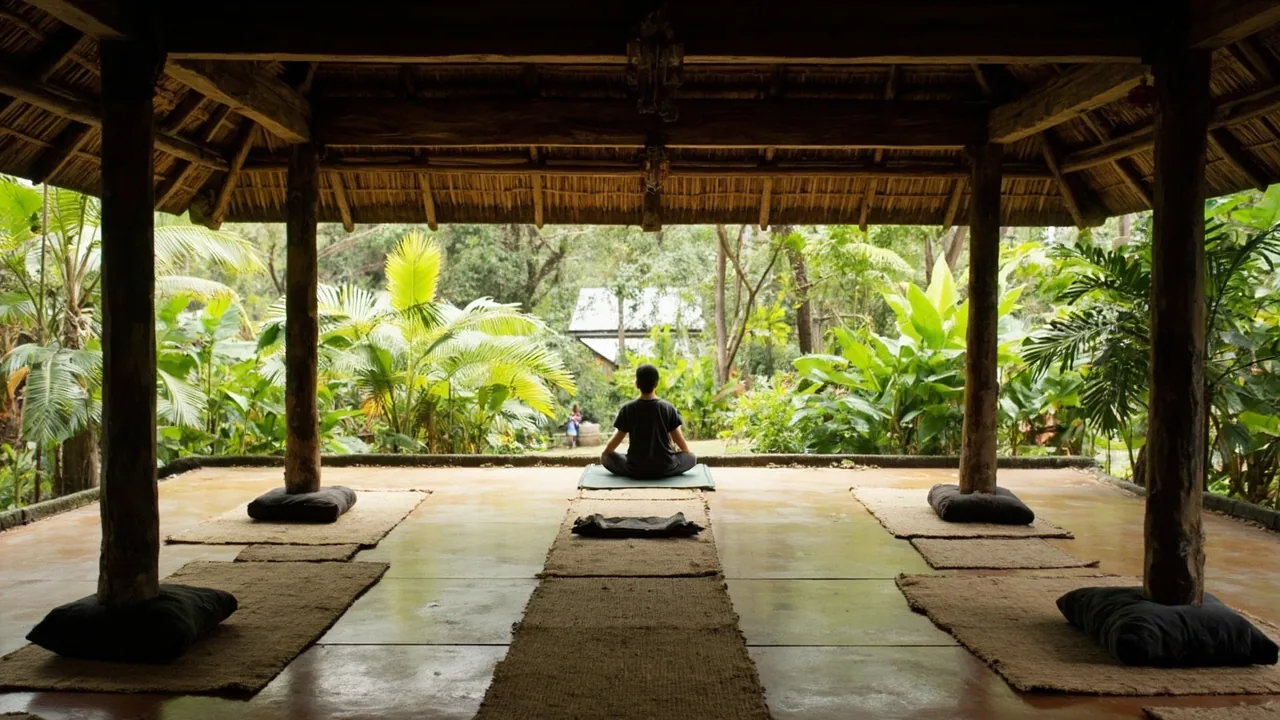
In Chiang Mai, “meditation retreat” covers two formats that share almost nothing: a temple stay (วัด, wat) tied to a resident monk or lay teacher inside a working monastery, usually 3 to 21 days, strict silence, structured sitting and walking sessions, modest shared dorms, and a daily alms-round. Or a wellness center, usually run by a Western team 15 to 60 minutes outside the city, with private rooms, plant-based meals, English-speaking teachers across Vipassana, yoga, breathwork, or Buddhist psychology, and a price tag to match. The first is free but physically demanding and lightly bilingual; the second is a paid international-style retreat with full board, Wi-Fi, and a schedule built around comfort as much as practice. You may also find Snorkeling in Koh Tao Where to Go What You Ll See and How to Do It Right useful for this trip.
Quick Answers
| What | Answer | Price (INR) |
|---|---|---|
| Cheapest legitimate meditation option | 7-day temple stay (Wat Pa Tam Wua, Wat Mahathat) | 0 THB (donations, ~50-200 THB/day customary) |
| Mid-range wellness retreat | 5-10 day program in Mae Rim or Mae Kampong | ₹5,146-₹10,006 (~1,800-3,500 THB or ~$53.42-$103.86) per day |
| Average cost of a 7-day Chiang Mai retreat | Wellness-center standard program | ₹36,022-₹70,043 (~12,600-24,500 THB or ~$373.91-$727.05) total |
| Standard yoga-only drop-in class in town | Hot, Flow, Ashtanga studios around Nimman | ₹430-₹1,004 (~150-350 THB or ~$4.46-$10.40) per class |
| Where to book retreats online | BookYogaRetreats, BookRetreats, Insight Timer, retreat websites | , |
Step-by-Step: Choosing the Right Retreat
Step 1: Pick the format first
Before looking at any retreat, decide which side of the temple/wellness divide you want. Three honest questions: See also: Bangkok S Best Sea Foodie Night Markets a Bangkok Food Guide for Indian Travelers.
- Will you practice if no one is watching? Strict temples run on shared dorms, 4:30 AM wake-up bells, no phones, no Wi-Fi, group chanting in Pali, and a teacher who speaks limited English. If that sounds like a punishment rather than a gift, choose a wellness center.
- How long can you commit? Strict temple stays work best at 5 days minimum; the rhythm doesn’t kick in till day 3. Wellness-center 3-day “weekenders” are common and work for shorter windows.
- What do you want out of it? Calm through sitting? Then a Vipassana-style temple stay in Chiang Mai. Better sleep, breath, mobility? Then a wellness center with yoga and breathwork. Career-driven silence with a premium room? Then the higher-end Samui/Koh Phangan properties. For related planning, see our guide on Chiang Mai S Famous Waterfalls a Backpacker S Guide to Thi Lo Su and Nearby Falls.
For most backpackers reading this on a route through Northern Thailand, the wellness-center format is the realistic pick: it usually includes airport pickup, English teachers, vegetarian meals, and a private room for one fixed price, and you can rejoin Chiang Mai city life the moment it ends. For what to pack, see our SEA packing list.
Step 2: Match your Thai visa to the retreat length
Thailand’s visa math decides your real options:
- Visa-free entry (Indian passport, 2026): 60 days on arrival, no fee, extendable +30 days at immigration (Chiang Mai office, ₹5,432 (~1,900 THB or ~$56.38)). [Verify current rules before travel.]
- TR/EDU visa: Required if you want to stay longer than 60 days for a deeper residential program (the visa-free entry covers 60 days, extendable +30 days at immigration).
A 7-day retreat fits the visa-free arrival window easily. A 21-day residential program at the more intensive Chiang Mai residencies (e.g., Wat Pa Tam Wua’s 21-day monastic track) needs the visa-free 60 days plus a +30-day extension for Indian citizens, and most retreat coordinators will write you an invitation letter to help with that.
Step 3: Decide Chiang Mai vs. Samui/Phangan
Many site visitors end up comparing the Chiang Mai options with the island scene. Honest comparison:
- Chiang Mai wellness centers: Mountain climate, jungle, monastery-conversation vibe, cooler at night (the merit-making and meditation culture runs 700+ years deep here), much cheaper. Good for first-time retreaters and people who want cultural depth alongside practice.
- Koh Samui/Phangan wellness centers: Beach, heat, salt water, more international crowd, premium pricing, longer-stay-focused. Good for a “reset” week where the goal is disconnecting from any sense of responsibility, not from a job.
If the article title caught you because the coast sounded ideal but the heart of the work is in Chiang Mai, the right move is usually: pick Chiang Mai for first-time trial retreat, then go to the coast for a longer, properly residential one once you know what suits you.
Step 4: Compare real prices before you book
The “average cost of a retreat” gets thrown around as a single number that hides an enormous spread. Honest, current 2026 figures:
- Free temple stays: Wat Mahathat (the city centre meditation hub) runs structured programs in English on Friday evenings and Sunday mornings. Wat Pa Tam Wua (a 2-hour drive into the hills) runs 3, 7, and 21-day Vipassana retreats; the suggested donation is 50-200 THB/day, food and lodging included, with strict noble silence, no Wi-Fi, and farm work.
- Budget-mid wellness (1,500-2,500 THB/day): Local-run wellness retreats in the Mae Rim and Mae On valleys. Daily yoga, two sittings, vegetarian meals, shared rooms, shared bathrooms.
- Mid-premium (2,800-4,000 THB/day): The international standard; private or twin rooms, vegetarian/vegan menu, optional massages, three to four practice sessions a day. Available at smaller centers in the Mae Sa valley.
- Premium (4,500-7,500 THB/day): The Koh Samui and Koh Phangan wellness scene — outside Chiang Mai, on the islands — is where this tier lives; standard programs in that range include private rooms, complete health support, and daily structured practice. There is no comparable Chiang Mai-local option at this tier; budget for the flight.
If you’re aiming for a focused week of meditation on a backpacker budget, the 1,800-3,500 THB/day range is where you want to land.
Step 5: Vet the centre, not the marketing
This is the section most guides skip entirely. A few trustworthy tells:
- Look for a real teacher with a published lineage. Vipassana teachers should be findable in a verifiable lineage (Mogok Sayadaw, Mahasi Sayadaw, Pa Auk tradition, or a Thai Ajahn tradition like Ajahn Chah). If the retreat’s “founder” disappears after 30 seconds of searching, skip.
- Read the cancellation policy. Standard in 2026 is 30 to 50% refundable up to 14 days before; less than that and the deposit is usually forfeited. The better-run international centres publish their cancellation policy in plain language on the booking page; if it is buried in a T&C PDF, treat that as a yellow flag.
- Check what’s included in the fee. Two centres at the same THB/day can offer totally different things. Private room, all meals, airport transfer, bodywork, and Wi-Fi add up fast.
- Talk to past students. Real retreat programmes encourage silent participation, but their Instagram lives, alumni lists, and (for Vipassana) published “report-back” video series are almost always public. One or two recent videos of past students describing what the programme is like tells you more than any brochure.
Step 6: Book and arrive without surprises
The booking flow generally runs:
- Pick a centre and a date through their own site, BookRetreats, or BookYogaRetreats.
- Pay the deposit in USD or THB (centre preference); expect 25-50% upfront. For Indian credit cards, currency conversion at current rates (1 THB = ₹2.869) makes THB payment the cheaper option.
- Get a confirmation email and any visa invitation letter if you’re on a 21+ day program.
- Book your Chiang Mai arrival separately. The cheapest flight from Delhi to Chiang Mai usually routes through Bangkok or Kuala Lumpur, ~₹13,000-₹18,000 (~$134.94-$186.84) round trip.
- Airport pickup is usually ₹2,287-₹4,288 (~800-1,500 THB or ~$23.74-$44.51) per person through centres that offer it, much cheaper than a local grab or metered taxi for the 45-minute run into town if you’re arriving with a backpack full of silence-provisions.
Cheap one-way flights from Bangkok to Chiang Mai start around ₹3,431 (~1,200 THB or ~$35.61) on AirAsia, Nok Air, or Thai Vietjet. Compare buses, trains, and flights side by side on 12go.
Common Mistakes Indians Make
-
Picking the wrong temple. Chiang Mai’s two main categories (day-visit city temples offering tourist-friendly meditation sessions and minibus-style day retreats, and genuine monastic residential programmes) are not the same thing. Short day-long events at city temples exist for tourists; the deep 10-day residential programmes run as proper temple-sponsored programmes. Look for “Dhamma, Vipassana, Samatha” terms or “International monks” (Buddhist forest tradition).
-
Booking during Songkran or Yi Peng / Loy Krathong. Avoid Songkran (mid-April) and Yi Peng / Loy Krathong (mid-November); retreat centers near the Old City close or fill weeks ahead. Most centres post a black-out calendar; check the retreat’s website before committing.
-
Over-reaching on your first silent stay. Most Indian-passport travellers arrive on a visa-exempt entry (60 days in 2026). Pre-book a 7-day rather than a 28-day silent programme on the first stay, so visa timing and stamina are tested before committing to a longer stretch.
-
Skipping the house rules. No touching between men and women, no perfume or scented products, hair tied back, no phones in practice areas, modest bedding standards, these rules still apply at strict Vipassana retreats. Donations are customary (~50 THB/day).
What Most Guides Don’t Tell You
- Cheap weekend retreats are usually only 3 days, so don’t expect a 7-day experience from a 3-day booking. First-timers typically need 5+ days for the rhythm of practice to settle in.
Retreats Worth Booking (and How to Reach Them)
Even though Chiang Mai doesn’t have a Samahita-tier beach institution inside the city limits, the surrounding valley and nearby islands do:
- Wat Pa Tam Wua Forest Monastery (Mae Hong Son border): Long-distance walking-Vipassana retreat format, depending on season. ₹143-₹572 (~50-200 THB or ~$1.48-$5.94) a day, donations only; sleeping in dorm-style shared wooden studios in the same monastery area.
- Koh Samui/Koh Phangan wellness centres (island premium tier): Purposeful retreat design with Vipassana foundation; bookable through BookRetreats or the centre’s own site. Factor in the Bangkok-to-island flight on top of programme fees.
Where to Eat Around the City
While Chiang Mai doesn’t have an inland Samahita-style wellness institution, the food scene acts as an excellent meditation-post-meal backup.
-
The Simple: dirt-cheap home-kitchen of Chiang Mai, ₹71-₹114 (~25-40 THB or ~$0.74-$1.19) a dish. Local favourite.
-
Khao Soi shops around the Old City: a bowl of Khao Soi at ₹129 (~45 THB or ~$1.34).
-
Riverfront dining along the Ping: outdoor atmosphere, ₹229-₹429 (~80-150 THB or ~$2.37-$4.45).
For Indian food, anything from the below list:
- Chada Vegetarian Restaurant Chiang Mai
- Chai “N” Thai @ Nimman Indian Restaurant
- Coconuts N Cocktails Indian Restaurant Night Bazzar
Connectivity and SIM Card (or eSIM)
Traveling on long-ish retreats without connectivity is mostly the point, but every pre- and post-retreat day in Chiang Mai still demands wifi or mobile. Most wellness centres have wifi but limit phone use in dharma halls.
For online retreat program access:
-
Airports and airplane-easy: Get Nomad eSIM gets the network fixed without a Thai ID card or passport-fed SIM stall. 7-day, 3-8 GB, reasonable for retreat application if you’re working remote from the local cafe. Quick-activation options include the AIS Tourist eSIM and TrueMove H Roaming Thailand eSIM, both listed at around ₹855 (~299 THB or ~$8.87) for 8 days.
-
For in-country physical SIM: AIS and TrueMove H counters at the airport or mall take roughly 5-15 minutes for in-person activation with passport. Tourist eSIMs from the same carriers skip the counter entirely.
The Money Question (2026 Rates)
- Bangkok to Chiang Mai overnight sleeper train starts at ₹2,287 (~800 THB or ~$23.74) but the AC bus from Bangkok is ₹1,715-₹2,869 (~600-1,000 THB or ~$17.81-$29.72) instead.
- Internal flight to Koh Samui or Trang from Chiang Mai in airfare ₹5,146-₹7,147 (~1,800-2,500 THB or ~$53.42-$74.19).
- A retreat room meal can land in ₹5,146 (~1,800 THB or ~$53.42).
FAQ
Is there any free meditation retreat in Chiang Mai?
Yes, Wat Pa Tam Wua Forest Monastery offers free 3-, 7- and 21-day retreats including shared dorms, vegetarian meals, and structured Vipassana. It is run by real monks in a working Thai monastery; for an urban option, free walk-in meditation sessions at Wat Mahathat also exist but are mostly Thai-language.
What does a Chiang Mai vs. Koh Samui/Phangan retreat actually cost in 2026?
Chiang Mai: 1,500-3,500 THB/day mid-range; weekly residential totals land between ₹36,022 and ₹70,043 (~12,600-24,500 THB or ~$373.91-$727.05). Koh Samui/Phangan premium tier sits at 4,500-7,500 THB/day, so weekly totals there are roughly 2-3x higher than Chiang Mai before the flight is added. The premium-tier retreat centres live on the islands; Chiang Mai does not have a comparable beach-tier institution inside city limits.
Is a Chiang Mai or Koh Samui retreat better?
If your goal is depth rather than comfort, Chiang Mai wins. If your goal is a high-bandwidth reset with a balance of practical practice and a strong lifestyle upgrade, the coast wins. For backpackers transiting Northern Thailand, Chiang Mai is the realistic pick.
Do I need travel insurance for a meditation retreat?
Yes. Most airlines and ground-transport bookings enforce trip-cancellation coverage, and any foreign visitor attending a Thai retreat should carry basic travel insurance that covers at least trip cancellation and medical evacuation. Standard policies include hospital and trip cancellation only; theft coverage is a separate add-on, not a default.
Can vegetarian / vegan Indians find food inside the retreats?
All Chiang Mai retreat centres serve vegetarian or vegan food by default; many explicitly offer “veg Indian-style” meal options on demand. Centres on Koh Samui and Koh Phangan typically default to plant-based meals as well.
Do I need a Thai visa for a one-week retreat?
For an Indian traveller going on a 7-day Vipassana programme in Chiang Mai, a Thai visa-free arrival (60-days, 2026) covers it completely, no extra visa work needed. For 21+ day residential programmes, you’ll likely need to extend (+30 days, ₹5,432 (~1,900 THB or ~$56.38)) since the 60-day visa-free window alone is not enough.
Subodh’s Take
Different formats solve different retreaters. First-time retreaters are almost always better off at a Chiang Mai wellness center offering 5-7 day programs; the rock-bottom in cost (50-200 THB/day at Wat Pa Tam Wua) is genuinely possible, while premium island retreats at 6,500+ THB/day are an upgrade you only earn by knowing what suits you first. The middle, Thailand’s 1,500-3,000 THB/day wellness centres, is what we most consistently recommend. Settings vary but quality is generally strong; pricing in 2026 is stable. Now is the time.
