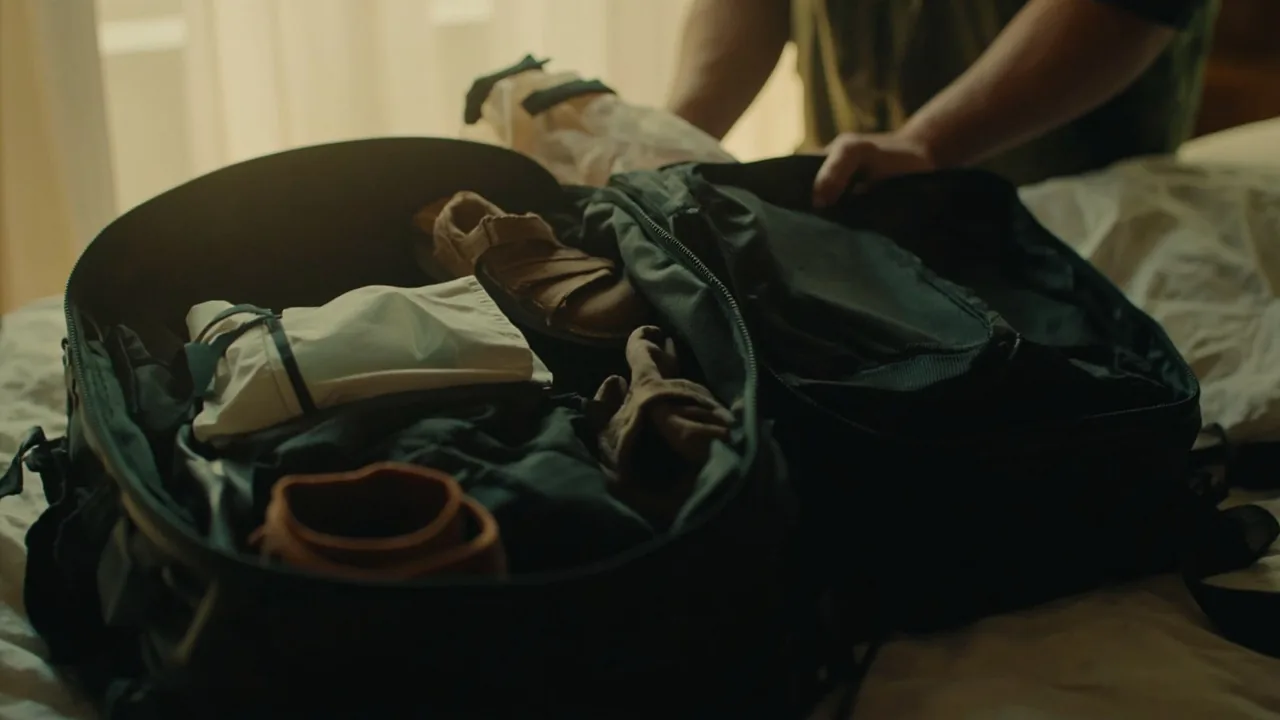
Monsoon Season Packing List for Southeast Asia: What to Pack for Rainy Season Travel
Packing for a monsoon trip in Southeast Asia means planning for humidity that never quits. A 40L-50L backpack with the right rain-specific kit will keep you drier, lighter, and faster than a suitcase of “just in case” cottons. For related planning, see our guide on Sea Backpacking Hub.
This is the monsoon-specific list. For year-round basics, see our dry-season packing checklist. For backpack selection, see our 2026 backpacker gear guide.
Subodh’s Pro Tip: Monsoon packing is about drying speed, not just staying dry. A ₹2,000 (~$20.76) Gore-Tex jacket is no use if your cotton tee underneath takes 18 hours to dry in a hostel without a dryer. Quick-dry synthetics beat heavy waterproofs for 95% of rainy-season days in SEA.
Quick Answers
| What | Answer | Price (INR) |
|---|---|---|
| Best backpack size for monsoon travel? | 40L-50L with rain cover included | ₹3,500-₹7,000 (~$36.33-$72.66) |
| How many quick-dry t-shirts do I need? | 3-4 (you’ll rotate one wet, one worn, one drying, one clean) | ₹400-₹800 (~$4.15-$8.30) each |
| Are power banks allowed in cabin baggage? | Yes, under 100Wh (≈20,000 mAh at 5V); 100-160Wh needs airline approval | — |
| Monsoon downpour survival rate? | ₹600 poncho + dry bag gets you through 95% of storms | ₹600 (~$6) poncho + dry bag |
| Can I skip rain boots? | Yes, except in flood-prone Hanoi/Phnom Penh streets where sandals with grip are fine | — |
What Monsoon Does to Your Trip
Two months a year, SEA flips from hot-and-sunny to hot-and-wet. Bangkok gets the worst of it (August-October), Hanoi runs June-September, Phnom Penh May-October, Luang Prabang May-September, Vientiane May-October. Bali and the Philippines have their own rhythms. The pattern is the same: mornings hot and sticky, afternoons a 30-minute deluge, evenings back to humid calm. Streets flood in 20 minutes. Hostel hallways drip. Buses leave on time and then sit in two-hour traffic because three lanes are underwater.
This is not the monsoon that floods Kerala. It’s the kind where you get drenched, dry off in two hours, and pay for it with one mild cold.
Subodh’s Pro Tip: The mistake Indians make is treating monsoon travel like Himalayan trekking. SEA rain is warm, short, and followed by sun. You do not need a heavy-duty raincoat or rubber boots. You need a thin poncho, a dry bag, and clothes that dry by the next morning.
The Monsoon Packing Checklist
Rain Gear (Non-Negotiable)
| Item | Why | Approximate Price |
|---|---|---|
| Lightweight poncho (full-coverage, knee-length) | Storms are sudden, buses have open doors, scooters have no shelter | ₹400-₹800 (~$4.15-$8.30) |
| Pack rain cover (fits your specific backpack) | Strap-on covers don’t survive tropical rain sideways | ₹300-₹600 (~$3.11-$6.23) |
| 10L-20L dry bag with roll-top | Protects passport, electronics, documents on flooded buses and boats | ₹600-₹1,200 (~$6.23-$12.46) |
| Small zip-lock bags (3-4) | For phone, wallet, charger inside daypack | ₹30 (~$0.31) for a pack |
Quick-Dry Clothing (The Heart of the List)
Cotton stays wet for 12+ hours in SEA humidity. Synthetics dry in 90 minutes under a hostel fan. This is the single biggest change from a dry-season list.
| Item | Quantity | Why | Approximate Price |
|---|---|---|---|
| Quick-dry t-shirts (polyester or merino blend) | 3-4 | One wet, one worn, one drying, one clean | ₹400-₹1,500 (~$4.15-$15.57) each |
| Quick-dry shorts | 2 | Same logic, lighter than trousers for humidity | ₹500-₹900 each |
| Convertible travel trousers (zip-off legs) | 1 | For air-conditioned buses and temple visits, dries fast | ₹1,200-₹2,500 (~$12.46-$25.95) |
| Synthetic briefs/boxers | 4-5 pairs | Cotton underwear stays damp and chafes | ₹200-₹400 (~$2.08-$4.15) each |
| Lightweight long-sleeve shirt (UPF 50+) | 1 | Sun + mosquito protection on cloudy days | ₹800-₹1,800 (~$8.30-$18.68) |
| Sarong / thin scarf | 1 | Sarongs double as towel, sheet, temple cover, and emergency rain wrap | ₹300-₹600 (~$3.11-$6.23) |
Footwear
Three pairs is the maximum. More than that and your backpack is shoes.
| Item | Why | Approximate Price |
|---|---|---|
| Closed-toe walking shoes or trail runners (mesh, quick-dry) | For temple visits, hikes, flooded sidewalks where debris cuts feet | ₹2,500-₹6,000 (~$25.95-$62.28) |
| Sport sandals with heel strap (Chaco/Teva style) | Hostel showers, beach, flooded streets, dries in 20 minutes | ₹1,500-₹4,500 (~$15.57-$46.71) |
| Flip-flops (cheap pair) | Throwaway backup, hostel slippers, beach | ₹200-₹400 (~$2.08-$4.15) |
Subodh’s Pro Tip: Do not bring rubber rain boots. They trap heat, take forever to dry, and add 1kg to your bag. Sandals with a heel strap are grippier on wet tile than smooth-soled boots. The only time boots make sense is northern Vietnam during typhoon weeks, and most backpackers don’t go then.
Electronics & Tech
| Item | Why | Approximate Price |
|---|---|---|
| Universal travel adapter (Thailand uses A/B/C/F; Vietnam uses A/C/G) | SEA has three different socket standards across one trip | ₹800-₹1,800 (~$8.30-$18.68) |
| Power bank under 20,000 mAh / 100Wh | Above that, Indian and SEA airports confiscate it from cabin baggage | ₹1,500-₹3,500 (~$15.57-$36.33) |
| 20,000 mAh fast-charge (multiple ports) | Monsoon means more downtime indoors, more charging | ₹1,800-₹3,500 (~$18.68-$36.33) |
| Phone tripod or flexible mount | For low-light indoor evenings when it’s raining out | ₹500-₹1,500 (~$5.19-$15.57) |
| USB-C and Lightning cables (2 of each) | Cables die faster in humidity, and replacement shops are inconsistent | ₹200-₹500 (~$2.08-$5.19) each |
| Small extension cord with multiple ports | One wall outlet, four devices, three roommates | ₹500-₹1,200 (~$5.19-$12.46) |
See our power bank buyer’s guide for the full breakdown on Wh ratings and airline rules.
Health & Toiletries
| Item | Why | Approximate Price |
|---|---|---|
| ORS sachets (5-6) | Rehydration after a 30-minute downpour walk | ₹15-₹20 (~$0.16-$0.21) each |
| Paracetamol + ibuprofen (small strip) | Travel-fever backup | ₹30-₹60 (~$0.31-$0.62) |
| Antacid (ENO or Ranitidine) | Heavy rains + heavy street food = predictable discomfort | ₹30-₹80 (~$0.31-$0.83) |
| Loperamide (one strip) | For sudden traveller’s diarrhea on a bus | ₹20-₹40 (~$0.21-$0.42) |
| Mosquito repellent (DEET 30%+ or Picaridin) | Mosquitoes spike after rain | ₹150-₹400 (~$1.56-$4.15) |
| Sunscreen SPF 50 | Sunscreen in SEA costs 3-5x Indian prices, bring from home | ₹400-₹800 (~$4.15-$8.30) |
| Quick-dry travel towel (microfiber) | Dries in 30 min vs 8 hours for cotton | ₹400-₹900 (~$4.15-$9.34) |
| Anti-fungal foot powder | Wearing wet sandals all day invites foot fungus | ₹80-₹150 (~$0.83-$1.56) |
For the full toiletry breakdown, see our toiletries-only kit guide.
Documents & Money
| Item | Why |
|---|---|
| Passport (with 6+ months validity) | Monsoon season sees more ID checks at flooded checkpoints |
| Printed visa + e-visa copies | Wet phone = no visa proof at immigration |
| Forex card (HDFC/ICICI/SBI) | Primary payment method; cash backup of ₹3,000-₹5,000 (~$31.14-$51.90) in USD |
| Travel insurance PDF (printed) | Tropical storms delay flights; insurance claims need paper proof |
| 2 photocopies of passport + visa | Stored separately from originals |
Monsoon vs. Dry Season: What Changes
The dry-season packing list and the monsoon list differ on five specific points.
| Category | Dry Season | Monsoon Season |
|---|---|---|
| T-shirt fabric | Cotton or linen OK | Quick-dry synthetic only |
| Outer layer | Light cardigan for AC buses | Thin rain poncho for sudden storms |
| Daypack liner | Ziploc for phone | Roll-top dry bag for entire electronics kit |
| Sandal type | Open flip-flops fine | Heel-strap sandals with grip |
| Laundry strategy | Wash every 3 days, dries by next morning | Wash daily, accept 18-hour dry times, use hostel laundry |
The hostel laundry trade-off matters more in monsoon. Most hostels charge ₹143 (~50 THB or ~$1.48) per kg and machine-dry in 2 hours. Hand-washing in monsoon humidity means your clean shirt is your wet shirt the next morning. Budget for the laundry service 2-3 times a week, and pack fewer clothes because of it.
Electronics & Tech Setup
Power sockets across SEA are inconsistent. Thailand uses A, B, C, and F. Vietnam uses A, C, and G (the British three-pin). Cambodia and Laos use A, C, and E. One universal adapter covers all four countries. Do not bring country-specific adapters; they break in transit and you end up buying the wrong one at a 7-Eleven.
Power bank rules are enforced strictly at Indian airports and variably across SEA. Under 100Wh (20,000 mAh at 5V) is universally cabin-allowed. Between 100-160Wh needs airline approval, usually one email two weeks before departure. Above 160Wh is checked-baggage-only and most airlines refuse it entirely.
Monsoon also kills phone speakers and charging ports faster than dry season. Keep your phone in a ziploc during heavy rain, dry the charging port before plugging in, and bring a small microfiber cloth (any old t-shirt scrap works) to wipe down the phone every night. Travellers report that phones last 30-40% longer on a trip when they aren’t moisture-cycled daily.
For your SIM and data setup: most travellers grab a local tourist SIM at the airport (AIS, dtac, TrueMove in Thailand; Viettel, Mobifone in Vietnam; Cellcard, Smart in Cambodia; Unitel, Lao Telecom in Laos). If you’d rather skip the airport queue and have data on landing, an eSIM activates before you board. Get Nomad eSIM covers Thailand, Vietnam, Cambodia, and Laos on regional plans that beat per-country SIM pricing for a 2-3 week trip.
Cultural Dress Codes (Still Apply in Rainy Season)
Temples don’t care that it’s pouring. Shoulders and knees must still be covered at the Grand Palace in Bangkok, Angkor Wat in Siem Reap, and the temples of Luang Prabang. Your quick-dry convertible trousers and long-sleeve shirt handle this. The sarong from your packing list is the emergency backup when the trousers are drying on the hostel line.
Monsoon adds one wrinkle: you’ll be tempted to wear shorts all day because of the humidity. Don’t. Most SEA temples enforce the dress code more strictly than beach destinations. A ₹300 (~$3.11) sarong from the night market solves the problem without filling your bag.
For more on temple protocols and country-specific gear, see our country packing lists for Thailand and Vietnam.
Common Packing Mistakes Indians Make
Mistake 1: Bringing a suitcase instead of a backpack. What happens: You can’t carry it up a flooded staircase, you can’t hoist it into a sleeper bus luggage hold, you can’t walk 800m from the bus station to the hostel in rain. The fix: A 40L-50L backpack with a hip belt. Backpacks keep your hands free for umbrellas, dry-bag zippers, and grabbing the side of a songthaew.
Mistake 2: Packing jeans, hoodies, and full-length denim. What happens: Denim takes 12-18 hours to dry in SEA humidity. You wear the same wet jeans for two days, they smell, they chafe, and you’ve used up half your clothing weight on one item. The fix: One pair of quick-dry convertible trousers. Done. Save jeans for the flight home.
Mistake 3: Ignoring the power bank Wh rating. What happens: You buy a 30,000 mAh brick in India, and airport security confiscates it at the gate because it’s 111Wh (above the 100Wh cabin limit). The fix: Buy a 20,000 mAh / 5V / 100Wh power bank. It’s still 3-4 phone charges, and every airline allows it.
Mistake 4: Packing cotton underwear and socks. What happens: They stay damp, they don’t dry overnight, and you end up buying more on day three. The fix: 4-5 pairs of synthetic quick-dry underwear. The same for socks if you’re doing temple hikes or northern Vietnam treks.
Mistake 5: Forgetting a pack rain cover. What happens: Your backpack gets soaked through, your dry clothes inside are now wet clothes, and you’ve lost two days of clean kit. The fix: Most 40L-50L backpacks (Osprey Farpoint, Decathlon Forclaz, Quechua) include a fitted rain cover. If yours didn’t, buy one for ₹400-₹600 (~$4.15-$6.23) at any Decathlon in India before flying.
FAQ
Do I need a dry bag, or are ziplocs enough?
Ziplocs work for one phone and a wallet. A roll-top dry bag is for when your entire electronics kit, passport, and a change of clothes need to survive a flooded songthaew floor or an upside-down kayak. ₹600-₹1,200 gets you a 10L-20L one that pays for itself the first time it rains.
Should I bring a power bank bigger than 20,000 mAh?
Only if you have airline approval in writing. Indian DGCA and most SEA carriers allow up to 100Wh in cabin baggage. 20,000 mAh at 5V is exactly 100Wh. Above that, you risk confiscation. Two 20,000 mAh banks are a smarter play than one 30,000 mAh brick.
Can I just wear my quick-dry clothes and skip bringing rain gear?
You can, and you’ll be soaked within ten minutes of a real storm. Quick-dry fabrics handle drizzle, sweat, and post-rain humidity. They don’t handle a 30-minute cloudburst sideways on a motorbike. A thin poncho costs ₹400-₹800 (~$4.15-$8.30) and weighs 150g. There’s no real reason to skip it.
What about typhoon season in Vietnam and the Philippines?
Typhoon weeks (usually September-October in Vietnam, year-round in the Philippines) are different from regular monsoon. If you’re travelling in those windows, add a small first-aid kit upgrade, check your insurance for weather-related cancellations, and plan for 1-2 days of indoor time. The basic packing list still applies, but expect ferries and flights to be cancelled.
Is monsoon a bad time to visit SEA at all?
No, and this matters. Monsoon is the cheapest season. Hostels drop 20-30%, tours are negotiable, and popular spots like Railay Beach or Ha Long Bay are 80% empty. The trade-off is rain windows. Most backpackers prefer monsoon for budget and quiet, then pick destinations that handle rain well (Bangkok, Hanoi, Siem Reap) over coastal spots that don’t (Koh Samui in October is a wash-out).
