Mui Ne Weather by Month: Best Time for Sand Dunes (2026)
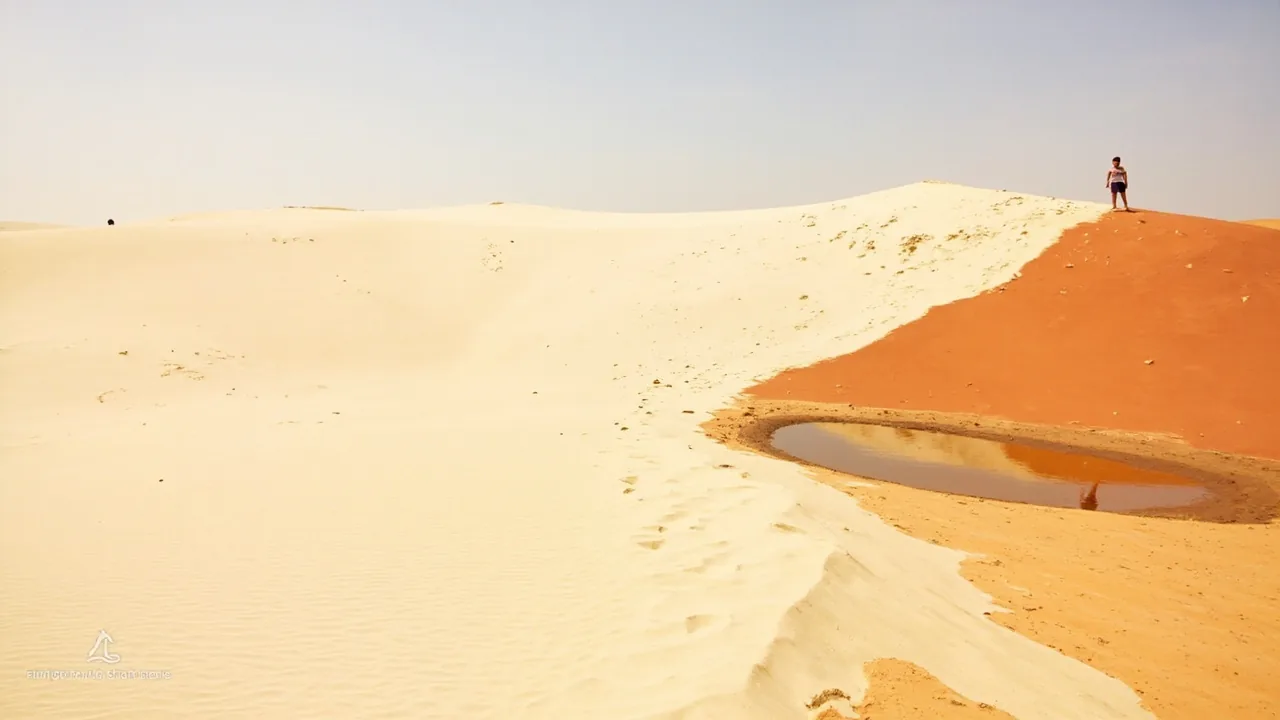
If you’re working out mui ne weather by month best time for sand dunes, the answer comes down to the December-to-April dry window. December through April gives you the postcard shot: bone-dry white and yellow dunes, clear sunrise light, jeep tours running on schedule. June through October turns parts of the same landscape into a muddy slough. Planning the wider region? Our Southeast Asia backpacking hub covers the full multi-country route.
Quick Answers
| What | Answer | Price (INR) |
|---|---|---|
| Best months for the dunes | December to April (dry season) | ₫1,200,000 to ₫1,800,000 jeep tour |
| Worst months for the dunes | June to September (peak monsoon) | Tours often cancelled after sustained rain |
| Cheapest time to visit | May or October (shoulder, short showers) | Dorm beds ₫180,000 to ₫360,000/night |
| Sunrise time in dry season | 5:45 to 6:10 AM | Jeep pickup around 4:30 AM |
| Average rain in peak monsoon July | 230 mm across 18 to 22 rainy days | Bring a real rain jacket, not a poncho |
Month-by-Month Breakdown
For a country-wide month-by-month plan, see the best month to visit Vietnam guide for Indian travellers.
| Month | Weather | Crowds | Cost Level | Verdict |
|---|---|---|---|---|
| January | Dry, 26 to 28°C, low humidity | High | Peak (₫₫₫) | Peak dunes weather, peak prices |
| February | Dry, 26 to 29°C, light breeze | High | Peak (₫₫₫) | Same as January, slightly warmer |
| March | Dry, 27 to 30°C, hottest stretch starts | Medium-High | Shoulder-Peak (₫₫) | Still good for dunes, hotels drop a touch |
| April | Hot, 28 to 32°C, first short showers late month | Medium | Shoulder (₫₫) | Last reliable month, humid by afternoon |
| May | Transitional, 29 to 33°C, scattered afternoon rain | Low-Medium | Budget-Shoulder (₫) | Cheap stays, sand still firm most mornings |
| June | Wet season starts, 28 to 32°C, heavy evening showers | Low | Budget (₫) | Lakes filling, red dunes get soft |
| July | Peak monsoon, 27 to 31°C, 18 to 22 rainy days | Low | Budget (₫) | White dunes still climbable early morning |
| August | Peak monsoon, 27 to 31°C, typhoon risk | Low | Budget (₫) | Tours get cancelled often, refund haggling |
| September | Monsoon tails off late month, 27 to 31°C | Low | Budget (₫) | Wildflowers start, but roads still slick |
| October | Shoulder returns, 27 to 30°C, light rain | Medium | Shoulder (₫) | Best low-season value, almost no crowds |
| November | Dry weather returns mid-month, 26 to 29°C | Medium-High | Shoulder-Peak (₫₫) | Reopens fully, book early for Christmas |
| December | Dry, 25 to 28°C, lowest humidity | High | Peak (₫₫₫) | Perfect dunes weather, peak Christmas/New Year rates (highest tier of the year) |
Dry Season (December to April) vs. Rainy Season (May to November)
The dunes flip with the rain. The white dunes stay climbable most of the year because the sand is deep and drains fast, but the red dunes turn red-brown mush after sustained rain, and jeep drivers will refuse the route because the vehicles sink. The Fairy Spring (Suoi Hong) stream that cuts through the red dunes disappears almost entirely in dry months, leaving cracked earth that looks alien; in July, the same stream is ankle-deep and brown.
The lotus lake you see on Instagram is itself a seasonal thing. It’s only there from June to October, fed by monsoon runoff. If you go in February expecting a lake, you’ll find sand. If you go in August expecting the same lake, you might not be able to get to it because the access road is flooded.
Pros of dry season (Dec to Apr):
- White, yellow, and red dunes all accessible every day, no cancellations
- Sunrise is usually clear, the 4:30 AM jeep pickup isn’t a wasted morning
- Less humidity means daytime dunes visits feel fine, not exhausting
- Dorms, hostels, and hotels all run on standard schedules, no surprise closures
Cons of dry season (Dec to Apr):
- Christmas, New Year, and Tet (late January or early February) push hostel rates up by 40 to 60%; pack for the cool stretch with a Vietnam December packing list
- The main dune parking lots get crowded at sunrise, three to five jeeps staging at once
- Hot afternoons in April, 32°C plus, make the dunes a real heat-stress risk if you stay past 10 AM
- No lotus lake. If the lotus shot matters to you, this is the wrong window
Pros of rainy season (May to Nov):
- Dorm beds go for half the December rate (see the Vietnam February weather month by month breakdown for how the dry-season peak compares)
- Almost no tourist crowds. Sunrise jeep tour, you, the driver, and one other traveller
- The lotus lake is in season (June to October)
- Rainy-season photographs have dramatic cloud structure over the dunes
Cons of rainy season (May to Nov):
- Red dunes get soft, drivers cancel, you lose half a day
- Flooding closes the road to the lotus lake in August some years, check with your hostel the day before
- Typhoon risk for the August to October stretch, though Mui Ne itself is rarely hit hard, long-tail forecasts often flag it anyway
- Sunrise tours get cancelled 30 to 50% of August mornings, your money back is a negotiation
The honest middle path is the shoulder months: late April, May, and October. You get dry-season firmness on the dunes most mornings, you get the low-season price tag, and you accept that one afternoon in three will dump rain on you for an hour.
What to Pack Specifically for These Months
For dry season (December to April), bring a real sunscreen (SPF 50, the dunes bounce light back at you), a light long-sleeve shirt for the 4:30 AM jeep because pre-dawn on the sand gets down to 21°C, and a buff or scarf to keep sand out of your nose and mouth during the jeep ride. Closed-toe shoes are not optional; sandboarding barefoot or in flip-flops ends with burned toes by 7:30 AM.
For rainy season (May to November), the dry-season list still applies plus a real rain jacket, not a 7-Eleven poncho. The poncho tears the first time you crawl up a wet dune. Quick-dry pants over jeans, because jeans stay wet for eight hours after a single downpour. A dry bag for your phone and passport during jeep tours in July and August.
For both seasons, a headlamp with a red-light mode is worth packing. Most sunrise jeep pickups happen before the driver turns the lights on, and you’re fumbling with your phone while climbing into a stranger’s vehicle in the dark.
Season Costs Comparison
| Item | Peak Season (Dec to Feb) | Shoulder Season (Mar, Apr, Oct, Nov) | Low / Monsoon (May to Sep) |
|---|---|---|---|
| Flight from India | ₹22,000 (~$228.02) to ₹28,000 (~$290.21) round trip | ₹15,000 (~$155.47) to ₹22,000 (~$228.02) | ₹11,000 (~$114.01) to ₹16,000 (~$165.83) |
| Dorm bed per night | ₫300,000 to ₫500,000 | ₫220,000 to ₫360,000 | ₫180,000 to ₫280,000 |
| Private room | ₫700,000 to ₫1,200,000 | ₫500,000 to ₫800,000 | ₫400,000 to ₫650,000 |
| Sunrise jeep tour (shared) | ₫1,500,000 to ₫1,800,000 | ₫1,200,000 to ₫1,500,000 | ₫900,000 to ₫1,200,000 |
| ATV sandboard add-on | ₫400,000 to ₫600,000 | ₫350,000 to ₫500,000 | ₫250,000 to ₫400,000 |
| Bus from HCMC (Sleeper) | ₫280,000 to ₫350,000 | ₫230,000 to ₫280,000 | ₫200,000 to ₫250,000 |
Subodh’s Pro Tip: Book shared sunrise jeeps direct at your hostel, not through hotel lobby tour desks. Same drivers, identical route, the hostel price is usually ₫200,000 to ₫400,000 less per person because the hotel takes 15 to 20%.
How to Run a Sunrise Jeep Tour on a Budget
If your trip also includes the highlands, the Dalat weather by month highland escape guide explains how the same dry-versus-wet logic plays out inland.
The tour runs in two flavours. A shared jeep is four to eight travellers, leaves at 4:30 to 5:00 AM, hits the white dunes at sunrise, the red dunes and Fairy Spring by 7:00 AM, and you’re back for breakfast by 8:30 to 9:00. The other option is a private jeep, just you, same route, costs roughly double but you control the stops and the start time.
If money matters, shared is the call. The shared jeeps occasionally run late during Christmas and Tet when traffic backs up on the access road, so if you have a bus to catch that day, ask the operator for an early-slot jeep (4:00 AM pickup) or book a private for the sunrise morning of your departure.
Negotiating the add-ons. The driver will quote a base jeep price and then start tacking on: ATV rental, sandboard rental, Fairy Spring entrance (when applicable). Each one is haggled individually, and the cheapest ones disappear fast. If you want to ride an ATV, ask your hostel the day before whether they bundle the jeep and the ATV; many do, and the bundle is usually ₫300,000 cheaper than negotiating both at the dunes.
Safety Alert: Sandboarding injuries at the dunes are real and underreported. The basic rental boards have no bindings; you sit on the board, hold the rope, slide down a dune. The slope at the white dunes is roughly 30 to 40 degrees. If you’ve never been on a board, the safer play is one slow run from the lower slope with the driver’s help, not the full-height descent everyone films.
Where to Eat in Mui Ne (What Works When)
Mui Ne is seafood-heavy, and the Vietnamese seafood clay-pot places run year-round. During dry season, the open-air spots with sea-facing tables are the move. In rainy season, check whether the place has a covered area; half of the beachfront restaurants in Mui Ne are tarp-roofed, which is fine until a real downpour turns dinner into a wet-towel exercise.
The clay-pot seafood at PHỐ MŨI NÉ - CƠM NIÊU HẢI SẢN TƯƠI SỐNG is one option for local seafood without driving into Phan Thiet town. Travellers building a beach loop often pair Mui Ne with the Nha Trang beach season weather month guide.
Vegetarian travellers will struggle in Mui Ne. The shortlist spots are mostly seafood-focused, and the cơm niêu (clay-pot rice) format usually comes with fish sauce in the seasoning. Indian restaurants in the Bokei and Lucky Bubbles areas thin out during monsoon because Indian traveller traffic to Mui Ne drops off outside dry season.
Getting Connected
You’ll want data for two things in Mui Ne: checking the weather radar the morning of your jeep tour, and booking a bus or Grab back to HCMC if a typhoon cancels a flight. A physical SIM from Viettel or Mobifone at HCMC airport costs ₫150,000 for 30 days with 3 to 4 GB/day; nomads who land and book their jeep tour via the GetYourGuide app often prefer a cheaper eSIM instead. ESIM providers let you activate before the flight and skip the airport SIM queue lets you activate before the flight and skip the airport SIM queue.
If you’re staying more than a week, the local SIM is cheaper; for four nights or under, the eSIM math wins. Both Viettel and Mobifone have decent 4G along the Mui Ne beach strip but drop to 3G around the dunes themselves (unsurprising, because sand and 4G don’t mix well).
FAQ
Is the sand dunes tour worth it during monsoon? Worth a one-time go, even August. Pick a clear morning (your hostel will know from the previous night’s rain), book the jeep, take the shared rate, and accept that the red dunes might be cancelled. Half the monsoon tour is jeep driving through flooded countryside, which on its own is worth the ticket.
How early does the jeep pick me up? Shared jeep pickups are 4:30 to 5:00 AM from your hostel. The driver waits at the front gate, honks, doesn’t come in. Most hostels will pack you a takeaway breakfast if you ask at check-in the night before.
Can I do the dunes without a jeep? Yes. You can rent a scooter for ₫150,000 to ₫200,000/day and ride to the white dunes yourself. The catch: red dunes and Fairy Spring are about 25 km further inland, and the road between them is sketchy in monsoon months. Jeep is the safer call for first-timers.
Will my tour be cancelled if it rains the night before? Sometimes. For month-specific typhoon and flooding risk elsewhere on the coast, the Hue weather typhoon flooding risk month guide is a useful reference point. White dunes still run after light overnight rain. Red dunes usually cancel if it rained more than two to three hours the previous night. Your driver will WhatsApp or call at 4:00 AM with the verdict. Ask for a refund, not a reschedule, if it’s a multi-day stay and you have only one morning free; the operators understand.
What is the actual sunset vs sunrise question I should care about? Sunrise. Sunset at the dunes is fine but the sun sets behind the dunes, you get a flat orange wash rather than the backlit silhouettes that make sunrise famous. If you can only do one, sunrise, no question.
Should I skip Mui Ne in August entirely? No, but adjust expectations. The dunes are still there. Some operators run a slightly reduced schedule. The trade is the dorm rates drop 40% from July, the road traffic dies, and the lotus lake is in full bloom. Book flexible transport out (sleeper bus to HCMC or Nha Trang works fine in rainy season) in case typhoon forecasts shift.
Do I need to pre-book the jeep tour or can I show up? Pre-book if you’re in dry season and on a tight schedule. Walk-up works in monsoon when demand is low. Your hostel’s reception is the fastest booking channel; otherwise the GetYourGuide Mui Ne sunrise jeep options cover most schedule preferences.
Subodh’s Take
If your dates are flexible and your budget is tight, the May-and-October shoulder is the answer: dry mornings, monsoon-light evenings, half-price dorms, and the jeep drivers still answer the phone. If you want the “perfect dunes” reel and money is no object, January or early February, midweek if you can swing it. Avoid July if the red dunes are your priority, full stop.
