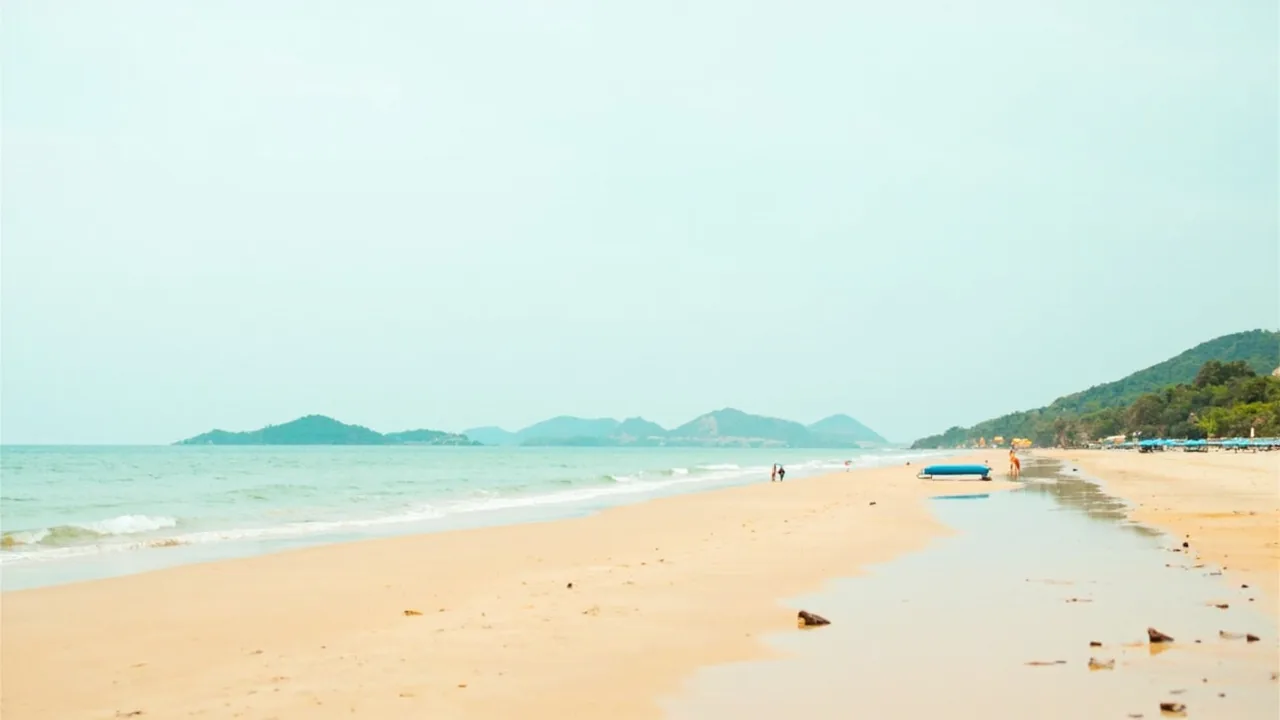
Nha Trang Beach Season: The Only Month-by-Month Guide Indian Budget Travelers Need
If you are Googling “Nha Trang weather by month when is beach season,” here is the straight answer: the safe swimming window runs from May through September, with the cleanest water in June and July. October to December is typhoon season. January to April is dry but the sea is rough.
Nha Trang sits on the south-central coast and gets a different weather pattern than the rest of Vietnam. The south (Ho Chi Minh City, Phu Quoc) has two seasons: wet and dry. Nha Trang has its own rhythm: a hot dry stretch from February to April, a warm rainy stretch from May to September that is paradoxically the best beach season, and a typhoon-prone stretch from October to December. Travellers who treat Nha Trang like Phu Quoc or Da Nang get caught out. For the full Southeast Asia beach route, see the sea backpacking hub.
Quick Answers
| What | Answer | Price (INR) |
|---|---|---|
| When is Nha Trang beach season? | May to September (warm, mostly calm sea) | Free to swim |
| When is it too dangerous to swim? | October to December (typhoons, rough surf) | Avoid swimming |
| When is the cheapest month? | November (typhoon risk, low demand) | ₹500 (~$5.24) per dorm night |
| When is the most expensive month? | August (peak domestic + Russian tourists) | ₹1,200 (~$12.57) per dorm night |
| Average rainfall in wettest month? | October, ~340mm | — |
| Average sea temperature in July? | ~28°C | Free to enter |
Month-by-Month Breakdown
| Month | Weather | Crowds | Cost Level | Verdict |
|---|---|---|---|---|
| January | Dry, ~24°C air, rough sea | Medium | Shoulder (₹₹) | Sun is out, swimming is sketchy |
| February | Dry, ~25°C air, choppy sea | Medium | Shoulder (₹₹) | Same as January, no improvement |
| March | Hot, ~27°C air, strong winds | Medium | Shoulder (₹₹) | Sunburn risk, water still rough |
| April | Hottest, ~28°C air, sea calming | Medium | Shoulder (₹₹) | Heat peaks, beaches start to fill |
| May | Warm, ~29°C air, sea turns calm | High | Peak (₹₹₹) | Beach season starts, book early |
| June | Warm, ~30°C air, brief showers | High | Peak (₹₹₹) | Best swim month, jellyfish appear |
| July | Hot, ~30°C air, afternoon rain | high | Peak (₹₹₹) | Peak season, dorms fill up |
| August | Hot, ~30°C air, humid | high | Peak (₹₹₹) | Most expensive month, Russian + domestic crowds |
| September | Warm, ~28°C air, sea still calm | Medium | Shoulder (₹₹) | Still swimable, typhoon risk rises late |
| October | Wet, ~27°C air, rough sea | Low | Budget (₹) | Typhoon season starts, avoid |
| November | Wet, ~26°C air, storms | Low | Budget (₹) | Cheapest month, swimming unsafe |
| December | Cool, ~24°C air, occasional storms | Low | Budget (₹) | Floods possible, mostly quiet |
Subodh’s Pro Tip: The single best week to visit is mid-June. The water is at its calmest, the rain comes in short 30-minute bursts in the late afternoon, and the July-August price spike has not hit yet. If you can only do one week, do that one.
Safety Alert: Jellyfish appear in the bay from June through August. Travellers report painful stings on Tran Phu Beach and at Bai Dai. Wear a rash guard or long-sleeve swim shirt if you plan long swims. The local phrase for jellyfish is “sứa,” and the small transparent ones are the worst. If stung, vinegar on the affected area is the standard local treatment, not freshwater.
Nha Trang Beach Season: Pros and Cons
Pros:
- May to September water temperature stays between 27°C and 29°C, warmer than Goa in winter
- June, July, August get rain but it is afternoon, not all-day, so mornings are clear
- Dorm rates outside July-August drop to ₹500-₹600 (~$5.24-$6.28) per night, almost half of peak
- Vietnamese summer holidays fall in this window, so domestic tourism is strong, meaning good bus and train connections
- Seaweed and algae blooms are rare in Nha Trang compared to Phan Thiet or Vung Tau
Cons:
- October through December sees 4-6 typhoons per season, with at least one or two making direct landfall near the city
- July and August dorm prices spike 50-100%, and the good ones (the ones walking distance from Tran Phu Beach) sell out by 9 PM
- June and July bring jellyfish blooms that close some swimming beaches temporarily
- Rain is short but heavy, 30mm in 30 minutes is common, and floods side streets near the Cai River
- December and January see the highest swell, with waves of 2-3 metres hitting the main beach
Now the ground-level detail. Flights from India to Cam Ranh Airport (the airport serving Nha Trang, about 35 km south of the city) stay cheap in November and December because demand collapses. A round trip on AirAsia or VietJet from Mumbai or Bengaluru runs around ₹14,000-₹18,000 (~$146.61-$188.50) in low season, jumping to ₹25,000-₹32,000 (~$261.80-$335.10) in July-August when domestic demand peaks. The trade-off is obvious: in low season you save ₹10,000 (~$104.72) on the flight but cannot swim at the beach.
Dorm rates follow the same curve. In August, a bed at one of the well-rated hostels in the city centre runs ₹912-₹1,313 (~250,000-360,000 VND or ~$9.55-$13.75) per night. In November, the same bed drops to ₹547-₹802 (~150,000-220,000 VND or ~$5.73-$8.40). That is a midrange difference of about ₹438 (~$4.59) per night, working out to roughly ₹3,066 (~$32.12) across a week. For a solo backpacker on a tight budget, that ₹3,066 (~$32.12) buys a full day of island-hopping tours or a three-day motorbike rental.
One thing the standard “best time to visit” articles miss: the rainy season in Nha Trang is structurally different from the monsoon in Hanoi or HCMC. Hanoi monsoon means grey skies for days. Nha Trang rain means a 20-30 minute downpour around 3 PM, then sunshine by 4 PM. The humidity stays high but you still get usable beach mornings. Travellers who arrive in June expecting full days of rain are surprised to find blue sky at 9 AM and another blue sky at 5 PM.
What to Pack Specifically for This Time
See our Vietnam packing list month-by-month for the full breakdown. If you are going during beach season (May to September):
- Quick-dry swim shorts (two pairs minimum, humidity is brutal)
- A rash guard or long-sleeve swim shirt for jellyfish protection
- Reef-safe sunscreen (SPF 50+, the sun is closer to the equator than most Indians realize)
- A lightweight rain jacket for the afternoon showers (does not need to be heavy, just waterproof)
- Sandals with straps (flip-flops get washed off the beach in choppy water)
- A dry bag for phone and wallet when island-hopping
If you are going during typhoon season (October to December) and accepting the low-season deal:
- A proper waterproof jacket, not just a poncho
- Quick-dry everything, including socks
- A small first-aid kit (typhoon season means more road accidents and minor injuries)
- A printed copy of your hotel booking and e-Visa, not just on your phone (power cuts happen)
- Travel insurance that covers trip interruption, since flight cancellations are common
For the cooler months (January to March), pack a light hoodie for evenings. The temperature drops to 18-20°C after sundown, which catches tourists from tropical Goa off guard.
Season Costs Comparison
| Item | Peak Season (Jun-Aug) | Shoulder (Apr-May, Sep) | Low Season (Oct-Mar) |
|---|---|---|---|
| Flight from India (round trip) | ₹25,000 (~$261.80) | ₹18,000 (~$188.50) | ₹12,000 (~$125.66) |
| Dorm Bed (per night) | ₹1,200 (~$12.57) | ₹800 (~$8.38) | ₹500 (~$5.24) |
| Private Room | ₹3,000 (~$31.42) | ₹2,000 (~$20.94) | ₹1,200 (~$12.57) |
| Bus from HCMC | ₹1,500 (~$15.71) | ₹1,200 (~$12.57) | ₹900 (~$9.42) |
| Island-hopping tour | ₹1,800 (~$18.85) | ₹1,500 (~$15.71) | ₹1,200 (~$12.57) |
| Seafood dinner for two | ₹2,500 (~$26.18) | ₹2,000 (~$20.94) | ₹1,800 (~$18.85) |
The biggest swings are dorm beds and flights. Food and tours barely move because the local economy does not depend on tourist season the way Goa or Phuket does. For a seven-day trip, peak season costs around ₹35,000-₹40,000 (~$366.52-$418.88) all in (excluding flight), low season around ₹20,000-₹25,000 (~$209.44-$261.80). That is a real difference for budget travelers.
Subodh’s Pro Tip: November is the single best month for the budget traveler who does not need to swim. Flights are at their cheapest, hostels are empty (you can often negotiate 20% off the listed price by walking in), and the city has a quieter, more local feel. The trade-off is no swimming, and at least one storm warning during your stay. Check the Vietnam weather by month and region guide to confirm whether November fits your other destinations on the same trip.
Getting Connected
You will want data to check real-time typhoon warnings if you are going in October or November. Grab a local Viettel or Mobifone SIM at the airport (₹729 (~200,000 VND or ~$7.64) for 30 days with 4GB/day) or skip the SIM card queue entirely with Get Nomad eSIM. Both work fine for weather apps and Telegram groups where local backpackers share storm updates.
Safety Alert: During typhoon warnings, follow the Vietnam Disaster Management Authority’s updates and your government’s travel advisory page (for Indians, check mea.gov.in before departure). Do not trust hotel staff who tell you “it will be fine” if a Category 2 or higher storm is forecast.
FAQ
Can you swim in Nha Trang in October or November? Technically possible on calm days, but not advisable. The swell is unpredictable, undertows are common, and lifeguards are often not on duty at smaller beaches. Travellers report getting pulled out at Bai Dai and Doc Let in October. Stick to the hotel pool.
When is jellyfish season in Nha Trang? June through August, with peak in July. The small transparent jellyfish (sứa) are the most painful. Most main beaches post warning flags. If you see a purple or red flag, do not enter the water.
How bad is typhoon season really? Three to four typhoons pass within 500 km of Nha Trang each year between September and December. Most do not make direct landfall, but the outer bands can bring heavy rain in 24 hours, flood side streets, and cancel ferries to the islands. Plan for at least one indoor day if you travel in this window.
Is May or September better for budget travel? May is shoulder season with calm sea, which means dorms fill up fast as people realize the beach is swimable. September has more rain but cheaper prices and fewer crowds. For pure budget, September is better. For pure beach, May is better.
What about Tet (Vietnamese New Year)? Late January or early February, depending on the lunar calendar. For 2026, Tet falls on February 17. Most restaurants close for 3-5 days, domestic tourism peaks, and prices spike. Avoid Nha Trang during Tet unless you specifically want to experience it. See our Vietnam Tet holiday guide for exact dates.
Do I need an e-Visa for Vietnam? Yes, for Indian passport holders. The Vietnam e-Visa costs ₹2,387 (~25 USD), is valid for 90 days with multiple entry, and processes in 3 working days. Apply at the official portal before you fly. There is no visa-on-arrival for Indians. Check current requirements.
Where do Indian backpackers stay in Nha Trang? The Tran Phu Beach area is where most budget travelers cluster. Walking distance to the beach, plenty of dorms, and the Indian restaurants (Ganesh, Omars) are nearby for when you need a dal-chawal fix. Avoid staying south of the Cai River, it is a 20-minute walk to the main strip and you will end up taking taxis daily.
Subodh’s Take
Nha Trang in July versus Nha Trang in November are two completely different trips. July is hot, crowded, expensive, and the best beach experience on the south-central coast. November is empty, cheap, rainy, and you cannot swim. The honest answer for most Indian budget travelers is to come in May or early June, before the price spike but after the sea has calmed. You will pay shoulder-season rates for peak-season water. If you are flexible and do not need the beach, November is a steal. If you need the beach, May is the answer.
