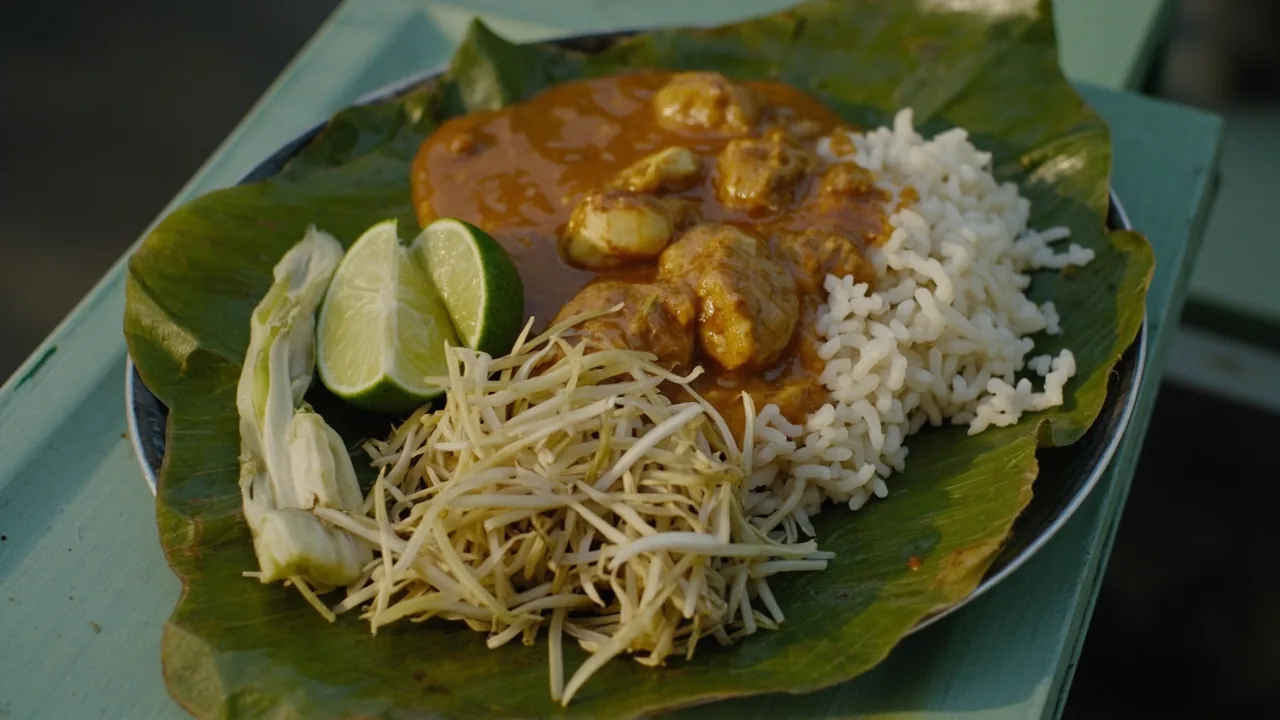
Vegan Food in Southeast Asia: What Indian Backpackers Eat (2026)
Yes, you can eat vegan across Southeast Asia. This guide covers the dishes that work, the phrases that get understood, and the countries ranked from easiest to hardest for a strict plant-based Indian backpacker. The picture varies sharply by country, and the next section spells out where each one sits on that spectrum.
What “vegan” means in Southeast Asia
In Southeast Asia, “vegetarian” on a menu often means “no meat,” but it usually still includes fish sauce, oyster sauce, eggs, and sometimes shrimp paste. True vegan means you also have to dodge those. The good news: Thailand, Cambodia, Laos, and parts of Vietnam have a long tradition of jay (เจ / chay) food, a Chinese-influenced Buddhist vegan cooking that is genuinely plant-only and widely available during the annual Nine Emperor Gods Festival. Outside festival season, the same kitchens still operate but at smaller scale.
Subodh’s Pro Tip: The single most useful phrase you’ll learn is “jay” (Thai/Lao) or “chay” (Vietnamese). It signals strict plant-based, no eggs, no dairy, no fish sauce, and any cook who knows the word will steer you right. See the full Jain food survival guide for the deeper rules.
Quick Answers
| What | Answer | Price (INR) |
|---|---|---|
| Easiest countries for vegan | Thailand, Vietnam, Singapore | — |
| Hardest countries for vegan | Myanmar, parts of Indonesia | — |
| Best single word to learn | ”Jay” (Thai/Lao) or “Chay” (Vietnamese) | — |
| Common hidden ingredients | Fish sauce, oyster sauce, egg in noodles, shrimp paste | — |
| Best vegan street food | Fruit shakes, mango sticky rice (confirm no egg), spring rolls, pad see ew jay | — |
| Apps that help | HappyCow, Google Translate camera, Maps.me offline | — |
| Vegan-friendly Indian fallback | Every major backpacker hub has at least one pure-veg Indian kitchen | — |
Country-by-country: where it’s easy, where it’s not
Thailand: easiest in the region
Thailand is the gold standard for vegan food in Southeast Asia. Bangkok alone has over 400 vegan and vegetarian restaurants listed on HappyCow, though most listed spots are vegetarian-only or vegan-friendly rather than fully vegan, and Chiang Mai’s Old City has so many jay kitchens that you can eat three meals a day plant-based without repeating a spot.
Dishes that work:
- Pad see ew jay: wide rice noodles, Chinese broccoli, soy sauce. Ask for “no egg” and “jay” and you’ll get it right.
- Tom yum jay: the clear-broth version, no shrimp, lemongrass and galangal forward.
- Som tam jay: green papaya salad made without fish sauce and without dried shrimp. Specify “no pla ra, no kung.”
- Mango sticky rice: confirm the coconut milk is the only sweetening and no egg yolk is added (some stalls use it for colour).
- Khao soi jay: northern Chiang Mai curry noodle, easy to find a vegan version.
Cities to prioritise: Bangkok (Sukhumvit, Chinatown), Chiang Mai (Old City), Chiang Rai, Pai, Krabi town, Koh Phangan.
Subodh’s Pro Tip: Bangkok’s May Kaidee family of restaurants is the most famous all-vegan Thai chain in the country. Their Tom Kha (coconut soup) is the dish I’d order first to test a new cook’s understanding of jay.
Vietnam: easy in cities, harder in rural areas
Vietnam is the second-easiest. Buddhist chay restaurants exist in every city, and the Buddhist calendar’s first and fifteenth days of each lunar month push many places to run all-vegan menus. Outside the cities, you’ll lean on phở chay, bún chay, and rice dishes.
Dishes that work:
- Phở chay: vegetable broth, rice noodles, tofu, sometimes mock meat. Confirm “no nuoc mam” (fish sauce).
- Bún chay: rice vermicelli with tofu and pickled vegetables.
- Bánh mì chay: the baguette sandwich, hold the pate and mayo with egg.
- Cơm chay: the rice plate, completely customisable.
Cities to prioritise: Hanoi (Old Quarter), Ho Chi Minh City (District 1 and District 3), Da Nang, Hoi An.
Tricky spots: the Mekong Delta, and small-town central Vietnam. You’ll find rice and tofu but not the variety.
Cambodia: easy in tourist hubs, harder elsewhere
Phnom Penh and Siem Reap have enough jay restaurants and Indian-run pure-veg places that you’ll eat well. Outside those two cities, vegan food in Cambodia means asking carefully and accepting that you’ll eat a lot of rice, stir-fried morning glory, and banana fritters.
Dishes that work:
- Bai sach chrouk with a vegan swap (grilled soy-marinated tofu in a baguette).
- Amok trei made with tofu instead of fish.
- Banana flower salad (yup, the flower, shredded).
- Num banh chok: fermented rice noodles, ask for the vegetable curry version without fish.
The Indian community in Phnom Penh runs several pure-veg thali places that are vegan with one ask (“no ghee, no butter”). Worth tracking down on HappyCow.
Laos: easy in Luang Prabang, harder elsewhere
Luang Prabang has a small but solid jay scene, partly because the town’s morning alms-giving culture overlaps with Buddhist vegan cooking. Vientiane has fewer options. Outside the two cities, vegan food in Laos is mostly what you cook yourself from market produce, or what your guesthouse kitchen lets you assemble.
Dishes that work:
- Khao soi jay: coconut curry noodle soup found in Lao jay kitchens.
- Tam mak hung jay: Lao green papaya salad, ask for “no padek” (fermented fish sauce).
- Sticky rice with any vegetable side.
Safety Alert: Padek (Lao fermented fish sauce) is in nearly every savoury Lao dish. If you don’t say “jay” or “no padek,” you will be served it. Travellers with stricter Jain-style requirements should also see the Jain food rules reference.
Indonesia: easy in Bali, harder elsewhere
Bali is a global vegan capital. Ubud and Canggu have more vegan restaurants per square metre than probably any non-Indian city in the world. Outside Bali, Indonesia gets harder: much of the cuisine centres on sambal (chilli paste with shrimp), terasi (shrimp paste), and kaldu (anchovy stock).
Dishes that work in Bali:
- Nasi campur jay: the rice plate, hold the sambal.
- Gado-gado: peanut sauce salad, ask for “no terasi.”
- Soto jay: clear vegetable soup.
Malaysia and Singapore: easiest in Singapore, doable in Malaysia
Singapore is a vegan paradise by any global standard, with hawker centres increasingly labelling chay (strict vegan) stalls and plenty of Indian vegetarian/vegan banana-leaf options. Malaysia is a step behind but Kuala Lumpur’s Brickfields and Penang’s George Town have enough pure-veg Indian places to cover you. See the cheap veg guide for Singapore for specifics.
Myanmar: hardest in the region
Myanmar is the country where vegan travellers struggle most. Bamar cuisine leans on ngapi (shrimp paste) and fish sauce, English menus are rare, and the pure-veg Indian restaurant scene is small. If you’re vegan and heading to Myanmar, learn the phrase early, carry snack bars, and don’t rely on finding variety outside Yangon.
Language phrases that work
Don’t try to explain veganism in full. Use the shortest possible signal.
| Country | Phrase | Pronounced |
|---|---|---|
| Thailand | ”Jay, sai khreuang phed sagun” (vegetarian, no dairy) | “JAI, sai kroo-ang pet sa-goon” |
| Thailand | ”Mai sai nam pla, mai sai khai" | "My sai nam pla, my sai kai” (no fish sauce, no egg) |
| Vietnam | ”An chay, khong trung, khong nuoc mam" | "An chay, khong trung, khong nuoc mam” |
| Laos | ”Jay, sai padek" | "JAI, sai pa-dek” (no padek/fish sauce) |
| Cambodia | ”Btong chea, ot trei" | "Btong chey, ot trey” (vegetarian, no fish) |
| Indonesia | ”Sayuran saja, tanpa terasi, tanpa telur" | "Sa-yoor-an sah-ja, tan-pa ter-asi, tan-pa teloor” |
| Myanmar | ”Tha-lone-say, htamin hto hkauk” | Say you’re vegetarian; few will catch nuances |
Tip: Google Translate’s camera feature is the single best tool here. Point it at a menu in any of these languages and the translated text is reliable enough to spot “egg,” “fish,” “milk,” and “shrimp paste.”
Eight vegan dishes you’ll find almost everywhere
- Fresh fruit shakes (no milk added, ask “no condensed milk”): every country, every street corner, ₹86-₹229 (~30-80 THB or ~$0.89-$2.38).
- Stir-fried morning glory (pad pak bung / rau muong xao): ₹172-₹344 (~60-120 THB or ~$1.78-$3.57).
- Spring rolls (poh pia / goi cuon): confirm “no egg in the wrapper” at smaller stalls; restaurants are usually safe.
- Sticky rice + mango: confirm the coconut milk has no egg yolk or dairy.
- Tom yum jay / sour vegetable soup: every Thai jay kitchen has it.
- Vegetable fried rice: anywhere, but specify “no egg” (a default add in much of the region).
- Tofu banh mi / tofu sandwich: street breakfast workhorse, ₹55-₹92 (~15,000-25,000 VND or ~$0.57-$0.95).
- Banana fritters (kluay tod / chuoi chien): deep-fried, sugar-dusted, almost always accidentally vegan. Confirm no egg wash.
Subodh’s Pro Tip: When in doubt, walk into any place with a yellow/red banner featuring Chinese/Buddhist iconography. These are almost always jay or chay kitchens with cooks who understand strict plant-based. The banner is a stronger signal than the menu.
Apps that help
- HappyCow: the global vegan/vegetarian directory. Coverage is good in Bangkok, Chiang Mai, Singapore, Ubud; thinner in Laos and Myanmar.
- Google Translate camera: point at the menu, get a translation. Better than typing by hand.
- Maps.me offline: essential when you can’t get a SIM to work; also worth pairing with a packing list for SE Asia so you’ve got offline maps saved before you land.
- HappyCow filter for “vegan”: don’t accept “vegetarian” filter results. The difference matters here.
What most guides don’t tell you
Fish sauce is the silent killer. A bowl of plain white rice with cucumber looks vegan. It’s not: it’s been served next to fish sauce all day, and the same spoon was used. At higher-end restaurants this isn’t an issue. At street stalls it can be. Strict vegans should look for places with separate jay fryers and woks.
Egg in the noodle dough. Yellow alkaline noodles and most fresh rice noodles in Vietnam are egg-free, but a few stalls mix egg into the dough. If you’re strict, ask at each new place the first time.
Butter in the “vegan” banana bread. Bali and Chiang Mai cafes occasionally bake with butter even when the loaf is otherwise plant-based. Ask.
Hotel/guesthouse breakfast buffets are the riskiest meal of the day. Toast, jam, fruit look safe. The scrambled eggs are not. But the pancakes were made with milk, the fried rice used egg, and the congee was thickened with egg white. Stick to fruit, plain bread, and explicitly vegan options, or skip it.
Indian restaurants in SEA are not automatically vegan. Ghee is everywhere, paneer is everywhere, and “veg” usually means “no meat” with dairy intact. You’ll need to specify “no ghee, no paneer, no butter” to get a true vegan plate. Even pure-veg Indian places often use ghee as the default cooking medium. See the Jain rules guide for how this gets even stricter under Jain rules.
Festivals make it easier, not harder. During the Nine Emperor Gods Festival (Sept/Oct, lunar calendar), jay restaurants multiply in Thailand and Malaysia. During Buddhist Wan Phra days (new and full moon), many local spots run all-vegan menus. Travellers who time trips around these get a meaningfully better experience.
Step-by-step: building a vegan day in any SEA city
- Open HappyCow the night before. Filter by “vegan,” sort by distance from your hostel, screenshot 3-4 options. Don’t depend on finding something cold.
- Pre-load Google Translate. Download the Thai/Vietnamese/Lao/Cambodian offline language pack. Camera mode works offline once downloaded.
- Stock snack bars at the airport. Two per day, minimum. SEA’s heat melts chocolate so favour date-and-oat or peanut varieties.
- At breakfast, default to fruit + plain bread + peanut butter. The buffet is a minefield (see “What most guides don’t tell you”). Save the bigger meal for lunch.
- Lunch: aim for a jay/chay kitchen. One sit-down meal at a properly vegan place beats three street-stall gambles. Budget ₹229-₹430 (~80-150 THB or ~$2.38-$4.46).
- Dinner: street food is fine if you ask the right questions. “Jay” or “chay” + “no egg, no fish sauce, no shrimp paste.” Walk away if the cook hesitates.
- Hydrate with fruit shakes, not smoothies. “Smoothie” in SEA usually means blended with milk and condensed milk. “Shake” usually means blended fruit + ice + sugar. The labelling is loose, so always ask.
- Plan a “rescue” option. Most major hubs have a fully vegan Indian restaurant that will feed you a complete thali for ₹574-₹1,004 (~200-350 THB or ~$5.94-$10.40). Note its location on day one. On the days you can’t be bothered to negotiate, you eat there.
Common mistakes Indian vegans make
- Assuming “vegetarian” on an English menu means vegan. It usually doesn’t. Fish sauce is the default seasoning in most SEA kitchens.
- Trusting a “veg” symbol without asking. A green dot or a “V” on a tourist-menu dish often just means “no meat.”
- Skipping fruit shakes because of sugar. They’re the safest, cheapest vegan food in the region. Have one a day.
- Not carrying a backup snack. SEA’s heat and travel delays punish underprepared travellers. Carry bars.
- Treating every Indian restaurant as automatically vegan. Ghee is everywhere. Specify.
- Booking tours that include meals without flagging diet. Day trips to Angkor, Mekong Delta boat tours, Chiang Mai elephant sanctuaries (the ethical ones) all include lunch. Email ahead and confirm a vegan option, otherwise you’ll get rice and cucumber while everyone else eats noodles.
FAQ
Is street food in Southeast Asia safe for vegans? Yes, with the same general rules as any traveller: busy stalls, high turnover, cooked-to-order. The street food safety guide applies. The vegan-specific risk is fish sauce, not hygiene.
Which country is the easiest for strict vegans? Thailand, especially Bangkok and Chiang Mai. Singapore is a close second with more English signage.
Which is hardest? Myanmar, then rural Indonesia and rural Vietnam. Outside Yangon, Mandalay, and Inle, you’ll struggle.
Do I need to learn the local language? No. “Jay” (Thai/Lao), “chay” (Vietnamese), and Google Translate camera cover 90% of cases.
Can I rely on HappyCow? For Bangkok, Singapore, Bali, Chiang Mai, Hoi An: yes, it’s reliable. For Laos and Myanmar: thin. Have a backup plan.
What about Jain-vegan (no onion, no garlic)? This is meaningfully harder. See the Jain rules reference and the Jain food survival guide.
How does this compare to the vegetarian guide? The vegetarian version covers the wider “no meat” diet. The vegan version is stricter: no eggs, no dairy, no fish sauce, no shrimp paste. A large share of what works for vegetarians works for vegans, but the remainder is where most strict plant-based mistakes happen, especially hidden egg, fish sauce, and dairy.
Is vegan food in Southeast Asia cheap? Yes. A full vegan day in Thailand averages ₹717-₹1,290 (~250-450 THB or ~$7.43-$13.37). In Vietnam, ₹294-₹552 (~80,000-150,000 VND or ~$3.05-$5.72). In Cambodia, ₹358-₹834 (~15,000-35,000 KHR or ~$3.71-$8.65). In Laos, ₹108-₹215 (~25,000-50,000 LAK or ~$1.12-$2.23). All far cheaper than back home.
Subodh’s Take
The honest answer to “is vegan food in Southeast Asia doable?” is yes, and you won’t go hungry. The deeper answer is that it requires a small upfront investment: learn one word per country, install two apps, know which dishes are silently non-vegan. After three or four days in any major city, the system runs itself and you’ll be eating better plant-based food than you do at home. The countries I’d worry about are the ones with thin Indian-veg restaurant scenes, not the ones with thin vegan scenes, because in the latter you can find variety. Where I would not go as a strict vegan without serious prep: rural Myanmar, deep eastern Indonesia. Anywhere else, you’ll be fine with this guide in your pocket.
Connectivity: Get Nomad eSIM for vegan-friendly maps and HappyCow offline when you land.
Tours: Browse vegan food tours on GetYourGuide for Bangkok, Singapore, and Bali.
— Subodh
