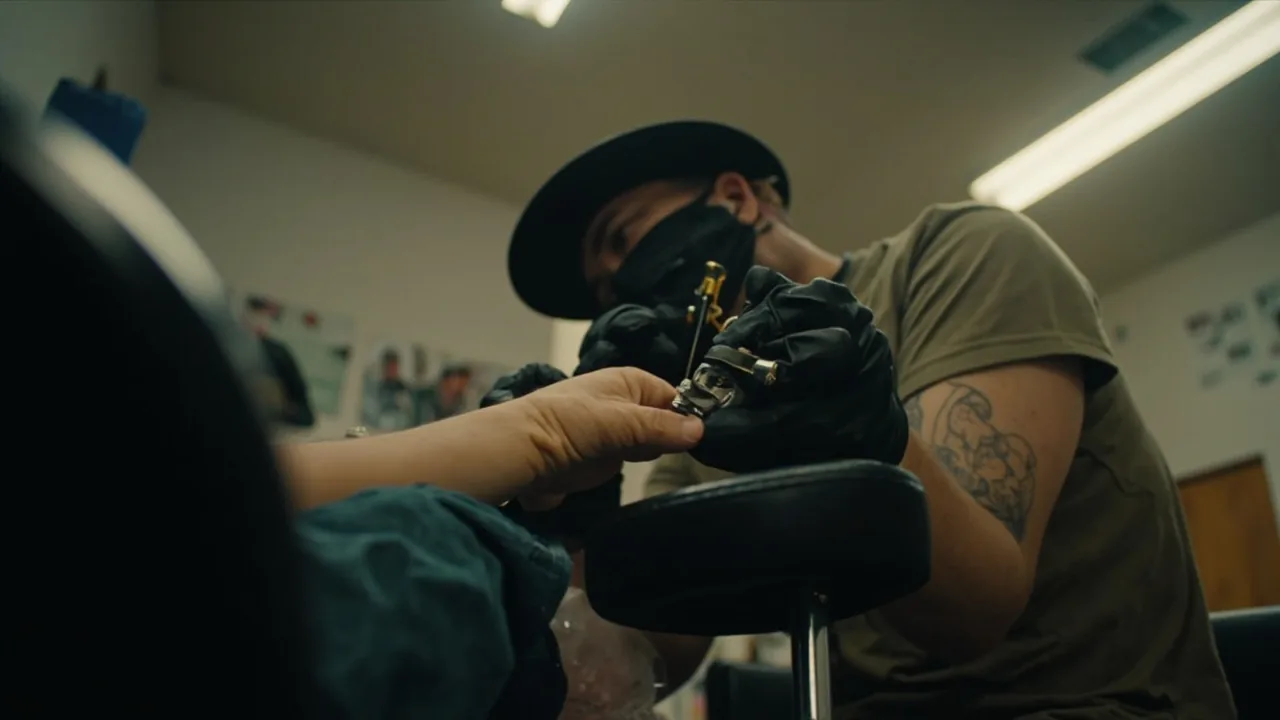
Tattoo Safety in Thailand & SE Asia (2026 Parlor Guide)
For the 2026 update, use Thailand’s Ministry of Public Health tattoo-establishment licence and Vietnam’s Department of Health studio registration as the baseline checks. Pick a licensed studio that opens single-use needles in front of you, uses an autoclave for reusable equipment, and follows proper aftercare. Avoid unmarked shops and street-side stalls that cannot demonstrate those safeguards. Planning the wider region? Our Southeast Asia backpacking hub covers the full multi-country route.
Quick Answers
| What | Answer | Price (INR) |
|---|---|---|
| Is getting a tattoo in Thailand safe? | Yes, if you use a licensed studio with single-use needles and an autoclave. | ₹0 |
| Minimum cost of a small tattoo in Bangkok? | ₹2,297 (~800 THB or ~$23.83) for a simple walk-in design. | ₹2,300 (~$23.84) |
| Hepatitis B vaccine needed before travelling? | Strongly recommended; ideally started 6 weeks before departure. | ₹1,200 (~$12.44) |
| How long until a new tattoo can be soaked in water? | 7 to 14 days minimum; ocean and pool are off-limits for at least 3 weeks. | ₹0 |
| Will Indian travel insurance cover a tattoo infection? | Almost never. Plan to self-pay for any clinic visit. | ₹0 |
The “7 to 14 days” soaking rule is the single thing travellers get wrong. The tattoo is an open wound; submerging it in tap water, seawater, or pool chlorine before the skin barrier closes is the fastest way to get an infection that means an after-hours clinic visit in a country where you don’t speak the language.
The Real Risks
For broader context on staying healthy across the region, see our Thailand health risks guide for Indian travellers. (What to Worry About)
| Risk | Likelihood | Impact | How to Avoid |
|---|---|---|---|
| Infection from unsterile equipment | Moderate at unmarked shops, Low at licensed studios | High (scarring, bloodborne disease) | Verify autoclave, single-use needles, and Ministry of Public Health licence on the wall. |
| Poor aftercare on the road | High | Moderate (faded ink, infection) | Carry second-skin bandages, fragrance-free soap, and follow the 7 to 14 day no-soak rule. |
| Allergic reaction to coloured ink | Low | Moderate (itching, raised scars) | Ask for a patch test 48 hours before a large colour piece. |
| Regret from a rushed design | High | Low (costly laser removal later) | Insist on a stencil and 24-hour cooling period for any piece over ₹28,715 (~10,000 THB or ~$297.86). |
| Language barrier with the artist | Moderate | Low (wrong design) | Use Google Translate or book through a studio that lists English-speaking artists. |
| Scarring from sun exposure | High in Thailand/Vietnam | Low (faded, raised ink) | Apply SPF 50+ on healed tattoos after day 21. |
The biggest variable is not the country, it is the studio. A licensed shop in Vientiane with an autoclave is safer than a back-alley parlour in London. Conversely, a dirt-cheap shop in Bangkok that skips the autoclave is a real risk anywhere.
How to Verify a Studio is Safe
If you need emergency care during your trip, our Thailand emergency medical care guide covers hospital networks and clinic options.
Where to Stay & Trip Planning: The Bananarchy Thailand backpacking trip runs fixed-departure routes through Bangkok, Chiang Mai, and the islands with safety briefings on arrival.
This is the checklist that matters. Walk out of any shop that fails even one of these.
1. Licence on the wall. In Thailand, look for the Ministry of Public Health tattoo establishment licence. In Vietnam, licensed studios display a Department of Health registration. Cambodia and Laos have weaker enforcement, so a clean visible workspace matters more than a framed certificate.
2. Single-use needles pulled from a sealed pouch in front of you. This is non-negotiable. A reputable artist will unpack a new needle cartridge for each client. If they hesitate, leave.
3. Autoclave or hospital-grade steriliser on-site. For tube-grip setups (rotary machines), the metal grip must be autoclaved between clients. Cartridge systems (Cheyenne, Peak) are safer because the entire cartridge is single-use.
4. Bottled ink poured into single-use caps. Ink should be decanted into a disposable cap for your session. If you see them dipping a used cap back into a main ink bottle, that is cross-contamination.
5. Gloves, barrier film, and hospital-grade surface disinfectant. The artist wears fresh nitrile gloves. The bed, machine, and bottle surfaces are wrapped in cling film or barrier film that gets changed per client.
6. Before-and-after photos of healed work. Instagram is your friend here. Search the studio’s tagged location, look for photos taken 2 to 4 weeks post-session, not just the fresh shot on day one. Healed work shows the artist’s true skill.
A tattoo studio is a medical-adjacent environment. If it smells like bleach, has visible dust, or the artist eats lunch at the tattoo bed, walk out.
Before You Fly: Vaccines and Prep
For embassy contacts and what to do in a medical crisis abroad, see the Indian embassy emergency helpline guide.
Get these sorted before you board the flight from Delhi or Mumbai.
- Hepatitis B (3-dose series, ideally started 6 weeks before travel). This is the most important one. Traveller reports and CDC guidance both list Hep B as the primary bloodborne risk in unregulated studios. Cost in India: roughly ₹1,200 (~$12.44) for the full series at a private hospital.
- Tetanus booster if your last one was over 10 years ago. Tetanus is a real risk with any puncture wound, and a tattoo needle puncture is no exception.
- Hepatitis A is recommended for Southeast Asia in general, though it is food/water-borne rather than needle-borne.
- Antibiotics: ask your doctor before travel whether you need any prescription medicine. Do not self-treat a suspected tattoo infection; seek a clinician if you see red streaks, pus, or fever.
Carry these items in your daypack from day one of the trip, even if you plan the tattoo later:
- Second-skin bandage (Tegaderm or Dermalize Pro). 1 sheet = ₹144 (~50 THB or ~$1.49) at a Thai pharmacy.
- Fragrance-free antibacterial soap (available at Watsons, Boots, and 7-Eleven across Thailand, Vietnam, Cambodia, and Laos).
- SPF 50+ sunscreen (healed tattoos only, after day 21).
Prices converted at the prevailing mid-market rate on 2026-07-17 (1 THB ≈ ₹2.87); check the current rate before budgeting.
Tattoo Aftercare on the Road
Tap water in Vietnam makes cleaning a fresh tattoo trickier; review our Vietnam tap water guide before booking sessions in HCMC.
The 7 to 14 Day Rule
A fresh tattoo is an open wound. The skin barrier takes 7 to 14 days to close fully, and the deeper layers keep healing for 3 to 6 weeks. Soaking it in water before that barrier closes is the single fastest way to get an infection.
Hour 0 to 24: Leave the second-skin bandage on. The artist will wrap you. Do not peel it for a peek. This first bandage catches the plasma and blood that seep out, and removing it too early pulls the ink out with it.
Day 1 to 3: First wash, then re-bandage. Wash with lukewarm water and fragrance-free soap. Pat dry with a clean paper towel (not a cloth towel, cloth harbours bacteria). Apply a thin layer of aftercare balm (the studio will recommend one, or ask for a H2Ocean or Hustle Butter alternative at any 7-Eleven in Thailand). Cover with a fresh second-skin patch for another 48 hours.
Day 3 to 7: Air exposure, light moisturising. Remove the second-skin patch. Wash twice a day. Apply a thin layer of balm. Do not over-moisturise. Over-greasy tattoos heal slower and can develop rashes.
The hard rules for 7 to 14 days minimum, longer for large pieces:
- No soaking. That means no ocean swims, no pool dips, no hot tubs, no long baths, no river tubing in Vang Vieng, no waterfalls in Luang Prabang, no snorkelling in Koh Tao.
- Showers are fine, but keep them short and avoid aiming the water jet directly at the fresh tattoo for the first 5 days.
- Sweat is a problem. Heavy backpacking days, scooter rides in 35°C heat, and treks will all sweat salt and bacteria into the wound. Plan your tattoo timing around your itinerary: do not get inked the day before a Ha Giang loop ride or a 4-day Vang Vieng trek.
Day 14 to 21: Light activity is fine. The surface is healed but the deeper layers are still mending. No ocean or pool until day 21. Sun exposure is the enemy of fresh ink; SPF 50+ on a healed tattoo or UPF clothing over it.
Travellers often ask: “But I’m in Thailand for two weeks, I have to swim in Koh Tao.” You do not have to. Plan the tattoo for the end of the trip, or accept that you will be on the boat with a shirt on. Getting an infection in a remote island clinic costs more than missing one snorkel day.
City-by-City: Where to Book
Heads up: Thailand’s roads and scooter culture are a separate risk; if you plan to ride, read the Thailand motorbike safety guide before you book sessions in Chiang Mai.
Bangkok: The largest concentration of licensed, internationally recognised studios. The neighbourhoods of Sukhumvit (around Asok and Phrom Phong) and Silom host most of the English-speaking artists. Studios here routinely serve Korean, Japanese, and European clients and follow autoclave protocols as a baseline. Avoid Khao San Road stalls; the licensing is inconsistent and the aftercare advice is often wrong.
Chiang Mai: The traditional backpacker stop for tattoos. The good news: several well-regarded studios operate here, and the artists are accustomed to foreign travellers. The warning: Chiang Mai also has a high density of walk-in shops with variable hygiene. Check licences and reviews carefully. Cool weather helps with healing, which is one reason travellers prefer it over Bangkok.
Ho Chi Minh City: A growing tattoo scene in District 1, with several studios that have trained abroad. Hygiene is generally good at the top end. Tap water quality makes aftercare trickier, so bring your own soap and bottled water for cleaning.
Phnom Penh and Vientiane: Smaller scenes. Fewer choices, so vetting is more important. Ask your guesthouse or hostel staff for recommendations, and check that the studio is at least visibly clean with new-needle protocols. Cambodia’s medical infrastructure is thinner than Thailand’s, so a botched tattoo that gets infected here is a bigger problem than the same infection in Bangkok.
What to Do If It Gets Infected
For hospital options specifically in Cambodia, our Cambodia medical emergency guide lists clinics and pharmacy chains.
A normal healing tattoo is itchy, slightly raised, and has a thin layer of dry skin flaking off. That is not an infection. Signs of a real infection:
- Spreading redness with defined red streaks moving away from the tattoo
- Yellow or green pus (not plasma; plasma is clear and pinkish)
- Fever, chills, or swollen lymph nodes in your armpit or groin
- Pain that increases after day 3 instead of decreasing
Step 1: Stop aftercare balms. Wash gently with antibacterial soap, air dry, do not cover.
Step 2: Find the nearest clinic. In Bangkok and Chiang Mai, private hospital networks with English-speaking staff are used to tourist cases. In Vietnam, private clinics in Hanoi and HCMC have English-speaking doctors. In Cambodia and Laos, expect a thinner hospital system and budget for an evacuation to Bangkok if the infection is serious.
Step 3: Thai and Vietnamese clinics may prescribe a short course of a penicillin-family antibiotic such as Augmentin; the exact drug, dose, and duration depend on the prescribing doctor. If you are allergic to penicillin, tell the doctor so they can choose an appropriate alternative.
Step 4: Document everything with photos. If the infection is from a negligent studio (reused needles, no gloves), you can report them to the local public health authority. In Thailand, that is the Department of Health Service Support. Realistically, most travellers just want the infection cleared and move on, but the report is there as a backstop.
Cost of a clinic visit in Thailand for a tourist without insurance: ₹4,307-₹11,486 (~1,500-4,000 THB or ~$44.68-$119.14) for the consultation, plus medication. In Cambodia and Laos, expect ₹4,820-₹9,640 (~50-100 USD) for a similar private clinic visit.
Indian-Specific Considerations
Medicines to carry from India:
- Any prescription medicine your doctor recommends after reviewing your travel plans
- Metrogyl 400 (Metronidazole) for any gastro backup, separate from tattoo care
- Pantocid 40 (Pantoprazole) for stomach acid, common with antibiotic use
- Dolo 650 (Paracetamol) for pain and fever
- ORS sachets (Electral brand) for dehydration if fever hits
Indian Embassy contacts (in case you need a medical evacuation or a notarial document for insurance):
- Bangkok: +66 2 670 2400, embassy of India, Soi Phiphat, Silom
- Chiang Mai: consulate at +66 53 280 322 (limited hours, weekdays)
- Hanoi: +84 24 3842 4989
- Phnom Penh: +855 23 210 912
Communication tip: Most Thai and Vietnamese clinic intake forms are in English. If you land in a smaller hospital in Cambodia or Laos where the form is in Khmer or Lao, a translation app gets you through. A short printed medical history in English (allergies, current meds, blood group) on your phone is a real time-saver in an emergency.
Getting Connected
A working data connection is how you find a clinic, call the embassy, or pull up Google Translate. In Thailand, an AIS or dtac tourist SIM is ₹859 (~299 THB or ~$8.91) for 8 days with 15 GB. In Vietnam, a Viettel or Mobifone tourist SIM runs ₹737-₹1,105 (~200,000-300,000 VND or ~$7.64-$11.46). For cheaper roaming or multi-country coverage, an eSIM works before you even land. Get Nomad eSIM covers Thailand, Vietnam, Laos, and Cambodia on a single plan, and you can install it on your phone in the Delhi airport lounge.
Safety Context
A few destinations in the region have periodic unrest or elevated political tension that does not affect studio safety directly but can affect travel logistics. For up-to-date guidance before you book sessions on the road, check the Indian Ministry of External Affairs travel advisory at mea.gov.in and your destination country’s own government travel site. The safety of the tattoo itself comes down to the studio, not the country.
FAQ
Travelling solo? Our solo female safety guide for Indian women in Thailand covers areas and hours to avoid.
Q: Can I get a tattoo on a tourist visa in Thailand? A: Yes, there is no legal restriction. A tourist visa is sufficient for the studio session and aftercare. You do not need a medical visa.
Q: Is it cheaper to get tattooed in Thailand than in India? A: For complex colour work by a high-end artist, prices are comparable. For traditional Thai sak yant bamboo tattoos, Thailand is cheaper. For walk-in small pieces, Thailand is often cheaper than a Mumbai or Delhi studio of equivalent quality.
Q: Do I need to tip the tattoo artist in Thailand? A: Not mandatory, but a ₹287-₹861 (~100-300 THB or ~$2.98-$8.94) tip for a small piece or ₹1,436-₹2,872 (~500-1,000 THB or ~$14.89-$29.79) for a multi-session piece is appreciated and standard practice at most studios.
Q: Can I get a tattoo if I am on antibiotics for something else? A: Consult your doctor. Tattooing while on blood thinners or active antibiotics for a current infection is a bad idea. Healing is suppressed and infection risk rises.
Q: How do I know if a sak yant studio is safe? A: Sak yant at temples in Thailand and Cambodia is a traditional practice with variable hygiene. A modern studio offering sak yant designs with a tattoo machine and proper sterilisation is safer than a bamboo needle session at a temple. Both are popular; the choice is yours, but go in knowing the trade-off.
Q: Will a new tattoo set off airport security? A: No. Fresh tattoos do not trigger any security scan. The metal in the tattoo needle is removed before you leave the chair.
Q: What if I regret the design two days later? A: Most studios offer a touch-up within 60 to 90 days for free, which covers fading but not redesign. Laser removal in Bangkok runs ₹4,307-₹14,358 (~1,500-5,000 THB or ~$44.68-$148.93) per session depending on size. Plan the design well; cover-ups are expensive.
Subodh’s Take
The backpacker tattoo is one of the most rewarding things you can do on a long Southeast Asia trip. Chiang Mai sleeve, Koh Tao turtle, Luang Prabang elephant. They become the story you tell for years. The risk is not the region, it is the shortcuts: the unmarked shop, the reused cap, the “I’ll figure out aftercare later” attitude. Pick a licensed studio, plan the timing around your itinerary so you are not soaking a fresh tattoo in the Mekong on day three, and bring a few key supplies from India. The whole safety case comes down to those three things.
