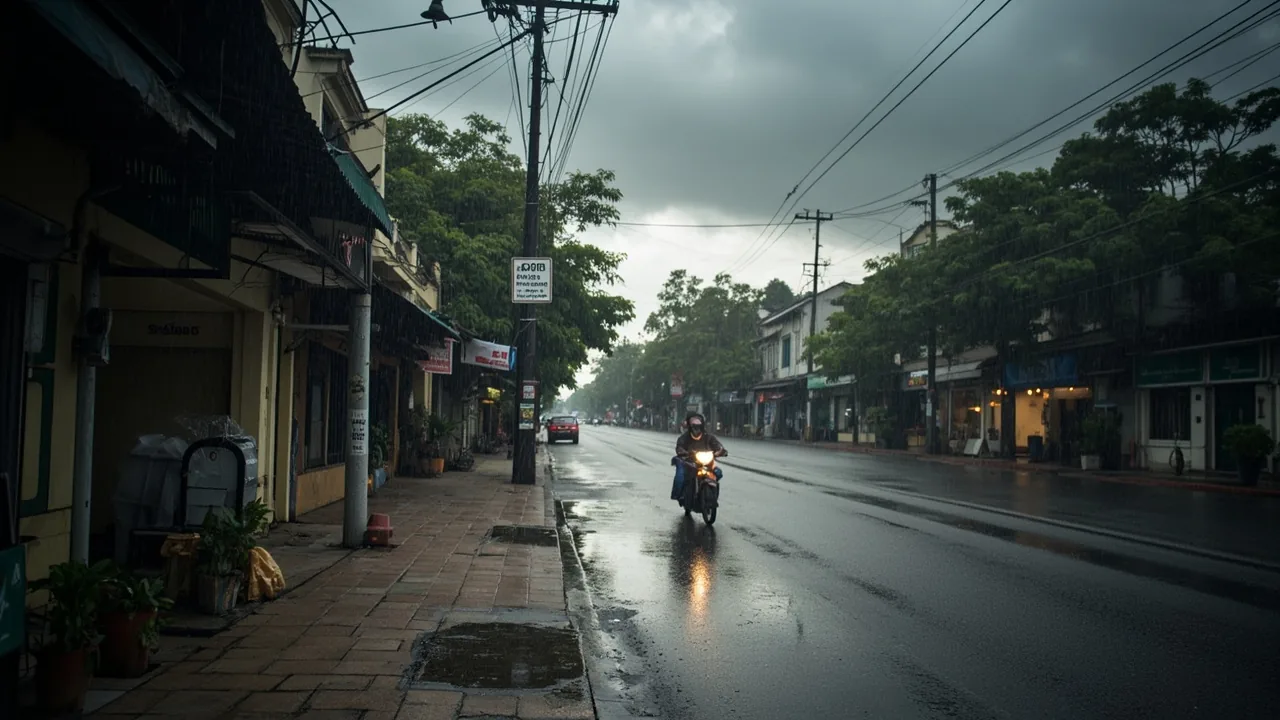
When NOT to Go to Vietnam: Worst Months, Bad Weather, and Total Chaos Periods
When should you not go to Vietnam? The answer depends on which region you’re visiting. Vietnam’s three climate zones mean a perfect month in Hanoi can mean typhoons in Da Nang and flooding in Hoi An. September through November bring the worst weather, January brings Tet chaos, and wrong timing costs Indian travellers money, sleep, and entire itinerary days.
At the time of writing, 1 INR ≈ 270 VND, which is the number you want in your head whenever anyone quotes a dong figure. You may also find How Many Days Do You Need in Vietnam useful for this trip. For currency conversion tips, see our INR to Vietnam Currency Exchange guide.
Quick Answers
| What | Answer | Price (INR) |
|---|---|---|
| Worst single month nationwide | October (typhoon + rain peak + flooding) | — |
| Tet chaos window | 7 days before and 7 days after Lunar New Year (late Jan/early Feb 2026) | — |
| Months to actively avoid booking | September, October, January (Tet) | — |
| Wettest region in Oct | Central Vietnam (Hue, Da Nang, Hoi An) | — |
| Cheapest overall period to fly (not necessarily visit) | Mid-Feb to mid-April, mid-Sep to mid-Oct | ₹18,000-₹22,000 (~$186.84-$228.36) |
| One-month e-visa fee from official portal | Apply via Vietnam e-Visa portal | ₹2,408 (~25 USD) |
The Three-Season Reality of Vietnam
Most guides flatten Vietnam into “wet season vs dry season.” That’s wrong, and the wrongness costs you real money. Vietnam is shaped like an S, with three climate zones stacked top to bottom, and each zone peaks and troughs at a different month. The north drives by winter cold and summer heat, the centre is battered by typhoons from roughly August to November, and the south has a brief dry window from December to April before the southwest monsoon drags in five straight months of rain. See also: Vietnam Departure Tax Airport.
What this means for booking dates: a single “best time to visit Vietnam” answer is a unicorn. Pick your month based on the regions you’ll touch. Travellers report that October looks dreamy in travel guides but is, in practice, the month that strands people in Hoi An when the river overtakes the old town and the bridges shut. For related planning, see our guide on International Airports in Vietnam.
If your dates are fixed (semester break, wedding, visa expiry), you’ll need to plan around the worst period rather than around the perfect one. If your dates are flexible, this guide will help you pick the cleanest fortnight. You may also find Vietnam Visa for Indian Passport Holders Requirements E Visa Process Fees Visa on Arrival Explained useful for this trip.
Month-by-Month: What’s Terrible
January: Tet Roulette
If you only read one section, read this one. Tet Nguyen Dan (Lunar New Year) falls in late January or early February, and the date shifts every year. For 2026 Tet falls around 17 February, with the official public holiday running roughly 6–8 days. The chaos isn’t just those 6–8 days, it’s the week before and the week after: offices close, shops close, restaurants close, bus stations turn into a festival of stranded people, and prices on whatever’s still open go through the roof.
Travellers report that bookings across Da Nang, Hoi An, and Nha Trang sell out 2–3 months ahead for the Tet week, and last-minute hotel rates can triple compared to the week before. You will pay extra for the privilege of finding a closed restaurant on every corner of your itinerary.
Things to know operationally:
- Banks and ATMs may be empty. Stock dong in Hanoi or HCMC before you travel to a smaller city for Tet.
- Domestic flights (Hanoi to Da Nang, etc.) sell out and double in price. Book 2 months ahead or skip internal flights during this window.
- Tourist sites still operate. Beaches are still open. But the food, transport, and shopping experience you came for is largely switched off.
- The days immediately before Tet are wonderful culturally. The days immediately after (the first 3–4 working days) are the worst, half the country on holiday, half recovering from it.
If your dates fall anywhere between 10 January and 20 February, move them.
March to August: Mostly Fine, With a Few Heat Traps
This block is the green-light window for most of Vietnam. March through May is the country’s sweet spot: dry across all three regions, pleasant temperatures in the north, warming up everywhere else. June, July, and August bring heat, humidity, and some afternoon storms, but the country’s open, the tours run, and the food scene is in full swing.
The operational risk in this window is summer school holidays. Late May through early August sees Vietnamese families on the move, especially in Da Nang, Nha Trang, and beach towns on the south coast. Hotels fill up, sleeper buses between cities sell out a few days ahead, and domestic flight prices spike. Travellers report paying 30–50% more for a Hanoi to Da Nang flight in mid-July than the same flight in late September. If your dates are flexible, end of August and the first half of September are quieter and noticeably cheaper.
Subodh’s Pro Tip: If you only have a one-week window and can’t dodge summer holidays, book Hanoi and Halong Bay, not Da Nang. The north sees a small bump in domestic tourism in summer but nothing like the central coast, and Halong Bay crowds are manageable.
September to November: The Typhoon Belt
This is the worst window of the year, full stop. September is when tropical storms start rolling in from the South China Sea. October is peak typhoon month, with the central coast (Hue, Da Nang, Hoi An, Nha Trang) taking the worst hits. November starts to recover in the south but stays wet in the centre and turns cold in the north.
Concretely, October in Hoi An has been known to flood the Ancient Town. When Thu Bon River overruns its banks, the wooden walkways go underwater, lanterns still light up at night but in reflections two streets deep, and most riverside restaurants close for the day. Tour operators cancel cooking classes and street-food walks on the assumption nobody’s walking anywhere. Da Nang gets typhoon advisories that force beach closures for 2–4 days at a stretch. Travellers report losing 30% of a 10-day trip to weather cancellations in an October trip.
The south sees less typhoon damage but still gets the southwest monsoon rains, which means daily downpours that flood streets in Ho Chi Minh City and disrupt Mekong Delta boat tours. The north cools down sharply in November and Hanoi can hit 14°C at night, which is fine for sightseeing but cold for motorbike loops.
December: Surprisingly Good, With One Footnote
December is the cleanest month to visit almost all of Vietnam, the one month when all three regions are doing something close to “good weather” at the same time. The south is in dry season (December to April). The centre has post-typhoon clarity. The north is cool but sunny by day. Travellers report December as reliably the best month of the year. The catch: prices spike from 20 December through 2 January because of Christmas, New Year, and the start of northern hemisphere winter holidays in Europe and Russia. The days just before and after that window are quieter and noticeably cheaper.
Subodh’s Pro Tip: If you can land in Vietnam on or around 6 December and stay through 14 December, you’ll get the best weather, thin crowds, and shoulder-season prices. That fortnight is the sleeper pick of the year.
The Price Trap Nobody Mentions
Here’s the angle most “worst time to visit” guides miss: the cheapest months to fly to Vietnam are often NOT the cheapest months to BE in Vietnam. Vietnam’s pricing has two separate cycles, one for international flights (driven by northern hemisphere school calendars and weather patterns) and one for domestic travel (driven by Tet and Vietnamese summer holidays). They overlap in unhelpful ways.
| Travel Window | Flight Cost (Delhi to HCMC, round trip) | Domestic Cost (hotels, tours, sleeper buses) | Verdict |
|---|---|---|---|
| Late Dec / early Jan | Highest | Highest | Avoid unless you love crowds and paying for them |
| Tet (late Jan or Feb) | Mid-high | Triple in central Vietnam | Closed shops, sold-out transport |
| Mid-Feb to mid-Apr | Lowest of the year | Low and stable | Best value, but south is hot |
| May to mid-Jun | Mid | Mid | The actual sweet spot if you can take the leave |
| Mid-Jul to mid-Aug | High | High in coastal cities | Summer holidays, central beaches booked solid |
| Mid-Sep to mid-Oct | Lowest of the year | Low, but weather is awful | Cheap for a reason |
| Early Dec | Low | Low and rising | Best weather-to-price ratio |
For a quick sanity check, the rough round-trip fare from Delhi to Ho Chi Minh City in shoulder season sits around ₹18,000-₹22,000 (~$186.84-$228.36) on AirAsia or VietJet. Tet or Christmas pushes that to ₹32,000-₹45,000 (~$332.16-$467.10) on the same airline. If you see prices in the ₹15,000s for your dates, you have accidentally picked one of the cheap windows. Check the weather before celebrating.
Safety Alert: When you see low airfare into central Vietnam (Da Nang specifically) in October or early November, that’s almost always typhoon season, not a real deal. Check Vietnam’s National Centre for Hydro-Meteorological Forecasting before booking.
Region-Specific Bad Windows
Northern Vietnam (Hanoi, Sapa, Ha Giang, Halong Bay, Ninh Binh)
Worst months: January (cold + Tet), July (peak heat + storms), December (cold snap possibility). Travellers report Hanoi below 10°C in January, which sounds quaint but makes motorbike loops miserable and Sapa can drop below 5°C with fog closing the mountain passes for 2–3 days at a stretch.
Best months: Late September to mid-November, and March to mid-May. Cool, dry, the rice terraces in Sapa turn gold in late September through early October.
Central Vietnam (Hue, Da Nang, Hoi An, Nha Trang, Quy Nhon)
Worst months: September, October, November (typhoons + flooding). Da Nang airport occasionally closes for 8–24 hours during typhoon landfall, stranding you in the city until the next available flight.
Best months: February to August, especially March, April, and June.
Southern Vietnam (Ho Chi Minh City, Mekong Delta, Phu Quoc, Mui Ne)
Worst months: June through early November (southern monsoon). The rain is often short and sharp, not day-longers, but the Mekong Delta boat tours cancel more than they run. Phu Quoc is sunny through these months but ferry schedules get choppy.
Best months: December to May, peak in February and March.
Tet Survival, If You Have to Go
If your dates are locked into Tet (wedding, family commitment, fixed flight), a few moves reduce the pain:
- Book internal flights the day the carrier opens Tet schedule, usually 3 months ahead.
- Skip the 5 days on either side of the actual new year entirely if possible. You will have a much better trip.
- Pre-stock cash in major cities. Travellers report ATM shortages in smaller towns in the 3 days before Tet.
- Aim for the days after the 5th of the new lunar month. The country starts working again, prices drop, and most tours resume.
- Use Vietnam e-Visa portal (₹2,408 (~25 USD)) to skip the visa line you don’t need to be standing in during a Tet rush.
Quick Regional Fit Cheat Sheet
| Your priority | Pick these months | Avoid these months |
|---|---|---|
| Beaches in central Vietnam | March, April, May, June | September, October, November |
| Hoi An without rain | February, March, April, May, June | September, October, November, December (rain on way out) |
| Hanoi + Halong Bay comfortably | March, April, May, October, November | January, July |
| Mekong Delta boats | January, February, March, April | July, August, September |
| Phu Quoc dry | November, December, January, February, March | July, August, September |
| Sapa terraces | Late September, October, early November | January (cold), June (rain) |
Connectivity Note
If you do push your trip into September or October for the cheap flights, sort your data situation before you fly. A Viettel or Mobifone tourist SIM is ₹477 (~130,000 VND or ~$4.96) at the airport counter, with around 6 GB of data over 14 days. Travellers report the airport version costing the same as in-town shops, no reason to wait. If you’d rather land with data already on, the Get Nomad eSIM option delivers a profile by email and activates on scan, useful if your flight lands late and the airport SIM counter is closed.
If You’re Crossing Overland in the Bad Months
A common Indian traveller loop is Vietnam into Cambodia or Laos by land border. The worst weather months for Vietnam aren’t the worst for Cambodia or Laos, so it’s worth coordinating your bad-month budget trips to land in Vietnam in a quiet fortnight, then cross before the weather turns. Check the Cambodia to Vietnam Overland Border Guide for the routes that still run in shoulder monsoon periods.
FAQ
Is October that bad for Vietnam? Travellers report October as the worst single month, especially for central Vietnam. Typhoons, flooding in Hoi An, beach closures in Da Nang, monsoon rain in the south. If you can move your dates to late November or early December instead, do.
What months are cheapest to fly to Vietnam from India? Mid-February to mid-April and mid-September to mid-October are the lowest fare windows for Delhi/HCMC and Mumbai/HCMC routes. They look great on the price tag but each window carries its own problem (Tet hangover in the spring, typhoons in the autumn). If a flight deal lands you in Vietnam in those windows, double-check weather for your specific city before booking.
Should I avoid Tet entirely? Treat Tet as a hard avoid window unless you have a specific reason (wedding, family, fixed event) to be in Vietnam. The country largely shuts down for the lunar new year week, internal transport is a mess, and prices on what’s still open are punitive.
Is central Vietnam safe during typhoon season? Most typhoons pass without major incident, but coastal flooding in Hoi An and Da Nang happens every year, and the airports occasionally close. If you must travel September to November, pick northern or southern Vietnam where the typhoon risk is lower.
Does rain cancel tours in Vietnam? Yes, especially Mekong Delta boat tours in the southern wet season, Hue street-food walks in heavy rain, and Halong Bay overnight cruises during typhoon advisories. Cook in a cancellation buffer of 2–3 days in your itinerary for typhoon-season trips.
Which region of Vietnam has the most stable weather? Southern Vietnam (Ho Chi Minh City, Phu Quoc, Mekong Delta) is the most predictable by month, with a clean December-to-April dry window and a wet season you can plan around. Central Vietnam is the least predictable, with typhoons that can throw any week’s plans in the bin.
Subodh’s Take
Vietnam is one of the cheapest, friendliest, and most-rewarding countries in Southeast Asia for Indian travellers, and that stays true for at least 8 months of the year. The two months that genuinely deserve to be called “worst” are September and October in central Vietnam, and the one period that always hurts is Tet, regardless of where you are. If you can dodge those, you’re golden. If your dates are locked, plan around them instead of through them: a Tet trip with domestic flights booked 3 months ahead and a Tet-tolerant Hanoi base is a wildly different experience to wandering into Da Nang the week before new year.